Medieval Europe
Overview
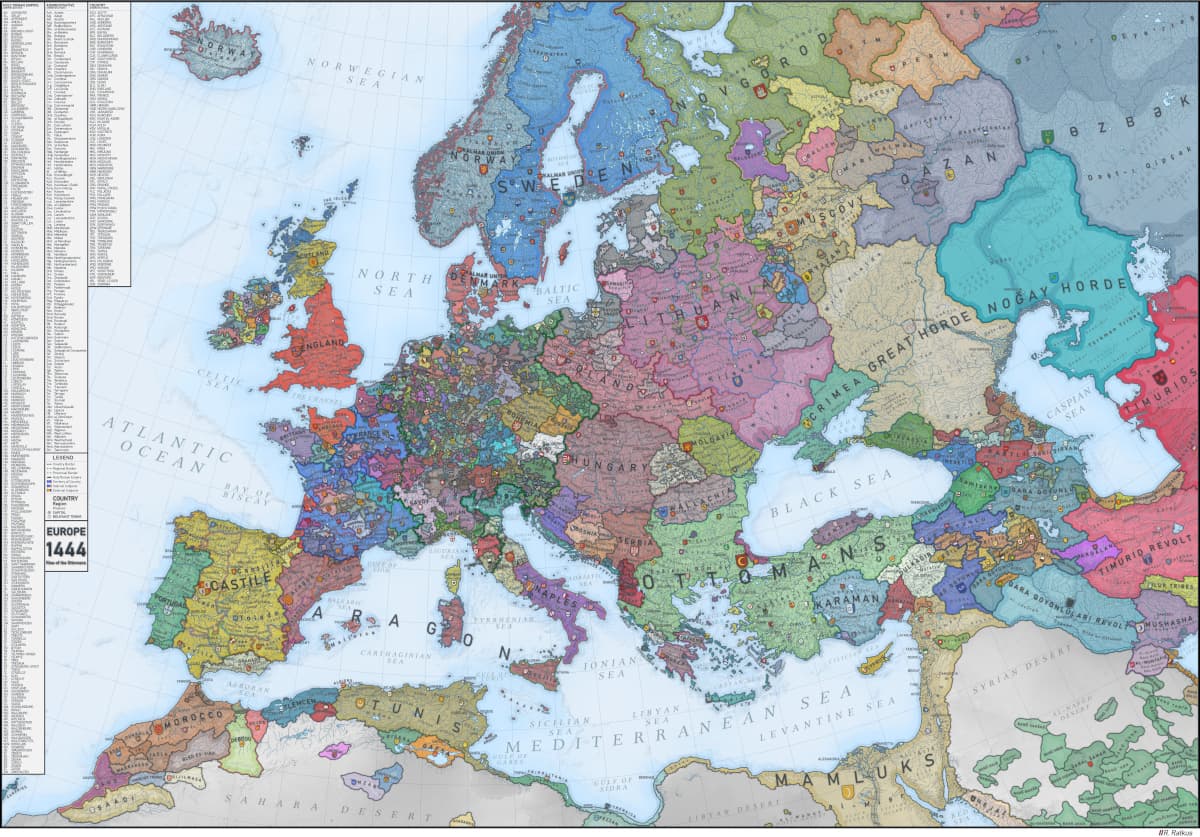
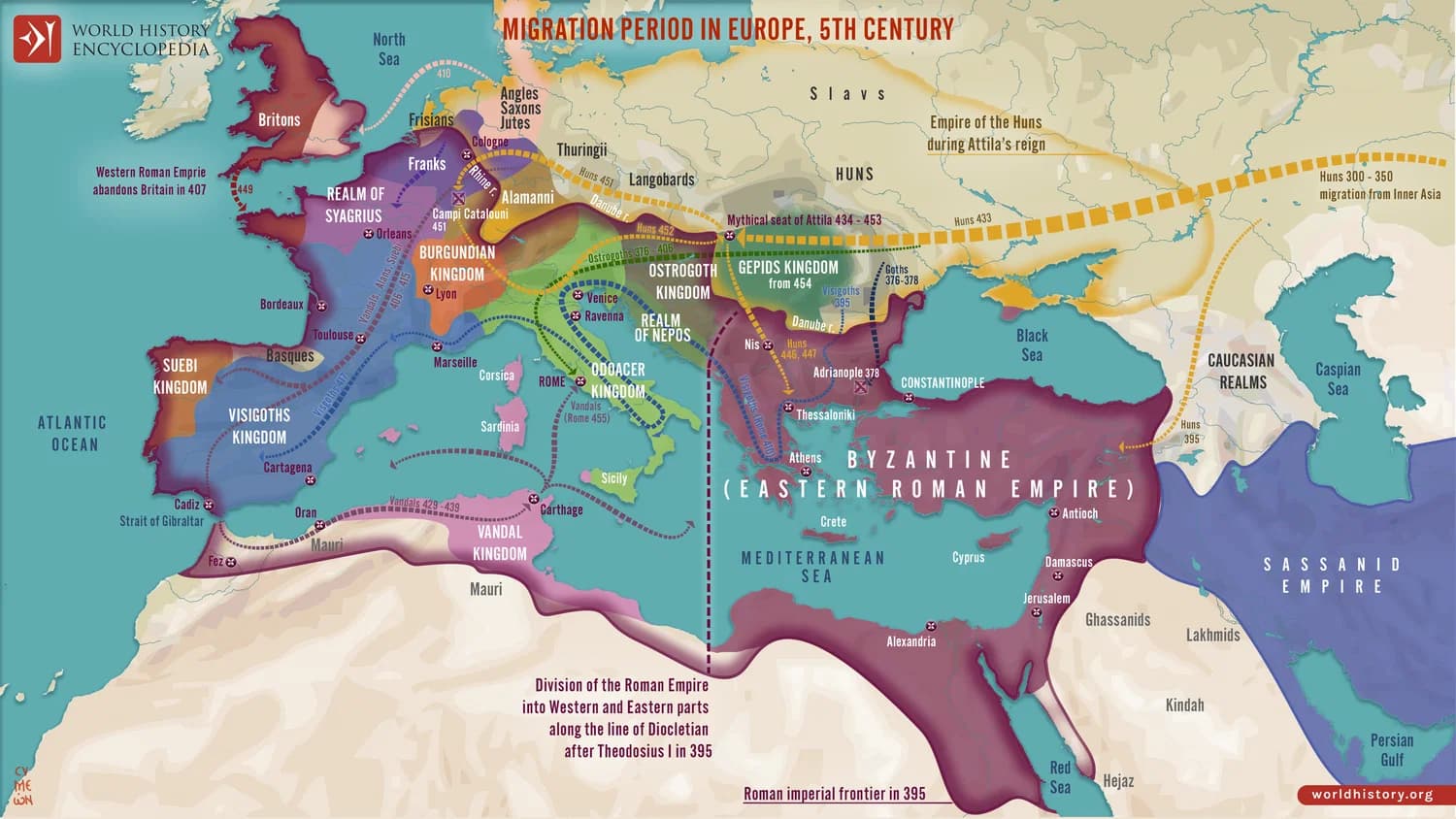
The medieval period in Europe, commonly dated from approximately 500 to 1500 CE, is known as the Middle Ages. For much of this era, Europe was fragmented into small, decentralized Christian kingdoms governed through feudal systems. Political authority rested with kings, nobles, and the Church, while land was controlled by lords and worked by peasants bound by service and protection.
Over time, especially in the late Middle Ages, power consolidated in emerging states such as France, England, and Spain. Ideas of sovereignty—where rulers exercised final authority within defined territories—grew stronger, weakening older feudal hierarchies. Legal traditions also evolved, with documents like England's Magna Carta (1215) establishing early limits on royal power.
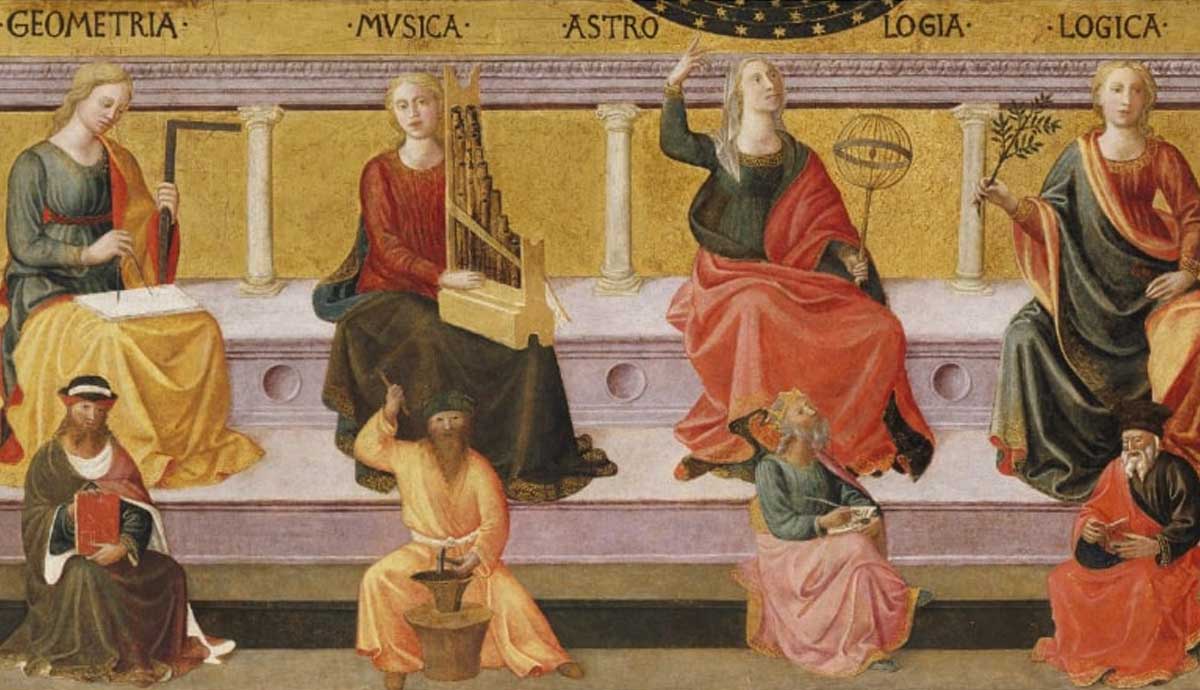
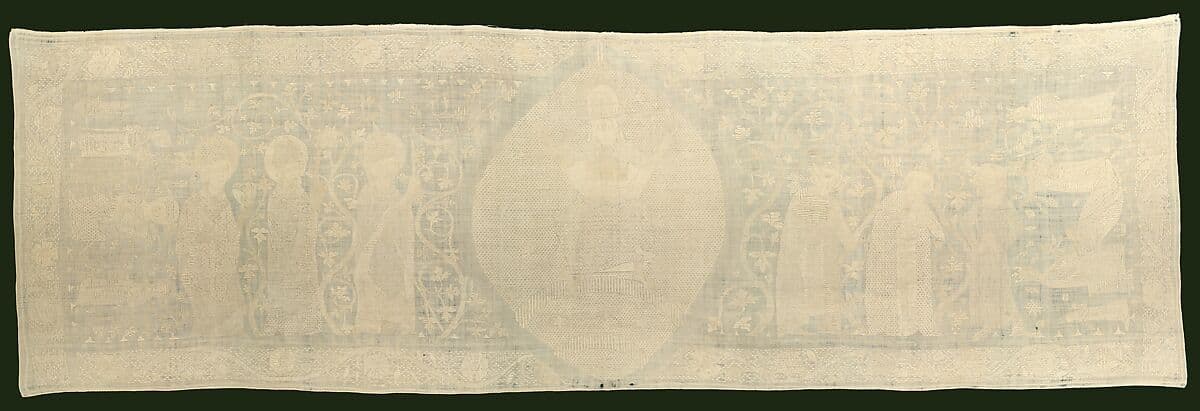
Medieval society was significantly shaped by Christianity, which had a large influence on law, education, and the arts. Romanesque and Gothic churches, illuminated manuscripts, and religious iconography served spiritual and educational purposes. At the same time, the expansion of towns and trade created new economic and cultural life alongside older tribal traditions.
1440 Findings
Hours of research by our editors, distilled into minutes of clarity.




.png&w=3840&q=75)

Explore World History
Weave together the many narratives of world history with our highly curated and expanding selection of diverse, fascinating resources designed to showcase the breadth and richness of Earth's story, from the earliest traces of human civilization to the dramatic developments of contemporary cultures.