Internal Revenue Service
Overview
The Internal Revenue Service, or IRS, is a division of the US Treasury Department that specializes in federal taxes. It enforces the Internal Revenue Code—Title 26 of the US Code, a compilation of federal statutes—and, effectively, oversees tax collection. In 2024, the IRS collected roughly $5T in tax revenue.
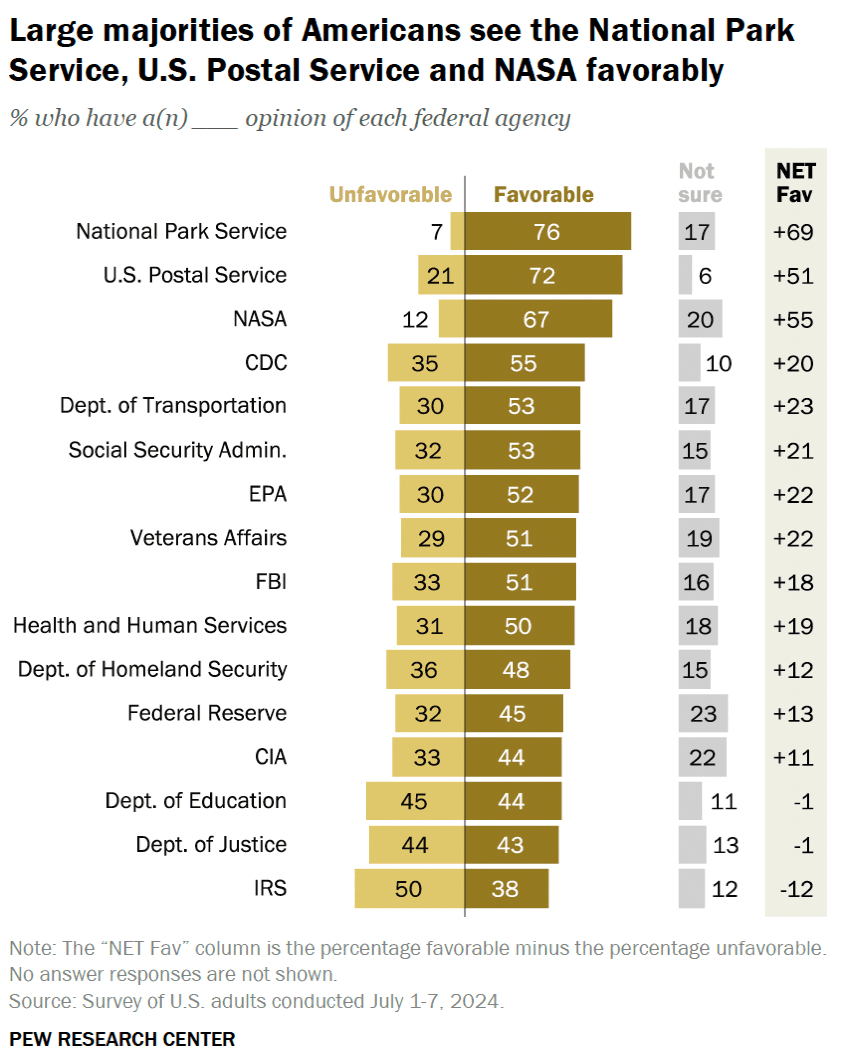
Given its role in diverting household income streams, it also has a bad reputation. Half of Americans had an "unfavorable view" of the IRS as of 2024. In a ranking of 16 well-known federal agencies by popularity that year, the IRS came in dead last, behind both the Department of Justice and the Department of Education.
Specifically, the IRS is responsible for determining, assessing, and collecting internal revenue in the US, such as personal and corporate income taxes; excise, estate, and gift taxes; and payroll taxes for the nation's Social Security system (state governments are responsible for collecting state taxes). These taxes help pay for government spending on everything from maintaining roads to funding the military.
1440 Findings
Hours of research by our editors, distilled into minutes of clarity.




Explore Business & Finance
The United States is home to more than 33 million businesses, the vast majority of which are small businesses, with millions being created (and others closing shop) every year. These businesses often rely on loans, provide the goods and services that keep the economy flowing, and sometimes even grow large enough to enter public markets or provide private investment opportunities. Explore key topics central to business and finance, from the role of the Federal Reserve to how initial public offerings work, how millions of American students finance higher education, and more.
Featured Topics
- 401(k)
- Amazon
- Bankruptcy
- Bitcoin
- Bonds
- Capital Gains
- College Tuition
- Consulting
- Creator Economy
- Credit Unions
- Federal Reserve
- Gig Economy
- Individual retirement accounts
- Inflation
- Initial Public Offerings
- Investment Banking
- Labor Unions
- Life Insurance
- Macy’s
- Minimum Wage
- Mutual Funds
- OpenAI
- Startups
- Stock Market
- Student Debt
- US Currency
- Venture Capital
- Wall Street
- Warren Buffett
- Y Combinator