Prices can still feel high even if inflation is slowing
This is partly because a recent spike in inflation raised prices permanently, so even though the pace of price growth has slowed, prices have still gone up for good.
Hours of research by our editors, distilled into minutes of clarity.
This is partly because a recent spike in inflation raised prices permanently, so even though the pace of price growth has slowed, prices have still gone up for good.
Keep seeing inflation in the news, but don't have a great grasp on what it means or how it works? This overview from 1440 breaks down how economists think about inflation, what it means for the average consumer, and how governments attempt to keep rising prices in check through various policies.
Sustained periods of inflation are often caused by central bank policies including low interest rates or increased money supply. With more money chasing the same number of goods and services, prices tend to rise and the value of a single dollar drops.
This was just after the Revolutionary War. Both World Wars also brought double-digit inflation. It's worth noting that exact inflation rates in early America are difficult to calculate precisely.
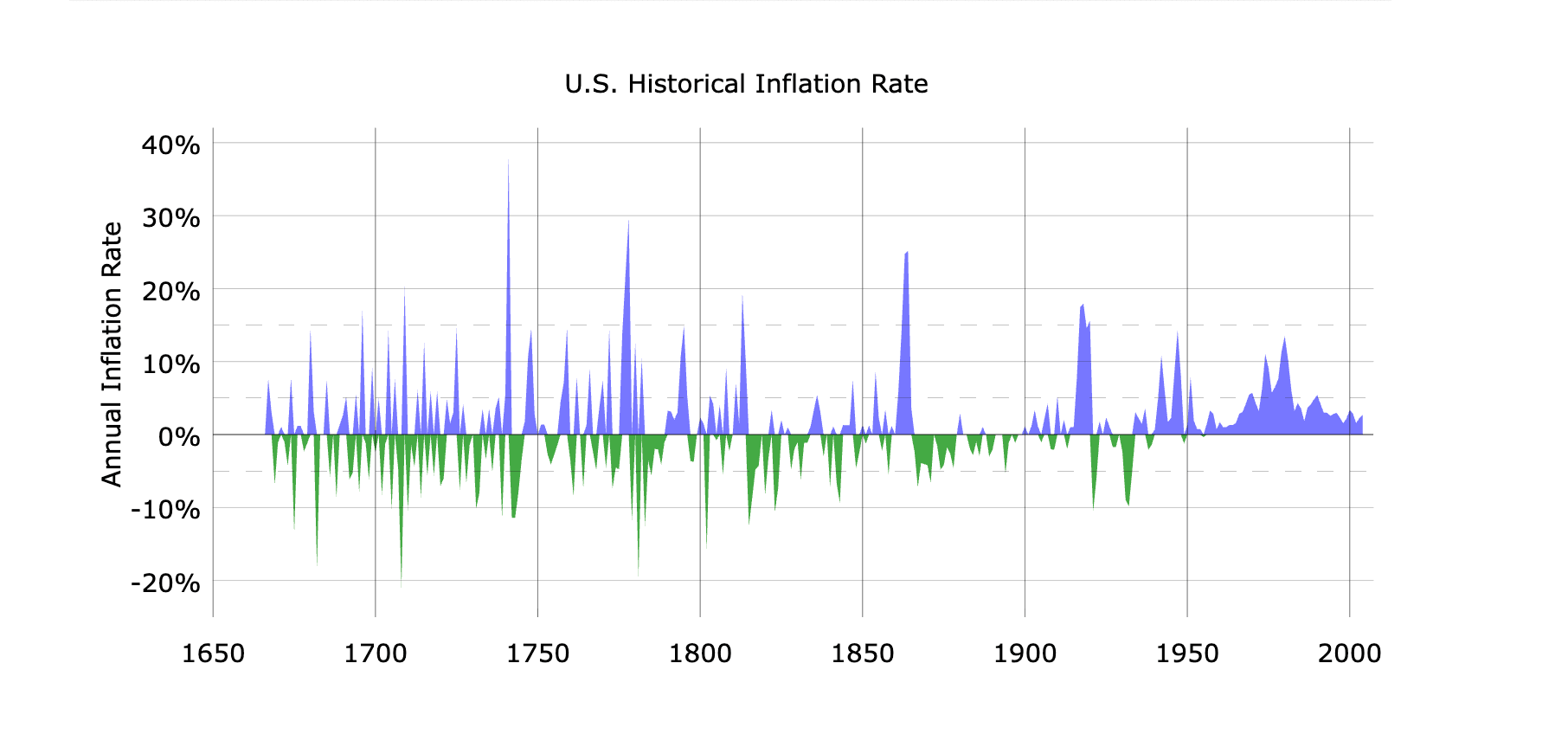
The value of a dollar hasn’t been consistent throughout history. An inflation calculator lets you compare the value of dollars from any two years over the past four centuries.
While controlling a complex and dynamic economy is difficult, interest rates—more specifically, the rate at which banks lend each other money overnight—are a powerful tool. Generally, raising the rate makes purchases more expensive and cools an overheated economy.
Because economies are complex systems, a wide variety of issues influence this balance—including some things generally considered to be positive, like rising wages.
It’s an arbitrary number originating from an offhand comment made by a New Zealand policymaker. The real objective is to maintain predictable prices for businesses and families to plan around while avoiding the dangers of deflation.
Disinflation happens when prices are still going up, just at a slower rate. Prolonged disinflation is also often accompanied by a recession, making it painful for consumers.
A central bank itself does not mean significant inflation will occur, but economists generally point to factors like two world wars and the printing of money to finance the US federal deficit as primary drivers of price increases.
While the details are not fully agreed upon, many economists point to the Federal Reserve's tightening of the money supply as a prime culprit, leading to a significant deflationary spiral.

The United States is home to more than 33 million businesses, the vast majority of which are small businesses, with millions being created (and others closing shop) every year. These businesses often rely on loans, provide the goods and services that keep the economy flowing, and sometimes even grow large enough to enter public markets or provide private investment opportunities. Explore key topics central to business and finance, from the role of the Federal Reserve to how initial public offerings work, how millions of American students finance higher education, and more.