Generative AI

Overview

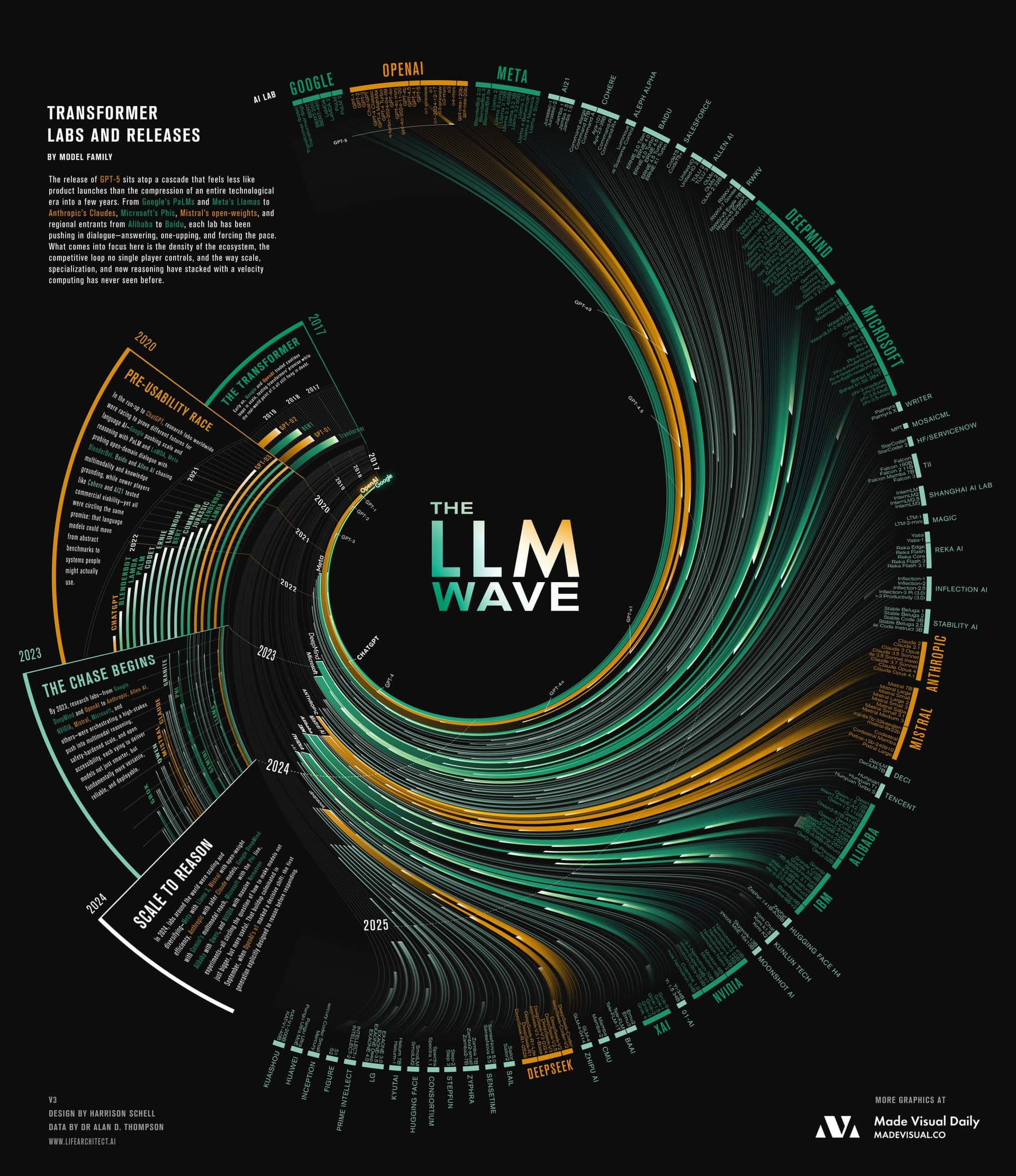
Generative AI is a form of artificial intelligence that can mimic human imagination and creativity. The term "generative" refers to models’ ability to generate original content, including text, video, audio, and more.

1440 Findings

Hours of research by our editors, distilled into minutes of clarity.

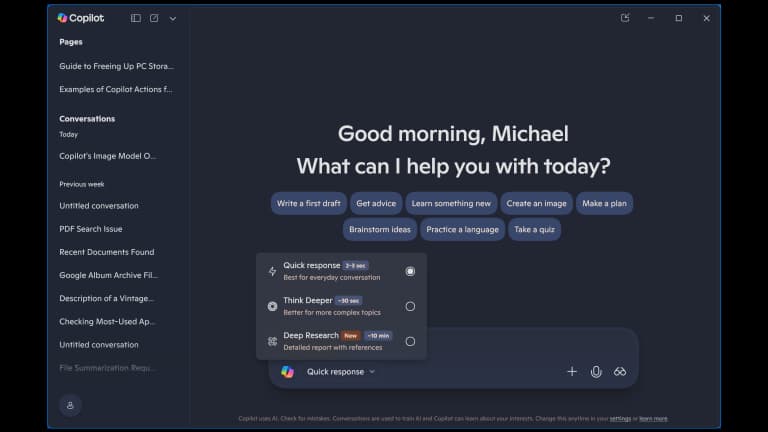
  • Microsoft has integrated AI across its software products with Copilot

    It utilizes an underlying model from OpenAI—makers of ChatGPT—to assist users in creating documents, writing code, locating files, and more across Windows, Microsoft 365, Bing search and WhatsApp on desktop and mobile devices. Copilot Voice and Vision offer accessibility features for users who prefer not to use mouse/keyboard navigation.

  • Neural networks mimic the structure and behavior of real physical systems

    Early generative AI systems were inspired by scientific models such as the Ising model, which explains how atoms interact with one another and align in magnets. As these networks have expanded, their behavior has more closely resembled that of quantum fields, enabling them to be used in exploring complex particle physics interactions.

  • Meet the investor running his life with AI

    Daniel Ha is a venture capitalist who built a suite of AI agents to boost his productivity, both professionally and personally. At his VC firm, a troupe of agents gathers data on startups and analyzes it from competing perspectives to produce a confidence score. When his dad was diagnosed with cancer, Ha used an oncology-trained AI to help him understand the condition.

  • How will AI affect the workforce?

    According to a recent Goldman Sachs study, about two-thirds of current occupations over the next decade could be impacted by generative AI, potentially affecting up to 300 million jobs. While individuals may fear that companies will use generative AI to do their jobs, economists instead see enormous potential to boost productivity. The study predicts that productivity has the potential to nearly double its rate from 2010–2018 thanks to the incorporation of generative AI. Read this article to learn more about global productivity trends over the years and the varied ways in which AI may affect both productivity and the workforce at large.

  • AI is learning to be funny

    Experts consider humor a particular challenge for large language models to learn, given the skill's complex linguistic play. In an experiment, a stand-up comedian performed half AI-produced jokes, and half human-produced jokes, to no discernible difference in the audience's laughter.

  • Will AI kill us all? A debate

    As AI becomes a bigger part of our lives, what does that mean for the future of humanity? The podcast Entanglements hosts a pessimistic former OpenAI employee and an optimistic Princeton professor to discuss whether AI brings dystopia or a brighter future.

  • Which AI chatbot is everyone's favorite?

    From OpenAI's ChatGPT to rivals like Elon Musk's Grok and Google Gemini, it feels like chatbots are everywhere now. Some of them, though, are newer and less-developed than others, and all of them have different proficiencies. This leaderboard has collected more than 400,000 votes to rank each chatbot in order of preference, and you can also add your own vote to the mix.

Next page

Explore Science & Technology

Since our ancient human relatives began using stone tools to perform tasks, humans have harnessed scientific knowledge and new technologies to expand the boundaries of our understanding of the natural world. From quantum computing and microplastics to artificial intelligence and memory, explore these topics and more with our concise yet informative overviews and expert-curated resources.

View All Science & Technology