American Express
Overview
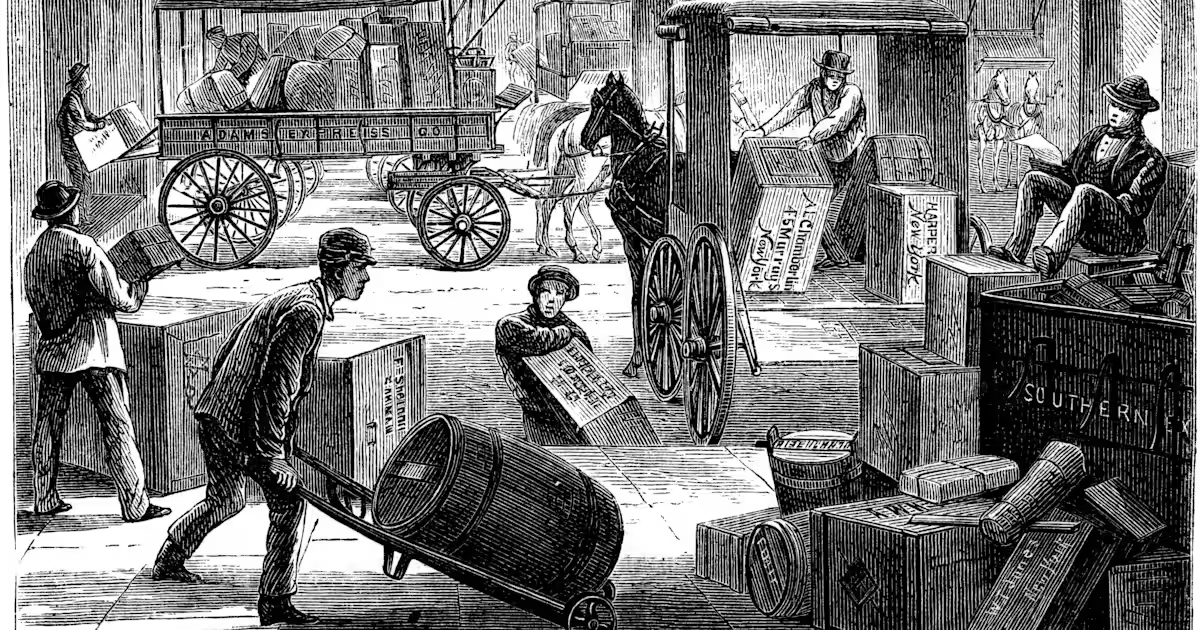
Named for its early express shipping services, American Express is a credit card and bank holding company. As of 2025, American Express was the second-largest credit card issuer in terms of US purchase volume and had a market capitalization exceeding $200B.
American Express was founded in 1850 when Henry Wells, William Fargo, and John Butterfield decided to consolidate their rival express shipping rail services. By 1862, American Express operated more than 10,000 miles of railway from the East Coast into Minnesota and Missouri. Over time, American Express expanded its rail services into accompanying travel services, like traveler's checks and money orders, until it began focusing entirely on its financial business in 1918.
Since launching its first charge card in 1958, American Express has become known for offering expansive perks and rewards to cardholders—from access to airport lounges to dining credits—in order to attract affluent customers.
1440 Findings
Hours of research by our editors, distilled into minutes of clarity.



Explore Business & Finance
The United States is home to more than 33 million businesses, the vast majority of which are small businesses, with millions being created (and others closing shop) every year. These businesses often rely on loans, provide the goods and services that keep the economy flowing, and sometimes even grow large enough to enter public markets or provide private investment opportunities. Explore key topics central to business and finance, from the role of the Federal Reserve to how initial public offerings work, how millions of American students finance higher education, and more.
Featured Topics
- 401(k)
- Amazon
- Bankruptcy
- Bitcoin
- Bonds
- Capital Gains
- College Tuition
- Consulting
- Creator Economy
- Credit Unions
- Federal Reserve
- Gig Economy
- Individual retirement accounts
- Inflation
- Initial Public Offerings
- Investment Banking
- Labor Unions
- Life Insurance
- Macy’s
- Minimum Wage
- Mutual Funds
- OpenAI
- Startups
- Stock Market
- Student Debt
- US Currency
- Venture Capital
- Wall Street
- Warren Buffett
- Y Combinator