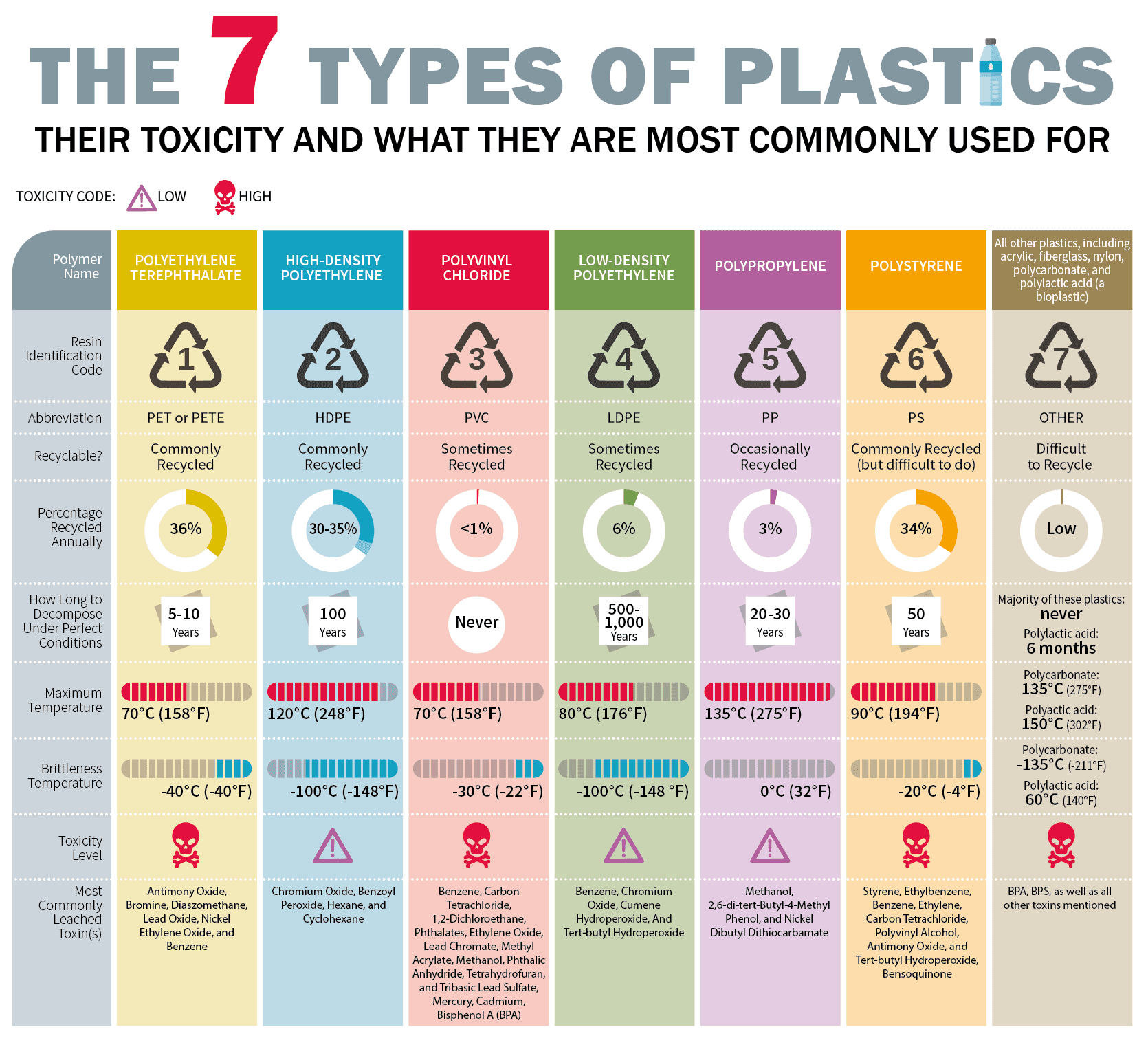
Posted by Marco Daniel MachadoJun 11Learn about the seven types of plastic, including their recyclability, toxicity, health risks, and common uses.Show 7 more findings ZoomThe 7 Types of Plastics You Should AvoidAlan's Factory Outlethttps://alansfactoryoutlet.com/infographics/the-7-types-of-plastics-you-should-avoid/?srsltid=AfmBOorY7QhP4IrJKqz0TtO73_10RxcwNKOZJRdTXeBbkyPy1DjiJj4O
Posted by Teddy BurkhardtJul 8, 2022Here's how the seven types of plastics fare in the recycling processTo help you make better-informed decisions about the products that you buy, here's a simple explanation of the seven different types of plastic, how they differ, and their impact on the environment. ZoomHere's how the seven types of plastics fare in the recycling processhttps://www.plasticsforchange.org/blog/different-types-of-plastic
Posted by Teddy BurkhardtJul 7, 2022A step-by-step guide to the plastic recycling processEverything you wanted to know about how plastic is recycled, the companies that collect and recycle plastic, where you can recycle, and much more. ZoomA step-by-step guide to the plastic recycling processhttps://www.bpf.co.uk/plastipedia/sustainability/how-is-plastic-recycled-a-step-by-step-guide-to-recycling.aspx
Posted by Teddy BurkhardtJul 7, 2022The history of natural and synthetic plasticsFrom cheap toys to woolly jumpers, plastic can be found in more products than many people realize. From a chemist's perspective all these things are made of the same class of materials: Polymers. And the distinction between which ones we happen to call "plastics" and which ones we don't is fairly arbitrary. ZoomThe history of natural and synthetic plasticsBBChttps://www.bbc.com/news/magazine-27442625
Posted by Teddy BurkhardtJul 7, 2022A guide to avoiding single-use plasticsHere’s everything you need to know about the most ubiquitous (and avoidable) kind of plastic waste: single-use plastics, the kind made to be tossed in mere minutes ZoomSingle-Use Plastics 101https://www.nrdc.org/stories/single-use-plastics-101
Posted by Teddy BurkhardtJul 7, 2022How plastic manufacturing could be sustainable againFrom polymers to nurdles, learn how plastic is created and what we can do to slow the lasting repercussions this material will have on both our planet and our lives. ZoomHow plastic manufacturing could be sustainable againNational Geographichttps://education.nationalgeographic.org/resource/science-101-plastics
Posted by Meher QazilbashJan 13, 2025What percentage of the world’s plastic waste actually gets recycled?Despite growing awareness of the world’s plastic waste challenges, the numbers showing how much of the world’s plastic waste actually gets recycled are abysmal. Only 9% of the world’s plastic waste is properly recycled, and a significant portion remains landfilled, mismanaged, or incinerated. Read this article for further analysis of why this is and what can be done in the future to better manage plastic waste. ZoomVisual Capitalisthttps://www.visualcapitalist.com/how-much-plastic-gets-recycled/
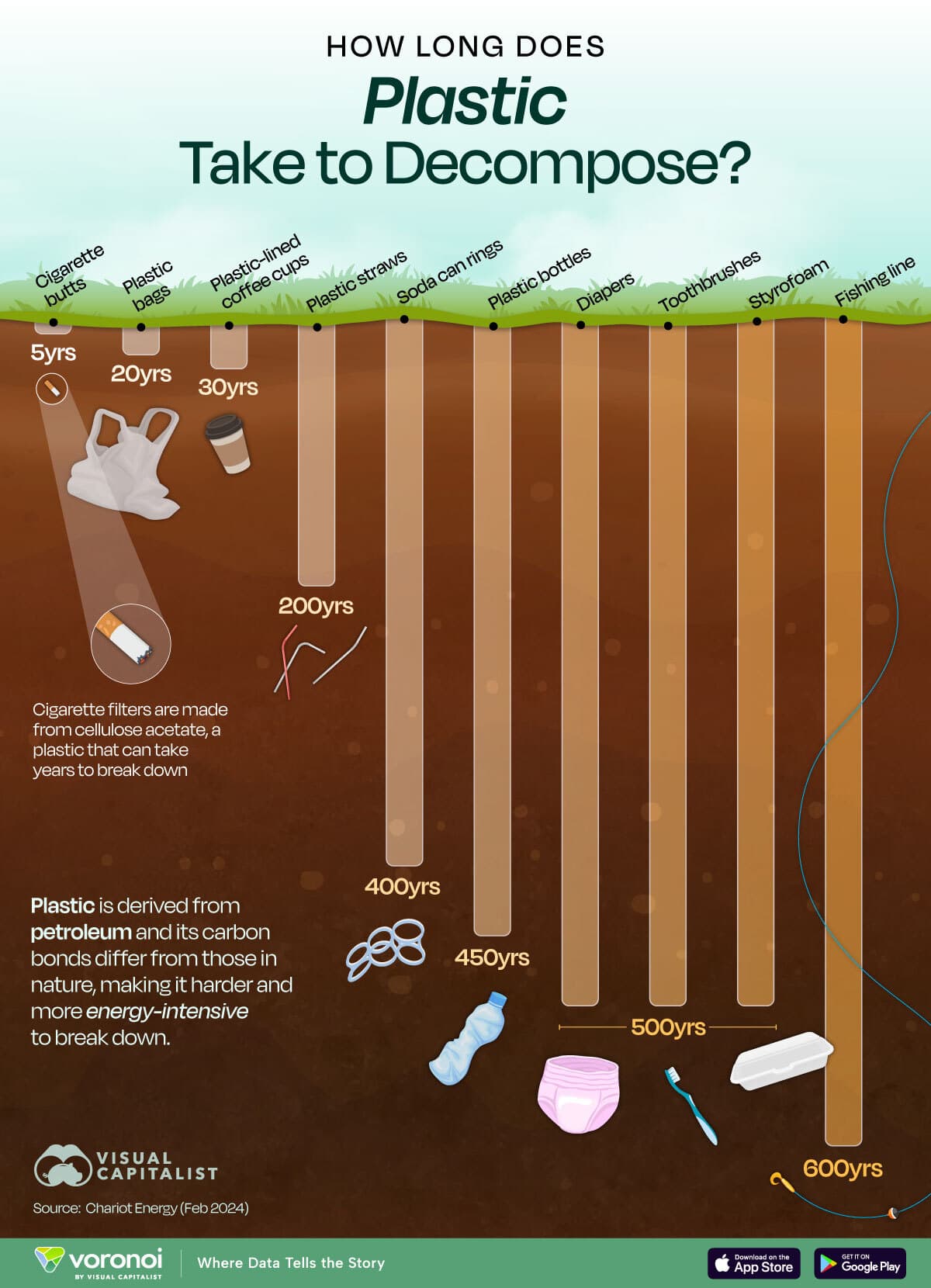
Posted by Marco Daniel MachadoSep 3View the estimated decomposition times for various everyday plastic products, which often fragment into smaller microplastics as molecular bonds are weakened by sunlight.Show 3 more findings ZoomInfographic: How Long Does Plastic Take to Decompose?Visual Capitalisthttps://www.visualcapitalist.com/infographic-how-long-does-plastic-take-to-decompose/
Posted by Teddy BurkhardtJul 8, 2022The global plastic crisis in imagesFor decades we have relied on plastics to keep us safe, insulate our homes, and make sure our food stays fresh. But when does plastic’s life come to an end? ZoomThe global plastic crisis in imagesUnited Nationshttps://www.un.org/en/exhibits/exhibit/in-images-plastic-forever
Posted by Marco Daniel MachadoJul 2BPA-free plastics may still pose health risks because they often contain other structurally similar chemicals.Show 3 more findings 3:58The Dangerous Chemicals In Your Plastic PackagesInsider Sciencehttps://www.youtube.com/watch?v=2_6R0fhGtHQ
Posted by Teddy BurkhardtJul 7, 2022How existing technology could prevent nearly 80% of plastic pollutionMore than 28 million tons of plastic enters the environment each year, where it harms animals and damages habitats. A study co-authored by researchers at The Pew Charitable Trusts found that this flow can be reduced by nearly 80% in the next 20 years using existing waste management and recycling technology. ZoomHow existing technology could prevent nearly 80% of plastic pollution https://pew.org/32EQSc6
Posted by Teddy BurkhardtJul 7, 2022Explore the UN’s interactive guide to global plastic pollutionAround the world, 1 million plastic drinking bottles are purchased every minute, while 500 billion single-use plastic bags are used worldwide every year. In total, half of all plastic produced is designed to be used only once—and then thrown away. ZoomExplore the UN’s interactive guide to global plastic pollutionhttp://unep.org/interactive/beat-plastic-pollution/
Posted by Teddy BurkhardtJan 15, 2025The amount of plastic chemicals in 300 everyday Bay Area foodsFood production is more complicated than it appears, and manufacturing, packaging, and shipping processes can add significant substances to your food. This massive project compiled data on 300 samples of foods delivered to the San Francisco area, testing for the presence of 18 different kind of plastic. Learn how to read the data here with its helpful guides and then explore the table yourself. ZoomPlasticListhttps://www.plasticlist.org/
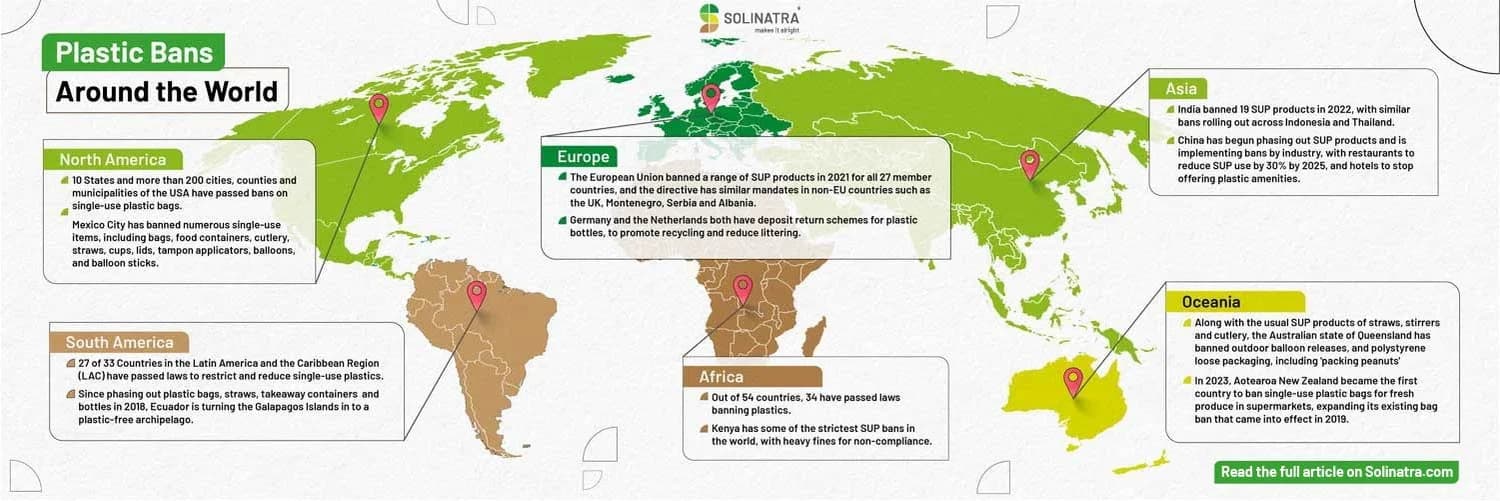
Posted by Marco Daniel MachadoAug 7As of 2023, more than 130 nations have enacted bans or restrictions on plastic items, starting with Bangladesh's ban on plastic bags in 2002.Show 3 more findings ZoomPlastic Bans Around the World — SolinatraSolinatrahttps://www.solinatra.com/news/plastic-bans-around-the-world
Posted by Marco Daniel MachadoFeb 20Most plastics are not biodegradable because breaking their chemical bonds requires temperatures lethal to most microbes, and these organisms have not been exposed to plastic long enough to evolve the necessary enzymes.Show 3 more findings 5:55The smallest solution to one of our biggest problems - Tierney Thys & Christian SardetTED-Edhttps://www.youtube.com/watch?v=-m0YaE8uKcg
Posted by Teddy BurkhardtJun 30Where the US's plastic recycling is discardedThe US ships over a million tons of plastic waste overseas each year. A short video explainer from USA Today shows a breakdown of what really happens to America's recyclables. 2:58Where the US’s plastic recycling is discardedUSA TODAYhttps://www.youtube.com/watch?v=KTcQB323D08
Posted by Marco Daniel MachadoJul 4, 2025Most biodegradable plastics don’t break down in everyday conditionsDespite their eco-friendly name, biodegradable plastics often require industrial composting, which most areas lack, to decompose the uncommon compounds found in them. This means they may linger in landfills or contaminate conventional plastics in recycling bins. ZoomIs Biodegradable Plastic Really a Thing? (Published 2024)The New York Timeshttps://www.nytimes.com/2024/05/20/climate/ask-nyt-climate-biodegradable-plastic.html?unlocked_article_code=1.Tk8.CoZz.1bTdNR1wi1fA&smid=url-share
Posted by Jeremy CronigApr 27The plastics industry spent decades promoting recycling while privately doubting it would ever workThis FRONTLINE investigation reveals that plastic makers publicly championed recycling for years despite internal doubts about its viability, and that no more than 10% of the plastic ever produced has been recycled. 53:16Plastic Wars (full documentary) | FRONTLINEhttps://www.youtube.com/watch?v=-dk3NOEgX7o
Posted by Marco Daniel MachadoApr 28Many plastic products are molded from melted pellets called nurdles, which are made from ethylene and propylene extracted from crude oil.Show 2 more findings 5:05How Plastic is MadeFactorahttps://www.youtube.com/watch?v=Y7e2yHxZl3A
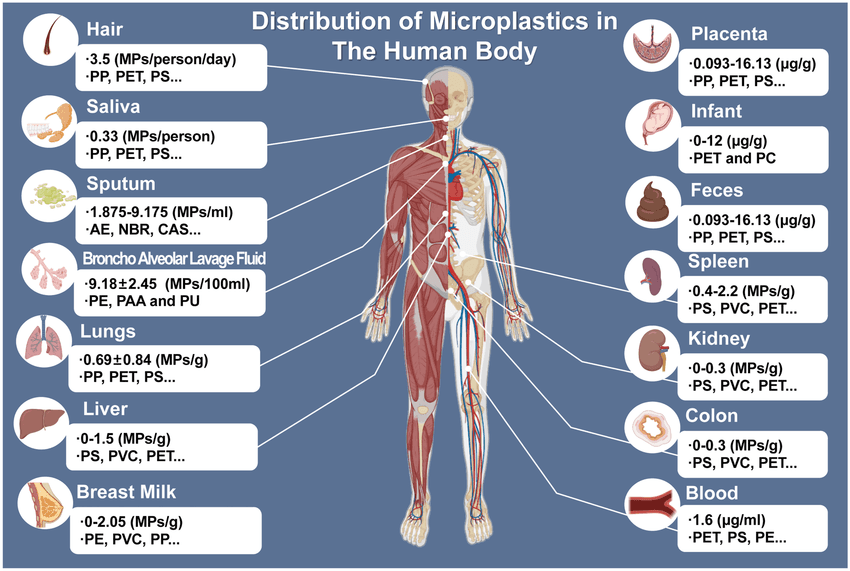
Posted by Marco Daniel MachadoAug 7Research shows that microplastics and nanoplastics can accumulate in major arteries, and patients with these deposits are significantly more likely to suffer heart attacks, strokes, or death.Show 2 more findings ZoomUnderstanding the Link Between Microplastics and Heart DiseaseNewYork-Presbyterianhttps://www.nyp.org/healthmatters/understanding-the-link-between-microplastics-and-heart-disease
Posted by Teddy BurkhardtJul 7, 2022A guide to single-use plastic bans across the USOver 100 cities and municipalities in the US have banned Expanded Polystyrene (EPS) in government facilities including New York City, Los Angeles, Seattle, San Diego and Miami Beach, Florida. Here, maps illustrate what US states have bans in place. ZoomA guide to single-use plastic bans across the UShttps://footprintusfoundation.org/single-use-plastic-legislation/
Posted by Marco Daniel MachadoJul 4, 2025The prevalence of microplastics came from plastic’s affordability and versatilityMicroplastics' durability and overuse have led to massive pollution that overwhelms the planet's ecosystems. Avian, terrestrial, and marine life have been observed to contain microplastics in their bodies, but reverting to paper, cotton, and other materials in manufacturing also brings environmental challenges. 9:02Plastic Pollution: How Humans are Turning the World into PlasticKurzgesagt – In a Nutshellhttps://www.youtube.com/watch?v=RS7IzU2VJIQ
Posted by Teddy BurkhardtJul 7, 2022How chemical recycling could create 'infinite' plasticThe way we normally recycle plastics is a downward spiral of waste and degraded materials, but there is another option—turning plastic back into the oil it was made from. ZoomThe world’s first ‘infinite’ plasticBBChttps://www.bbc.com/future/article/20210510-how-to-recycle-any-plastic
Posted by Teddy BurkhardtJun 30Microplastics 101: What we know about the contaminants invading our bodiesFifty-one trillion particles of microplastics float in our oceans. Yet there is very little science of how this affects our health. This quick 2-minute video explains the dangers of microplastics. 1:57Microplastics 101: What we know about the contaminants invading our bodieshttps://www.youtube.com/watch?v=aiEBEGKQp_I
Posted by Teddy BurkhardtJul 7, 2022Visualizing the enormity of plastic waste compared to global landmarksThe team at Reuters Graphics visualizes the world’s addiction to plastic bottles. Around the world, almost 1 million plastic bottles are purchased every minute. The illustrations included in this visual explainer show what that pile of plastic would look like if it was collected over longer periods of time and how large the piles would be compared to famous landmarks. ZoomVisualizing the enormity of plastic waste compared to global landmarksReutershttps://graphics.reuters.com/ENVIRONMENT-PLASTIC/0100B275155/index.html
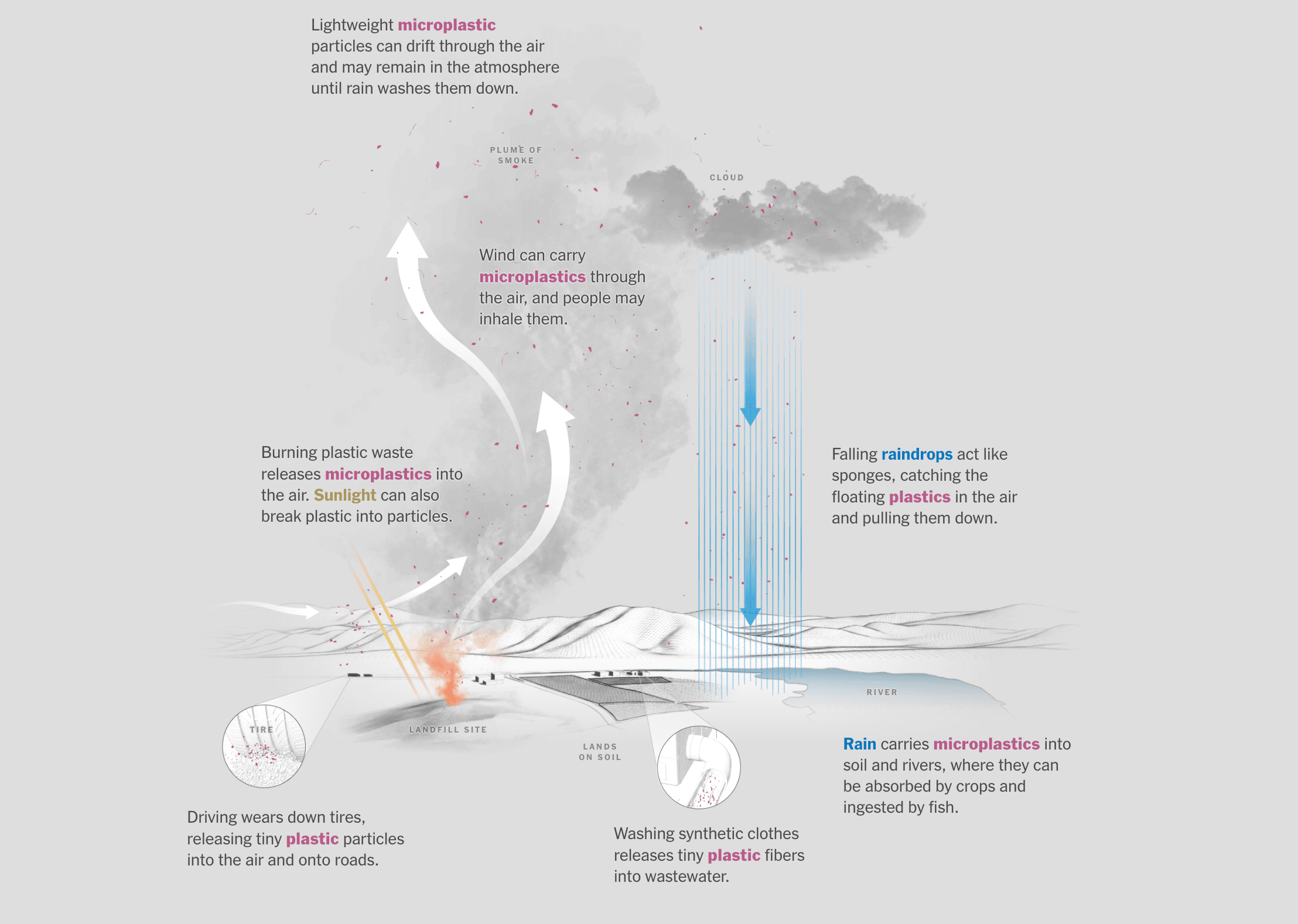
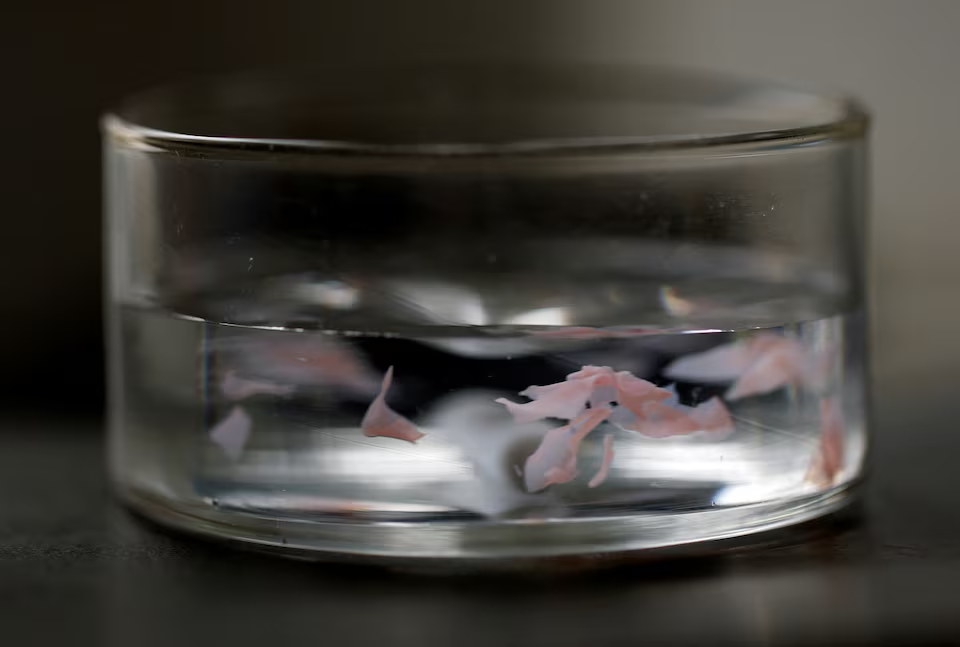
Posted by Marco Daniel MachadoJul 20Microplastics have been found everywhere there is liquid or vapor water, from the oceans and tropical waters to polar ice and the air we breathe, posing growing risks to wildlife and ecosystems.Show 2 more findings ZoomMicroplastics | Marine Debris Programdot gov iconhttps icon(link is external)(link is external)NOAAhttps://marinedebris.noaa.gov/what-marine-debris/microplastics
Posted by Teddy BurkhardtJul 7, 2022From soil to beer, microplastic pollution is all around usMarine plastic pollution has been studied for decades, but the extent and effects of plastic pollution elsewhere is only just beginning to be explored. ZoomIt’s not just the oceans: Microplastic pollution is all around usCNNhttps://www.cnn.com/2018/04/22/health/microplastics-land-and-air-pollution-intl/index.html
Posted by Marco Daniel MachadoMay 4How disruptions in oil markets can drive up the price of everyday goodsMost types of plastic are made from polymers derived from chemicals produced by the processing and refining of crude oil and natural gas. Spikes in the cost of either fossil fuel raise the cost of wrappings, tubs, and other plastic containers for products. ZoomWhy the Iran war is making everyday shopping more expensiveReutershttps://www.reuters.com/graphics/IRAN-CRISIS/OIL-CONSUMERS/akpeyynmypr/?user_id=68210e0b96ac40707a0cfdc9
Posted by Marco Daniel MachadoJul 4, 2025Microplastics are infiltrating the human body with unclear but concerning effectsScientists have linked microplastics to immune system damage, hormone disruption, inflammatory diseases, and even cancer—yet most of their health impacts remain unknown due to limited research. Studies suggest we ingest about a credit card's worth of plastic weekly. 8:30What Do Microplastics Do To My Body? | National GeographicNational Geographichttps://www.youtube.com/watch?v=vTRLM8wQG0Y
Posted by Marco Daniel MachadoJul 4, 2025A UN-led treaty may establish rules to phase out plastic globallyWith support from more than 175 nations, a treaty led by the United Nations is being negotiated to establish enforceable global rules for plastic production and pollution by 2025. Negotiations come as the total amount of plastic in the ocean has increased by 50% from 2017 to 2022. ZoomGlobal Plastics Treaty | Pages | WWFhttps://www.worldwildlife.org/pages/global-plastics-treaty
Posted by Teddy BurkhardtJul 7, 2022How Big Oil misled the public into believing plastic would be recycledAn NPR and PBS Frontline investigation reveals how the oil and gas industry used the promise of recycling to sell more plastic, even when they knew it would never work on a large scale. ZoomHow Big Oil misled the public into believing plastic would be recycledNPRhttps://www.npr.org/2020/09/11/897692090/how-big-oil-misled-the-public-into-believing-plastic-would-be-recycled
Posted by Teddy BurkhardtJun 30How billiard balls catalyzed the 'Plastics Century'For centuries, billiard balls were made of ivory from elephant tusks. But when excessive hunting caused elephant populations to decline, they began to look for alternatives: celluloid, which would become known as the first plastic. 5:34A brief history of plasticTED-Edhttps://www.youtube.com/watch?v=9GMbRG9CZJw
Posted by Marco Daniel MachadoJul 4, 2025Plastic's history began with an inventor seeking a $10,000 prize offerIn 1869, the first synthetic polymer—celluloid—was created as a substitute for ivory in billiard balls. It became the historical catalyst for the eventual manufacturing of plastics everywhere as an alternative to the depletion of other natural resources, including tortoiseshell and horns. ZoomHistory and Future of PlasticsScience History Institutehttps://www.sciencehistory.org/education/classroom-activities/role-playing-games/case-of-plastics/history-and-future-of-plastics/
Posted by August MoonMay 28Research shows that over 1,000 metric tons of microplastics fall on national parks every year—equivalent to 120 million bottles of water.Show 2 more findings 1:09We’re Breathing Microplastics1440 Originalshttps://www.youtube.com/shorts/cQJmf1LvzVo
Posted by Teddy BurkhardtJul 7, 2022Countries tried to curb plastic waste, but the US keeps shipping moreData show that American exporters continue to ship plastic waste overseas, often to poorer countries, even though most of the world has agreed to not accept it. ZoomCountries Tried to Curb Trade in Plastic Waste. The U.S. Is Shipping More. (Published 2021)The New York Timeshttps://www.nytimes.com/2021/03/12/climate/plastics-waste-export-ban.html
Posted by Marco Daniel MachadoJul 20Despite being derived from crude oil, which itself comes from organic material, synthetic plastic isn't biodegradable because it hasn't existed long enough for microbes to have developed mechanisms to break it down.Show 2 more findings ZoomWhy Doesn't Plastic Biodegrade?Live Sciencehttps://www.livescience.com/33085-petroleum-derived-plastic-non-biodegradable.html
Posted by Marco Daniel MachadoNov 19, 2025After swallowing 23 pieces of plastic, seabirds experience a 90% death rateResearchers found that this threshold is also met when marine mammals ingest 29 pieces and when sea turtles consume approximately 405 pieces. Almost half of the sea turtles, a third of the seabirds, and one in ten of the marine mammals studied had eaten plastic.From seabirds to sea turtles: the fatal toll of plastic revealedBBChttps://www.bbc.com/news/articles/cr5eyjd2zz7o?at_campaign=rss&at_medium=RSS
Posted by Marco Daniel MachadoAug 7Microplastics have been found across all of Earth's depths and altitudes, from plastic debris in the Mariana Trench to fragments found in snow samples near the summit of Mount Everest.Show 1 more finding ZoomMicroplastic pollution found near summit of Mount EverestThe Guardianhttps://www.theguardian.com/environment/2020/nov/20/microplastic-pollution-found-near-summit-of-mount-everest
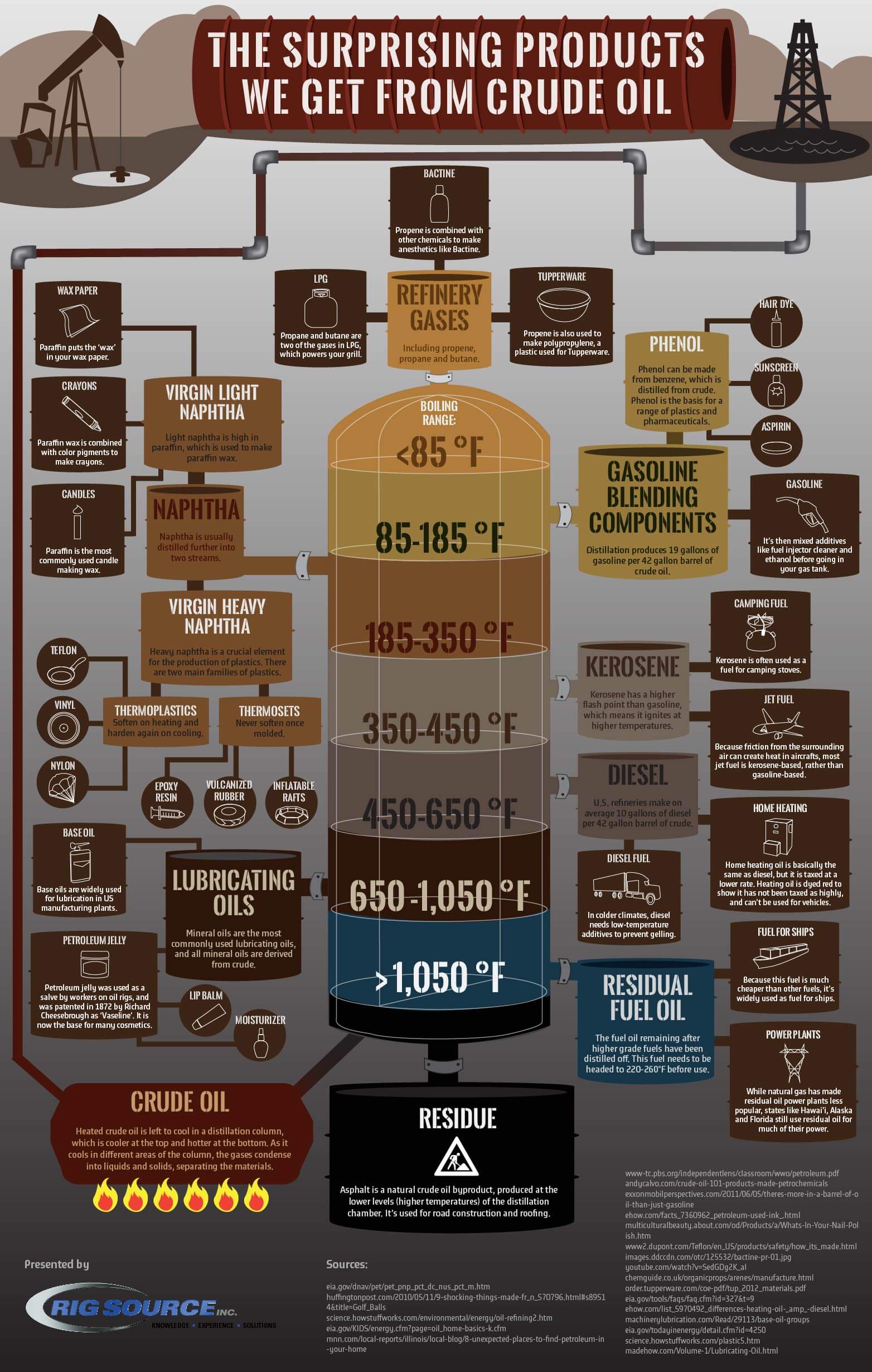
Posted by Marco Daniel MachadoApr 28View a sample of objects surprisingly derived from crude oil, including chewing gum and lipstickCrude oil processing produces a variety of fuels and the building blocks for plastics, but it also distills out the hydrocarbons used to make aspirin, Teflon, vinyl, crayons, candles, Tupperware, roofing shingles, asphalt pavement, hair dye, anesthetics, food-grade lubricants, polyester, synthetic rubber, and resins for items like dentures. ZoomCrude Oil Products Infographic | Rig SourceRig Sourcehttps://rigsourceinc.com/crude-oil-products-infographic/