Y2K
Overview
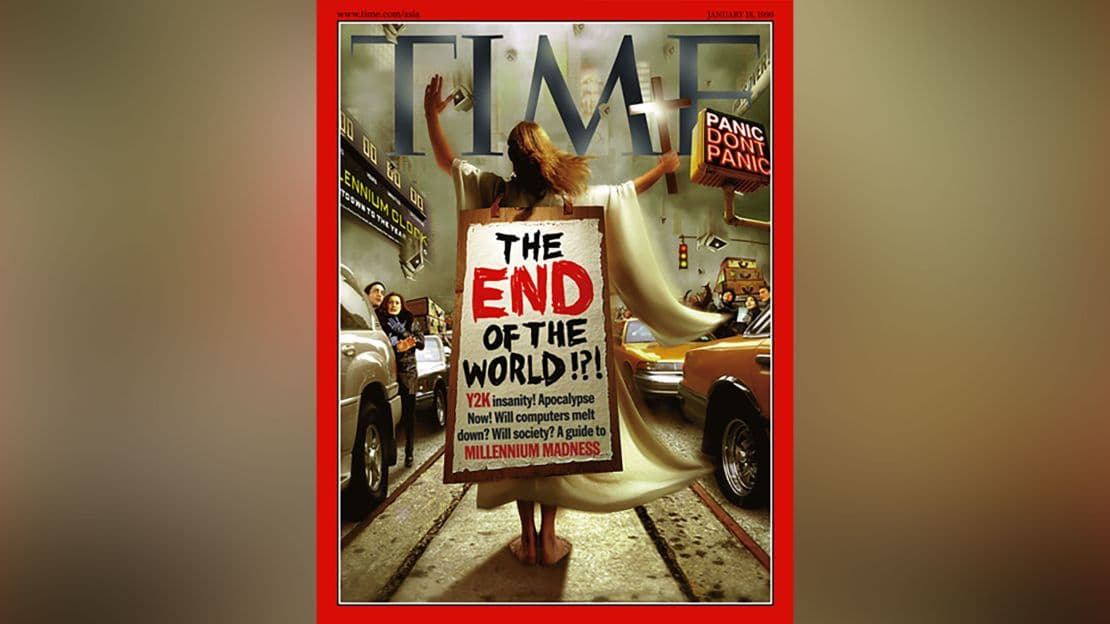
Y2K, short for “Year 2000,” was a potential computer bug caused by how dates were formatted in older software. To save memory space, early computers used two-digit years—like “97” for 1997—which in the new millennium risked misreading “00” as 1900 instead of 2000, potentially disrupting systems that depended on accurate dates.
In the late 1990s, many feared this glitch could cause widespread failures in banking systems, power grids, transportation networks, and other critical infrastructure. This idea took hold of the public imagination, spawning doomsday predictions, a booming survivalist market, and a massive global push to audit and repair vulnerable systems before the deadline—work that cost an estimated $300B-$500B.
Because of the extensive preparations, Y2K passed without significant disruptions. However, its legacy endures: the crisis helped modernize global IT systems, accelerated the outsourcing of programming jobs, and exposed society’s dependence on digital infrastructure—prompting long-term shifts in cybersecurity and software maintenance.
1440 Findings
Hours of research by our editors, distilled into minutes of clarity.


You've reached the end
Explore Society & Culture
Take a deep dive into the topics shaping our shared norms, values, and institutions. Art, music, and sports. Literature, architecture, and TV. Film, food, and philosophy. If it defines who we are as a society or how we express ourselves as a culture, then we're exploring it here.
Featured Topics
- Barbecue
- Beat Generation
- Bob Dylan
- Broadway
- Bruce Springsteen
- Burning Man
- The Burrito
- Country Music
- Dystopian Literature
- Flannery O’Connor
- Frank Lloyd Wright
- Girl Groups
- Hip-Hop
- James Beard Awards
- Memes
- National Football League
- National Parks
- Netflix
- Opera
- Rock 'N' Roll
- Salvador Dalí
- 'Saturday Night Live'
- Shakespeare
- 'The Star-Spangled Banner'
- Steven Spielberg
- Title IX
- True Crime
- Vacationing
- Walt Whitman