South Korea

1440 Findings

Hours of research by our editors, distilled into minutes of clarity.

  • Pinned

    South Koreans grew roughly 7 inches in a century on average

    A hundred years ago, the average Korean woman was only 4’7”. Today, she stands nearly eight inches taller than her great-grandmother did, the largest jump of any country on earth. This video from Vox tries to explain why. Turns out, South Korea’s increasing postwar quality of life gave its people a (literal) leg up.

    yt how south koreans got so much taller
    Video

    How South Koreans got so much taller

  • South Korea is separated from North Korea by a demilitarized zone

    There’s a lot of symbolism going on in the South Korean flag: a red-and-blue yin-yang represents the harmony created by opposing forces, and the white background represents peace and purity. The four black trigrams symbolize the four elements. The CIA World Factbook has more info on this country of 52 million, including where it ranks globally on obesity rates, energy consumption, and more.

  • The US and South Korea have a robust, if delicate, alliance

    The deep ties between South Korea and the United States go back decades, but the relationship hasn’t always been frictionless. When two off-duty American servicemen accidentally killed two South Korean middle-school girls in 2002, it set off anti-American protests that led South Korea to seek a more balanced relationship. The Council on Foreign Relations traces key moments in the two countries’ seven-decade history.

  • South Koreans grew roughly 7 inches in a century on average

    A hundred years ago, the average Korean woman was only 4’7”. Today, she stands nearly eight inches taller than her great-grandmother did, the largest jump of any country on earth. This video from Vox tries to explain why. Turns out, South Korea’s increasing postwar quality of life gave its people a (literal) leg up.

    yt how south koreans got so much taller
    Video

    How South Koreans got so much taller

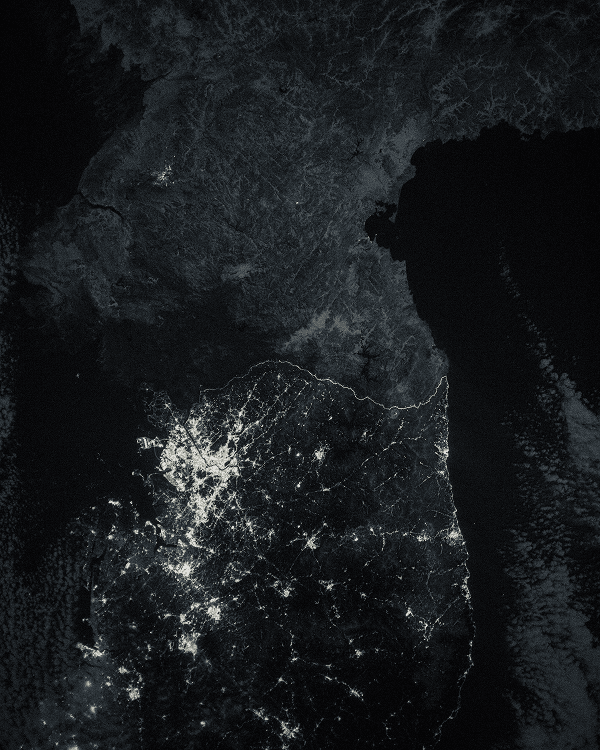
  • See South Korea's nighttime light usage, far surpassing North Korea's

    You can tell a lot about a place by looking at satellite imagery of the earth at night. Economists use such images to study poverty and inequality, especially about secretive countries where it can be difficult to get information any other way. An image from NASA’s Earth Observatory shows the difference in electrification between North and South Korea (and the lights illuminating the DMZ are visible from space).

  • There are roughly 7,000 Korean restaurants in the US

    A generation ago, the average American had never heard of kimchi or bulgogi, but these days, Korean cuisine is booming in the United States. And it’s no accident. This one-minute explainer video from Morning Brew reveals what role the government played in boosting the popularity of Korean food abroad, and what it all has to do with foreign debt and soap operas.

    yt korean food is having a moment in the us thanks in part to the korean government
    Video

    Korean food is having a moment in the US thanks, in part, to the Korean Government

  • How K-pop conquered the world

    How did Korean musical acts go from unpopular and at times maligned to filling arenas and creating one of the most viral music videos of all time? This 25-minute audio documentary from BBC World Service explains how social networks, plastic surgery, and government tax breaks helped turn K-pop into the multibillion-dollar global juggernaut we know today.

  • Why South Korean women are having fewer babies

    For decades, Asian countries have been combating dwindling birth rates by basically bribing families into having more children: offering government-subsidized housing, free IVF treatments, and even straight-up cash handouts. It hasn’t worked. In this BBC video, a TV producer, a cartoonist, and a private-school teacher explain their views on having children in 21st-century Korea.

    yt why south korean women arent having babies bbc news
    Video

    Why South Korean women aren't having babies | BBC News

  • Wealthy, 'chaebol' families rule South Korea's economy

    A handful of huge family-run conglomerates, or chaebol, are the engines of South Korea’s economy, with Samsung alone representing 20% of the country’s GDP. This gives the chaebol (literally “wealth group”) outsized power, often leading to corruption, labor violations, and anticompetitive practices. One economist interviewed in this Vice documentary says the chaebol have replaced Korean democracy with corporatocracy.

    yt the untouchable chaebols of south korea open secrets
    Video

    The Untouchable Chaebols of South Korea | Open Secrets

Explore World History

Weave together the many narratives of world history with our highly curated and expanding selection of diverse, fascinating resources designed to showcase the breadth and richness of Earth's story, from the earliest traces of human civilization to the dramatic developments of contemporary cultures.

View All World History