Mark Twain

Overview

Mark Twain was an American writer and humorist. He is considered one of the most important names in American literature, known in particular for “The Adventures of Huckleberry Finn,” a novel that remains both influential and controversial to this day.

1440 Findings

Hours of research by our editors, distilled into minutes of clarity.

  • Many consider Twain 'the father of American literature'

    In “Green Hills of Africa,” Ernest Hemingway declared that all modern American literature sprang from Twain's "Adventures of Huckleberry Finn." That’s a sentiment shared by many scholars, who assert that Twain’s book changed American fiction by challenging the country’s racist history and incorporating a more realistic vernacular.

    Video

    Mark Twain: Father of American Literature - Fast Facts | History

  • Read the works of Mark Twain

    Twain’s books are in the public domain, meaning they can be freely distributed. Digital versions of his classic novels—including “The Adventures of Huckleberry Finn,” “The Adventures of Tom Sawyer,” “A Connecticut Yankee in King Arthur’s Court”—as well as many of his short stories and satirical essays can be accessed through Project Gutenberg.

  • Mark Twain once challenged a rival newspaper editor to a duel

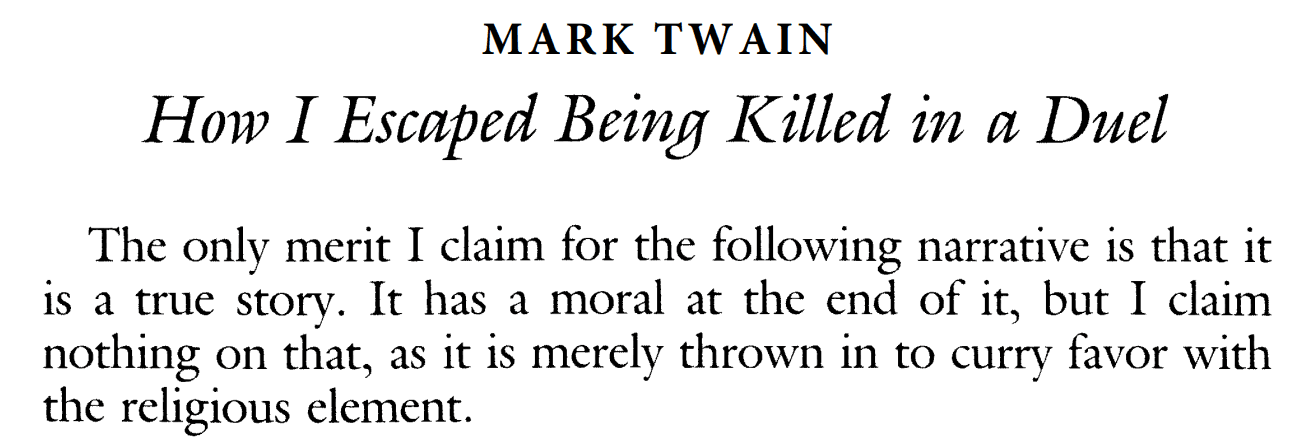
    While writing for a newspaper in Virginia City, Nevada, Twain published a story about a local fundraiser, accusing the paper’s rival of rescinding their donation. The problem was that the story was untrue: It was a hoax that he had concocted while drunk. The affair led to a protracted, public back-and-forth, with Twain challenging the editor of the rival paper to a duel; likewise, two other men challenged Twain to a duel. Twain ultimately left town, but wrote about the episode later on in an essay titled “How I Escaped Being Killed in a Duel.”

  • Clemens' pen name 'Mark Twain' is a nautical reference

    Samuel Clemens became a steamboat pilot’s apprentice in 1857 while writing a travelogue for a small newspaper, and earned his pilot’s license two years later. During that time, he learned the term “mark twain,” which meant 12 feet, something shipworkers would yell when they were approaching shallow waters. In 1861, he signed a travel letter under the pseudonym “Mark Twain” and used it for the rest of his career.

  • He made a name with a short story about jumping frogs

    Twain’s first big break came with “Jim Smiley and His Jumping Frog,” a fictitious story that appeared in a 1865 edition of the New York Saturday Press. (When it was republished elsewhere, the title was changed to “The Celebrated Jumping Frog of Calaveras County.”) That year, American poet James Russell Lowe called it “the finest piece of humorous literature yet produced in America.”

  • Twain read (and lampooned) classic literature

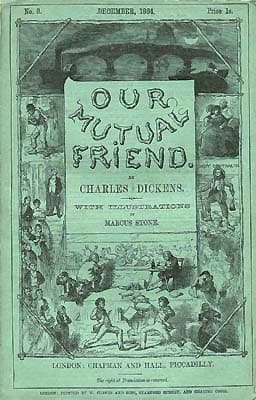
    Ever the ironist, Twain claimed to have “ no liking for novels or stories.” Obviously, that was untrue: He read widely, devouring books by Charles Dickens, slave narratives, and texts on astronomy. He also loved John Milton’s “Paradise Lost,” which he called “something everybody wants to have read and nobody wants to read.”

Explore Society & Culture

Art, music, sports, entertainment, movies, and many other subjects—these elements define who we are as a society and how we express ourselves as a culture. Take a deep dive into the topics shaping our shared norms, values, institutions, and more.

View All Society & Culture