Income Taxes

Overview

Income taxes are taxes governments levy on money earned by businesses and individuals. What’s more, they’re also many countries’ largest source of revenue: In the US, individual income taxes made up nearly half of the federal government’s revenue in 2024, while corporate income taxes added another 11% .

1440 Findings

Hours of research by our editors, distilled into minutes of clarity.

  • The history of the IRS

    This podcast episode takes a lighthearted dive into the history of the IRS, from when the agency was founded and called the Bureau of Internal Revenue, to that one time it had to enforce a national ban on alcohol. Want to learn more? Listen to the podcast episode.


  • The most taxed states in America

    Some states in the US have higher taxes than others. Hawaii, for instance, has the highest total tax burden in the country at 13.9%, whereas Alaska has the lowest overall tax burden at 4.9%. New York has the highest individual income tax burden; and eight states have no individual income tax. See a map of the most-taxed US states here.

  • What is a tax deductible?

    A tax deductible is an expense that a taxpayer or business can subtract from adjusted gross income, reducing their taxable income and therefore reducing the amount of taxes owed. Most Americans take what’s called the standard deduction. Understand how they work, the pros and cons, and more details in this comprehensive overview article.

  • The common mistake Americans make about tax brackets

    The US has a series of tax brackets which grow progressively larger based on the amount of income a taxpayer makes. Contrary to common belief, most people don't pay just one tax bracket, but all of them progressively until they reach their income...

    Video

    The common mistake Americans make about tax brackets

  • Breaking down what filing statuses mean

    This short video quickly runs through the five different filing statuses taxpayers fall under when they file income taxes: single, married and filing jointly, married and filing separately, head of household, and surviving spouse. Taxpayers’ status is determined by whichever category they fit into on December 31st of the tax year they’re filing for. Learn about filing statuses by watching this video.

    Video

    Breaking down what filing statuses mean

  • The evolution of income tax

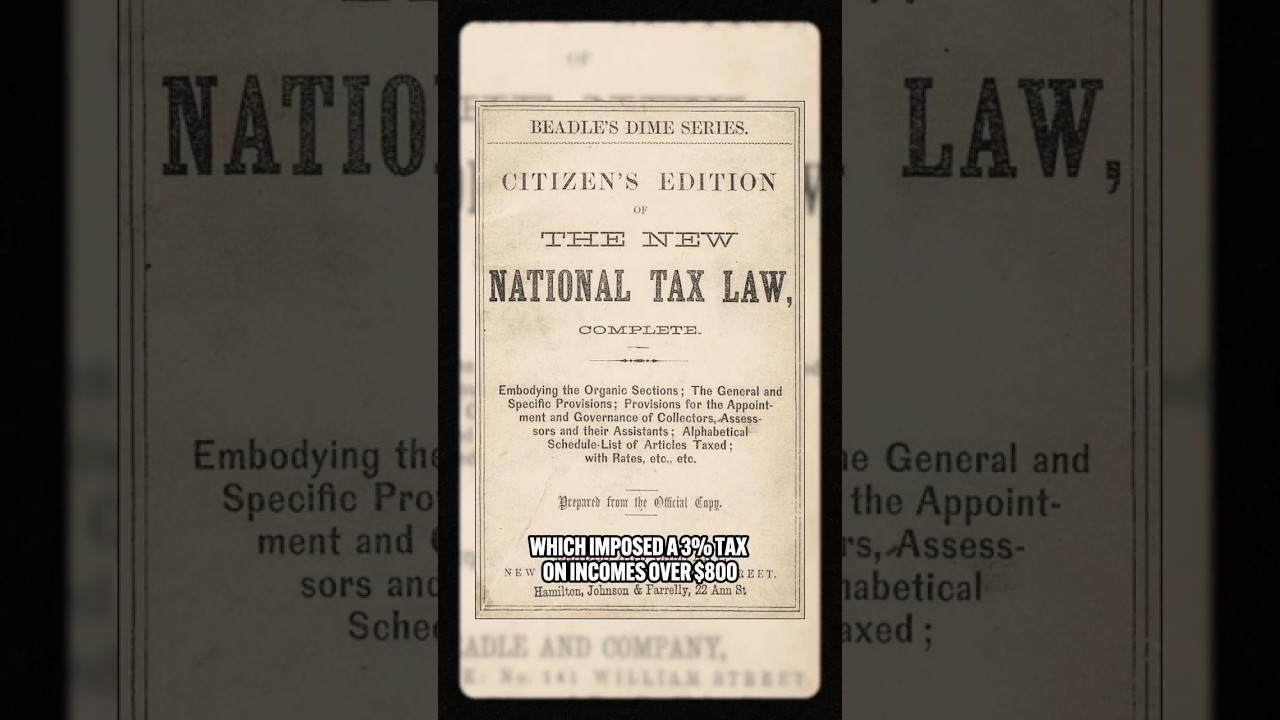
    Americans have long resisted income taxes. So, how did they become permanent? This overview explains how wartime funding needs, constitutional changes, and economic shifts gave rise to the modern tax system, from the Civil War to the payroll withholding rules we follow today.

    Video 1440 Original

    The evolution of income tax

  • A group of billionaires and millionaires wants to pay more taxes

    Hundreds of billionaires and millionaires have signed a letter called “Proud to Pay More,” in which they ask world leaders to tax the wealthiest individuals more than they currently do. The group, which includes Disney heir Abigail Disney and Valerie Rockefeller, re-upped their call at the World Economic Forum in Davos this year. Learn about the “Proud to Pay More” letter in this article.

  • Warren Buffett paid a lower effective tax rate than his secretary

    While wages and salaries are taxed progressively at rates up to 37%, long-term investments are taxed at lower rates: 0%, 15%, or 20%. For wealthy individuals like Buffett, whose income mainly comes from investments, this means paying a lower effective tax rate than someone earning a salary.

    Video 1440 Original

    Why Warren Buffett pays a lower rate than his secretary

  • The story behind the Beatles song ‘Taxman’

    In the US, many people think of the IRS as the “taxman”—but the Beatles song is actually about the tax structure in the UK at the time. George Harrison wrote the song when he realized that even though the Beatles had started earning money, “we were actually giving most of it away in taxes,” as he wrote in his autobiography. Learn more about the song here.

Next page

Explore Business & Finance

The United States is home to more than 33 million businesses, the vast majority of which are small businesses, with millions being created (and others closing shop) every year. These businesses often rely on loans, provide the goods and services that keep the economy flowing, and sometimes even grow large enough to enter public markets or provide private investment opportunities. Explore key topics central to business and finance, from the role of the Federal Reserve to how initial public offerings work, how millions of American students finance higher education, and more.

View All Business & Finance