Earthquakes

1440 Findings

Hours of research by our editors, distilled into minutes of clarity.

  • Pinned

    Portugal's 1775 earthquake is considered Europe's first modern natural disaster

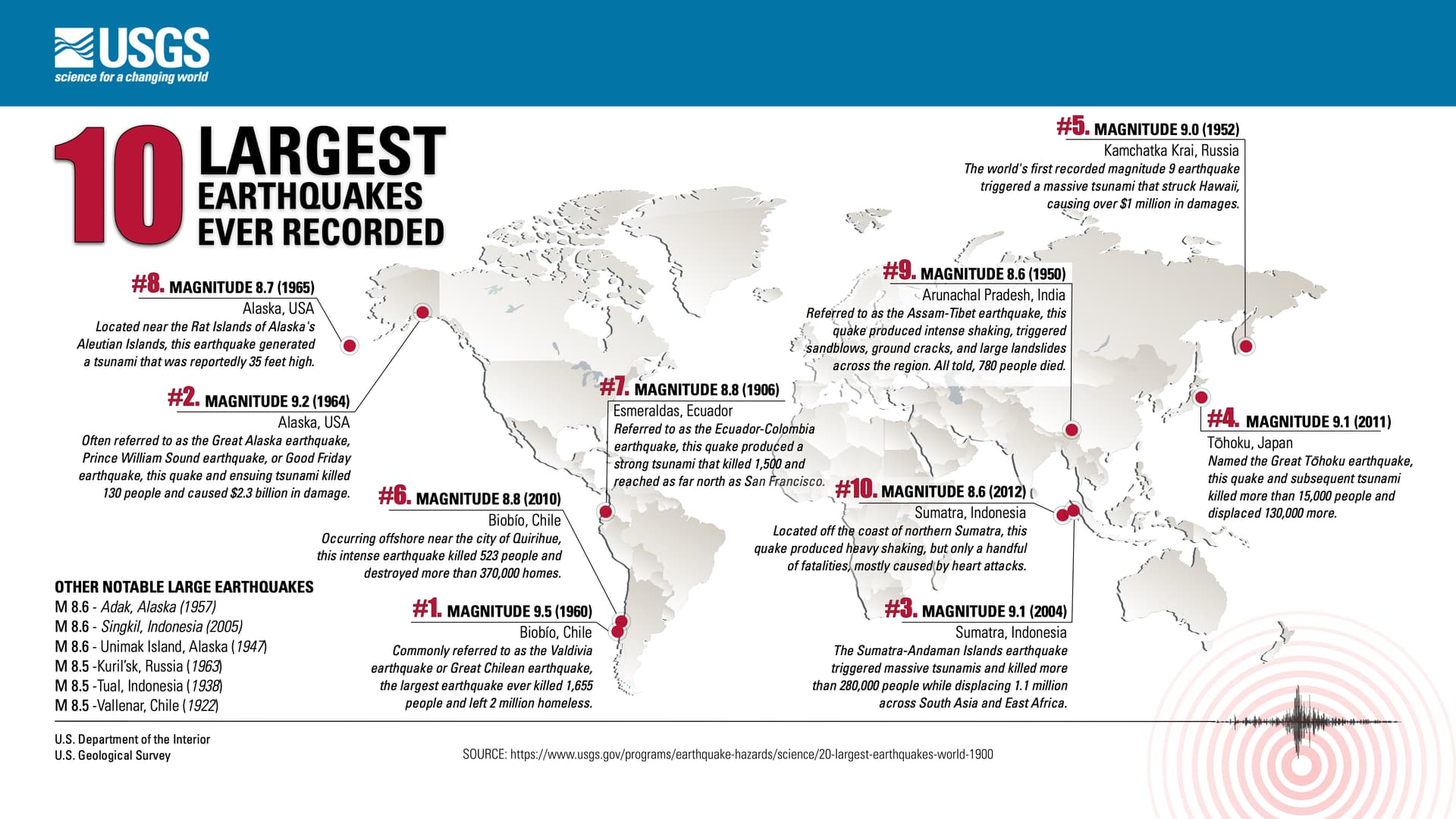
    An 8.5-magnitude earthquake off the Portuguese coast nearly destroyed Lisbon, killing thousands, creating 16-foot-wide fissures in the city, and triggering a massive tsunami. Historians credit it with jump-starting the Enlightenment in the region, with many thinkers seeking natural explanations.
  • A magnitude 25 earthquake would release enough energy to destroy the sun

    Since Richter and moment magnitude scales rank earthquake energies logarithmically, theoretical magnitude values can cover an enormous range with no upper or lower mathematical limit. A particle of dust drifting onto a table would have a magnitude of about -15.

  • Variations in rock types contribute to uncertainty in earthquake predictions

    Different rock types can withstand different amounts of stress before breaking and melt at different temperatures within Earth’s interior, preventing uniform modeling. The planet’s uneven mass distribution also creates variations in gravitational force, complicating mantle movement.

  • The movement of seismic waves reveals the structure of Earth’s interior

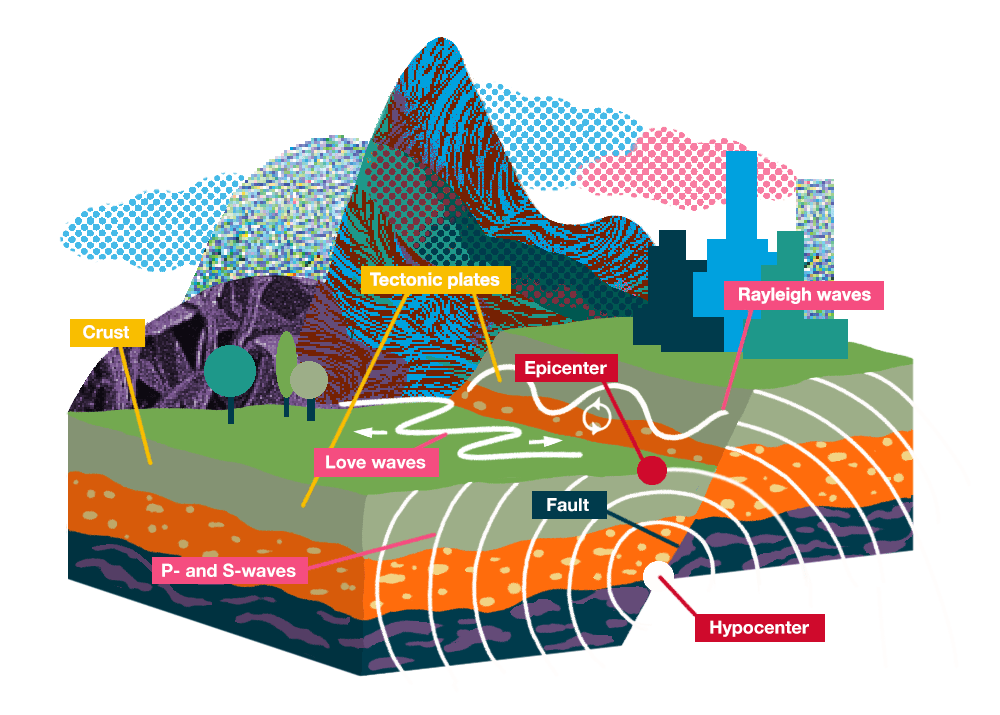
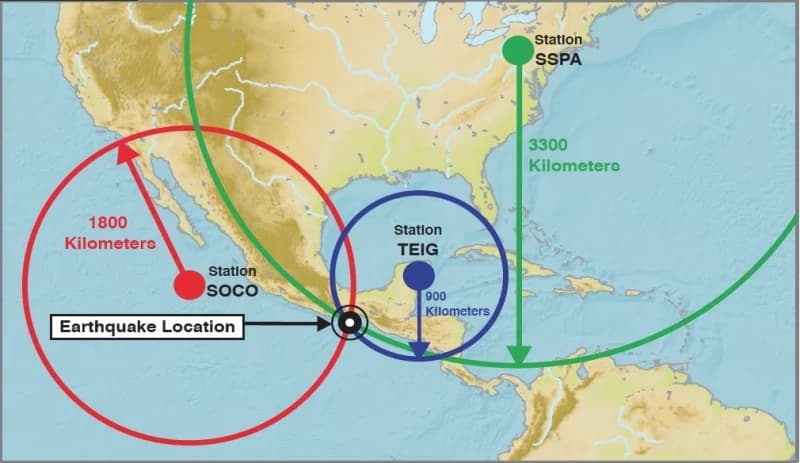
    Changes in temperature, density, and composition alter the path of primary and secondary waves, impacting where they are detected along Earth’s surface. These deflections create shadow zones 104 degrees to 140 degrees away from the epicenter, where no waves are directly detected.

Explore Science & Technology

Since our ancient human relatives began using stone tools to perform tasks, humans have harnessed scientific knowledge and new technologies to expand the boundaries of our understanding of the natural world. From quantum computing and microplastics to artificial intelligence and memory, explore these topics and more with our concise yet informative overviews and expert-curated resources.

View All Science & Technology