Declaration of Independence
Overview
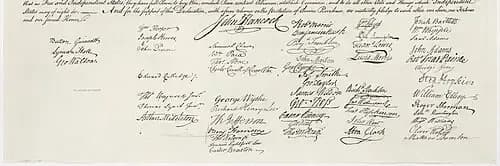
The Declaration of Independence is the founding document that formally announced the American Colonies' break from British rule. Adopted on July 4, 1776, it laid the philosophical and moral foundation for American self-governance, asserting that individuals possess inherent rights and that governments must be accountable to the people. While it didn't create a government or legal framework, the Declaration marked the birth of the United States as a sovereign nation.
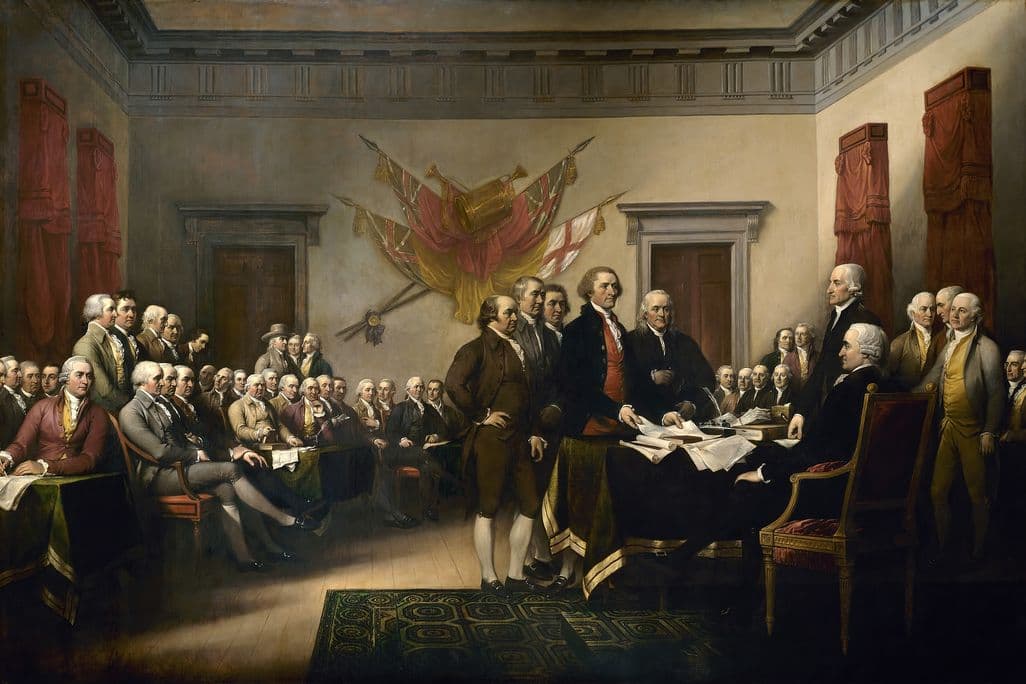
The document was created amid escalating conflict between the Colonies and the British crown over taxation, representation, trade restrictions, and military control. The Second Continental Congress appointed a drafting committee led by Thomas Jefferson, with John Adams and Benjamin Franklin serving in key editorial roles.
Structured as a political argument, the Declaration opens with a statement of universal principles, followed by a list of grievances against King George III. It concludes by asserting the complete independence of the Colonies from Great Britain. Its claim that governments exist by popular consent—and can be changed if they fail—has shaped revolutions abroad and reform movements within the US for centuries, from abolition to women's rights and the Civil Rights Movement.
1440 Findings
Hours of research by our editors, distilled into minutes of clarity.



Explore Civics
An informed citizenry is the backbone and bulwark of a vibrant democracy. From the principles behind the founding of the country to the forces that shaped our modern institutions, explore the most illuminating and insightful Civics resources from across the internet.