Posted by Meher QazilbashJan 6Hear about the Enlightenment origins of the Declaration's ideas.Show 1 more finding“UPON THE SHOULDERS OF GIANTS”: THOMAS JEFFERSON AND THE DECLARATION OF INDEPENDENCE - Podcast - College of Liberal Arts - Purdue University searchhttps://open.spotify.com/episode/0mkz85yMNUfQlmQKcV7aj6?si=80ae7a032ca04d5c
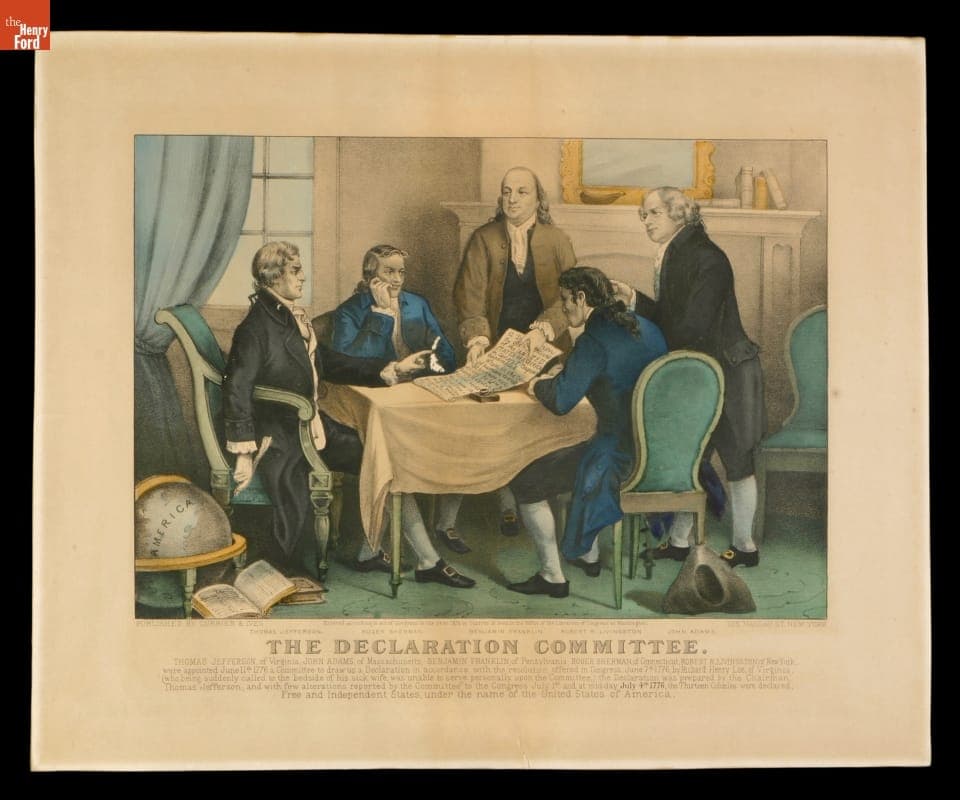
Posted by Meher QazilbashJul 2, 2025Ben Franklin’s edit helped define the Declaration’s philosophyWhen Thomas Jefferson drafted the Declaration, he wrote that its truths were “sacred and undeniable.” Benjamin Franklin urged replacing that phrase with “self-evident,” grounding the document in reason rather than religious authority and sharpening its Enlightenment logic. ZoomThe Declaration of Independence | Benjamin FranklinPBShttps://www.thirteen.org/programs/benjamin-franklin/declaration-independence-ev7upl/
Posted by Meher QazilbashJan 6Since 1776, the Declaration of Independence has served as a model for more than 100 nations and freedom organizations writing their own declarations.Show 3 more findingsEpisode 141: A Declaration in DraftBen Franklin's Worldhttps://open.spotify.com/episode/4HHqcG4o50SNcHGdOuseLF
Posted by Jeremy CronigJan 9See the documents that shaped the Declaration before it was writtenThis Library of Congress collection comprises early arguments for Colonial rights, protests against British authority, draft constitutions, and multiple working drafts of the Declaration of Independence. It traces the ideas and language that preceded the final document adopted in 1776. ZoomLibrary of Congresshttps://www.loc.gov/exhibits/jefferson/jeffdec.html
Posted by Meher QazilbashApr 8, 2025Many of the founding fathers were deists—believers in a God of reasonA uniquely American iteration of the Enlightenment movement thrived during the Revolution. This selection from a longer write-up on the American Enlightenment highlights six core ideas: deism, liberalism, republicanism, conservatism, toleration, and scientific progress. ZoomAmerican Enlightenment Thought | Internet Encyclopedia of Philosophyhttps://iep.utm.edu/american-enlightenment-thought/#H2
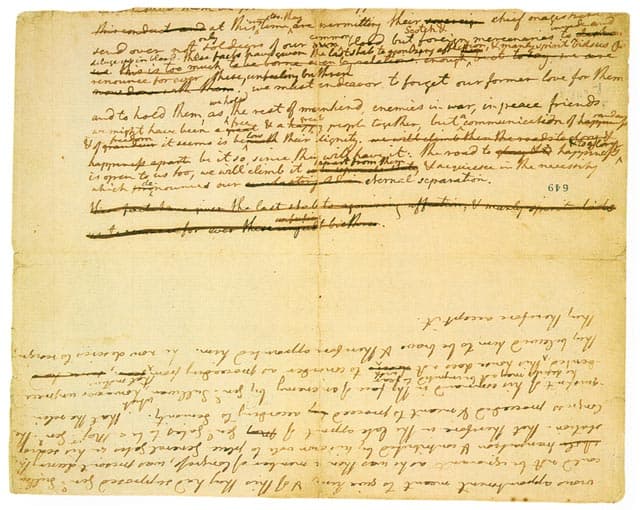
Posted by Meher QazilbashJun 18See how the Declaration evolved from draft to final textJohn Adams urged Congress to choose Thomas Jefferson to draft the Declaration because of his literary skill and low-profile reputation. Read Jefferson's initial draft, which included passages later removed, including a forceful denunciation of slavery. ZoomTranscript of Declaration of Independence (Rough Draft)https://www.monticello.org/the-declaration-of-independence/jefferson-and-the-declaration
Posted by Meher QazilbashJun 28, 2017The Declaration of Independence was not only a statement of principles but also an appeal for military allies that the struggling colonists needed to survive.Show 4 more findings ZoomAt Its Core, the Declaration of Independence Was a Plea for Help From Britain’s EnemiesSmithsonian Magazinehttps://www.smithsonianmag.com/history/its-core-declaration-independence-was-plea-help-britains-enemies-180963857/
Posted by Meher QazilbashApr 8, 2025Enlightenment ideals of reason informed the foundation of the RevolutionFrom the 17th to 19th centuries, an intellectual movement took place in Europe and its colonies that emphasized reason over authority. Following the Scientific Revolution, thinkers like Descartes, Kant, and Locke sought to explain the world in rational—rather than religious—terms. The movement caused a paradigm shift in how societies are organized and how people perceive themselves. 3:13Age of Enlightenment: How the Ideas of the Enlightenment Led to Revolutionhttps://www.youtube.com/watch?v=wmhP5DYhpRw&ab_channel=DailyDoseDocumentary
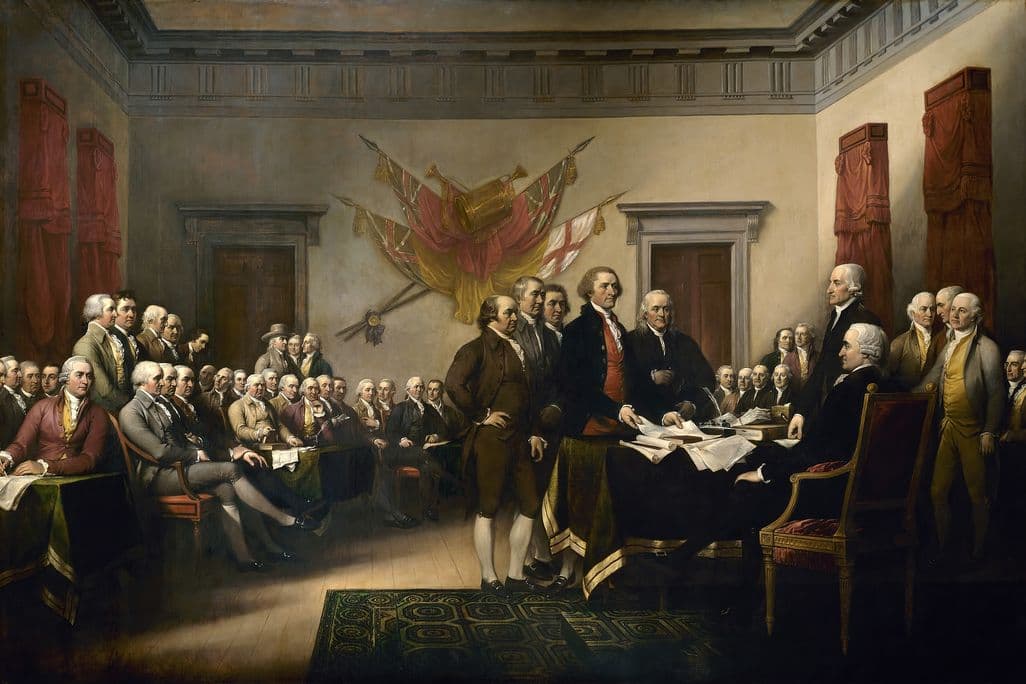
Posted by Meher QazilbashJul 2, 2025See a timeline of the Declaration's creationThis National Archives timeline walks through the Declaration’s creation step by step—from early calls for independence to drafting, approval, and final signatures—highlighting the key moments that led to the Colonies’ break from Britain. ZoomCreating the Declaration: A TimelineNational Archiveshttps://www.archives.gov/founding-docs/timeline
Posted by Teddy BurkhardtJan 8Hear about the individuals who have reshaped the Constitution throughout American historyThis multi-episode podcast series from The Washington Post explores how debates, court decisions, and influential individuals have shaped the Constitution as Americans pushed the nation to live up to its founding ideals.https://open.spotify.com/episode/7f4gKrLgWf3FTHSrx81oTT
Posted by Meher QazilbashJan 6Congress actually voted to approve independence on July 2, 1776, leading many Founders to believe that would be the date Americans would one day celebrate.This video highlights lesser-known facts about the Declaration of Independence, including that Congress approved independence on July 2—leading many Founders to believe that would be the day Americans would celebrate their independence.Show 3 more findings 3:38What you might not know about the Declaration of Independence - Kenneth C. DavisTED-Edhttps://www.youtube.com/watch?v=LKJMWHCUoiw
Posted by Meher QazilbashJun 16Hear about how the Founders placed the pursuit of happiness at the center of good governance.394 Jeffrey Rosen, The Pursuit of HappinessBen Franklin's Worldhttps://open.spotify.com/episode/6vR4zZpD3PKZQvo2eHHp3T
Posted by Jeremy CronigJan 19Virginia's Declaration of Rights was a main inspiration for Madison's Bill of RightsJames Madison drew on Virginia's Declaration of Rights, written in 1776. The document affirmed freedom of religion, freedom of the press, and jury trials, and placed limits on government power—core protections that later appeared in the Bill of Rights.https://encyclopediavirginia.org/entries/the-virginia-declaration-of-rights/
Posted by Jeremy CronigJan 19Madison and Jefferson forged a political alliance that shaped the early US republicBeginning in the 1780s, James Madison and Thomas Jefferson collaborated closely to oppose centralized power, to found the Democratic-Republican Party, and to guide the nation's early debates on constitutional and foreign policy.Gilder Lehrman Institute of American Historyhttps://www.gilderlehrman.org/history-resources/essays/age-jefferson-and-madison
Posted by Meher QazilbashJul 2, 2025What the Declaration actually says and how to see itThis official page from the National Archives breaks down the Declaration of Independence in plain English, explaining its purpose, key ideas, and grievances against King George III. It also shows how the document was created and where it’s displayed today. ZoomThe Declaration of Independence: What Does it Say?National Archiveshttps://www.archives.gov/founding-docs/declaration/what-does-it-say
Posted by Jeremy CronigAug 26A section condemning slavery, originally written by Thomas Jefferson, was cut from the Declaration of Independence.Show 3 more findings ZoomDeleted Slavery Passage | Declaration of Independencehttps://www.thehenryford.org/collections/explore/articles/the-deleted-slavery-passage-from-the-declaration-of-independence
Posted by Jeremy CronigJan 9A section condemning slavery was cut from the DeclarationThomas Jefferson included a passage in his original draft denouncing slavery. This explainer from the Henry Ford Museum explores why Congress removed it to preserve colonial unity and how that decision shaped the nation's earliest political compromises.https://www.thehenryford.org/explore/blog/the-deleted-slavery-passage-from-the-declaration-of-independence#:~:text=Included%20in%20this%20list%20was,Great%20Britain%20and%20the%20colonies
Posted by Teddy BurkhardtFeb 20Trace how the Bill of Rights, inspired by centuries of political theory, took shape between 1774 and 1789.This interactive resource from the National Constitution Center traces the complex drafting process behind the Bill of Rights, showing how state proposals and revisions evolved into the first 10 amendments.Show 3 more findings ZoomConstitutional Rights Origins and Travels - Writing RightsNational Constitution Centerhttps://constitutioncenter.org/rights/writing.php
Posted by Jeremy CronigMar 17Learn about the long and contested history of free speech in AmericaThis podcast examines how American free speech protections evolved—from the Founders' debates to landmark Supreme Court rulings—and why the country arrived at one of the most expansive speech regimes in the world.The right to free speech - ThroughlineThroughlinehttps://open.spotify.com/episode/4MmxsKk1erhIL3HKOipcDQ
Posted by Jeremy CronigMar 17Thomas Jefferson wrote the Virginia Statute for Religious Freedom in 1786, which directly influenced the US ConstitutionDrafted by Jefferson, the statute guaranteed freedom of worship to people of all faiths. Jefferson considered it one of his greatest achievements, and it served as the direct model for the First Amendment's religion clauses.Virginia Statute for Religious FreedomThomas Jefferson's Monticellohttps://www.monticello.org/encyclopedia/virginia-statute-religious-freedom
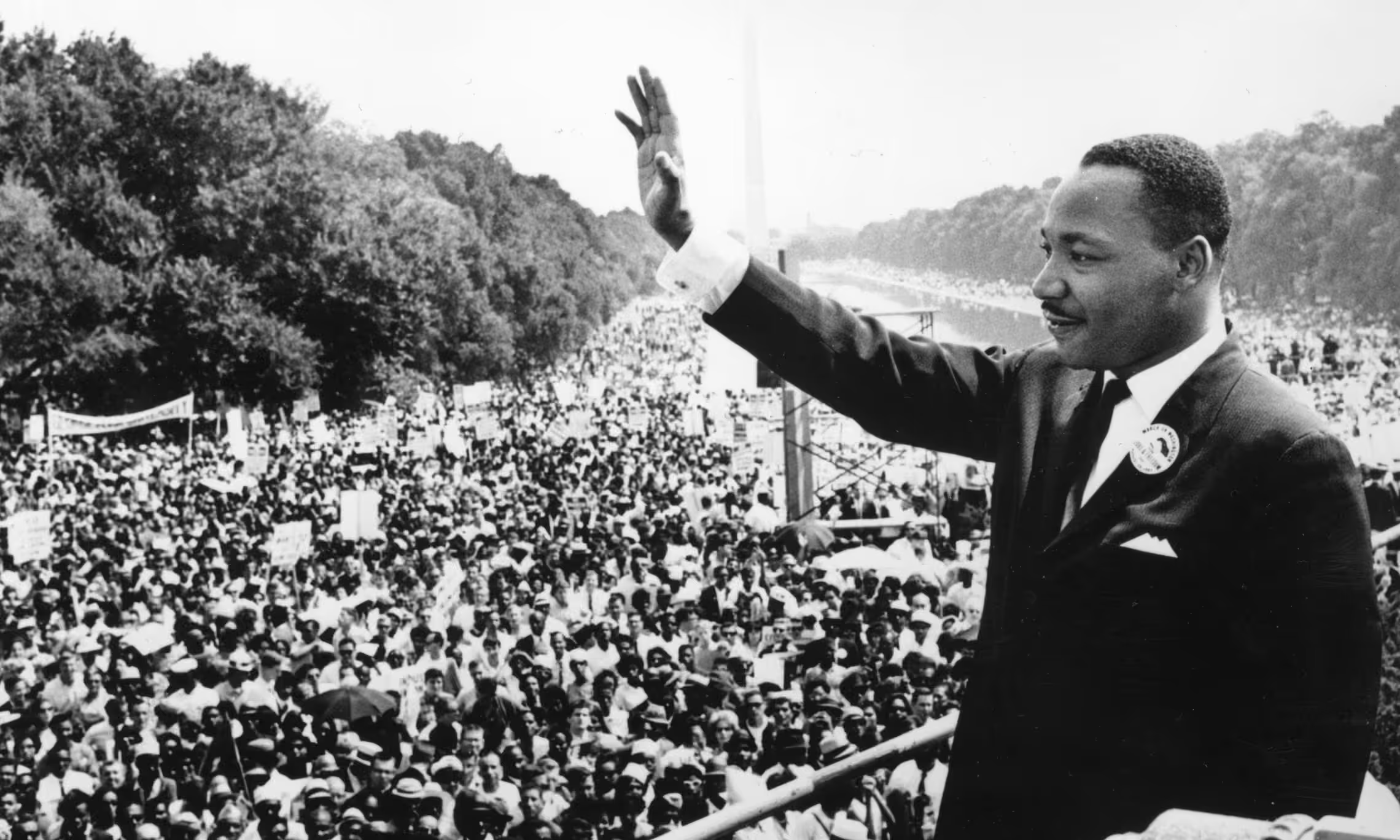
Posted by Meher QazilbashJul 2, 2025Martin Luther King Jr. invoked the Declaration to demand equalityThis article examines how Martin Luther King Jr. drew on the language and ideals of the Declaration of Independence to frame the Civil Rights Movement as a continuation of the nation’s founding promises. ZoomDr. Martin Luther King Jr. and the Promises of the American Revolutionhttps://www.amrevmuseum.org/dr-martin-luther-king-jr-and-the-promises-of-the-american-revolution
Posted by Phoebe BainJun 24Read the financial advice America's founding fathers gave, including Benjamin Franklin, Thomas Jefferson, and Alexander Hamilton. ZoomFinancial Advice from America’s Founding FathersKiplingerhttps://www.kiplinger.com/slideshow/credit/t065-s001-financial-advice-from-the-founding-fathers/index.html
Posted by Meher QazilbashJul 2, 2025The Declaration was also a list of grievancesThis article breaks down the Declaration’s 27 grievances against King George III, illustrating how they were intended not only to express colonial anger but also to justify rebellion and garner support abroad. ZoomThe Declaration of Independence Was Also a List of Grievances | HISTORYHISTORYhttps://www.history.com/articles/declaration-of-independence-grievances
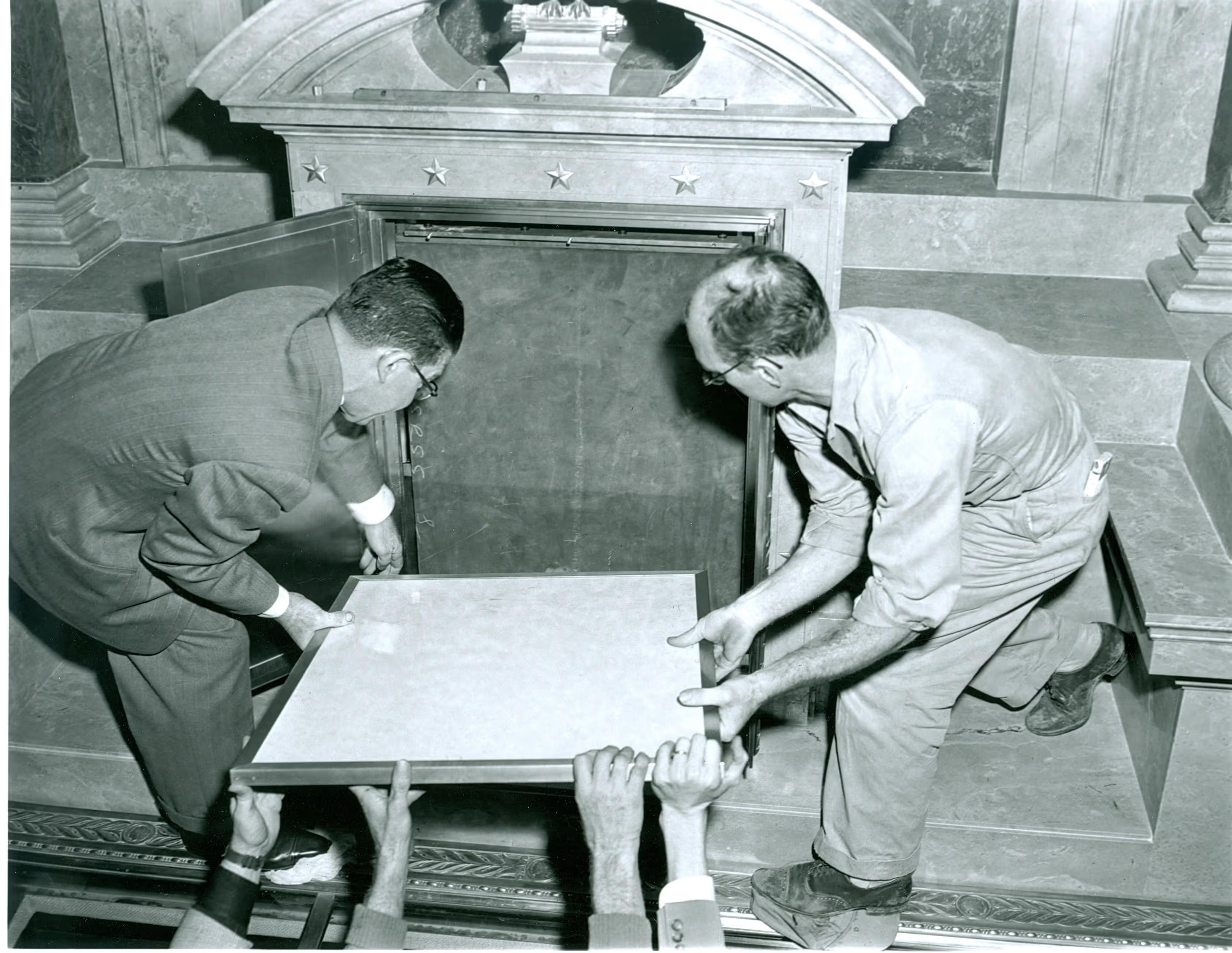
Posted by Jeremy CronigMay 5, 2022The original copy of the Declaration of Independence is not a pristine document, and even features a smudged anonymous handprint in the bottom left corner.This piece traces the Declaration's 200-year journey from its creation in 1776 through repeated relocations, risky copying methods, light damage, fires, wartime evacuation, and shifting federal custody—long before modern archival protections existed.Show 4 more findings ZoomThe Action-Packed History of the Declaration of IndependenceBoundary Stoneshttps://boundarystones.weta.org/2022/05/05/action-packed-history-declaration-independence
Posted by Jeremy CronigFeb 21Take a deep dive into the constitutional foundations of judicial reviewIn this episode of "This Constitution," the hosts take a law-focused approach to judicial review—examining its roots in Article III and the supremacy clause, its development through Marbury v. Madison, and the ongoing constitutional debates about whether the court's power strengthens or strains American democracy.https://open.spotify.com/episode/03G4GwiTwHpy0ZUUhECccm
Posted by Jeremy CronigJan 19Dive deep into Madison's role in promoting the Constitution through the Federalist PapersJames Madison used the Federalist Papers to shape ratification debates, explain the Constitution's design, and argue that a large republic could safeguard liberty. This podcast explores his pivotal role in the ratification of the Constitution.National Constitution Centerhttps://open.spotify.com/episode/0KxMoBPc6a2zBPLUkvVPxe
Posted by Teddy BurkhardtDec 10, 2024Debating the Constitution todayThe Constitution continues to shape our political and social life today. If you want to understand how today’s political debates connect to the Constitution, check out this podcast from the National Constitution Center. The weekly program features experts from diverse perspectives and explores how constitutional principles shape modern issues. ZoomPodcasts from the National Constitution CenterNational Constitution Centerhttps://constitutioncenter.org/news-debate/podcasts
Posted by Meher QazilbashApr 8, 2025The American Revolution became a template for a colonized worldThe robust and radical transformation during the American Revolution created a template for dozens of future independence movements. Its key ideas of republicanism, individualism, and equality inspired revolutions in France, Haiti, Ireland, and more, paving the way for the broadly democratic world we know today. ZoomHow the American Revolution Spurred Independence Movements Around the World | HISTORYHISTORYhttps://www.history.com/articles/american-revolution-independence-movements
Posted by Jeremy CronigAug 9The Founding Fathers were divided in their reactions to the Boston Tea Party.Show 4 more findings ZoomWhy Some Founding Fathers Disapproved of the Boston Tea Party | HISTORYHISTORYhttps://www.history.com/articles/boston-tea-party-critics-ben-franklin
Posted by Jeremy CronigMar 17Hear how the 2 religious clauses in the First Amendment have been tested and evolved over timeThis podcast examines the evolution of the free exercise and establishment clauses, tracing their development from federal restrictions to state and local laws. Discover the believers who challenged the limits of religious freedom throughout American history.O Your Honor, Hear My Prayer - Amended! Liberty's Guide to the First Amendmenthttps://open.spotify.com/episode/5t7vC93gMpM42pFp7OrOnn
Posted by Meher QazilbashJun 21, 2024On the role of 'Citizenship In A Republic'After finishing a Smithsonian-sponsored expedition to East Africa, US President Theodore Roosevelt stopped by Paris and gave a speech about the responsibilities an ordinary citizen has to their republic. Citizens must know there is no effort without error, knowing they "fail while daring greatly" in pursuit of a truly democratic republic. This podcast series on powerful speeches across history is written and narrated by historian and author Jon Meacham. ZoomIt Was Said: Theodore Roosevelt, Man In The Arena on Apple Podcastshttps://podcasts.apple.com/us/podcast/theodore-roosevelt-man-in-the-arena/id1527280716?i=1000581642422
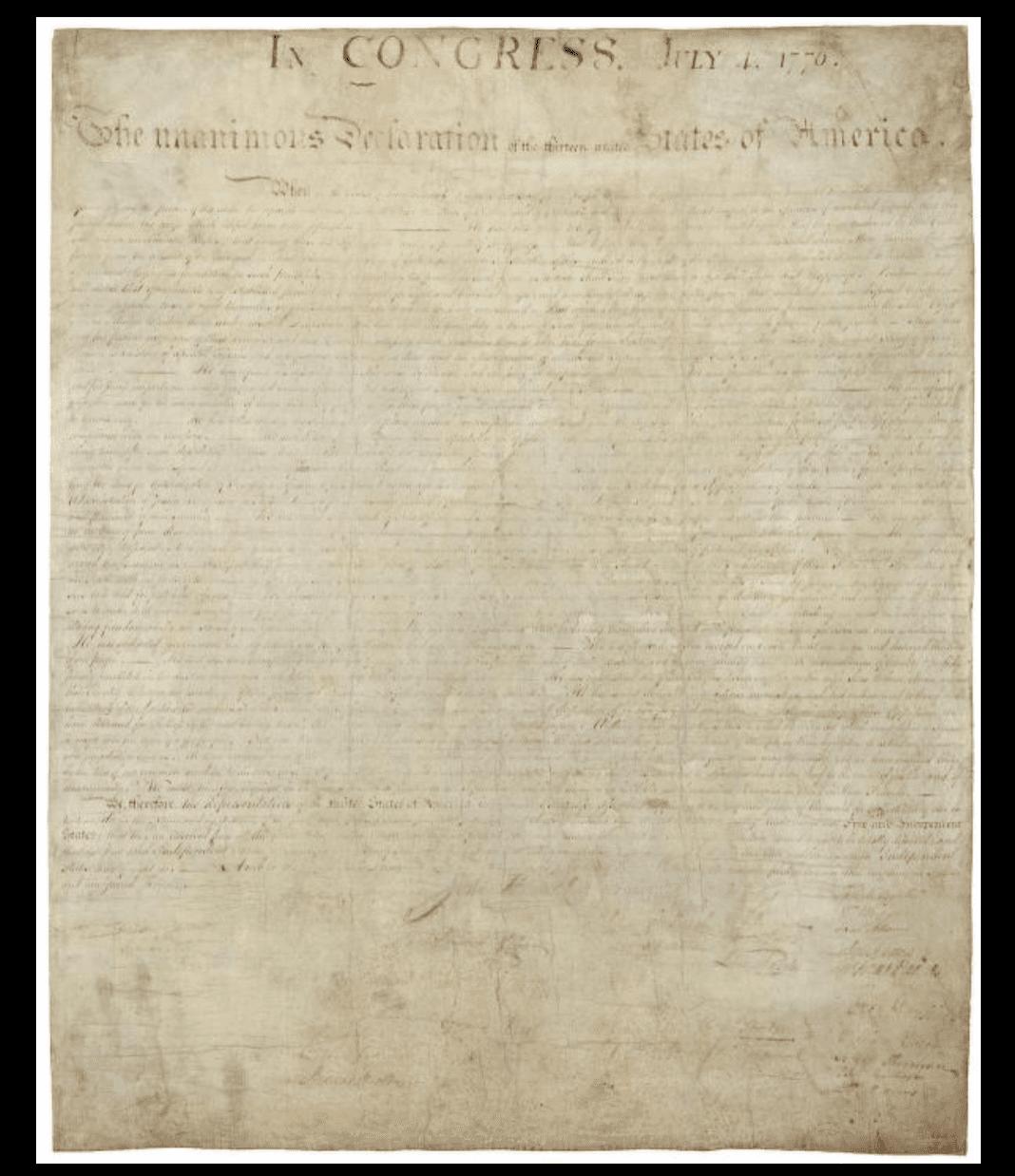
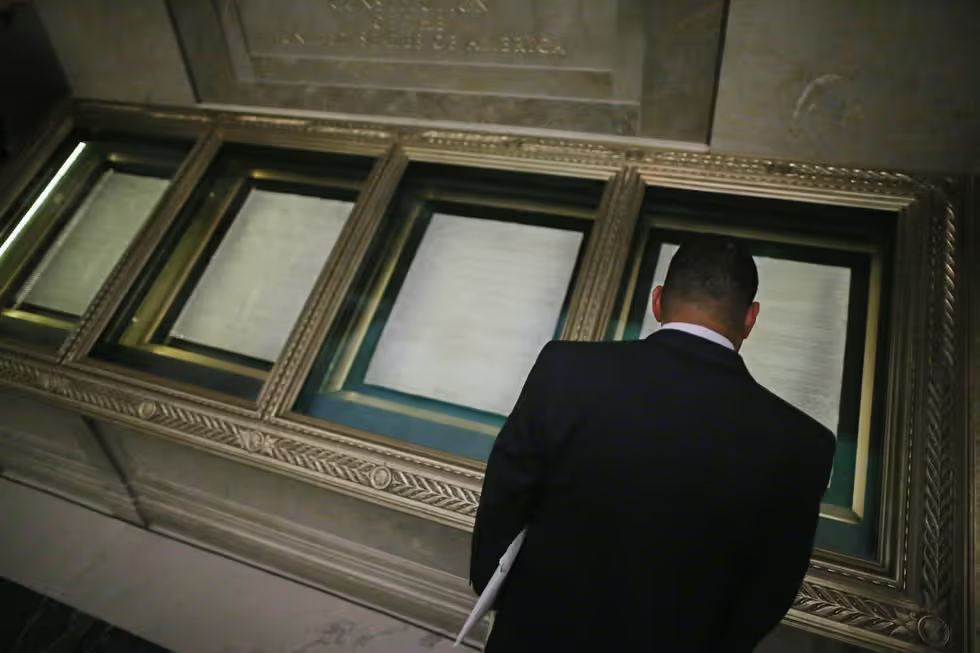
Posted by Meher QazilbashJul 2, 2025See the Declaration—known as the Matlack Declaration—displayed at the National ArchivesThe iconic handwritten Declaration displayed at the National Archives was penned by Thomas Matlack, the Continental Congress’s assistant secretary. He was chosen for his exceptional handwriting to prepare the formal copy signed by the delegates. ZoomImage 1 of Engrossed Declaration of Independence.Library of Congresshttps://www.loc.gov/resource/gdcwdl.wdl_02705/?r=-1.13,-0.363,3.26,1.909,0
Posted by Teddy BurkhardtMar 28, 2025Who said 'rebellion to tyrants is obedience to God'?As a brief, punchy statement rejecting unjust authority, "Rebellion to tyrants is obedience to God" became widely adopted during the American Revolution. The phrase is often misattributed to Benjamin Franklin and Thomas Jefferson, the latter of whom used it on his personal seal. This fact-checked article dives into the history of the phrase, claiming it was first used in 1770 in an epitaph for an English judge. Read more here. ZoomWho Said 'Rebellion to Tyrants is Obedience to God'? | Snopes.comhttps://www.snopes.com/articles/464526/rebellion-to-tyrants-is-obedience-to-god/
Posted by Jeremy CronigJan 19The rivalry between Alexander Hamilton and Thomas Jefferson centered on federalism—the question of how much power the federal government should hold relative to the states.Alexander Hamilton and Thomas Jefferson clashed over how power should be divided in the new republic—Hamilton favoring a strong national government with broad implied powers, and Jefferson warning that such authority would erode state power and threaten republican liberty.Show 4 more findings 10:17Jefferson and Hamilton go TOE-TO-TOE! | Thomas Jefferson | Historyhttps://www.youtube.com/watch?v=WhqcFaPRz3M
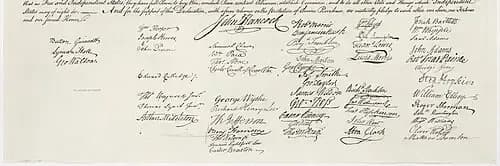
Posted by Meher QazilbashFeb 20Meet the 56 signers of the Declaration of Independence—most of whom didn't put pen to paper until August 2, 1776—and see their original signatures.This online exhibit from the Daughters of the American Revolution presents a visual slideshow of all 56 signers of the Declaration of Independence, pairing portraits and biographies with photographs of their handwritten signatures.Show 3 more findings ZoomSigners of the Declaration of Independencehttps://www.dar.org/archives/signers-declaration-independence
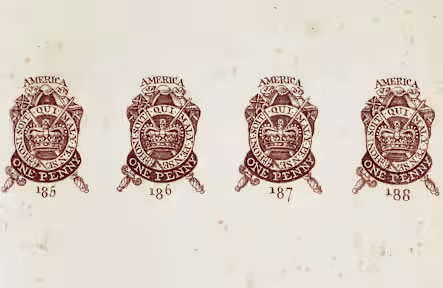
Posted by Teddy BurkhardtMar 18The Stamp Act Congress made 'no taxation without representation' into a constitutional argumentThe 1765 gathering of 27 delegates from nine colonies at New York's Federal Hall produced the Declaration of Rights and Grievances, which asserted that colonists could only be taxed by their own elected representatives. The document codified the principle that would define the road to revolution. ZoomOn this day: “No taxation without representation!”National Constitution Centerhttps://constitutioncenter.org/blog/no-taxation-without-representation
Posted by Jeremy CronigJan 19Hear about James Madison's presidency with The Washington Post's 'Presidential' podcastAs president, Madison governed during periods of constitutional uncertainty, foreign policy crises, and the War of 1812, making him the first American president to serve during a declared war. This podcast analyzes how his constitutional ideas translated into effective presidential leadership.https://open.spotify.com/episode/0j8kqsyV8xDefXjUor3Kf6