Billie Holiday

Overview

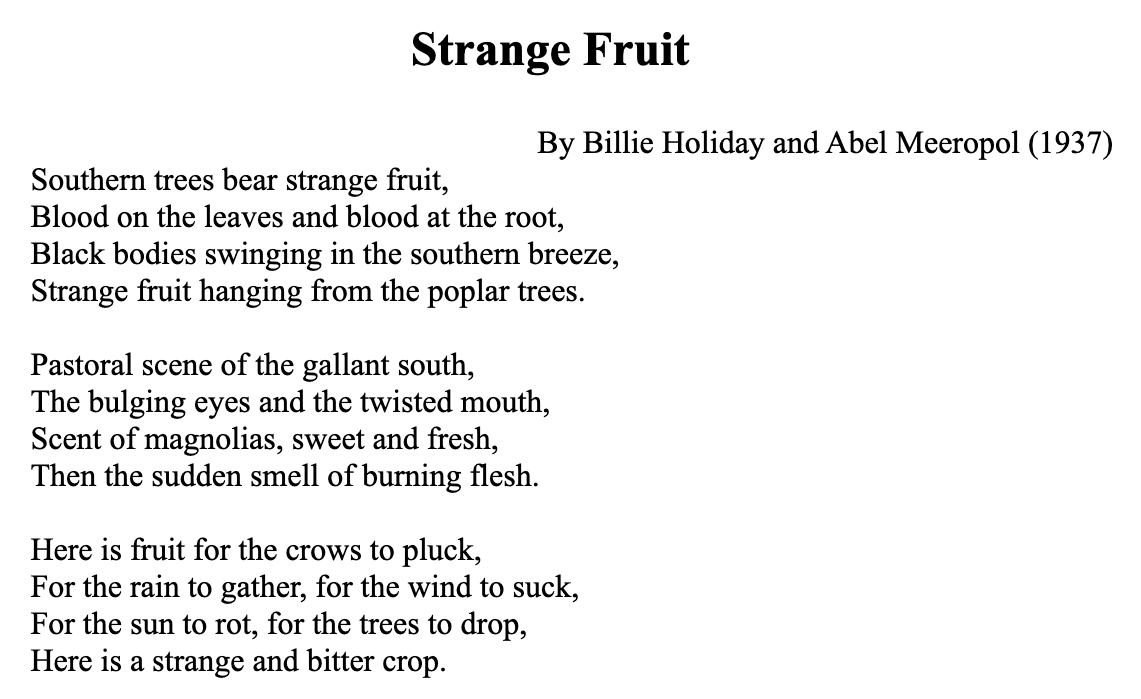
Billie Holiday was a singer who's considered one of the most important artists in jazz history. One of her most famous songs, 1939's "Strange Fruit," presented a horrifying picture of the racially motivated lynchings taking place across the United States. It would go on to sell over a million copies and would eventually be considered one of American music's most significant protest songs.

1440 Findings

Hours of research by our editors, distilled into minutes of clarity.

  • A beginner's guide to the music of Billie Holiday

    This primer from NPR breaks down some of the best entry points for newcomers to the jazz legend. From iconic tracks like "Strange Fruit" to deeper but essential late-era songs, the list offers a blueprint for appreciating Holiday before jumping into the deep end of her sprawling discography.

  • Understanding how Holiday's traumatic childhood led her to drugs

    At 10 years old, the jazz singer was raped and then returned to House of the Good Shepard under protective custody. Her rapist was eventually convicted, but the court still sent her to an all-girls Catholic reform school. Jake Brennan, the host of the Disgraceland podcast, believes those early events led Holiday to the transcendent world of performing, but that it also led her to the escape of drugs.

  • Billie Holiday's distinctive vocal technique was aided by new microphone technology

    Unlike many of her contemporaries, Holiday's voice was more reserved and seductive. In the past, that wouldn't have been practical—earlier microphones required singers to belt in order to be heard throughout a club or theater. However, technological breakthroughs in the 1930s produced more sophisticated and sensitive microphones, enabling a singer like Holiday to experiment with vocal dynamics.

  • Watch Billie Holiday's screen debut in 1935's 'Symphony in Black'

    The singer appeared alongside Duke Ellington in Paramount's "Symphony in Black," a musical short released by Paramount Pictures in September 1935, when Holiday was just 20 years old.

  • Why Billie Holiday's label refused to release 'Strange Fruit'

    Columbia Records declined to record the protest song, fearing negative reactions from southern retailers. She instead recorded it in 1939 for the Commodore label. The recording would eventually sell a million copies, be added to the Library of Congress' National Recording Registry, and be called the "Song of the Century" by Time magazine.

  • The poem behind 'Strange Fruit'

    "Bitter Fruit" was written by Abel Meeropol, a teacher, under the pseudonym Lewis Allen, after seeing a photograph of a lynching. Eventually, he set the words to music, and the song was then performed by his wife and other singers. In 1938, he played it for Holiday, who began performing it at the New York's Cafe Society. (Some users may experience a paywall.)

  • Billie Holiday ensured performances of 'Strange Fruit' had the right context

    In the song's earliest performances at Cafe Society in New York, one of a few truly integrated nightclubs in the society, the song was always performed last, after bar service had stopped, with a single spotlight on Holiday so audiences would pay close attention to the lyrics. Later, Holiday included her ability to perform the song in her concert contracts, allowing her to sing it even if venue owners were nervous about its protest message.

  • The federal agents who followed Billie Holiday

    After the success of "Strange Fruit," the Federal Bureau of Narcotics began surveilling Holiday on suspicion that she was using heroin. Jimmy Fletcher, an agent tasked with following her to clubs and parties, later said that they became quite close. "She was the type who would make anyone sympathetic because she was the loving type," he was reported as saying.

Explore Society & Culture

Art, music, sports, entertainment, movies, and many other subjects—these elements define who we are as a society and how we express ourselves as a culture. Take a deep dive into the topics shaping our shared norms, values, institutions, and more.

View All Society & Culture