Watch a time-lapse of 3D printing a Groot figurine
The total printing time on the Prusa i3 MK2 printer was 12 hours and 32 minutes, with the head alone taking nearly 5 hours to print from layering plastic filament.
Hours of research by our editors, distilled into minutes of clarity.
The total printing time on the Prusa i3 MK2 printer was 12 hours and 32 minutes, with the head alone taking nearly 5 hours to print from layering plastic filament.
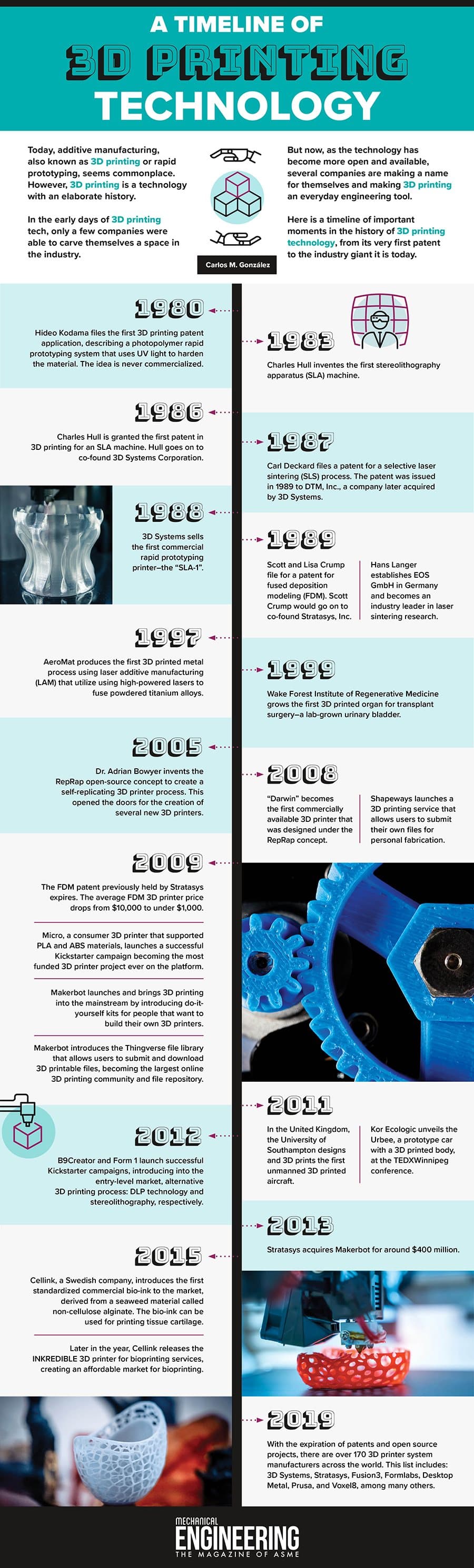
At the consumer level, the most common printing method is fused deposition modeling, which builds objects by melting an extruding thermoplastic filament that is deposited in layers. For industrial applications, selective laser sintering, which uses a laser to fuse particles of polymer powder (e.g., nylon), is preferred.
Limited only by the size of the printer and the properties of the materials used for printing, fabrications, including household items, toys, props, cases, prototypes, and models, can take anywhere from fractions of an hour to several days to make, depending on design complexity, size, color changes, and printer settings.
Data files are organized by category, including gadgets, learning, and fashion, with most available in .stl format, which is native to computer-aided design software, and presliced. Some files are also available in .3mf, an open-source file format developed as a universal standard for high-fidelity 3D printing.

Wyn Swainson, an English literature graduate student, filed a patent in Denmark for a system that scans an object and uses the scanning data to rebuild it using lasers that harden light-sensitive plastic. However, he never developed a working prototype. The idea originated from wanting to produce recreations of sculptures.
The first working 3D printing device was invented in 1983 and utilized stereolithography, a process in which a laser triggers a chemical reaction that hardens liquid resin. Powder-based laser sintering technology was patented in 1987, with metal-based powders first being used for 3D printing in 1997.
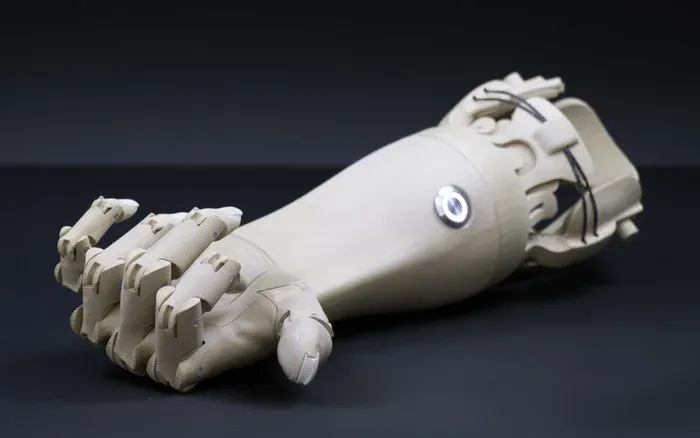
Although the sharing of designs and reduced manual labor suggested the fabrication of prosthetics would be facilitated by 3D printing, particularly in developing regions, software and hardware requirements have posed hurdles to achieving this goal. While some insurance companies have refused to cover 3D-printed limbs, they are covered by Medicare.
The technology has also been utilized for behind-the-ear and receiver-in-canal hearing aids, allowing for the creation of structures tailored to the patient's anatomy for enhanced effectiveness. 3D printing has also been used to print retinal eye cells and custom eyeglass frames.
With imaging data on a person's anatomy, external prostheses and implants, such as cranial plates or hip joints, can be custom-printed to better match a patient's body. Fabrication of porous structures can promote bone growth, leading to longer-lasting implants.
Shells for hermit crabs, wheelchairs for guinea pigs and dogs, and horseshoes for improved running performance have been created using 3D printers. Other artificial body parts made using this technology include a jaw for a loggerhead turtle, a beak for a toucan, and a tail for an American alligator.

In the greater Austin, Texas, area, a neighborhood of homes was fabricated using massive 3D printers at a rate of about one home every two weeks with just three laborers. Homes built with this material are extremely fire-resistant and may prove to be effective in hurricane-prone areas in the future.
Since our ancient human relatives began using stone tools to perform tasks, humans have harnessed scientific knowledge and new technologies to expand the boundaries of our understanding of the natural world. From quantum computing and microplastics to artificial intelligence and memory, explore these topics and more with our concise yet informative overviews and expert-curated resources.