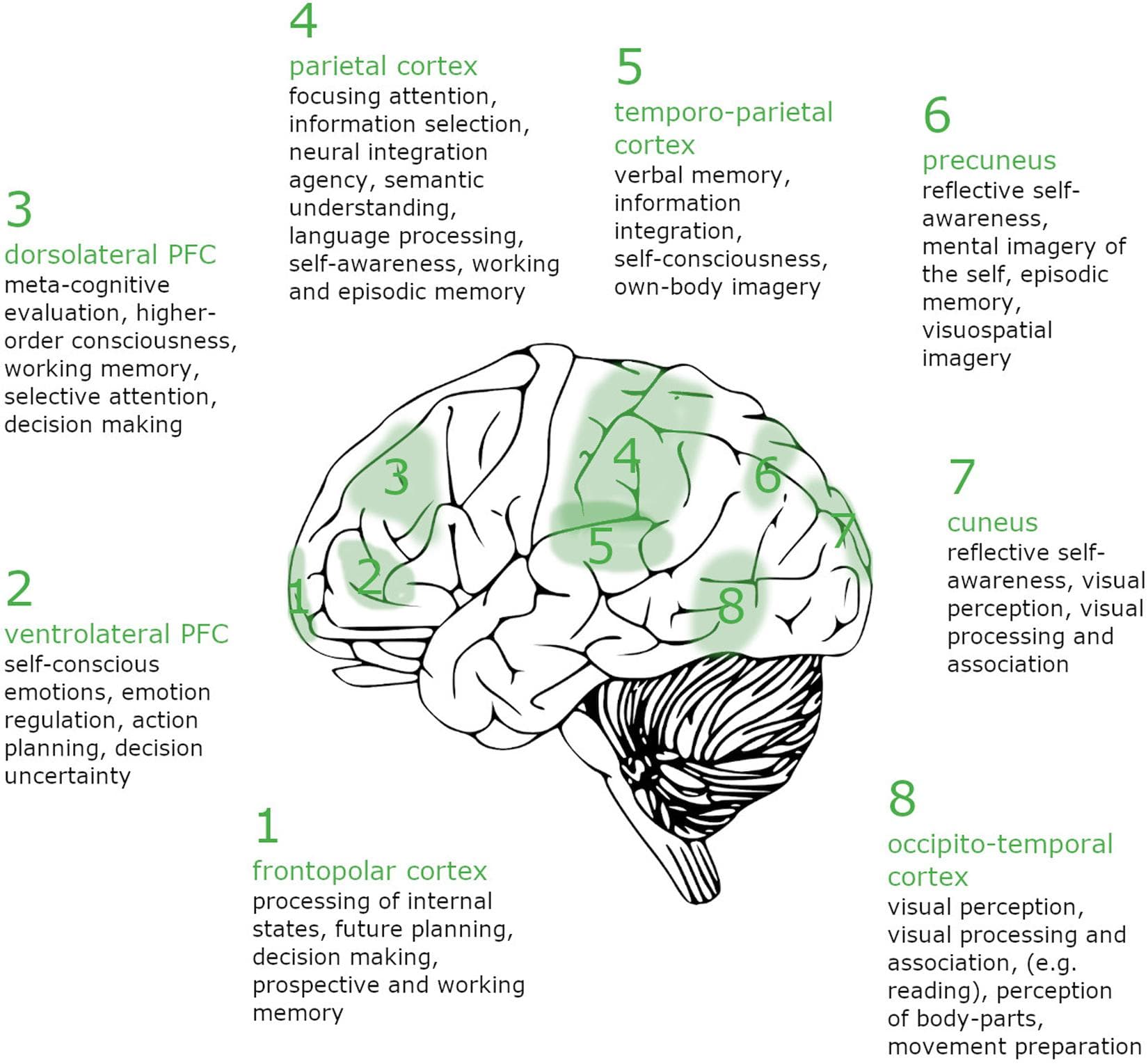
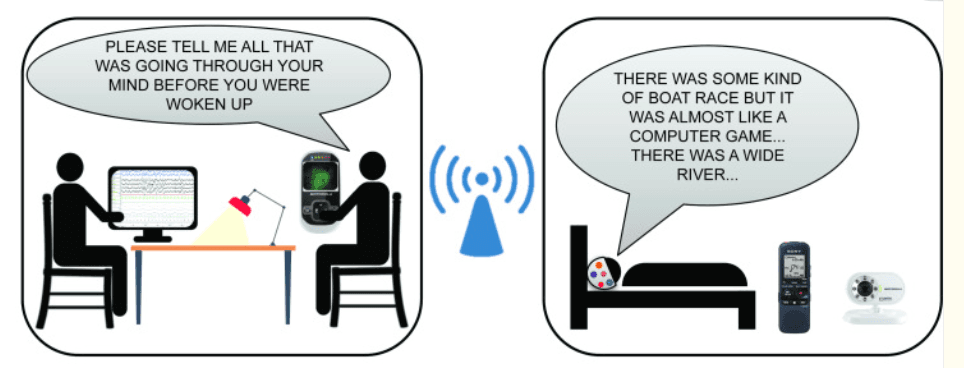
Posted by Dina Fine MaronJun 9Several brain regions are involved in lucid dreaming, a state in which a person knows they're dreaming.Show 2 more findings ZoomFrontiers | Lucid Dreaming Brain Network Based on Tholey’s 7 Klartraum CriteriaFrontiershttps://www.frontiersin.org/journals/psychology/articles/10.3389/fpsyg.2020.01885/full
Posted by August MoonJun 9Roughly 1 in 5 people experience lucid dreaming at least once a month—that's the ability to control or influence your dream environment.Show 1 more finding 0:59Lucid Dreaming Explained1440 Originalshttps://youtube.com/shorts/dK-NA0jC8ps
Posted by Teddy BurkhardtSep 25, 2023The benefits of lucid dreamingLucid dreams happen when the dreamer knows they've stepped out of the bounds of waking life. Studies show it can help dreamers cultivate creativity, process grief, and work through trauma. A 2021 study found that 85% of participants with PTSD no longer qualified for the diagnosis after a week of trauma-informed lucid dreaming in which they intentionally witnessed (and therefore integrated) recurring nightmares or changed the outcome completely. ZoomThe sleep secret: how lucid dreams can make us fitter, more creative and less anxiousThe Guardianhttps://www.theguardian.com/lifeandstyle/2023/sep/20/the-sleep-secret-how-lucid-dreams-can-make-us-fitter-more-creative-and-less-anxious
Posted by Teddy BurkhardtJan 8, 2024The dreaming brain, as understood by scientistsTechnology has advanced to where the seemingly separate fields of psychology and neuroscience are asking the same questions about dreams, such as whether they're more closely related to perception or visualization. Some field-intersecting findings include research that shows people with impaired face perception don't dream of faces, those with brain legion-related cognition difficulties deal with similar issues in dreams, and children's dreams change in parallel to their cognitive development. ZoomDreaming and the brain: from phenomenology to neurophysiologyhttps://www.cell.com/trends/cognitive-sciences/fulltext/S1364-6613(09)00267-8?_returnURL=https%3A%2F%2Flinkinghub.elsevier.com%2Fretrieve%2Fpii%2FS1364661309002678%3Fshowall%3Dtrue
Posted by Dina Fine MaronJun 9Dreams largely occur during REM sleep (but not entirely).Show 2 more findingsWhy and How Do We Dream? | Quanta MagazineQuanta Magazinehttps://open.spotify.com/episode/57o0CHNTQ231GKyrvV85a3
Posted by Dina Fine MaronJun 9How your subconscious influences your decisionsHow much of your desires and daily choices are truly yours? One of the most effective ways to influence someone's subconscious is when they're asleep. To study this possibility, researchers trained participants to be able to dream lucidly, a phenomenon that occurs when a dreamer knows they're dreaming. 14:35Dream Hacking: 3 Groundbreaking ExperimentsNOVA PBS Officialhttps://www.youtube.com/watch?v=7M06fJxiayo
Posted by Dina Fine MaronJun 9Dream interpretation has evolved from ancient mystical explanations, to dream reports, to tracking electrical activity in the brain and more.Show 1 more finding 31:24The science of dreams | PODCASThttps://www.youtube.com/watch?v=wHI4MAfq-eg
Posted by Drew SteigerwaldApr 10We dream for around two hours each night, on average, but the exact purposes of dreams remains under investigation.Show 3 more findings 3:32Dreams Explained1440 Originalshttps://www.youtube.com/watch?v=tym1bbD10vI
Posted by Dina Fine MaronJun 9The hippocampus, located deep inside the temporal lobe, appears to play a central role in dreaming and memory, according to recent research on dreaming and damage to that area of the brain.Show 2 more findings ZoomDreaming with hippocampal damage - PMCeLifehttps://pmc.ncbi.nlm.nih.gov/articles/PMC7279885/
Posted by Dina Fine MaronJun 9During dream sleep, the brain connects new information learned during the day with information already stored in the mind, creating a revised mind-wide web of associations. 4:02What Happens To Your Brain When You DreamInsider Techhttps://www.youtube.com/watch?v=rBby0RJw3Dc
Posted by Dina Fine MaronJun 8The study of dreams, formally called oneirology, has evolved over the centuries, from anecdotal interpretations to advanced brain imaging.Show 2 more findingsOneirology Part 1 (DREAMS) with G. William DomhoffOlogies with Alie Wardhttps://open.spotify.com/episode/1B8THYg4BJ8jghDX6sAdbV
Posted by Dina Fine MaronJun 8Sleep is no longer considered a binary state—scientists are seeking to map a variety of liminal states between sleep and waking, including the hypnagogic state associated with boosts of creativity.Show 5 more findings ZoomHow the Brain Moves From Waking Life to Sleep (and Back Again) | Quanta MagazineQuanta Magazinehttps://www.quantamagazine.org/how-the-brain-moves-from-waking-life-to-sleep-and-back-again-20251017/
Posted by Teddy BurkhardtJan 30, 2025Why don’t you remember all your dreams?Despite being a near-nightly occurrence, we remember very few of our dreams. Researchers believe reduced activity in regions where memories are stored, a different neurochemical environment during sleep, and rapid transition during waking contribute to this phenomenon. ZoomWhy don’t you remember all your dreams?Popular Sciencehttps://www.popsci.com/science/why-dont-i-remember-my-dreams/
Posted by Dina Fine MaronFeb 26Sleeping on a problem does seem to help—in fact research published in 2026 suggests scientists can seed people's dreams with sound cues about a difficult puzzle during REM sleep and they'll be better able to solve it.Show 5 more findings ZoomCan Dreams Help You Solve Problems?TIMEhttps://time.com/7381398/can-dreams-help-you-solve-problems/
Posted by Dina Fine MaronMar 8, 2024What is the brain up to when the mind wanders?As you stare into the distance while washing your home's seemingly never-ending pile of dishes, the brain activates its default mode network. This collection of "task-negative" brain regions associated with memory, reward, action consideration, and prediction alight with activity when humans mentally turn inward, possibly giving rise to the brain's ability to wander and humans' ability to construct internal narratives about the world. ZoomWhat Your Brain Is Doing When You’re Not Doing Anything | Quanta MagazineQuanta Magazinehttps://www.quantamagazine.org/what-your-brain-is-doing-when-youre-not-doing-anything-20240205
Posted by Dina Fine MaronJun 9Animal brain studies show brain activity similar to what we'd expect during dreams, but parsing whether animals are truly dreaming depends on how one defines dreaming and how scientists could prove it.Show 3 more findings ZoomAnimals dream too—here's what we knowNational Geographichttps://www.nationalgeographic.com/animals/article/animals-dream-too-heres-what-we-know
Posted by Dina Fine MaronJun 30Terminal lucidity is the phenomenon of sudden, heightened mental clarity when on the verge of deathThe "Let's Talk Near Death" podcast explores phenomena around the end of life, inviting guests to recount their own experiences. This episode focuses on the phenomenon known as "terminal lucidity," where patients experience clarity, vivid memory recall, and more, typically following a heart attack, stroke, or other trauma. Let’s Talk Near Death — Kirsty Salisbury - Podcaster, Author & End of Life Coachhttps://open.spotify.com/episode/32J7fQD8ApMqA0EsLXzqLR
Posted by Drew SteigerwaldMay 14Studies of psychedelic use may help shed light on the nature of consciousnessThe nature of consciousness—what it is, where it comes from, and how it manifests as moment-to-moment experience—remains under debate by scientists. Recent studies show psychedelics were found to boost low-frequency brain signals known as delta waves, a behavior also seen during dream states. 11:36Psychedelics and consciousness: Could drugs help quantify our waking state?Naturehttps://www.youtube.com/watch?v=1Tl7ktZLWF8
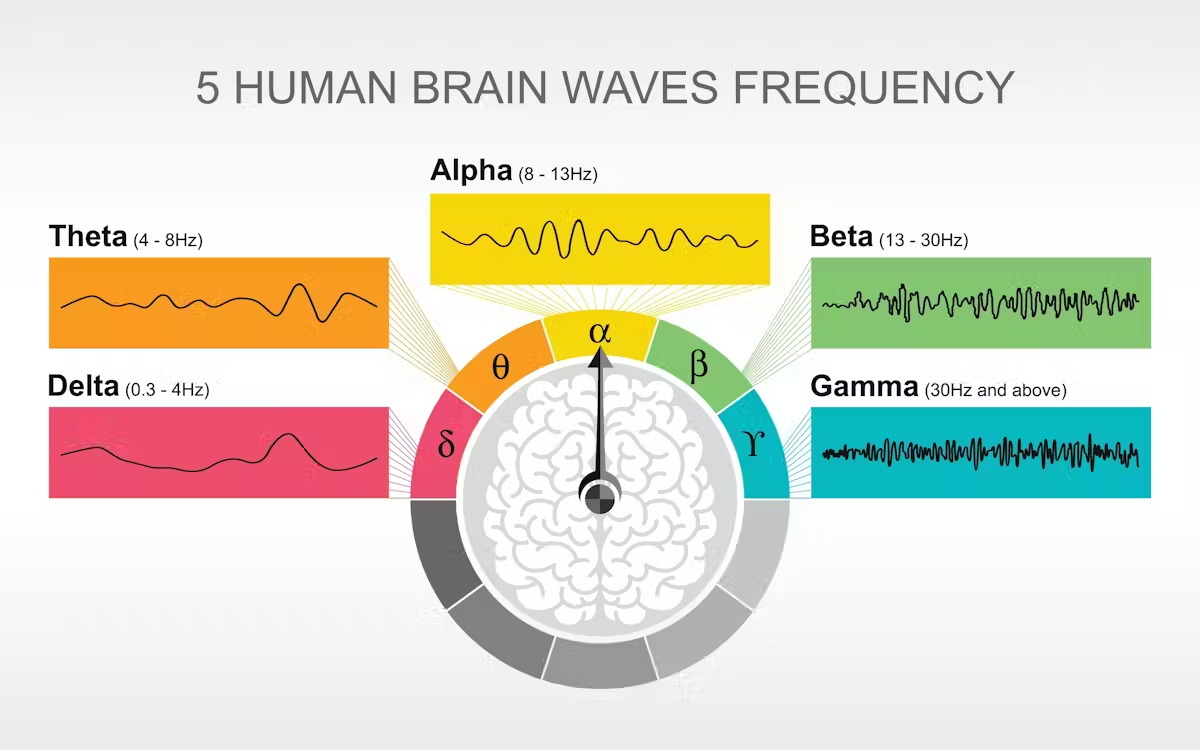
Posted by Meher QazilbashMar 5, 2025Delta brain waves happen during deep sleep, while REM cycles resemble being awakeAs the brain cycles from wakeful rest to deep sleep, different brain waves emerge. Alpha waves occur during restful waking states, while theta waves can be associated with light sleep and meditation. Delta waves are observed during deep sleep—but REM cycles more closely resemble active awake states. ZoomAlpha, beta, theta: what are brain states and brain waves? And can we control them?The Conversationhttps://theconversation.com/alpha-beta-theta-what-are-brain-states-and-brain-waves-and-can-we-control-them-219236
Posted by Dina Fine MaronDec 16, 2023Why do dreamers twitch?This thought-provoking piece highlights newer research suggesting sleep twitches may not be random dream leftovers, but instead a crucial way our brains map and understand our bodies. From sleeping rat pups to dreaming octopi, this biological mapping system appears universal across animal species. ZoomWhat Are Dreams For?The New Yorkerhttps://www.newyorker.com/science/elements/what-are-dreams-for
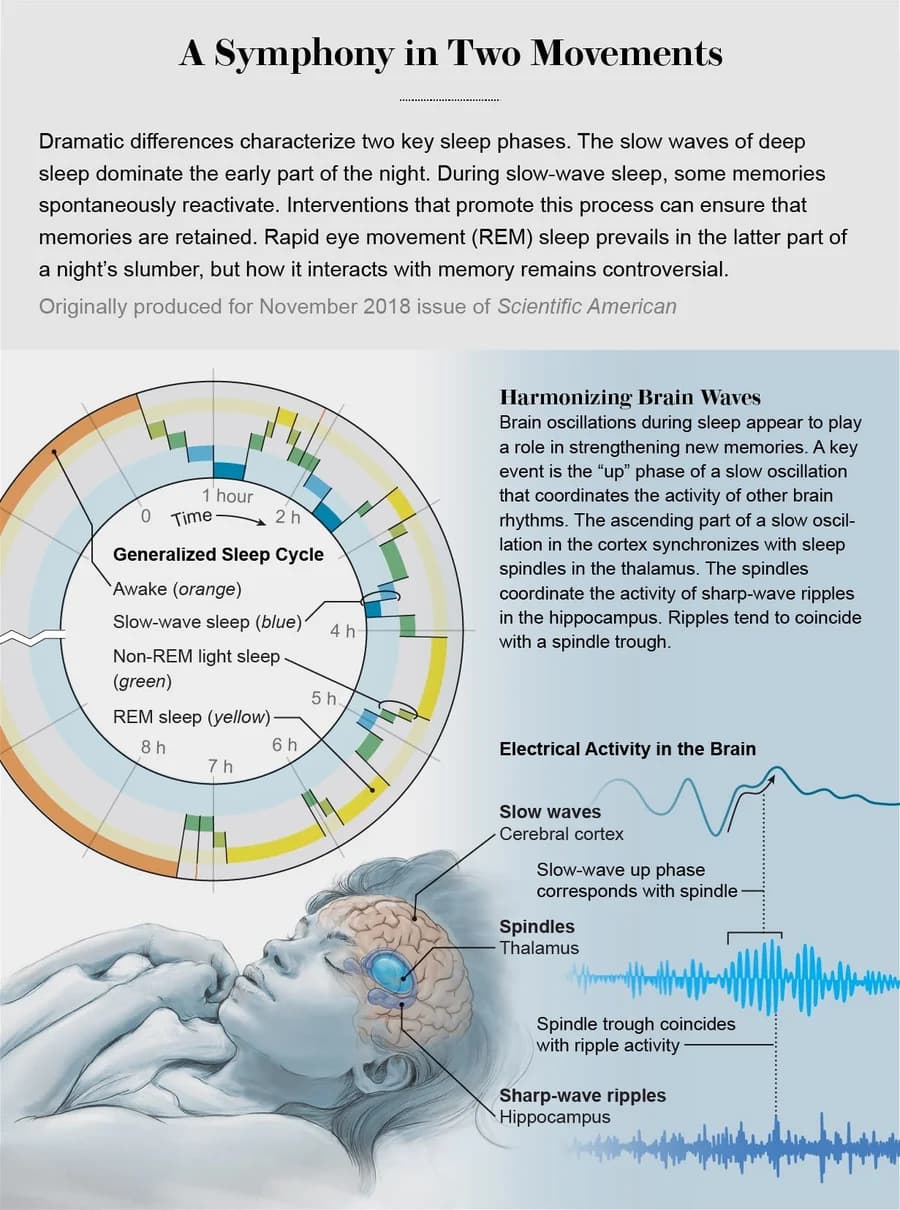
Posted by Teddy BurkhardtDec 16, 2023How dreams affect your memoryIn 1999, scientists conducted a study in which participants were asked to recall images flashed before them for milliseconds. They found that participants who slept before recalling the information performed better than those who had been asked to recall the same information that same day. This was some of the earliest convincing evidence of how crucial sleep is for learning and memory, findings that current research continues to strengthen. ZoomSleep Melds MemoriesHarvard Universityhttps://magazine.hms.harvard.edu/articles/sleep-melds-memories
Posted by Dina Fine MaronMar 5Scientists are learning to guide your dreams using sound and touch.Show 2 more findings ZoomMeet the Researchers Who Can Engineer Your Dreams | The WalrusThe Walrushttps://thewalrus.ca/dream-engineering/
Posted by Dina Fine MaronMay 15Psychedelics set off a flurry of brain activity that may permanently alter itThe brain seems to experience a sharp increase in communication between areas that generally don't interact. New research suggests a thin, sheet-like gray matter structure tucked deep within the brain, between the insular cortex and striatum, may be the key to this change. The area is centrally located and home to many of the receptors that psychedelics target, potentially rewiring the brain and rewriting thought patterns. 4:12How Psychedelics Change the BrainNOVA PBS Officialhttps://www.youtube.com/watch?v=pKR-jvGlkNg
Posted by Dina Fine MaronAug 17Brain activity sometimes goes into overdrive around the point of death according to researchers' recent analysis of patients' brains before and after they were taken off their ventilators. Show 3 more findings ZoomNear-death experiences are ‘electrical surge in dying brain’Big Thinkhttps://bigthink.com/neuropsych/dying-brain-electrical-surge/
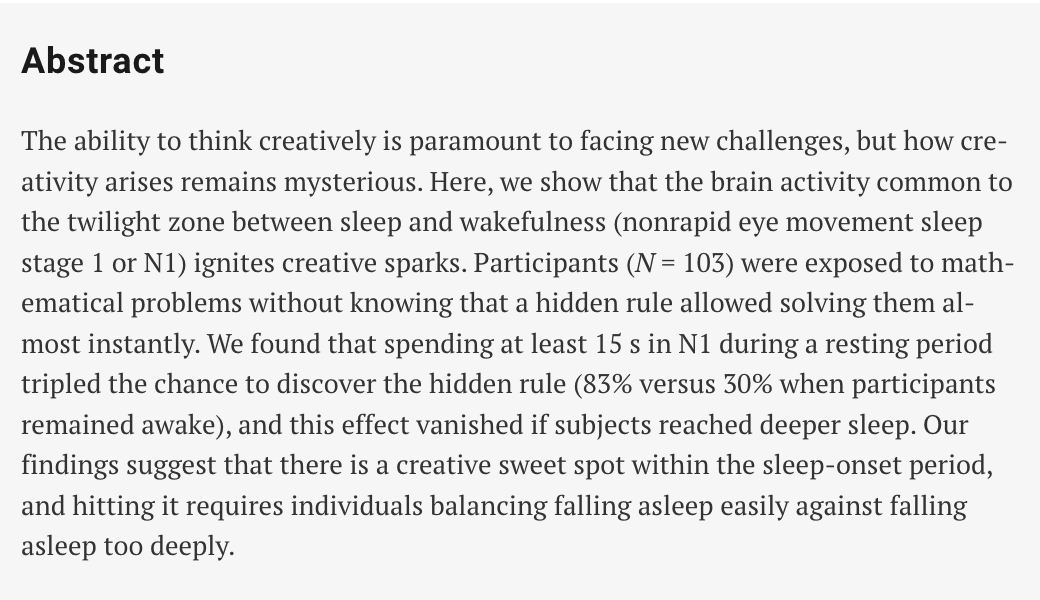
Posted by Dina Fine MaronJun 8Sleep research published in 2021 confirmed that there is a 'creative sweet spot' when people are drifting off to sleep, and that if they wake up at that point to work, it can boost their creative problem-solving.Show 1 more finding ZoomSleep onset is a creative sweet spotScience Advanceshttps://www.science.org/doi/10.1126/sciadv.abj5866
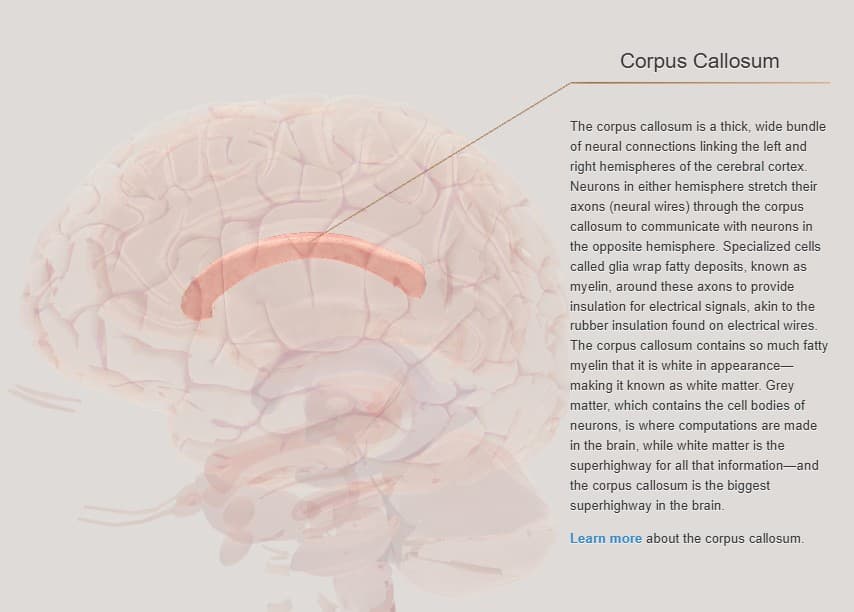
Posted by Marco Daniel MachadoSep 12, 2025Brain hemispheres control opposite sides of the body without either dominatingAlthough distinctions exist between the two halves—language processing is left-oriented, and emotions are right-oriented—signals are sent along neural pathways between the hemispheres and across different regions to collectively process information about external stimuli. ZoomThe Difference Between the Left and Right BrainWebMDhttps://www.webmd.com/brain/the-difference-between-the-left-and-right-brain
Posted by Marco Daniel MachadoJun 27, 2025The limbic system drives emotion, memory, and survival instincts in the brain.This interconnected group of brain structures—including the amygdala, hippocampus, thalamus, and hypothalamus—processes emotional responses, regulates bodily functions, and plays a key role in memory and learning. 5:42Emotions and the Brain: What is the limbic system?https://www.youtube.com/watch?v=yYUImmcq-bc
Posted by Dina Fine MaronJun 3, 2022Physiological changes to the brain on LSD can be captured via MRIPsychedelics like LSD often take users on novel experiences that can result in lasting shifts in perspective and behavior. See how LSD affects brain activity in this video that details how scientists visually captured the psychedelic's effect for the first time. 3:34The first modern images of a human brain on LSDQuartzhttps://www.youtube.com/watch?v=kvalFfavNpU
Posted by August MoonApr 30, 2025Your brain moves through four distinct sleep stages every nightEach stage plays a key role in memory, repair, restoration, and other key biological functions. The full cycle generally proceeds from light sleep and deep rest into vivid REM dreaming, which repeats between three and five times nightly. 1:34How Sleep Works1440 Originalshttps://www.youtube.com/shorts/R1UIvqdQmnM
Posted by Dina Fine MaronFeb 23, 2024Sleep disorders can exacerbate neurological and other health conditionsBrain regions that control sleep sit adjacent to those that regulate the autonomic nervous system, which controls involuntary bodily functions like heart and breathing rates. These neighbors influence each other, meaning poor sleep can impair or negatively impact the ANS, further disturbing sleep. ZoomAutonomic Dysfunction in Sleep Disorders: From Neurobiological Basis to Potential Therapeutic ApproachesNational Institutes of Healthhttps://www.ncbi.nlm.nih.gov/pmc/articles/PMC8926769/
Posted by Dina Fine MaronAug 18Medical advances that manage to resuscitate people from comas and cardiac arrests have enabled new research into the brain activity of people experiencing near-death experiences and a new (contested) explanation about why they occur. Show 6 more findings ZoomThe New Science of the Near-Death ExperienceNautilushttps://nautil.us/the-new-science-of-the-near-death-experience-1279957
Posted by Dina Fine MaronFeb 9Scientists are studying dying patients' brain activity in the final moments of lifeIn the final moments of life there are distinctive bursts of coordinated neural activity. Researchers are interested in parsing that data to better understand the dying process and also exploring how this data relates to our understanding of consciousness.BBC Science Focus Magazinehttps://www.sciencefocus.com/the-human-body/near-death-experiences-brain-activity-nde
Posted by Teddy BurkhardtJan 2, 2023Explore an interactive 3D model of the brainThe brain contains about 86 billion neurons—nervous system cells—and controls vital bodily functions via electrochemical signals. Neurons form circuits through axons, and different brain regions use these circuits to perform specific tasks. ZoomInteractive Brain Modelhttps://www.brainfacts.org/3d-brain
Posted by Meher QazilbashJun 3The brain consolidates memories during sleep During sleep, the brain appears to process memories from the day and encode them into long-term storage. At the same time, the brain prunes old memories out of the brain that are no longer useful. Understanding this process also sheds light a various neurodegenerative diseases. ZoomSleep’s Crucial Role in Preserving MemoryYale e360https://medicine.yale.edu/news-article/sleeps-crucial-role-in-preserving-memory/
Posted by Dina Fine MaronMay 14After 25 people used virtual reality headsets to practice flying with virtual wings—flapping their arms—their visual cortex responded to the wings almost as if they were real arms, treating them as body parts.Show 2 more findings Zoom25 people learned to fly in VR. Here’s how the brain changedScience Newshttps://www.sciencenews.org/article/virtual-wings-brain-changes
Posted by Marco Daniel MachadoJun 27, 2025Memory exists as multiple types stored across various brain systemsMemory isn't one uniform function—it's made up of multiple systems, like declarative (facts/events) and non-declarative (skills/habits), which involve different brain areas such as the hippocampus, amygdala, and cerebellum. 6:28Where Are Memories Stored?https://www.youtube.com/watch?v=R0wbTR95VEs
Posted by Marco Daniel MachadoOct 6, 2025Research suggests the brain maintains connections to lost limbsDecades-old research suggested brain reorganization after amputations, but brain scans show unchanged limb representations. Phantom limb pain may result from such unchanged brain maps, which may enhance prosthetic limb control in brain-computer interface technology.In the brain, a lost limb is never really goneNPRhttps://www.npr.org/sections/shots-health-news/2025/08/27/nx-s1-5515601/brain-map-lost-limb-amputee-plasticity