Back

By changing one's frame of reference in special relativity, electric forces can be reinterpreted as magnetic forces, highlighting how the two together constitute electromagnetism.

Similar Posts

Here’s what we found related to above. Click through to dive even deeper.
  • Electrical energy transfers at near light speed, even though the electrons carrying the energy in circuits only move a fraction of a millimeter per second.

  • While natural magnets can attract and repel, some nonmagnetic objects can also be levitated by changing magnetic fields, which can also generate electricity.

  • Individuals moving at different speeds may disagree on the order of observed events because each experiences the passage of time differently, according to special relativity.

  • In the 1910s, physicists proved that the existing laws of physics made it impossible for solid magnets to exist—a finding overturned by quantum mechanics.

  • Within Einstein's picture of the universe, gravity is technically not a force because forces cause accelerations that deviate objects from their natural path, and moving solely due to gravity is natural.

  • Watch a timeline of the history of electricity, from observations of static electricity in antiquity to the War of the Currents—a rivalry to establish the ideal system for electric grids.

  • Visualize quantum field theory, where observable forces like electromagnetism result from energy and momentum being exchanged between universe-sized fields.

  • The centrifugal force is associated with the feeling of being pushed outward when moving in a circle, but it is a fictitious force arising from objects' tendency to move in straight lines.

  • Visualize how the order of events changes, according to special relativity, when the perspective is changed between observers who move relative to one another.

  • Certain objects are magnetic because their electrons' magnetic moment—an intrinsic quantum property—align within the object in specific patterns.

  • Electricity can flow indefinitely along a ring of superconducting material, which provides zero resistance to the movement of charges due to quantum effects.

  • While special relativity describes motion along flat spacetime—the underlying fabric of the universe—general relativity extends this theory to explain motion through curved spacetime.

  • You have never made physical contact with anything in your life because electrons in the outer layer of atoms on the surface of objects repel one another.

  • Unlike other metals, mercury is a liquid at room temperature because of special relativity, which affects the spatial distribution of electrons in the atoms.

  • Although the color of light changes due to motion between a source and an observer—the Doppler effect—relativistic motion further alters it due to time dilation.

  • According to the equivalence principle, objects in a closed space cannot tell the difference between whether they are accelerating or experiencing a uniform gravitational field.

  • Metal plates can be pushed together by empty space—the Casimir effect—because of virtual particles that cannot be observed but are predicted by quantum field theory.

  • Albert Einstein's theory of gravity arose from what he described as 'the happiest thought of his life': realizing that a person who fell off the roof of their house would not feel their own weight as they fell.

  • For the speed of light to be constant for all observers, space and time cannot be absolute, universal dimensions that are identical for everyone.

  • Light appears to slow as it travels through transparent materials due to interactions with the charged particles in the atoms of the material.

  • Molten metal moving around Earth's inner core creates the planet's magnetic field, whose north and south poles do not align with the planet's geographic poles.

  • Every fundamental particle is a vibration in a field that spans the entire universe, according to quantum field theory.

  • Quantum electrodynamics is considered the first true quantum field theory, which applied quantum mechanics to the electromagnetic radiation field.

  • Because they move at the cosmic speed limit through space, photons—particles of light—do not 'perceive' distance or the passage of time.

  • 'Lightsabers' can be created by holding fluorescent bulbs up to overhead power lines, causing the bulbs to light up without making contact.

  • While moving through space faster than the speed of light is forbidden by special relativity, dark energy makes about 97% of galaxies appear to do so.

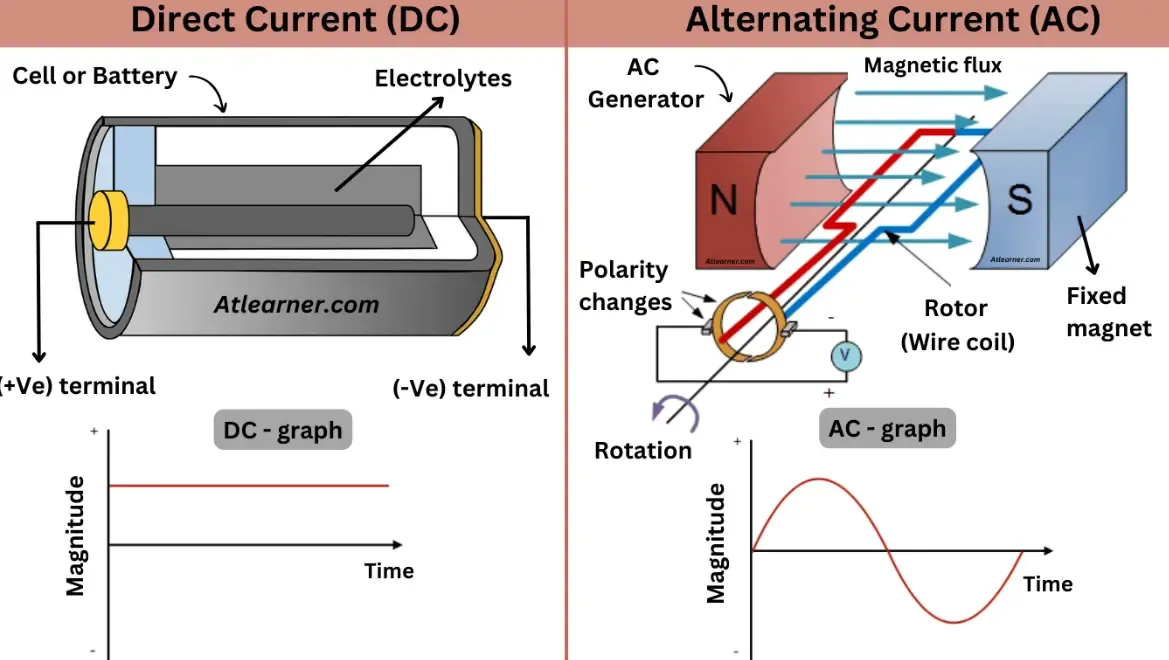
  • Electricity is produced when the ends of a battery are connected by a conducting wire, triggering chemical reactions that release the energy stored in chemical bonds.

  • Watch an animated derivation of the mass-energy equivalence, or E = mc², as a consequence of special relativity.

  • Transformers change the current and voltage across a set of wires by wrapping them around a magnetic core and using the magnetic field of one wire to induce a current in the other.

  • Antimatter particles possess the same mass and spin as their normal particle counterparts, but possess an opposite charge and transform into pure energy upon colliding with normal matter.

  • Gravity, electromagnetism, and two nuclear forces make up nature's fundamental forces

    While gravity is the most familiar force, it is also the weakest and the only one without a particle to mediate the force. The weak nuclear force is responsible for radioactive decay and transmutation of elements, while the strong nuclear force holds quarks together.

  • Fundamental particles of the same type, such as all electrons or all photons, are identical because they are all vibrations in the same quantum field.

  • Learn why magnets, like statically charged balloons, can deflect water

    While the oxygen atom in water molecules strongly attracts hydrogen's electrons—producing an uneven charge distribution that pulls water toward balloons that have been rubbed against surfaces—the presence of a magnetic field alters the path of these electrons, which produce their own tiny magnetic fields. The interaction of these fields repels water away from magnets, making it diamagnetic.

You've reached the end.