Back

Posted by

Wireless charging uses a magnetic field to move charged particles in a battery

Based on the concept of electromagnetic induction, when a compatible device is placed on a charging pad with correct alignment, the alternating current flowing through the pad creates a changing magnetic field. This magnetic field induces a current in the device, recharging the battery without a connecting wire.

Similar Posts

Here’s what we found related to above. Click through to dive even deeper.

  • Posted by

    While natural magnets can attract and repel, some nonmagnetic objects can also be levitated by changing magnetic fields, which can also generate electricity.

  • Posted by

    By changing one's frame of reference in special relativity, electric forces can be reinterpreted as magnetic forces, highlighting how the two together constitute electromagnetism.

  • Posted by

    Electricity is produced when the ends of a battery are connected by a conducting wire, triggering chemical reactions that release the energy stored in chemical bonds.

  • Posted by

    Contactless credit cards descend from a batteryless Cold War listening device

    The same physics that let Soviet spies eavesdrop on the US ambassador in 1945 underlie contactless payment methods today. The device is a passive chip powered wirelessly by incoming radio waves.

  • Posted by

    Fast charging can degrade batteries faster by exposing them to higher temperatures.

  • Posted by

    Transformers change the current and voltage across a set of wires by wrapping them around a magnetic core and using the magnetic field of one wire to induce a current in the other.

  • Posted by

    Magnetic fields can be visualized using ferrofluids—substances made of magnetic nanoparticles suspended in a carrier fluid.

  • Posted by

    Rechargeable batteries rely on chemical reactions to generate electricity, but unavoidable reactions cause them to gradually lose capacity.

  • Posted by

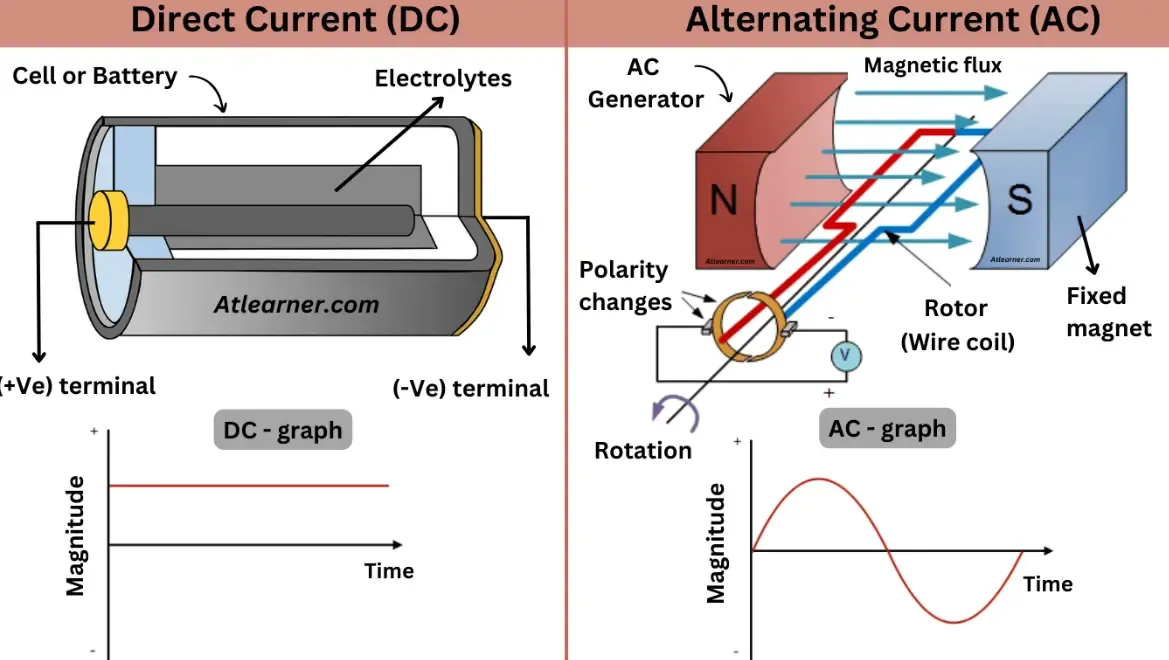
    Visualize how alternating currents—electricity that periodically changes direction—are generated by rotating magnetic fields, as occurs in turbine-generator systems.

  • Posted by

    In the photovoltaic effect, light generates electricity by creating a charge imbalance after knocking electrons out of atoms in the semiconducting materials of solar cells.

  • Posted by

    Faraday cages protect enclosed objects by redirecting electrical currents

    Constructed from conductive materials, the cage allows electrons to distribute themselves evenly throughout its surface and travel to ground, keeping the interior neutrally charged and preventing any internal electricity. The same principle blocks electromagnetic waves by redirecting the electric field component, preventing telecommunication signals from entering the apparatus.

  • Posted by

    Certain objects are magnetic because their electrons' magnetic moment—an intrinsic quantum property—align within the object in specific patterns.

  • Posted by

    Molten metal moving around Earth's inner core creates the planet's magnetic field, whose north and south poles do not align with the planet's geographic poles.

  • Posted by

    Fluxgate magnetometers detect magnetic fields using electromagnets

    Instead of a compass needle's movement indicating a magnetic field, an alternating current produces an oscillating magnetic field in a metal bar. An external magnetic field creates an imbalance in the oscillations, which can be measured quantitatively.

  • Posted by

    Electricity can flow indefinitely along a ring of superconducting material, which provides zero resistance to the movement of charges due to quantum effects.

  • Posted by

    'Lightsabers' can be created by holding fluorescent bulbs up to overhead power lines, causing the bulbs to light up without making contact.

  • Posted by

    Learn why magnets, like statically charged balloons, can deflect water

    While the oxygen atom in water molecules strongly attracts hydrogen's electrons—producing an uneven charge distribution that pulls water toward balloons that have been rubbed against surfaces—the presence of a magnetic field alters the path of these electrons, which produce their own tiny magnetic fields. The interaction of these fields repels water away from magnets, making it diamagnetic.

  • Posted by

    Objects can be levitated by sound using an apparatus that causes these waves to interfere and combine, creating a 'pressure cage.'

  • Posted by

    By manipulating the orientation of hydrogen atoms, magnetic resonance imaging machines capture cross-sections of an organism to build a 3D reconstruction of its anatomy.

  • Posted by

    Watch a timeline of the history of electricity, from observations of static electricity in antiquity to the War of the Currents—a rivalry to establish the ideal system for electric grids.

  • Posted by

    Microwave ovens heat food by agitating certain molecules with non-ionizing light

    Molecules with resonant frequencies within the microwave range vibrate, producing heat between adjacent matter, just as hands warm when rubbed together. The mesh in front of an oven's door confines the microwaves to the container, while the rotating plate allows different parts of food to travel through regions of maximum vibration.

  • Posted by

    Electrical energy transfers at near light speed, even though the electrons carrying the energy in circuits only move a fraction of a millimeter per second.

  • Posted by

    Elon Musk's Neuralink's N1 chip can wirelessly read brain signals from over 2,000 electrodes

    The device is a battery-powered brain implant that transmits data via Bluetooth. Neuralink's near-term objectives for the device focus on unlocking new treatments for paralysis, neurological disorders, and some psychiatric conditions.

  • Posted by

    Nikola Tesla's biggest dream was a worldwide network of wireless power transmission

    He built the Wardenclyffe lab and a massive prototype transmission tower to develop trans-Atlantic transmission, but it was never operational. The concept was based on incorrect assumptions about Earth's conductivity, but it inspired subsequent efforts for wireless systems.

  • Posted by

    In the 1910s, physicists proved that the existing laws of physics made it impossible for solid magnets to exist—a finding overturned by quantum mechanics.

  • Posted by

    Watch how metals are extracted from rechargeable devices during recycling

    Recyclable batteries found in cars, phones, power tools, and other electronics contain lithium, cobalt, nickel, and other precious metals, whose reuse generates 70% fewer emissions than during their initial mining. Upon shredding these devices, a filter press squeezes the pieces through a proprietary fluid, which separates them for future reuse.

  • Posted by

    You have never made physical contact with anything in your life because electrons in the outer layer of atoms on the surface of objects repel one another.

  • Posted by

    In 2026, researchers successfully transported antimatter in a truck using a portable trap that employed electromagnetic fields to hold 92 antiprotons.

  • Posted by

    Genetically modified viruses can help construct battery electrodes

    MIT scientists' modifications caused the viruses to attract conductive materials, such as gold ions, which the viruses self-assembled into nanowires that could be used in batteries. These components allow batteries to be thinner and flexible enough to be constructed into new shapes.

  • Posted by

    If two strands of conducting materials are connected at two junctions, electricity can be generated if one junction is heated while the other is cooled—a phenomenon known as the Seebeck effect.

  • Posted by

    Airplane mode isn't there to protect planes, but it does save your mobile device's battery life.

You've reached the end.