Back

Posted by

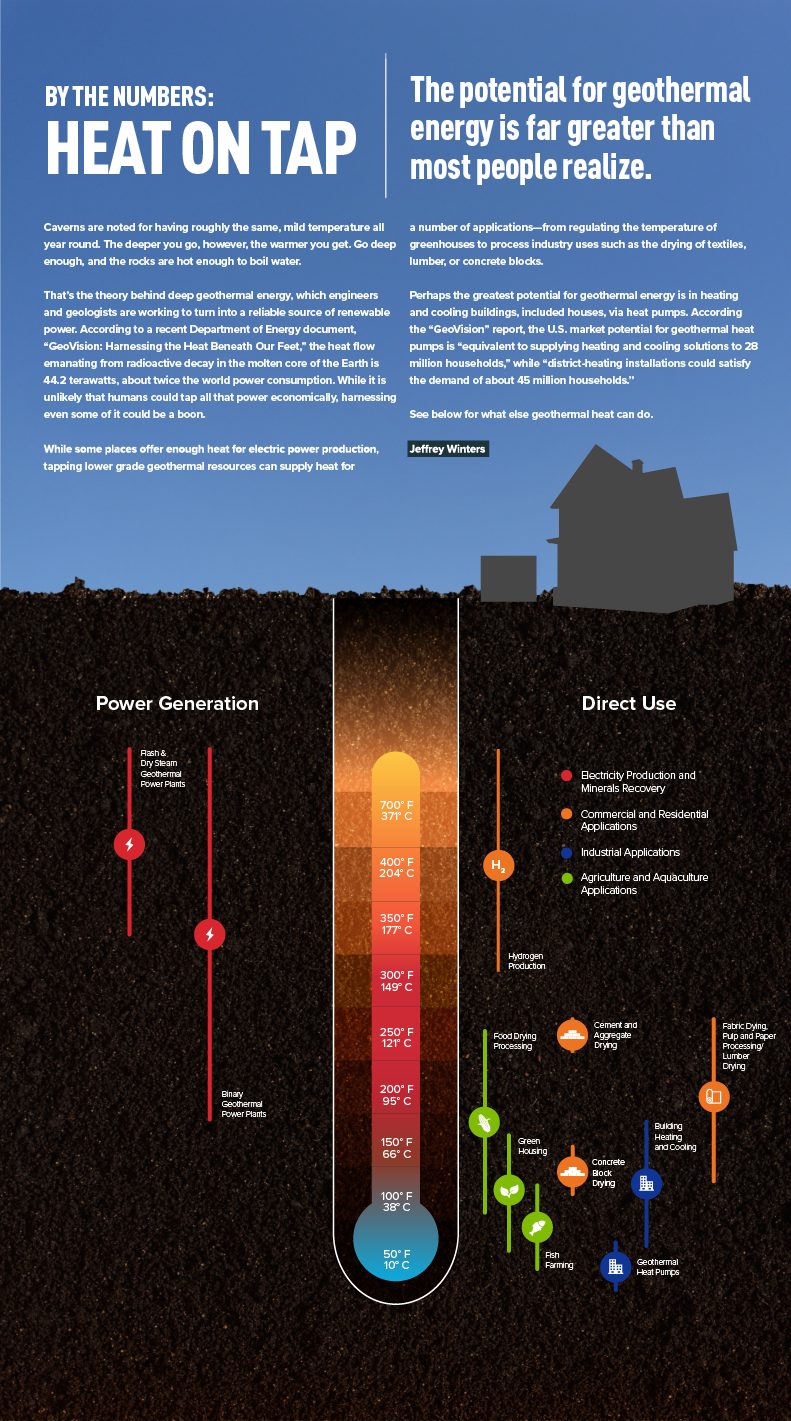
Aquifer thermal energy storage systems bank water heated during the summer in aquifers—layers of porous rock, gravel, and sand filled with groundwater—which are then collected in winter to warm homes.

Findings

Additional insights we found via Undecided with Matt Ferrell

  1. During the summer, ATES systems draw cold groundwater into heat exchangers that help cool homes, while the colder water that is readily available in winter is pumped back into aquifers to cool homes the following summer.

  2. Because water has a high heat capacity—it can store large amounts of thermal energy—ATES can be much more efficient than gas-furnace heating and cooling via heat pumps, while reducing emissions by avoiding the need to run a compressor.

  3. In the 1980s, the US Department of Energy conducted feasibility studies examining the viability of ATES, which can stimulate bacterial growth by introducing warm water into aquifers and uses wells that can corrode over time.

  4. About 85% of ATES projects are located in the Netherlands, where legislation has required buildings to meet specific energy efficiency benchmarks over time toward reaching energy-neutral or energy-positive status.

More Posts

You've reached the end.