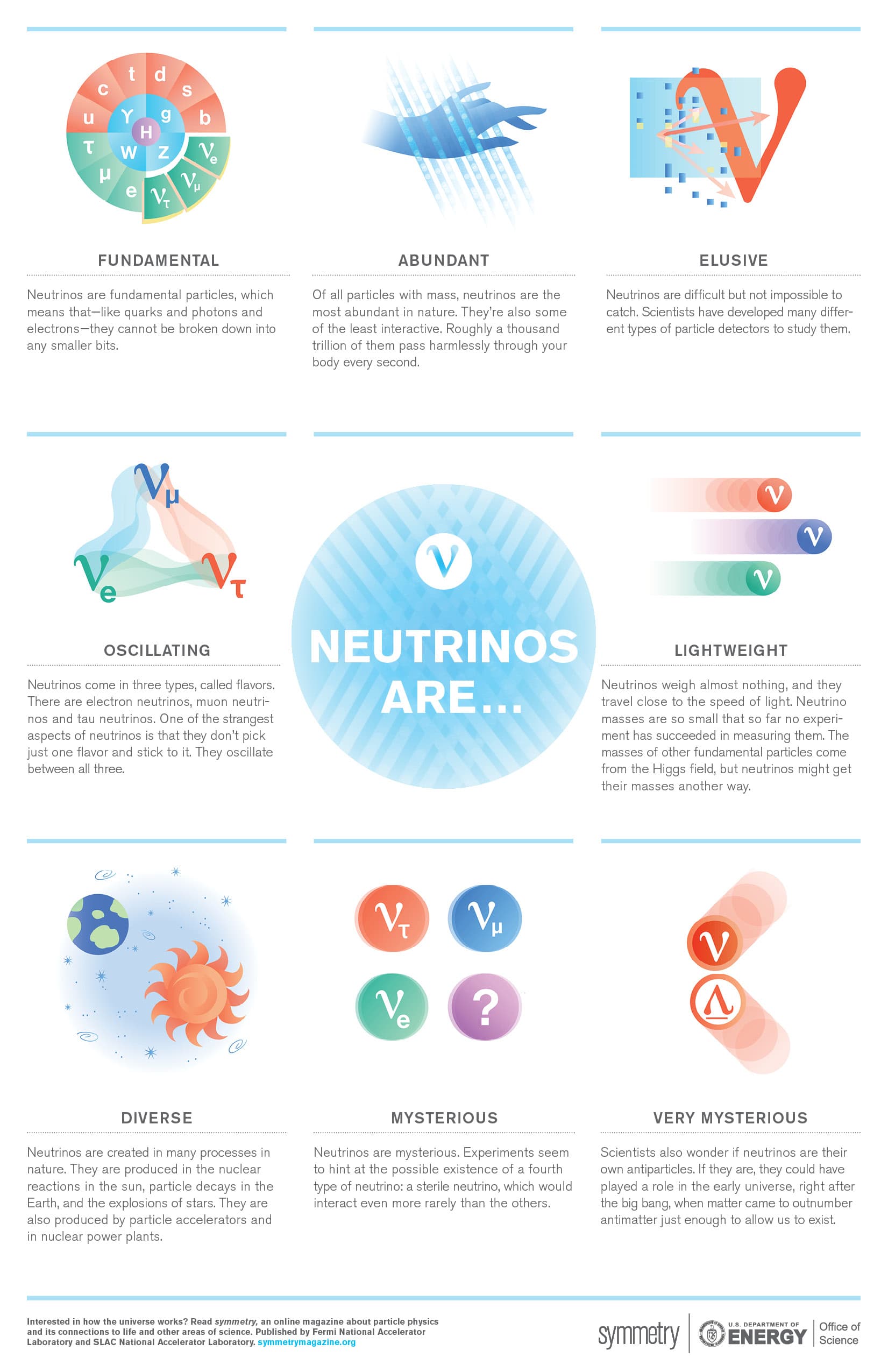
Posted by Marco Daniel MachadoApr 7After photons—particles of light—neutrinos are the most abundant particles in the universe.Show 3 more findings ZoomPoster: Neutrinos AreSymmetry Magazinehttps://www.symmetrymagazine.org/image/poster-neutrinos-are
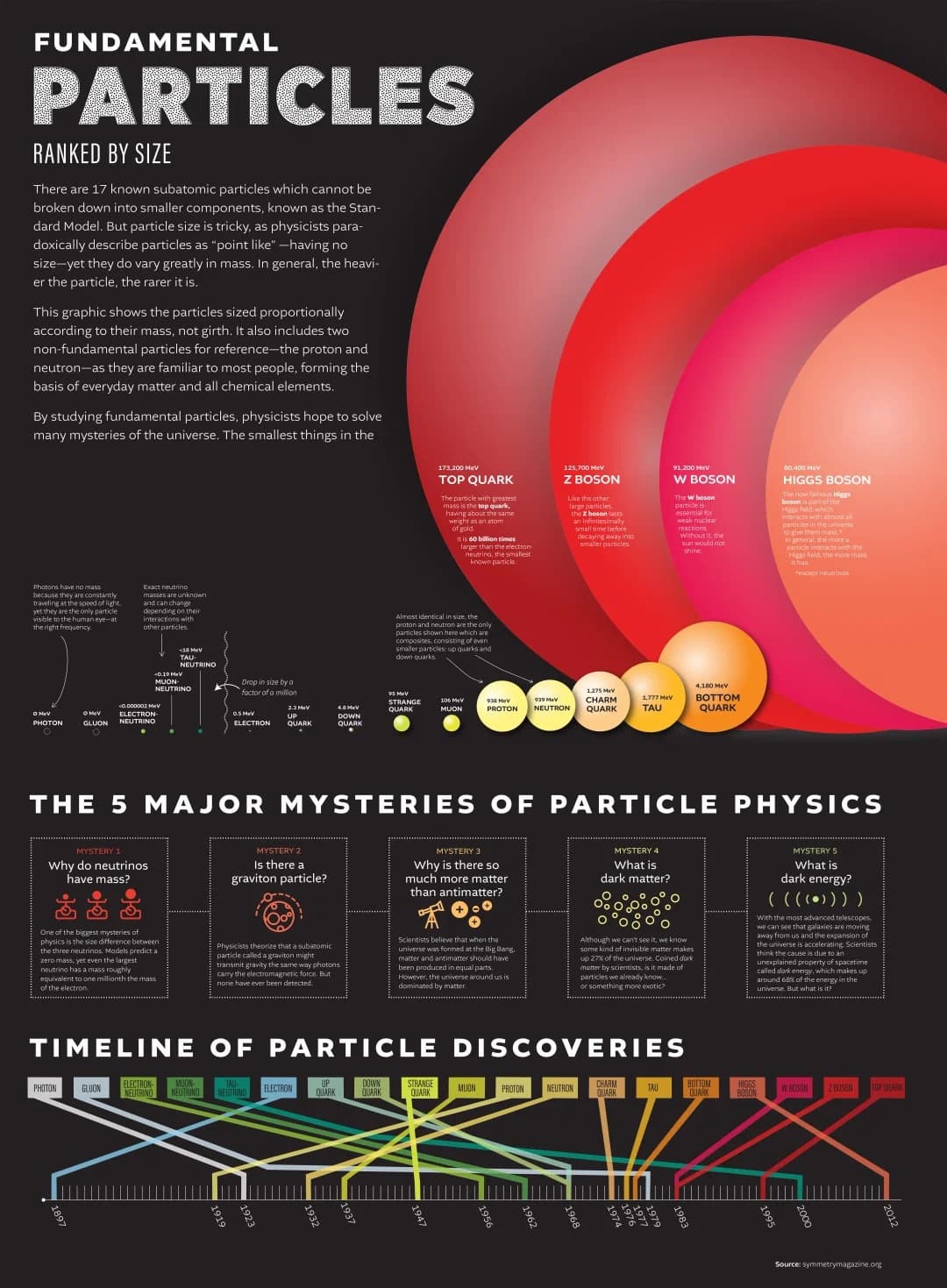
Posted by Marco Daniel MachadoJun 17View a ranking of the masses of fundamental particles, from the massless photon to the top quark, and a timeline of their discoveries.Show 6 more findings ZoomFundamental Particles of the Universe Ranked by SizeVisual Capitalisthttps://www.voronoiapp.com/other/Fundamental-Particles-of-the-Universe-Ranked-by-Size-442
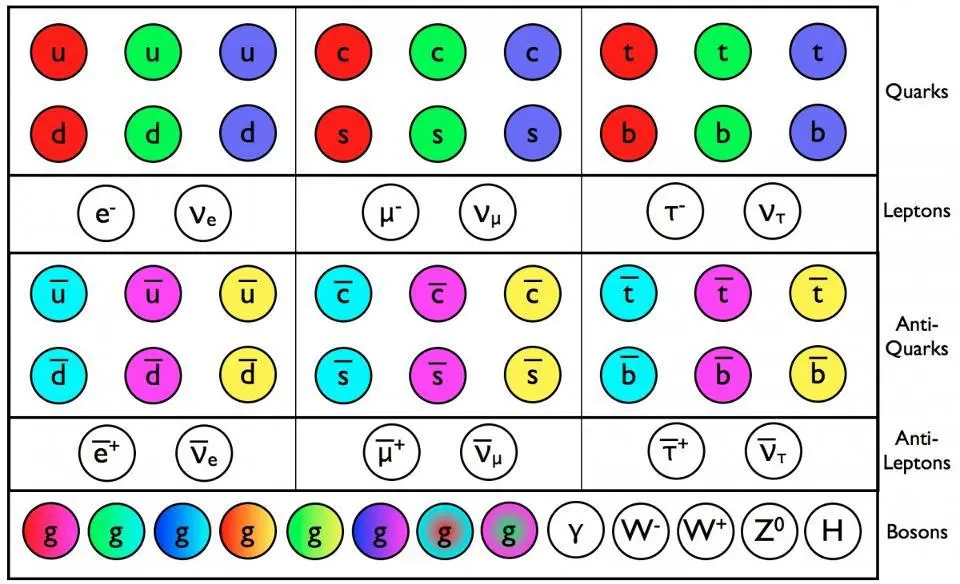
Posted by Marco Daniel MachadoAug 24Some particles that mediate fundamental forces in nature are their own antiparticles, such as photons—particles of light and mediators of the electromagnetic force.Show 4 more findings ZoomAsk Ethan: Do any particles not have antiparticles?Big Thinkhttps://bigthink.com/starts-with-a-bang/particles-not-have-antiparticles/
Posted by Marco Daniel MachadoJun 18A beam of neutrinos can be created by firing a beam of high-energy protons at a target to produce unstable particles that decay into neutrinos.Show 3 more findings 7:37How do particle accelerators make neutrinos? | Even BananasFermilabhttps://www.youtube.com/watch?v=pUmBioqD_J8
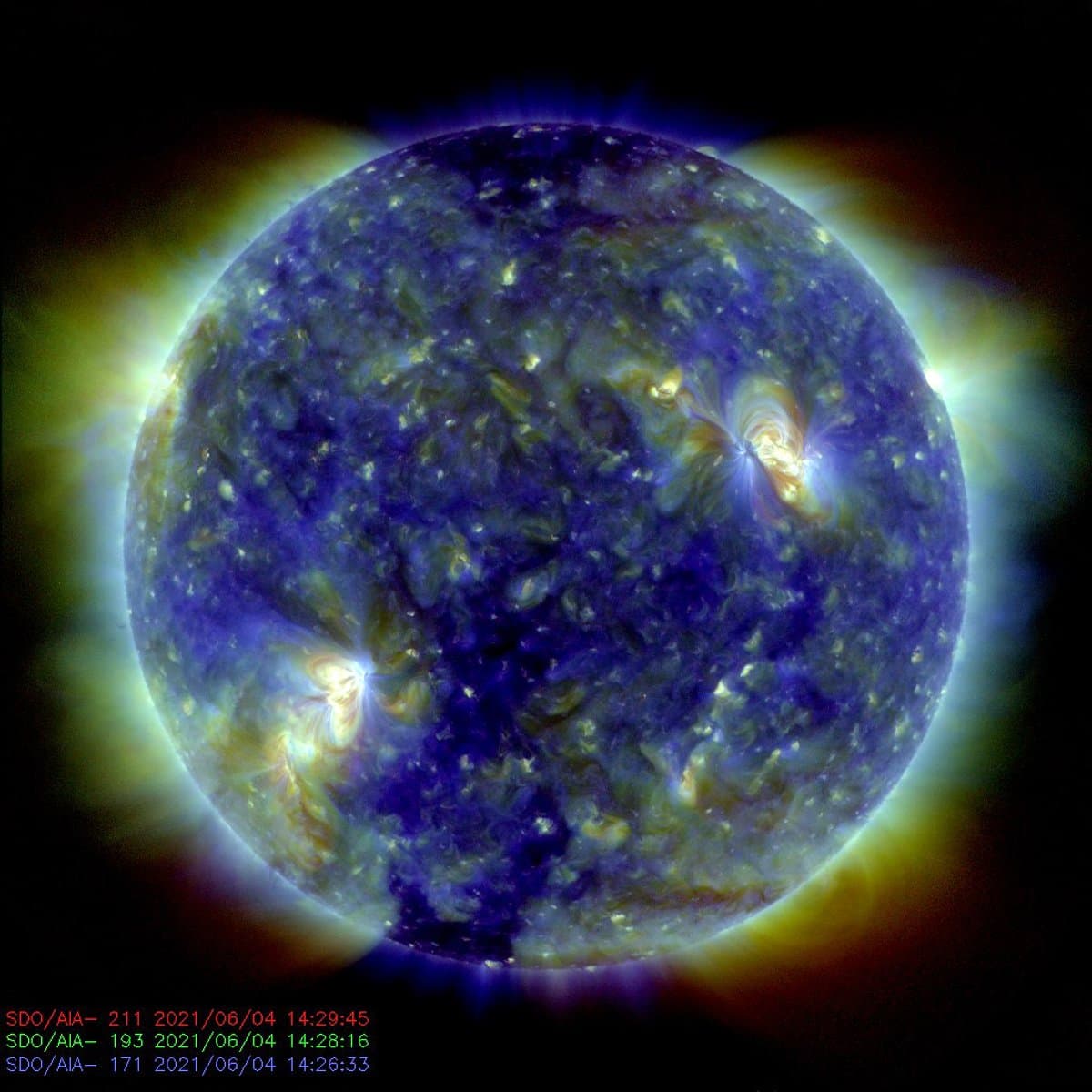
Posted by Marco Daniel MachadoMay 13Learn about solar neutrinos—about 70 billion of which pass through your thumbnail every secondAbout 100 quadrillion sextillion (10³⁸) of these elusive particles are created in the core every second, making up about 1% of the sun's total energy output. Because they seldom interact with normal matter, highly specialized equipment is needed to detect them, allowing scientists to probe what is happening in the solar core.Big Thinkhttps://bigthink.com/starts-with-a-bang/8-facts-about-the-suns-most-ghostly-particle-the-neutrino/
Posted by Marco Daniel MachadoMar 12Antimatter particles possess the same mass and spin as their normal particle counterparts, but possess an opposite charge and transform into pure energy upon colliding with normal matter.Show 4 more findings 3:03Antimatter Explainedminutephysicshttps://www.youtube.com/watch?v=Lo8NmoDL9T8
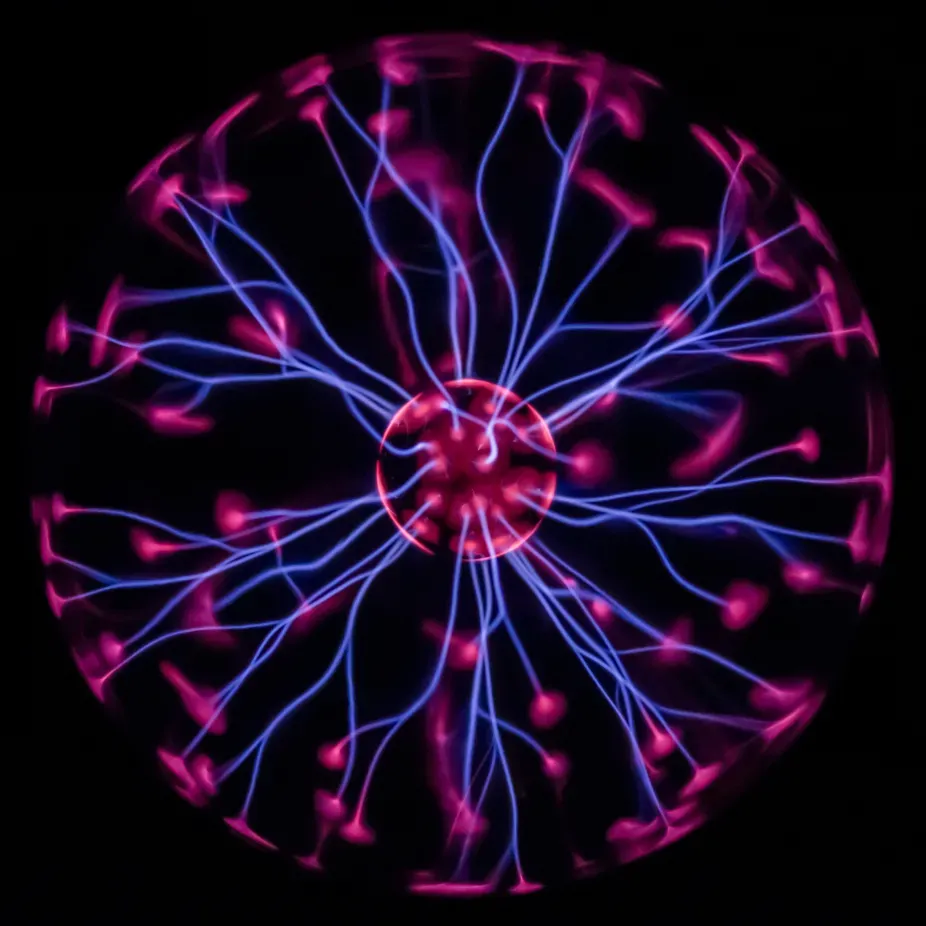
Posted by Marco Daniel MachadoJan 9Plasma is the most abundant form of visible matter in the universeWhen electrons are stripped from neutral atoms as a result of high-energy interactions, such as lightning strikes, the atoms become positively charged ions. The mix of these ions and negatively charged electrons, which are too energetic to recombine, is extremely electrically conductive and affected by magnetic fields. Zoomhttps://scied.ucar.edu/learning-zone/sun-space-weather/plasma
Posted by Marco Daniel MachadoFeb 23Some theorists have suggested that dark matter consists of supersymmetric particles—massive, hypothetical versions of known particles, such as the sneutrino, which is the supersymmetric partner of the neutrino.Show 3 more findings 16:51Is Dark Matter Made of Particles?PBS Space Timehttps://www.youtube.com/watch?v=fidzLZQyaJE
Posted by Marco Daniel MachadoMay 21Antimatter's rarity across the cosmos is one of the biggest problems in modern physics because the high-energy environment of the early universe should have produced equal amounts of matter and antimatter.Show 4 more findings 1:16Where Did the Antimatter Go?Kurzgesagt – In a Nutshellhttps://www.youtube.com/watch?v=DfB2qYJqAkA
Posted by Marco Daniel MachadoMay 12While atoms are normally made of protons, neutrons, and electrons, exotic ones have been built with antimatter—alternate versions of normal matter that live for fractions of a second.Show 3 more findings 7:39This New Element is Lighter than Hydrogen. What?!?!SciShowhttps://www.youtube.com/watch?v=KrabgulN1L8
Posted by Marco Daniel MachadoFeb 23Although among the most comprehensive frameworks in science, the Standard Model has numerous gaps, including its inability to explain dark matter, dark energy, or why normal matter is so much more abundant than antimatter.Show 3 more findings ZoomFive mysteries the Standard Model can’t explainSymmetry Magazinehttps://www.symmetrymagazine.org/article/five-mysteries-the-standard-model-cant-explain
Posted by Marco Daniel MachadoAug 13Quarks are elementary particles that come in six varieties and combine together to form larger, composite particles, such as the proton and the neutron.Show 4 more findings 6:34Quarks: The Miracle That Saved Particle PhysicsSciShowhttps://www.youtube.com/watch?v=j-993mWNcHk
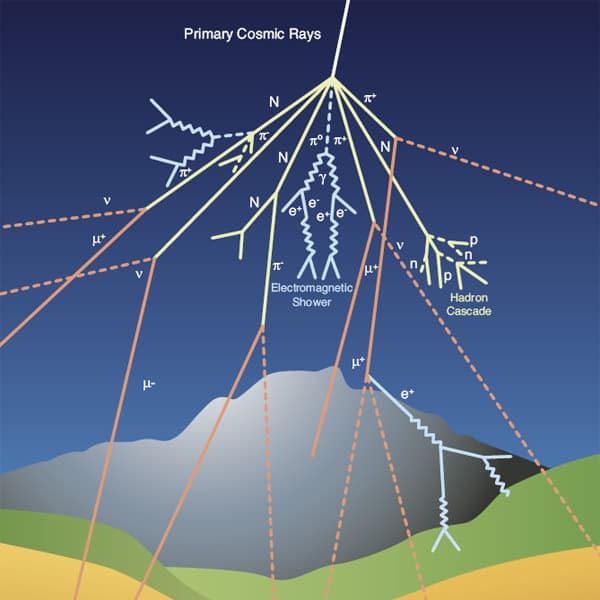
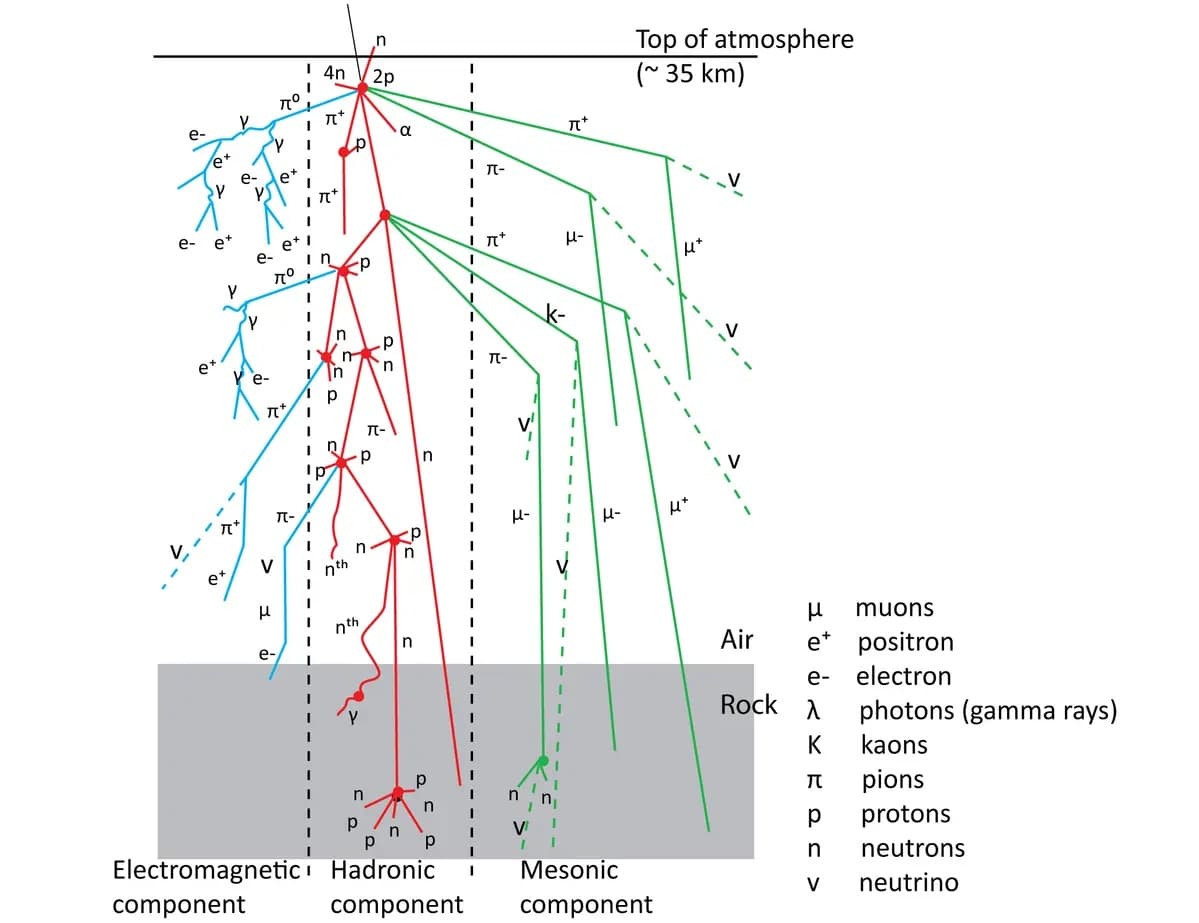
Posted by Marco Daniel MachadoAug 29Some cosmic rays possess energies as high as 100,000,000 teraelectron volts—more than 10 million times the energy of particles accelerated in the Large Hadron Collider.Show 3 more findings ZoomCosmic rays: particles from outer space – Home | CERNCERNhttps://home.cern/science/physics/cosmic-rays-particles-outer-space/
Posted by Marco Daniel MachadoJun 17The Higgs boson is a quanta, or discrete piece, of the Higgs field, which gives elementary particles, such as quarks and electrons, mass as they travel through it.Show 5 more findings 8:01The Higgs Field – Neil deGrasse Tyson & Brian Greene Explain How Particles Get Their Mass.StarTalkhttps://www.youtube.com/watch?v=ESsl1_Qbr5w
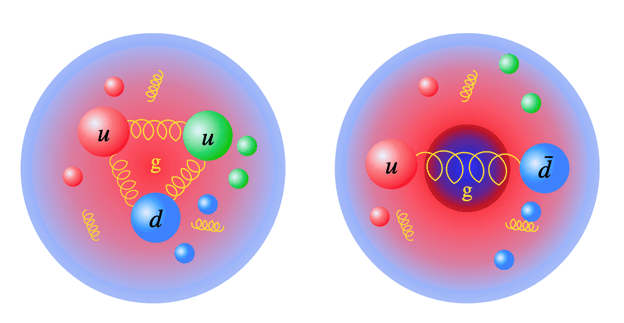
Posted by Marco Daniel MachadoAug 13The strong nuclear force, which keeps atomic nuclei intact, is mediated by gluons—massless particles that bind together the quarks that make up protons and neutrons.Show 4 more findings 21:37What Makes The Strong Force Strong?PBS Space Timehttps://www.youtube.com/watch?v=y1px8hBl7zg
Posted by Marco Daniel MachadoFeb 11Neutron stars, the remains of some massive stars after they explode in a supernova, are the densest directly observable objects in the universe.Show 5 more findings 7:26Neutron Stars – The Most Extreme Things that are not Black HolesKurzgesagt – In a Nutshellhttps://www.youtube.com/watch?v=udFxKZRyQt4
Posted by Marco Daniel MachadoOct 2, 2025Leptons do not experience the strong nuclear force that binds quarks togetherParticles like electrons can exist in isolation, enabling them to move more freely. Within circuits, this allows electrons to carry energy across wire surfaces quickly. Contrastingly, light created in the sun's core is delayed by a million years on its way to Earth due to collisions with free electrons.Leptons do not experience the strong nuclear force that binds quarks togetherSpace.comhttps://www.space.com/leptons-facts-explained
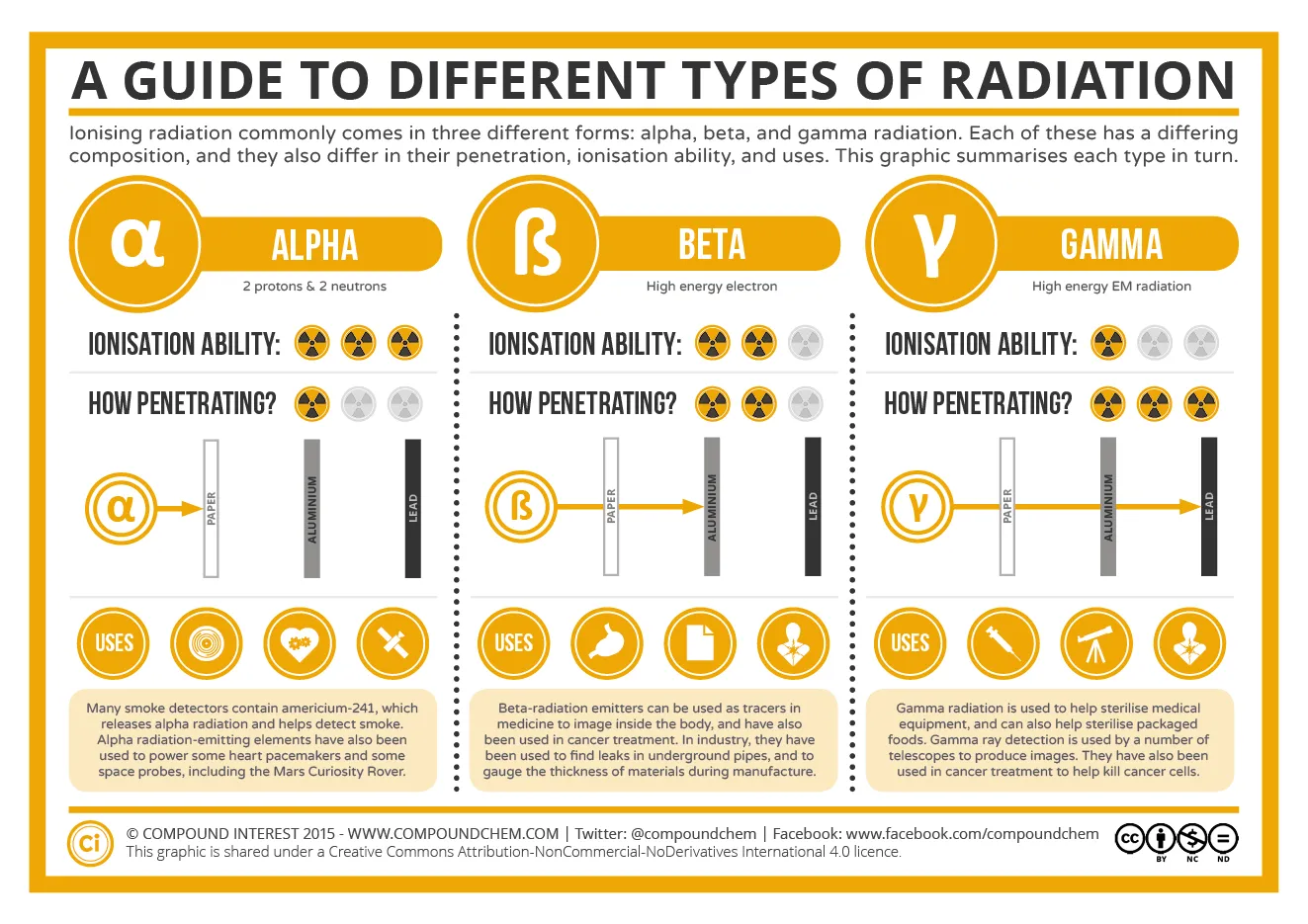
Posted by Marco Daniel MachadoApr 14View summaries of the most common types of radioactive decay and their associated particlesThe alpha particle has the strongest ability to ionize other atoms it strikes, but it also does not travel very far before colliding with something and being absorbed. Gamma particles—high-energy photons—do not interact with matter as easily and therefore possess the greatest penetrating power, though this also makes their ionizing potential the smallest. ZoomCompound Interesthttps://www.compoundchem.com/2015/09/10/radiation/
Posted by Marco Daniel MachadoMay 13Explaining why solving the solar neutrino problem revealed that neutrinos could transformElectron neutrinos are byproducts of the nuclear reactions within the sun's core. Based on the sun's energy output, scientists modeled reaction rates and predicted neutrino production, but the observed values were consistently one-third the predicted values. Experiments later showed that these neutrinos could change into other types on their way to Earth, causing the discrepancy. 7:15Fermilabhttps://www.youtube.com/watch?v=nN5hnznAVX0
Posted by Marco Daniel MachadoApr 4The one-electron theory describes the universe as having only one electronThe thought experiment explains why every electron has the same charge and mass as every other electron, and describes every positron—the antimatter version of the electron—as that same electron traveling backwards in time. Among other foundational challenges, the model suggests that the universe contains equal numbers of electrons and positrons, yet normal matter is much more common than antimatter. ZoomThis bizarre theory says there's only one electron in the Universe | BBC Science Focus MagazineBBC Science Focus Magazinehttps://www.sciencefocus.com/space/electrons-universe-number-theory
Posted by Drew SteigerwaldJun 26, 2024Photons are both particles of light and messengers of the electromagnetic forceEinstein's model of light as a wave and a massless particle of energy revolutionized physics, and scientists' application of the model led to groundbreaking technologies, including medical imaging and treatments, telecommunication signals, and probes of the quantum and cosmological realms. ZoomWhat is a photon?Symmetry Magazinehttps://www.symmetrymagazine.org/article/what-is-a-photon
Posted by Marco Daniel MachadoMay 12Once called 'aces,' quarks are fundamental pieces of matter that combine to create over 100 known composite particles, including the proton and neutron.Show 5 more findings ZoomQuarks: What are they?Space.comhttps://www.space.com/quarks-explained
Posted by Marco Daniel MachadoOct 2, 2025Gravity, electromagnetism, and two nuclear forces make up nature’s fundamental forcesWhile gravity is the most familiar force, it is also the weakest and the only one without a particle to mediate the force. The weak nuclear force is responsible for radioactive decay and transmutation of elements, while the strong nuclear force holds quarks together.Gravity, electromagnetism, and two nuclear forces make up nature’s fundamental forceshttps://www.youtube.com/watch?v=NwbsffunM10
Posted by Marco Daniel MachadoApr 15Less common types of radioactive decay include emitting neutrons and antimatterThrough neutron emission, one or more neutrons are ejected from atoms that have far fewer protons. Neutrons can also be released by artificially inducing the fission, or separation, of a large atomic nucleus into smaller ones. During beta-plus decay, a positron—the antimatter version of an electron—is produced when a proton turns into a neutron.Other types of radioactive decay | ARPANSAAustralian Radiation Protection and Nuclear Safety Agencyhttps://www.arpansa.gov.au/understanding-radiation/what-is-radiation/ionising-radiation/radiation-decay
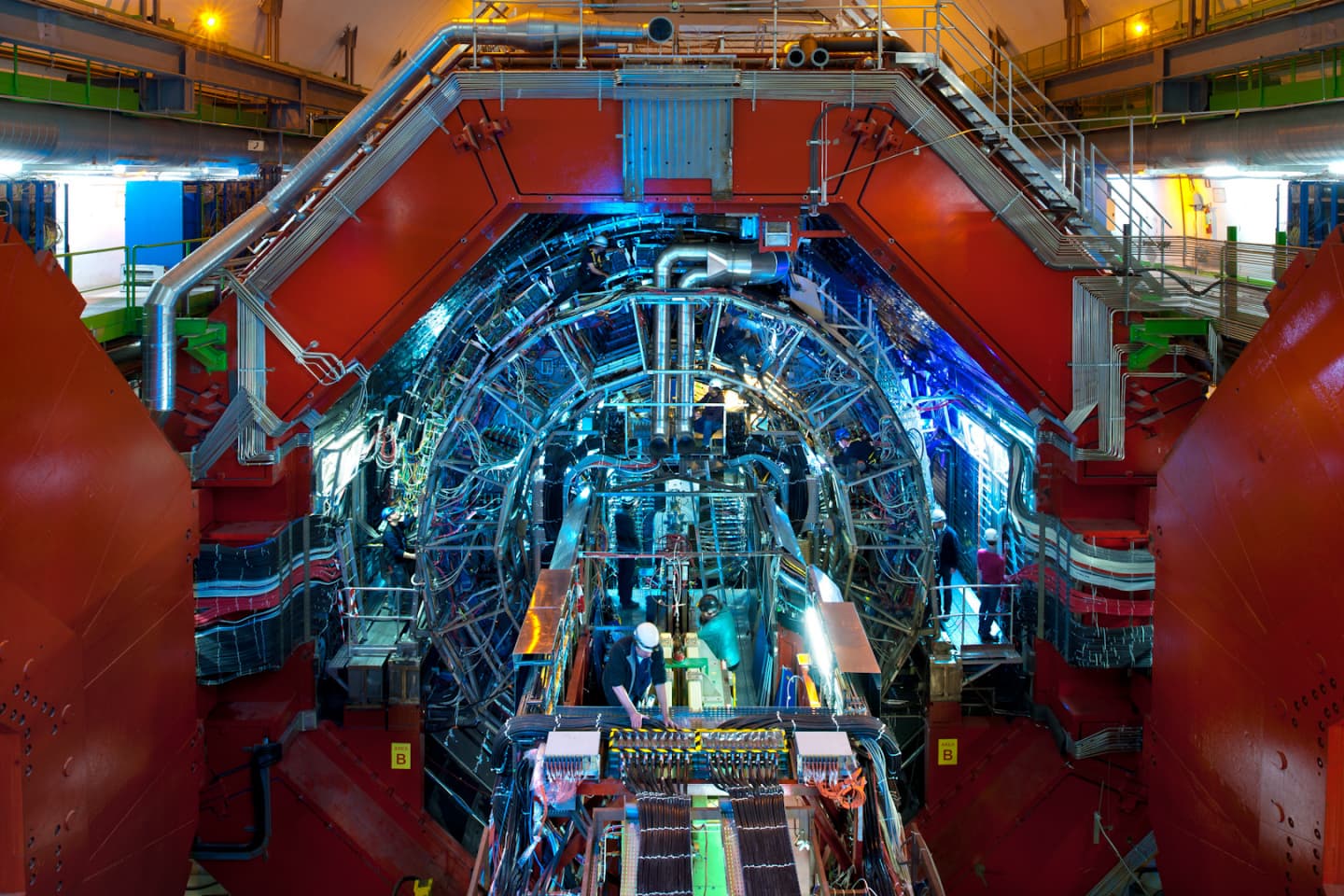
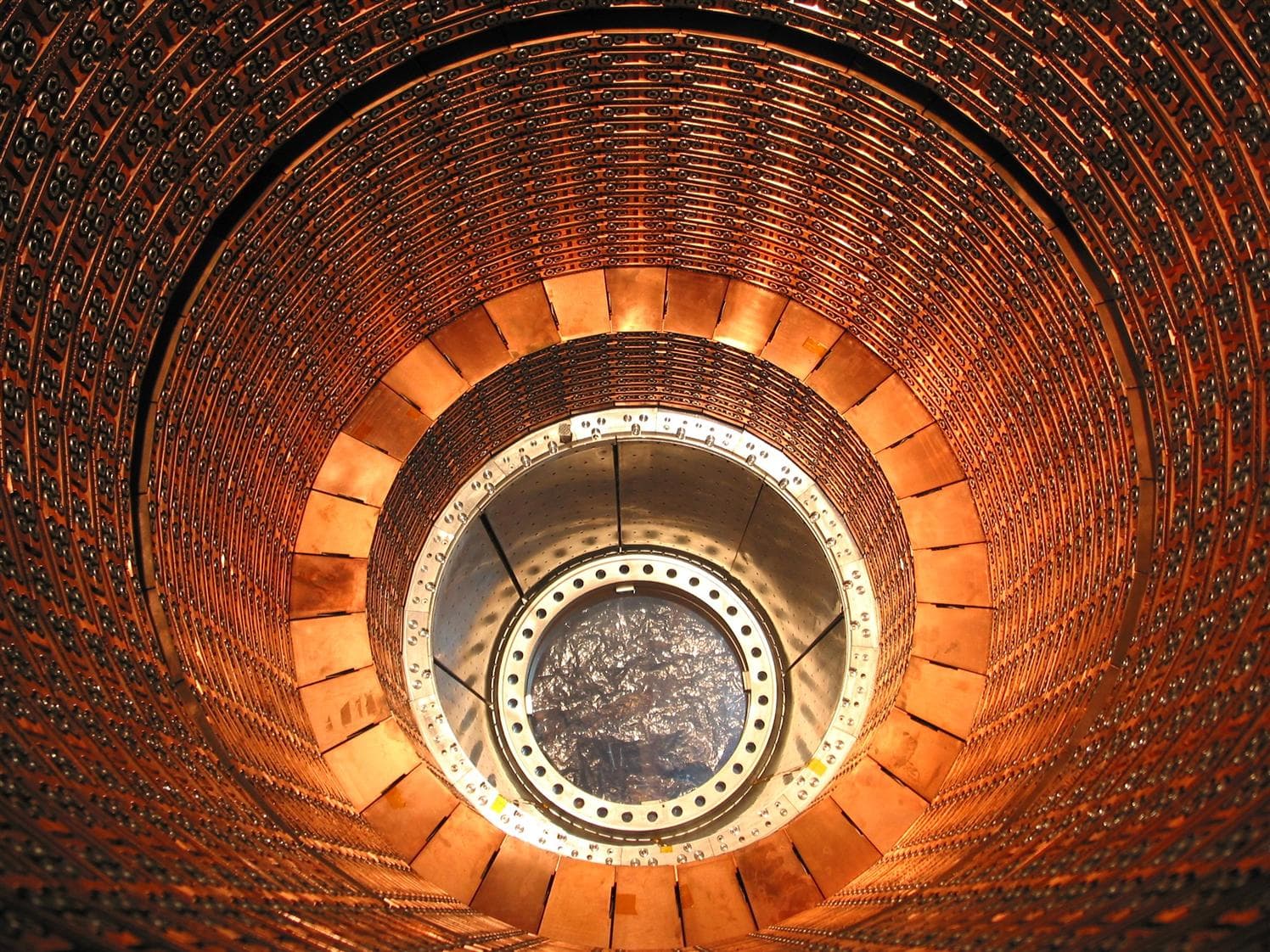
Posted by Marco Daniel MachadoJun 17Within ALICE—A Large Ion Collider Experiment—at the Large Hadron Collider, scientists have created quark-gluon plasma—an exotic form of matter present in the moments after the Big Bang.Show 2 more findings ZoomLarge Hadron Collider finds 1st evidence of the heaviest antimatter particle yetSpace.comhttps://www.space.com/lhc-alice-antimatter-first-hyperhelium4
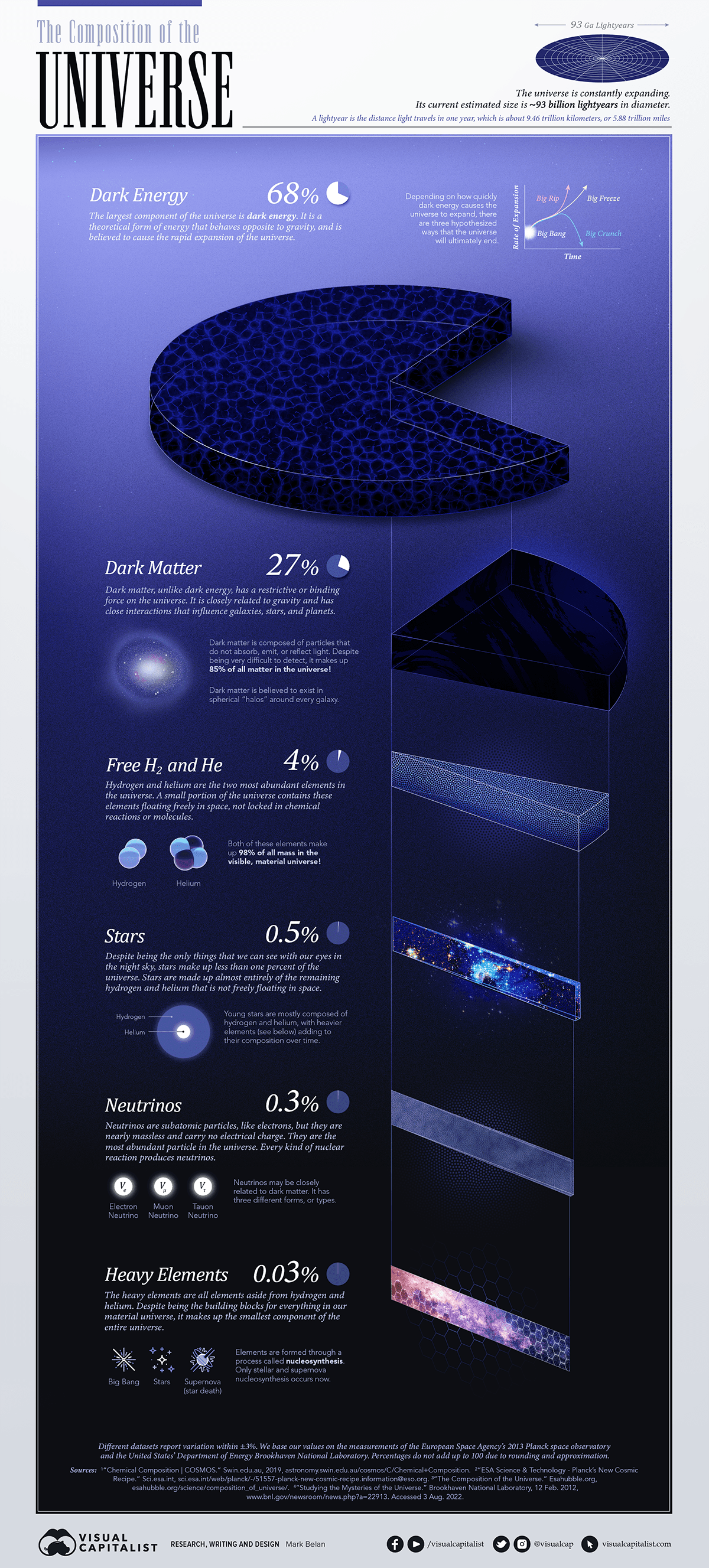
Posted by Marco Daniel MachadoApr 21View the composition of the universe, dominated by dark energy and dark matterAbout 95% of the observable universe is made of substances whose composition is unknown, but most of what remains (4%) is in the form of clouds of hydrogen and helium, followed by gases and plasma within stars (0.5%) and neutrinos created in nuclear reactions (0.3%). ZoomAll the Contents of the Universe, in One GraphicVisual Capitalisthttps://www.visualcapitalist.com/composition-of-the-universe/
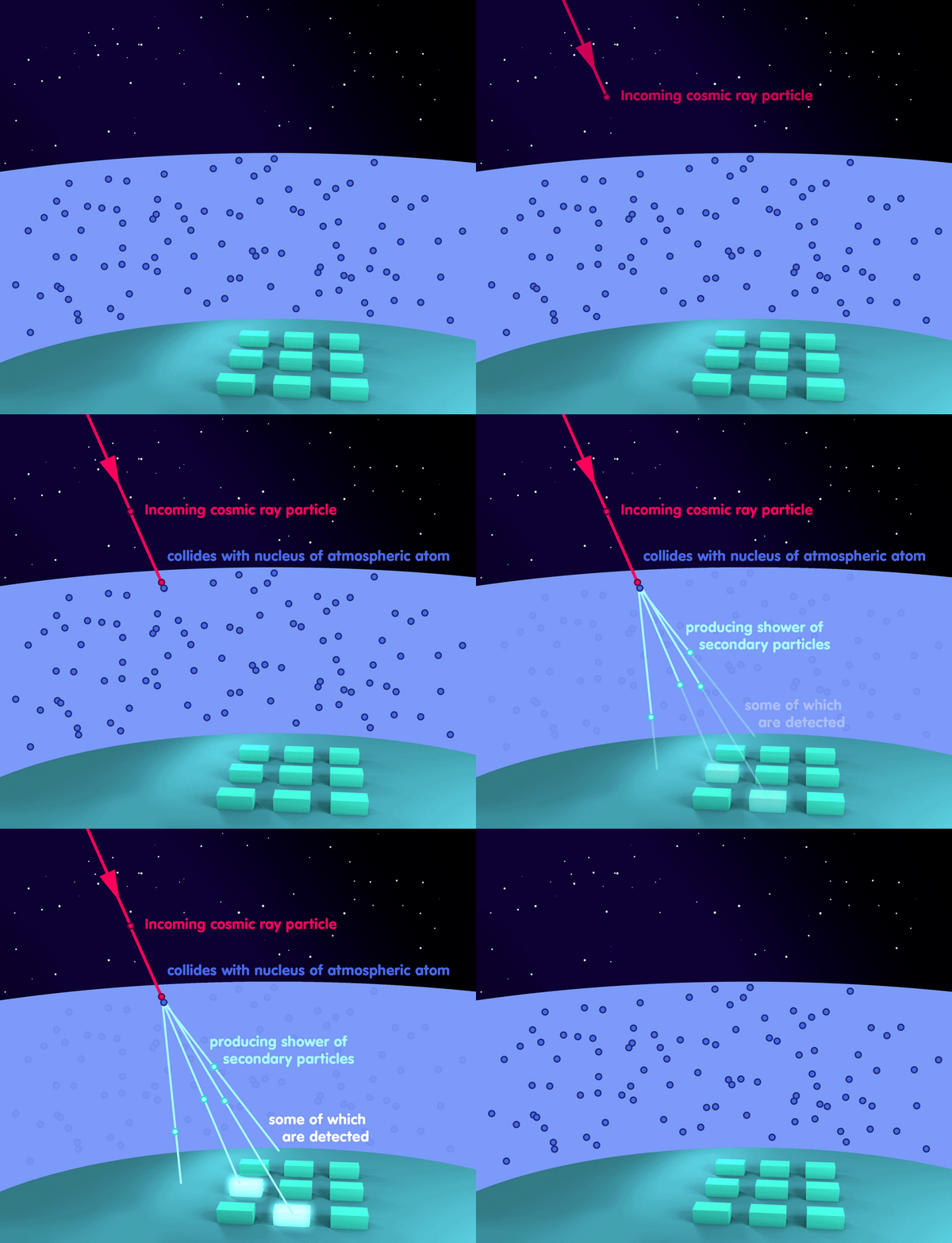
Posted by Marco Daniel MachadoAug 21Antimatter was discovered by examining debris from collisions between atmospheric gases and cosmic rays—high-energy matter particles from space.Show 5 more findings ZoomCosmic rays, explainedUniversity of Chicagohttps://news.uchicago.edu/explainer/what-are-cosmic-rays
Posted by Marco Daniel MachadoMay 7Particles produced in cosmic ray showers that would normally decay long before they reach Earth's surface are observed in ground-based detectors because they experience time more slowly when moving near the speed of light—a phenomenon predicted by special relativity. Show 3 more findings 4:34Impossible Muonsminutephysicshttps://www.youtube.com/watch?v=rVzDP8SMhPo
Posted by Marco Daniel MachadoAug 12Scientists can map Earth's shape and structure by measuring the ratios of certain particles arriving from different directions in space, as these ratios change with the density of the material particles travel through.Show 4 more findings 6:34Can neutrinos prove the Earth is round? | Even BananasFermilabhttps://www.youtube.com/watch?v=3ZJLXkNDqxA
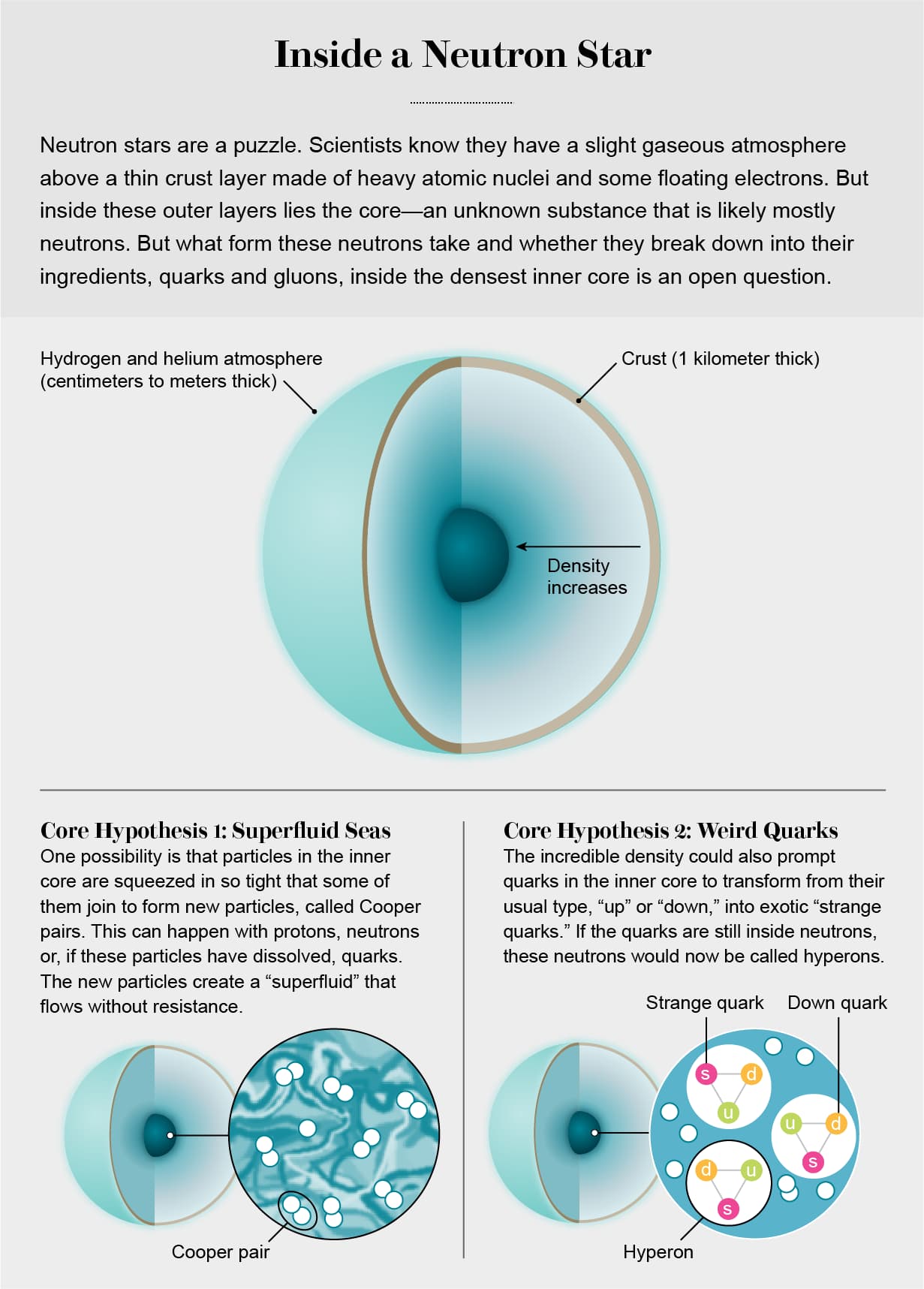
Posted by Marco Daniel MachadoApr 7The hypothetical matter that neutron stars' cores may contain, including strange quarksModels of the extreme pressures and energies in neutron stars suggest conditions resembling those believed to have existed within a fraction of a second after the Big Bang. In these environments, the quarks that make up protons and neutrons in trios may instead form pairs that combine to form one quantum object. (Some readers may experience a paywall.) ZoomScientific Americanhttps://www.scientificamerican.com/article/the-strange-hearts-of-neutron-stars/
Posted by Marco Daniel MachadoJan 15Fermilab's ICARUS experiment is searching for hypothetical sterile neutrinosNeutrinos are a group of three chargeless, lightweight particles that can transform into one another via a quantum mechanical phenomenon called neutrino oscillations. The rate of these oscillations can be determined by measuring the amount of each type at different distances, where data inconsistencies would suggest the existence of new physics. 7:08ICARUS: The search for new physicshttps://www.youtube.com/watch?v=rl-fmFuy7v0
Posted by Marco Daniel MachadoMay 22, 2025How a quantum quirk allowed neutral atoms to form soon after the Big BangAt the beginning of the universe, high-energy photons prevented atomic nuclei from combining with electrons to form neutral atoms. Rather than waiting for the universe to expand and cool completely, a rare quantum phenomenon—a two-photon transition—allowed neutral hydrogen atoms to form sooner, expediting the formation of stars, planets, and life. ZoomA quantum miracle enabled the formation of neutral atomsBig Thinkhttps://bigthink.com/starts-with-a-bang/quantum-reason-neutral-atoms/
Posted by Marco Daniel MachadoFeb 23About 85% of the matter in the universe is dark matter—an invisible substance that only interacts with its surroundings through gravity.Show 2 more findings 6:06Dark Matter Explained | Cosmology 101 Episode 7Perimeter Institute for Theoretical Physicshttps://www.youtube.com/watch?v=yRC_zISpYNQ
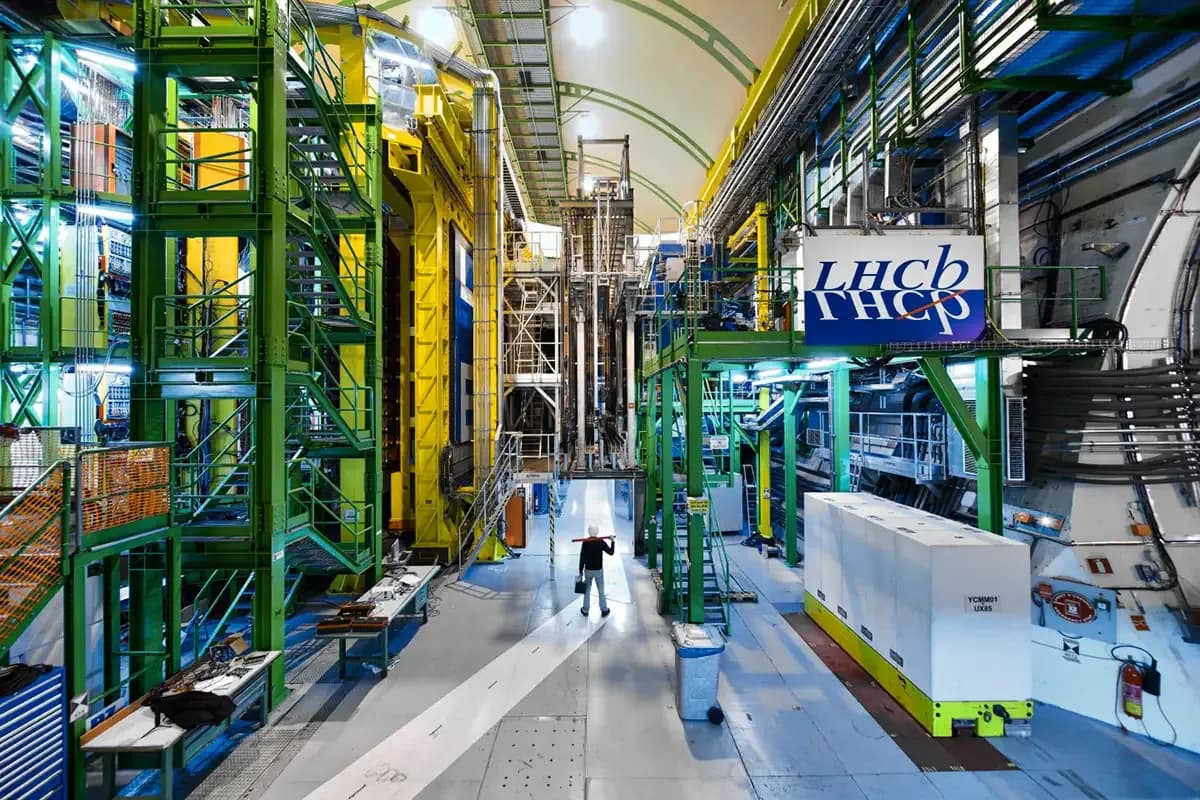
Posted by Marco Daniel MachadoJun 17As of 2026, 75 of the 86 particles discovered by the Large Hadron Collider have been found by the LHCb experiment—a detector that explores the decay of particles made of beauty and charm quarks.Show 2 more findings ZoomNew particles discovered at the LHCPatrick Koppenburghttps://koppenburg.ch/particles.html
Posted by Marco Daniel MachadoOct 2, 2025The Higgs boson provides a mechanism that explains why some particles have massThe mathematics of quantum field theory suggested that force particles should be massless, like the photon for electromagnetism, but the weak nuclear force’s equivalent W and Z particles are not. The Higgs field provides mass when interacting with such particles.The Higgs boson provides a mechanism that explains why some particles have masshttps://home.cern/science/physics/higgs-boson/what
Posted by Marco Daniel MachadoAug 21The average banana produces one positron—the antimatter counterpart to an electron—every 75 minutes as its trace amounts of radioactive potassium decay.Show 2 more findings 1:00Something in Your Kitchen Emits AntimatterKurzgesagt – In a Nutshellhttps://www.youtube.com/watch?v=Pj20omaP7WI
Posted by Marco Daniel MachadoMar 12Quantum field theory reveals that particles are ripples in universal fieldsInstead of being made of indivisible particles, all visible matter in the universe is built from underlying quantum fields—smooth, invisible entities that behave like waves. The theory suggests these fields are fundamental, and particles are disturbances that move through them.What Is Quantum Field Theory and Why Is It Incomplete?https://open.spotify.com/episode/1o3fMhJv5Znq8OyNOP3PED
Posted by Marco Daniel MachadoOct 3, 2025Virtual particles are bookkeeping tools used to describe force interactionsPhysicists mathematically describe the electromagnetic, weak nuclear, and strong nuclear forces as the result of these particles being exchanged between particles of matter. Despite not being real, observable particles, this method has provided experimental predictions with an accuracy of over 12 decimal places.Virtual particles: How physicists’ clever bookkeeping trick could underlie realityThe Conversationhttps://theconversation.com/virtual-particles-how-physicists-clever-bookkeeping-trick-could-underlie-reality-264739
Posted by Marco Daniel MachadoMay 12How the number of subatomic particles helps identify different types of atomsDifferent elements, such as oxygen and nitrogen, can be distinguished by the number of protons in each, since all atoms of the same element have the same number of protons. Isotopes of a given element have the same number of protons but different numbers of neutrons, while ions are atoms possessing different numbers of electrons than protons.University of Marylandhttps://terpconnect.umd.edu/~wbreslyn/chemistry/isotopes/isotopes-ions.html
Posted by Marco Daniel MachadoOct 2, 2025Particle interactions follow rules related to specific quantum propertiesLike a business whose purchased inventory matches sold inventory, physicists identified specific patterns across decades of particle accelerator data, which became new conservation laws for elementary particles. These laws help identify which particle decays are expected or forbidden.Particle interactions follow rules related to specific quantum propertieshttps://www.youtube.com/watch?v=pRbUfZWyoJc