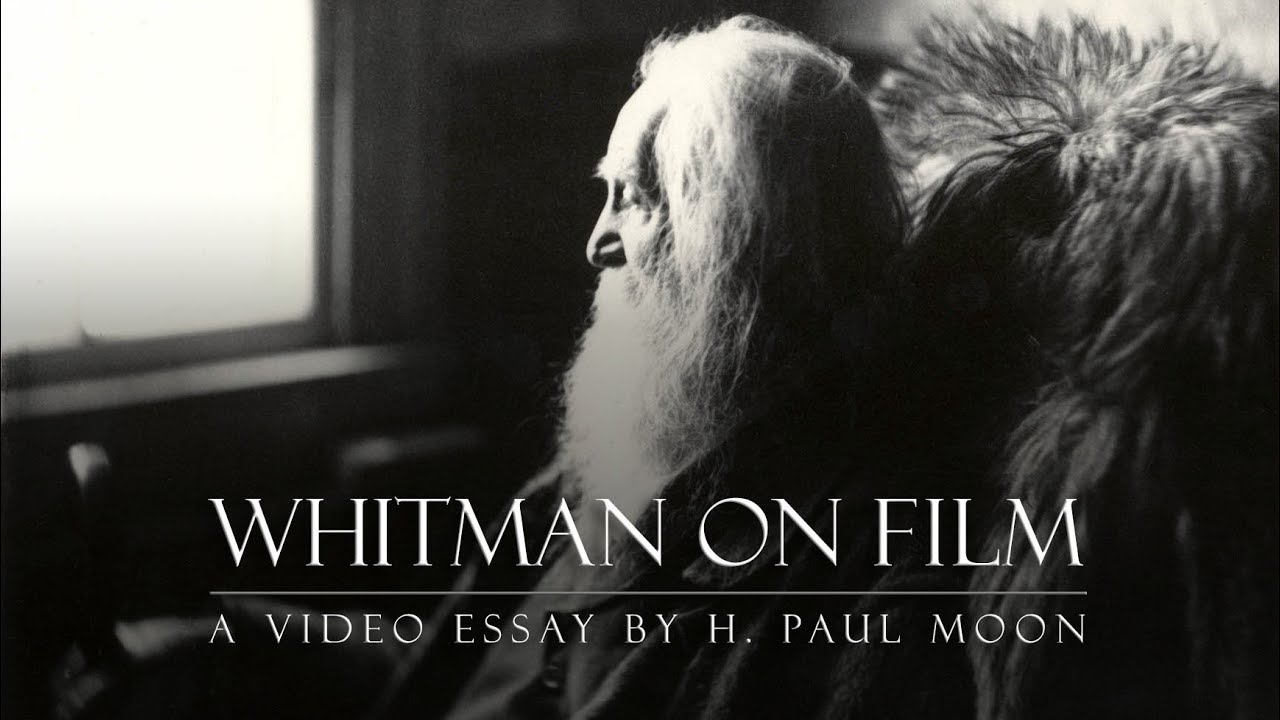
Whitman revolutionized American poetry
Whitman was a groundbreaking force in American literature, legitimizing the national idiom, capturing the spirit of the evolving country, and inspiring younger generations of writers for centuries to follow.

Hours of research by our editors, distilled into minutes of clarity.
Whitman was a groundbreaking force in American literature, legitimizing the national idiom, capturing the spirit of the evolving country, and inspiring younger generations of writers for centuries to follow.

Before “Leaves of Grass” there was “Franklin Evans,” a novel about a young man whose drinking ruins his life. Whitman all but disowned the novel for the rest of his life, though critics note that he preached teetotaling throughout his life.
A recording of Whitman reading a portion of his poem "America" has been mass-produced and broadcast, but the Library of Congress and other scholars say the recording is a hoax.
Whitman's poems have had significant screen time in movies like “Dead Poets Society” and television shows like “Breaking Bad.”

Hughes, one of the most important voices in American poetry, responds to the preeminent American bard by directly referencing Whitman’s “I Hear America Singing" in his poem "I, Too."
In addition to "O Captain! My Captain!," Whitman wrote another poem for the slain Lincoln: the longer, more sullen elegy, “When Lilacs Last in the Dooryard Bloom’d.”
After President Abraham Lincoln’s assassination, Whitman wrote two poems about him, both mourning the country’s loss. The more famous one is “O Captain! My Captain!,” which first appeared in the Saturday Evening Post in 1865.
The resource allows you to explore over 100 of Whitman’s essential works, from the iconic “Leaves of Grass” through poems you’ll recognize from pop culture, like “When I Heard the Learn’d Astronomer” and “O Captain! My Captain!”
Although William Shakespeare is widely considered to be the authentic author of the plays attributed to him, there are still dozens of theories suggesting that others are responsible for the classic works. Was it actually his contemporary, Christopher Marlowe? Or maybe his wife, Anne Hathaway? This list explains the 10 most popular theories that have been proposed, much to more than a few Shakespeare scholars' chagrin.
The 19th-century poet Emily Dickinson was known as a recluse in her later, most productive writing years. But this characteristic didn't limit her interactions via her preferred mode of writing. This article explores the poet's creative use of letterlocking, a mode of sealing a letter with or without an envelope. She would utilize the letterlock itself as part of a poem or the letter's contents, to the delight of the recipients. Explore the practice here.