Milky Way Galaxy

1440 Findings

Hours of research by our editors, distilled into minutes of clarity.

  • View maps of the Milky Way across all wavelengths of light

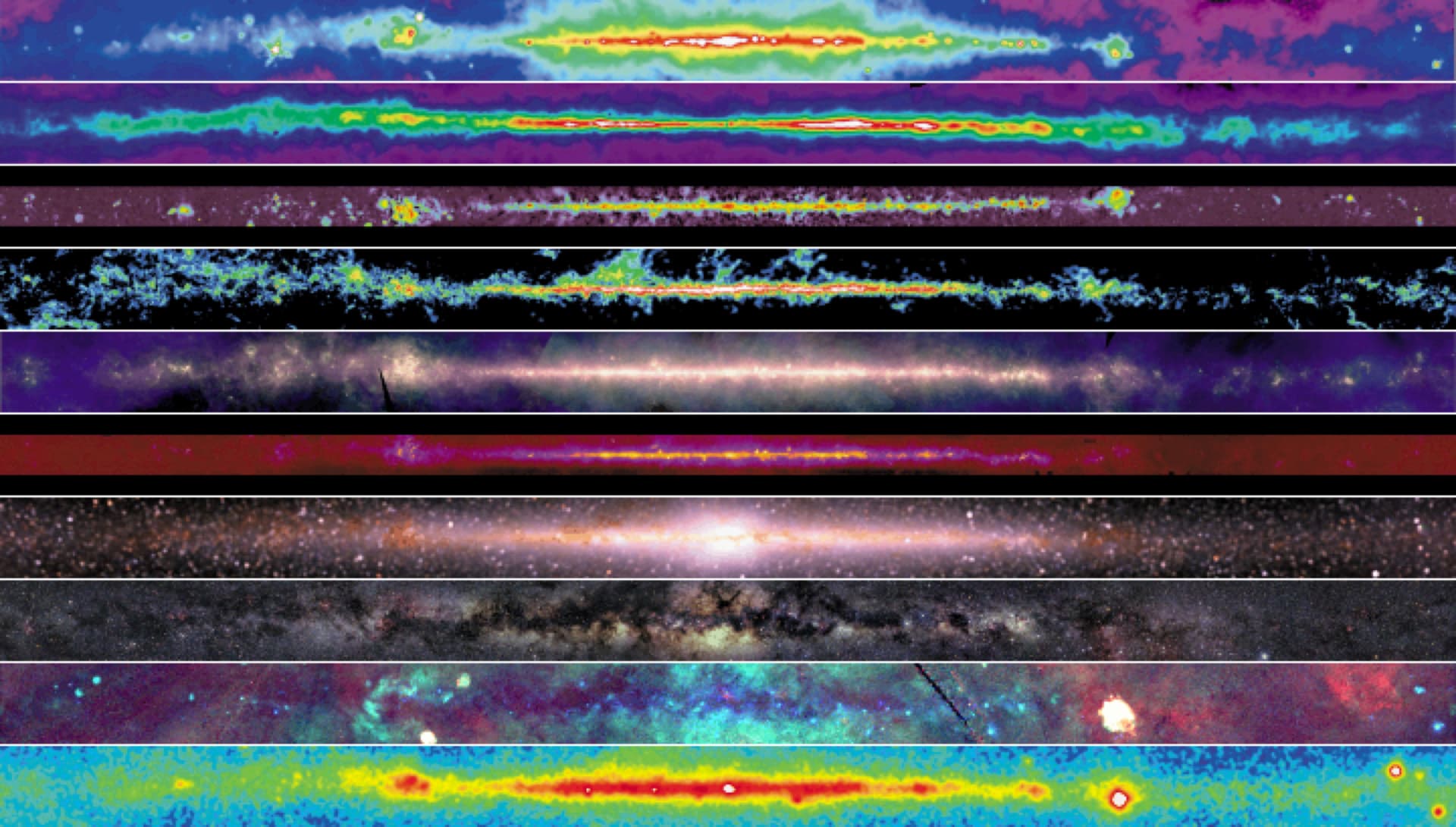
    By combining imaging from ground- and space-based telescopes designed to capture specific wavelengths of light, phenomena across a range of energies can be observed. If limited to a single frequency range, astronomers would not be aware of some cosmological events, such as those whose visible light is blocked by dust.
  • A map of the Milky Way

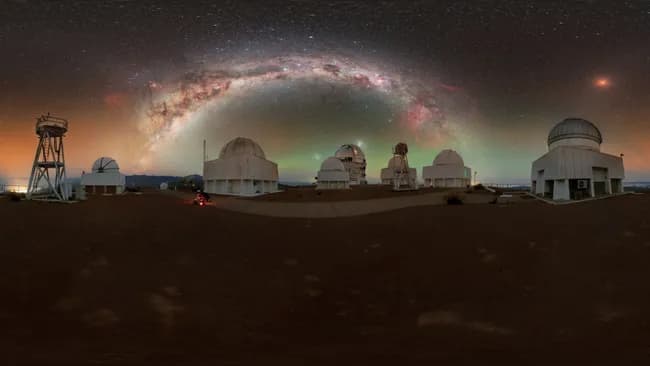
    Curious about the layout of the cosmos? This resource presents a detailed map of our galaxy, the Milky Way. Learn the basic structure and identify prominent global clusters, nebulae, main arms, spurs, and constellations. With numerous different maps and mediums, get oriented with the universe’s configuration and where exactly we fit into it.

  • What is galactic archaeology?

    In the same way that archaeologists excavate and analyze artifacts of human civilization, galactic archaeologists observe the light in the universe to glean lessons on its age, evolution, and more. Learn about this niche area of study with this 10-minute podcast.

  • Explaining the galaxy-sized gas bubbles hovering around the Milky Way

    Depth perception is hard to achieve when looking out into space. For decades, two camps of astrophysicists have disagreed over the nature of the North Polar Spur, a radio-wave emitting arc above the Milky Way galaxy's plane. Was it close and relatively small? Or was it faraway and much more massive? New research utilizing X-ray mapping of the galaxy has helped clarify the existence of both so-called smaller Fermi bubbles and larger X-ray ones.

  • The new history of the Milky Way

    New data garnered from European spacecraft Gaia in 2018 allowed astronomers to rewrite the Milky Way Galaxy's biography. Charting the movements of more than 1 billion stars, Gaia made astronomers reassess how our galaxy formed. Evidence of long-ago collisions and proof of unexpected and unusual movements were just the beginning of the beginning.

  • Galactic archaeologists trace the evolution of the Milky Way

    Archaeologists reconstruct the history of previous civilizations. Researchers in the new field of galactic archaeology have even greater ambitions: They intend to reconstruct the history of the whole Milky Way. Broadly speaking, the Milky Way galaxy is roughly 13.6 billion years old, with its first stars very large but short lived. Over time, our galaxy became a mix of young and old stars—studying them provides details into how our universe unfolded. This article explores the work of galactic archaeologists and the tools they use to explore the evolution of the galaxy.

Next page

Explore Science & Technology

Since our ancient human relatives began using stone tools to perform tasks, humans have harnessed scientific knowledge and new technologies to expand the boundaries of our understanding of the natural world. From quantum computing and microplastics to artificial intelligence and memory, explore these topics and more with our concise yet informative overviews and expert-curated resources.

View All Science & Technology