Posted by Marco Daniel MachadoJun 9Modern media exposure may impact whether people dream in color or black and white.Show 1 more finding ZoomDo people dream in color or black and white?Live Sciencehttps://www.livescience.com/health/dreams/do-people-dream-in-color-or-black-and-white
Posted by Dina Fine MaronJun 8An estimated 1 in 250 people—a small subset of the population—reports they've never remembered a single dream.Show 3 more findings ZoomWhy Can Some of Us Remember Dreams, While Others Rarely Do?Discover Magazinehttps://www.discovermagazine.com/mind/why-do-some-people-always-remember-their-dreams-while-others-almost-never
Posted by Teddy BurkhardtDec 16, 2023How dreams affect your memoryIn 1999, scientists conducted a study in which participants were asked to recall images flashed before them for milliseconds. They found that participants who slept before recalling the information performed better than those who had been asked to recall the same information that same day. This was some of the earliest convincing evidence of how crucial sleep is for learning and memory, findings that current research continues to strengthen. ZoomSleep Melds MemoriesHarvard Universityhttps://magazine.hms.harvard.edu/articles/sleep-melds-memories
Posted by Teddy BurkhardtJan 8, 2024The dreaming brain, as understood by scientistsTechnology has advanced to where the seemingly separate fields of psychology and neuroscience are asking the same questions about dreams, such as whether they're more closely related to perception or visualization. Some field-intersecting findings include research that shows people with impaired face perception don't dream of faces, those with brain legion-related cognition difficulties deal with similar issues in dreams, and children's dreams change in parallel to their cognitive development. ZoomDreaming and the brain: from phenomenology to neurophysiologyhttps://www.cell.com/trends/cognitive-sciences/fulltext/S1364-6613(09)00267-8?_returnURL=https%3A%2F%2Flinkinghub.elsevier.com%2Fretrieve%2Fpii%2FS1364661309002678%3Fshowall%3Dtrue
Posted by Dina Fine MaronJun 9Dreams largely occur during REM sleep (but not entirely).Show 2 more findingsWhy and How Do We Dream? | Quanta MagazineQuanta Magazinehttps://open.spotify.com/episode/57o0CHNTQ231GKyrvV85a3
Posted by Dina Fine MaronJun 8The study of dreams, formally called oneirology, has evolved over the centuries, from anecdotal interpretations to advanced brain imaging.Show 2 more findingsOneirology Part 1 (DREAMS) with G. William DomhoffOlogies with Alie Wardhttps://open.spotify.com/episode/1B8THYg4BJ8jghDX6sAdbV
Posted by Teddy BurkhardtJan 30, 2025Why don’t you remember all your dreams?Despite being a near-nightly occurrence, we remember very few of our dreams. Researchers believe reduced activity in regions where memories are stored, a different neurochemical environment during sleep, and rapid transition during waking contribute to this phenomenon. ZoomWhy don’t you remember all your dreams?Popular Sciencehttps://www.popsci.com/science/why-dont-i-remember-my-dreams/
Posted by Teddy BurkhardtSep 23, 2024Visualizing how we dream via Google search trendsWhen dreams perplex us, we often want to understand them—and in the age of Google, millions go to its search engine to find answers. Now, researchers have compiled a decade's worth of dream-related queries to glean dream trends across seven languages. See what dream was most commonly searched in Arabic in 2015, or what fears and hopes are specific to one culture and time alone with this unique visual essay. ZoomThe Shape of Dreams — by Federica Fragapane and Google News Labhttps://the-shape-of-dreams.com/#/
Posted by Drew SteigerwaldApr 10We dream for around two hours each night, on average, but the exact purposes of dreams remains under investigation.Show 3 more findings 3:32Dreams Explained1440 Originalshttps://www.youtube.com/watch?v=tym1bbD10vI
Posted by Dina Fine MaronJun 9Dream interpretation has evolved from ancient mystical explanations, to dream reports, to tracking electrical activity in the brain and more.Show 1 more finding 31:24The science of dreams | PODCASThttps://www.youtube.com/watch?v=wHI4MAfq-eg
Posted by Marco Daniel MachadoDec 31, 2025When processing light, the brain can perceive colors with no natural wavelengthWhile some animals are sensitive to many forms of light, humans possess receptors that are sensitive to red, green, and blue wavelengths. These receptors send signals to the brain, which are processed and mixed to produce the array of colors we observe, including magenta, pink, and "supercolors" that lack a corresponding natural wavelength in the visible spectrum. ZoomMagenta Doesn’t Exist? – Arts on the BrainEmory Universityhttps://scholarblogs.emory.edu/artsbrain/2020/12/02/magenta-doesnt-exist/
Posted by Teddy BurkhardtJun 7, 2022Why your favorite color is probably blueFrom a young age, we are primed to choose a favorite color, but strangely as we grow up, our preference often changes—and it’s largely due to influences outside our control. ZoomWhy your favourite colour is probably blueBBChttps://www.bbc.com/future/article/20220601-what-your-favourite-colour-says-about-you
Posted by Dina Fine MaronMar 5Scientists are learning to guide your dreams using sound and touch.Show 2 more findings ZoomMeet the Researchers Who Can Engineer Your Dreams | The WalrusThe Walrushttps://thewalrus.ca/dream-engineering/
Posted by Teddy BurkhardtDec 13, 2023Humans experience the world subjectively. What does that mean for scientific research?When you close your eyes, do you see static or colorful patterns or an "intrinsic grey" known as Eigengrau in German? This variation of our internal experiences is just the tip of the iceberg, one that scientists are increasingly studying and... ZoomThe moral imperative to learn from diverse phenomenal experiences | Aeon EssaysAeonhttps://aeon.co/essays/the-moral-imperative-to-learn-from-diverse-phenomenal-experiences
Posted by Dina Fine MaronJun 9How your subconscious influences your decisionsHow much of your desires and daily choices are truly yours? One of the most effective ways to influence someone's subconscious is when they're asleep. To study this possibility, researchers trained participants to be able to dream lucidly, a phenomenon that occurs when a dreamer knows they're dreaming. 14:35Dream Hacking: 3 Groundbreaking ExperimentsNOVA PBS Officialhttps://www.youtube.com/watch?v=7M06fJxiayo
Posted by Marco Daniel MachadoNov 19, 2025Color originates from the brain processing light of varying wavelengthsVarious geometric models, including Newton's color circle of hue and saturation and the horseshoe-shaped XYZ space for mixing colors via vector mathematics, have been proposed to describe colors accurately. However, these models do not encapsulate the variety of psychological effects that cause perceived colors to differ from mathematical representations. 19:35The "Geometry" of Colourshttps://www.youtube.com/watch?v=7KYwi2F5Ce4
Posted by Teddy BurkhardtJan 2, 2024What do your dreams mean, according to scienceHumans have been interpreting dreams as signs from deities, spirits, or the psyche for ages, and research shows that reflecting on and analyzing one's dreams can be beneficial. In alignment with dreams' elusive nature, they have no objective or clearly assigned meaning. However, variations of common dreams, such as a surprise exam in a forgotten class, are rife with shared primal fears. ZoomWhat Your Dreams Actually Mean, According to ScienceTIMEhttps://time.com/4921605/dreams-meaning/
Posted by Marco Daniel MachadoMay 16, 2024Brain implants can help colorblind people hear colorsColorblind artist Neil Harbisson was born into a world of grey. In 2004, he had a chip installed connected to an external color frequency sensor. Once the sensor "reads" a color, it sends a signal to the chip and plays an associated sound both in and outside Harbisson's head. 9:36I listen to colorTED-Edhttps://www.youtube.com/watch?v=ygRNoieAnzI

Posted by Drew SteigerwaldMay 14Studies of psychedelic use may help shed light on the nature of consciousnessThe nature of consciousness—what it is, where it comes from, and how it manifests as moment-to-moment experience—remains under debate by scientists. Recent studies show psychedelics were found to boost low-frequency brain signals known as delta waves, a behavior also seen during dream states. 11:36Psychedelics and consciousness: Could drugs help quantify our waking state?Naturehttps://www.youtube.com/watch?v=1Tl7ktZLWF8
Posted by Dina Fine MaronJun 8Sleep is no longer considered a binary state—scientists are seeking to map a variety of liminal states between sleep and waking, including the hypnagogic state associated with boosts of creativity.Show 5 more findings ZoomHow the Brain Moves From Waking Life to Sleep (and Back Again) | Quanta MagazineQuanta Magazinehttps://www.quantamagazine.org/how-the-brain-moves-from-waking-life-to-sleep-and-back-again-20251017/
Posted by Dina Fine MaronJun 9During dream sleep, the brain connects new information learned during the day with information already stored in the mind, creating a revised mind-wide web of associations. 4:02What Happens To Your Brain When You DreamInsider Techhttps://www.youtube.com/watch?v=rBby0RJw3Dc
Posted by Teddy BurkhardtSep 25, 2023The benefits of lucid dreamingLucid dreams happen when the dreamer knows they've stepped out of the bounds of waking life. Studies show it can help dreamers cultivate creativity, process grief, and work through trauma. A 2021 study found that 85% of participants with PTSD no longer qualified for the diagnosis after a week of trauma-informed lucid dreaming in which they intentionally witnessed (and therefore integrated) recurring nightmares or changed the outcome completely. ZoomThe sleep secret: how lucid dreams can make us fitter, more creative and less anxiousThe Guardianhttps://www.theguardian.com/lifeandstyle/2023/sep/20/the-sleep-secret-how-lucid-dreams-can-make-us-fitter-more-creative-and-less-anxious
Posted by Dina Fine MaronFeb 26Sleeping on a problem does seem to help—in fact research published in 2026 suggests scientists can seed people's dreams with sound cues about a difficult puzzle during REM sleep and they'll be better able to solve it.Show 5 more findings ZoomCan Dreams Help You Solve Problems?TIMEhttps://time.com/7381398/can-dreams-help-you-solve-problems/
Posted by Marco Daniel MachadoJul 30, 2025Individuals with synesthesia experience involuntarily overlapping sensations Tasting words or seeing colors in music results from the brain retaining extrasensory connections from infancy. While most lose these neural pathways during development, about 4% of people are synesthetes, maintaining them without realizing it's unusual. 13:10The Weird Reason Some People Can Taste ColorsBe Smarthttps://www.youtube.com/watch?v=pPIem63bC4w
Posted by Dina Fine MaronJun 9Dreams have long been used for religious and political power.Show 2 more findings ZoomWhy are dreams such potent vehicles for the supernatural? | Aeon EssaysAeonhttps://aeon.co/essays/why-are-dreams-such-potent-vehicles-for-the-supernatural
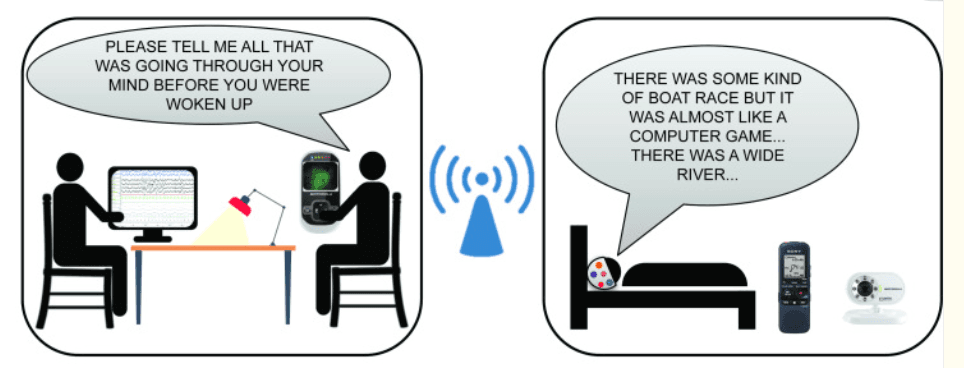
Posted by Dina Fine MaronJun 8For most of recorded history dreams were considered divine in origin.Show 2 more findings ZoomSleep, dreaming, and mental health: A review of historical and neurobiological perspectivesSleep Medicine Reviewshttps://www.sciencedirect.com/science/article/abs/pii/S1087079210000699
Posted by Jeremy CronigMar 10Red and blue election maps are a modern media inventionThe red–blue color scheme used on election night maps emerged in the 20th century as television networks adopted color graphics to make results easier to follow. The association of red with Republicans and blue with Democrats later became standardized. 5:53Why red means Republican and blue means DemocratVoxhttps://www.youtube.com/watch?v=lgz3p4cEXZU
Posted by Dina Fine MaronJul 23Emerging research suggests that cannabis, used by about 9% of American adults as a sleep aid, may suppress rapid eye movement and lead to worse quality sleep and fewer remembered dreams.Show 2 more findings ZoomThe hidden way cannabis changes your brain while you sleepLimited AccessThe Washington Posthttps://www.washingtonpost.com/health/2026/07/23/hidden-way-cannabis-changes-your-brain-while-you-sleep/
Posted by Teddy BurkhardtJun 20, 2022Examining self-diagnosed synesthesiaA growing number of people on social media claim to have a perceptual condition that lets them smell colors, see music, or taste sounds. But do they really? ZoomWhat’s the Deal With Synesthesia TikTok?WIREDhttps://www.wired.com/story/synesthesia-tiktok/
Posted by Dina Fine MaronJun 9The hippocampus, located deep inside the temporal lobe, appears to play a central role in dreaming and memory, according to recent research on dreaming and damage to that area of the brain.Show 2 more findings ZoomDreaming with hippocampal damage - PMCeLifehttps://pmc.ncbi.nlm.nih.gov/articles/PMC7279885/
Posted by Dina Fine MaronMar 24Blindfolded people could identify objects by touch alone a week after encountering themThese touch memories are more complex and durable than previously thought. In research published in 2018, blindfolded volunteers touched over 150 household objects for about 10 seconds each, and afterward correctly identified the objects more than 90 percent of the time when presented with the object and a similar one. Participants still knew most of the objects a week later with about 85 percent accuracy. (Some users may experience a paywall.)A Touch to RememberScientific Americanhttps://www.scientificamerican.com/article/a-touch-to-remember/
Posted by August MoonJun 9Roughly 1 in 5 people experience lucid dreaming at least once a month—that's the ability to control or influence your dream environment.Show 1 more finding 0:59Lucid Dreaming Explained1440 Originalshttps://youtube.com/shorts/dK-NA0jC8ps
Posted by Meher QazilbashDec 3, 2024Can music alter your memories?You’re familiar with music’s ability to transport you to a past experience, but new research suggests that music can even alter how you remember your past experiences. A team of psychology researchers and music experts recently published a study that demonstrates how music can help shift our emotional recollection of a memory. Read to learn more about the study’s findings and how it could influence therapy practices. ZoomMusic can change how you feel about the pastThe Conversationhttps://theconversation.com/music-can-change-how-you-feel-about-the-past-239045?utm_source=join1440&utm_medium=email&utm_placement=newsletter
Posted by Teddy BurkhardtNov 8, 2022See original photos of King Tut's tomb in updated colorThe 1922 discovery of King Tutankhamen’s tomb in Egypt revealed new secrets about the civilization to a fascinated world, and the Metropolitan Museum of Art's Harry Burton captured the discovery in 2,800 black-and-white glass negatives. Nearly a century later, a selection of the images were colorized by experts . ZoomHistoric Photos of King Tut’s Tomb Colorized - artnet NewsArtnet Newshttps://news.artnet.com/art-world/king-tut-photos-color-359033
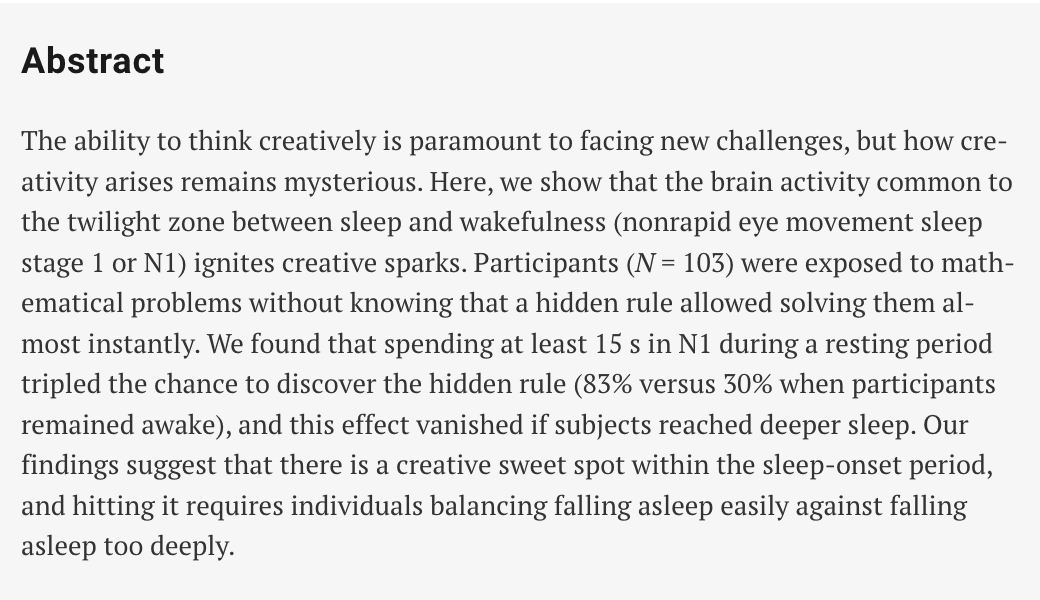
Posted by Dina Fine MaronJun 8Sleep research published in 2021 confirmed that there is a 'creative sweet spot' when people are drifting off to sleep, and that if they wake up at that point to work, it can boost their creative problem-solving.Show 1 more finding ZoomSleep onset is a creative sweet spotScience Advanceshttps://www.science.org/doi/10.1126/sciadv.abj5866
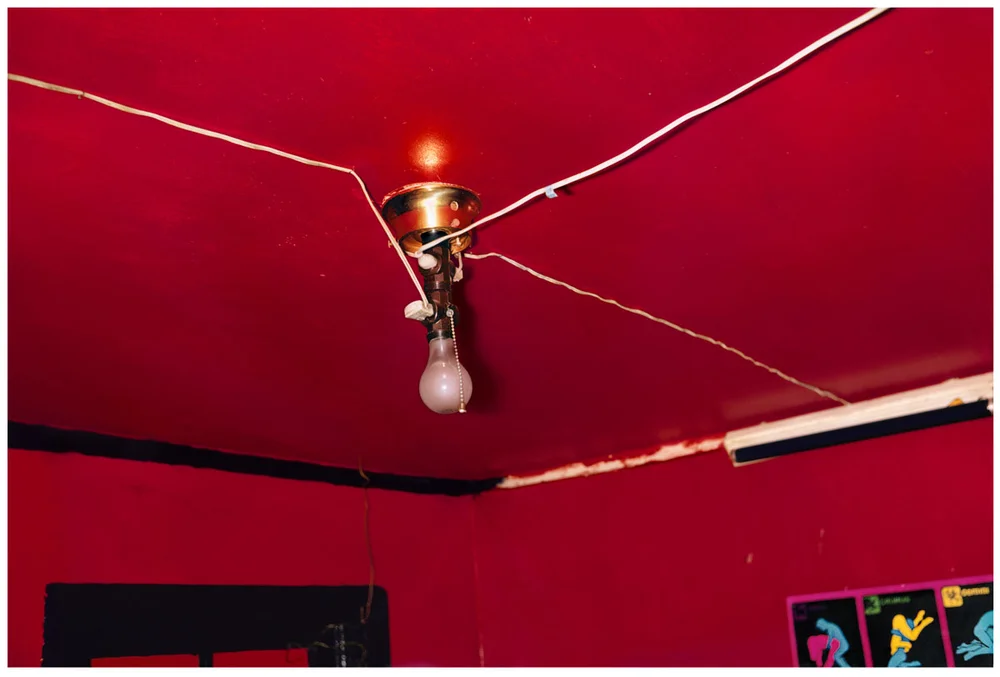
Posted by Kevin KearneySep 26, 2025William Eggleston was one of the first non-commercial photographers working in colorWhen he began exhibiting his work in the '70s, most color photography was limited to advertising. Eggleston's "democratic" stills of working-class Americana were filled weith vibrant color and would go on to influence generations of photographers and filmmakers. ZoomWilliam Eggleston (American, 1939) (Getty Museum)https://www.getty.edu/art/collection/person/103KDK