Posted by

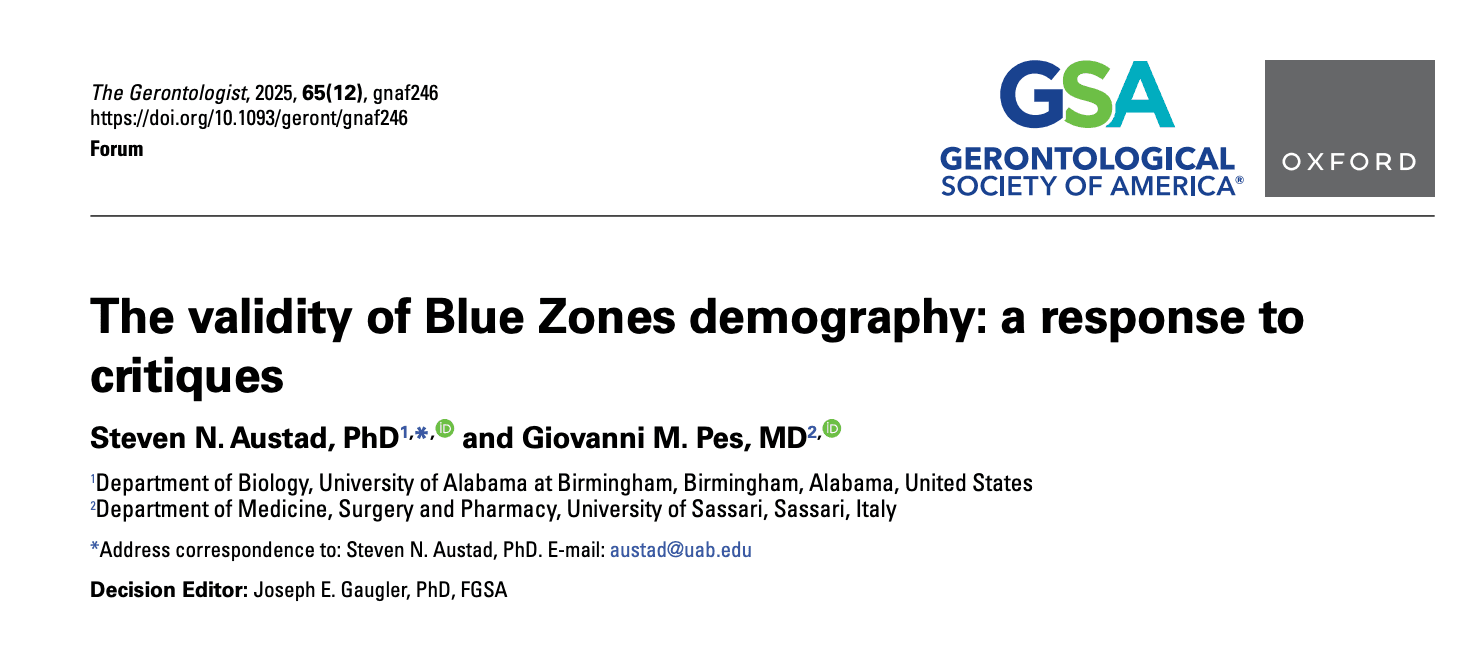
In the original 2004 blue zones study, which sought to verify the ages of long-lived, healthy populations in Sardinia, Italy, researchers hypothesized that inbreeding in these isolated communities may have helped promote their longevity. (Paywall may apply.)
Findings

Additional insights we found via Experimental Gerontology

  1. Written by Belgian demographer Michel Poulain, Italian physician Giovanni Pes, and colleagues, the paper noted that males in the area were particularly long-lived and healthy—a surprising phenomenon since, on average, males live shorter lives than females globally.

  2. Among their surprising findings was that in this area of Sardinia, there were 16.6 centenarians per 100,000 inhabitants—compared with 10 per 100,000 in other European countries.

  3. One hypothesis they pointed to for the older ages in Sardinia: inbreeding. In this isolated, mountainous region there are high rates of inbreeding due to frequent marriages between related individuals and low immigration rates. Decreased genetic diversity, they wrote, could have favored genetic characteristics that protect individuals from certain diseases of aging.

Similar Posts

Showing 1440 posts similar to In the original 2004 blue zones study, which sought to verify the ages of long-lived, healthy populations in Sardinia, Italy, researchers hypothesized that inbreeding in these isolated communities may have helped promote their longevity. (Paywall may apply.)

You've reached the end.