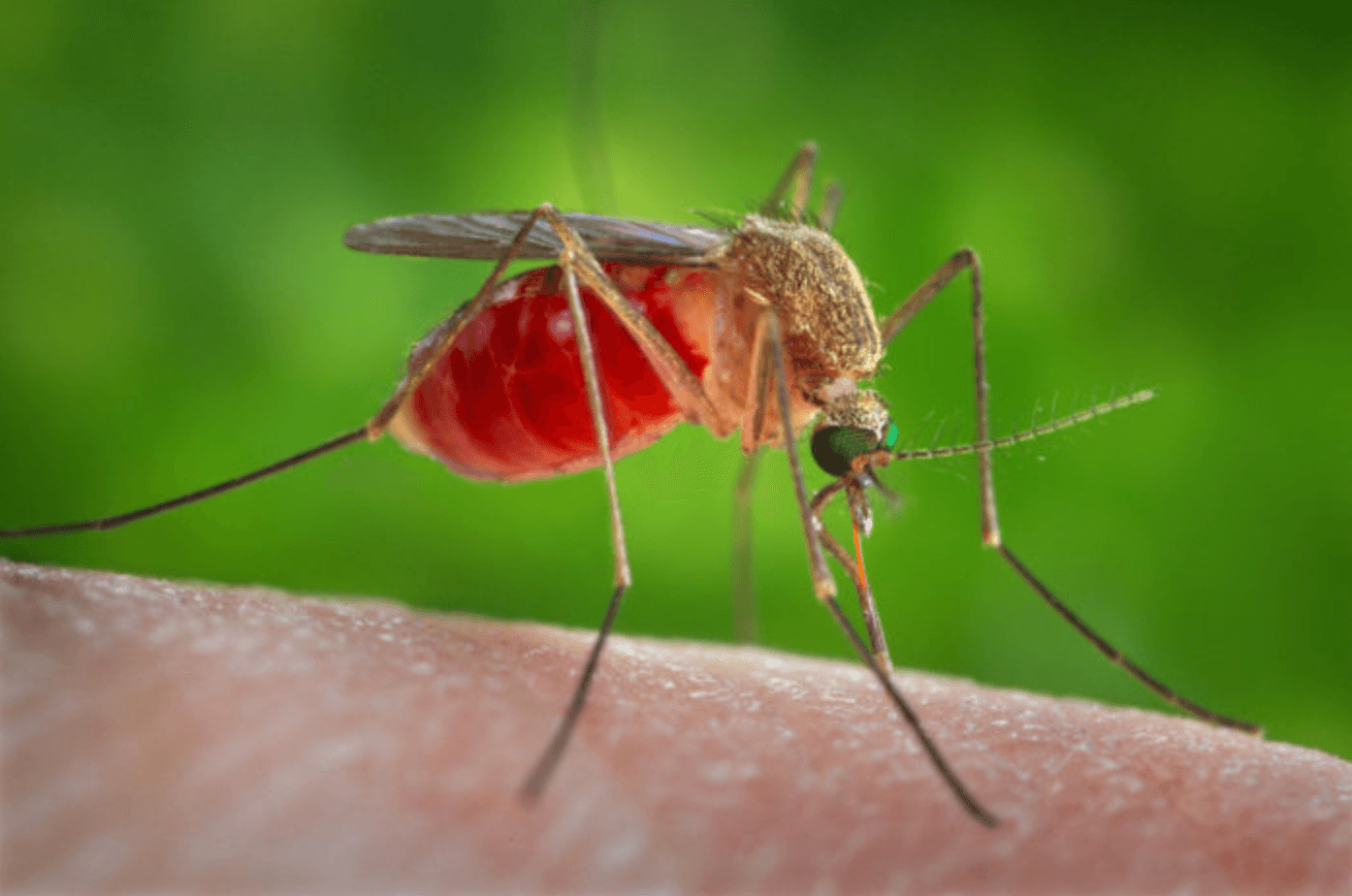
Posted by Dina Fine MaronMay 18Protecting yourself from West Nile involves avoiding getting bites and clearing standing water.Show 2 more findings ZoomWest Nile virus is on the rise: 3 ways to protect yourself from mosquitoes | Cultivating HealthUC Davishttps://health.ucdavis.edu/blog/cultivating-health/west-nile-virus-is-on-the-rise-3-ways-to-protect-yourself-from-mosquitoes/2023/07
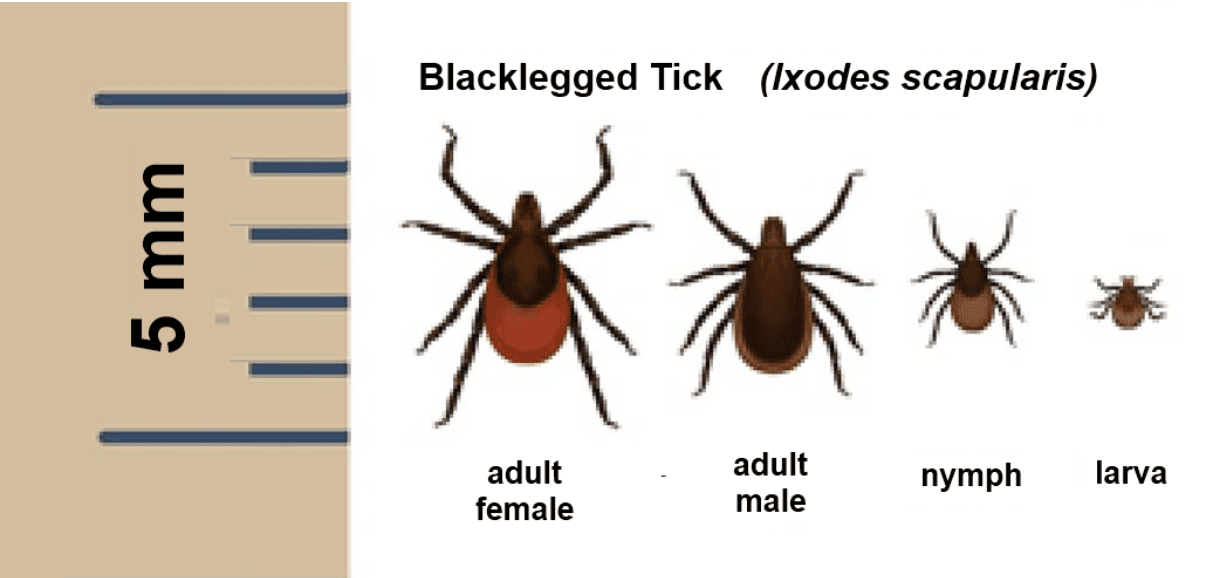
Posted by Dina Fine MaronMar 16Wearing tick repellent, covering up, and performing tick checks are the best Lyme preventionSpraying repellents onto your clothes—and reapplying them—or donning impregnated bug-repelling clothes can help keep ticks away. Effective sprays include DEET, picaridin, or permethrin. Bug spray applied to the body should be applied on top of sunscreen, and only after the sunscreen has dried.American Medical Associationhttps://www.ama-assn.org/public-health/infectious-diseases/what-doctors-wish-patients-knew-about-lyme-disease
Posted by Dina Fine MaronMay 18There's no cure for West Nile virus—and infection can leave patients with permanent symptoms.Show 2 more findings 4:11West Nile Virus is here. Fight the bite.ABC10https://www.youtube.com/watch?v=4u32tDGbiTM
Posted by Dina Fine MaronMay 18There's a West Nile virus prevention rap—and it's amazingThis catchy rap from biologist MC Bugg-Z and the Fairfax County government in Virginia walks people through prevention steps and the dangers of the virus, telling listeners to "rock" insect repellant and talking about the history of the disease in the US. 3:11West Nile Story (West Nile Virus Prevention Rap)Fairfax County Governmenthttps://www.youtube.com/watch?v=AL6V4eB-mbI
Posted by Dina Fine MaronMay 18Dead birds are often the warning sign health officials look for as a sign of West Nile danger.Show 2 more findingsWest Nile VirusPest Talk: The Buzz on Bugshttps://open.spotify.com/episode/7eveCkmLpU33TYYyDObRrX
Posted by Dina Fine MaronMay 18Most cases of West Nile virus are asymptomatic in peopleAbout 1 in 5 infected people develop symptoms from West Nile, including symptoms such as fatigue, head and body aches, and vomiting. But around 1% of patients develop severe complications such as encephalitis or meningitis, which can be life-threatening. Those who are most likely to become severely ill are people over age 60.West Nile | Johns Hopkins Center for Immunization ResearchJohns Hopkins Bloomberg School of Public Healthhttps://centerforimmunizationresearch.org/our-vaccine-research/flavivirus-immunization-research-and-education/west-nile
Posted by Dina Fine MaronMay 18US West Nile case numbers were up 40% in 2025 across the United States though theories vary to explain this surge.Show 2 more findings 1:45Health officials warn of rising West Nile virus casesNBC Newshttps://www.youtube.com/watch?v=Bd8kVjeLaCc
Posted by Dina Fine MaronMay 18West Nile Virus is maintained in nature, even without human infectionsMosquitoes pick up the virus when they feed on birds, and then pass it to other birds with their bite, delivering it via virus-laden saliva. Hundreds of different North American bird species can harbor the virus—even if they don't all get sick from it.Ep 84 West Nile virus: The Crow in the Coal MineThis Podcast Will Kill Youhttps://open.spotify.com/episode/1aBWjq5G9ojCI9oaLMkCsy
Posted by Drew SteigerwaldApr 30How a scientist discovered West Nile is spread by birdsListen to Tracey McNamara, former chief pathologist at the Bronx Zoo, detailing her surprising late 1990s discovery that established West Nile virus is spread by birds. Financing animal disease surveillance studies, she says, saves human lives and surveillance gaps may fuel missed opportunities to identify dangerous diseases before they jump between species. ZoomHow monitoring animal health can predict human disease outbreaksTEDhttps://www.ted.com/talks/tracey_mcnamara_how_monitoring_animal_health_can_predict_human_disease_outbreaks
Posted by Dina Fine MaronMay 18West Nile is named after the district in Uganda where it was first isolated from a patientIn 1937, scientists isolated the virus from a woman in the West Nile District of Uganda. It's since been detected in much of Africa, Eastern Europe, West Asia, the Middle East, and was first detected in US patients during an outbreak in 1999.Birds, Migration and Emerging Zoonoses: West Nile Virus, Lyme Disease, Influenza A and Enteropathogens - PMCNational Library of Medicinehttps://pmc.ncbi.nlm.nih.gov/articles/PMC1069015/
Posted by Dina Fine MaronMay 18Long-term memory issues among West Nile survivors may be from the body's immune response, not the viral infection.Show 2 more findings ZoomMemory loss caused by West Nile virus explained | WashU MedicineWashington University in St. Louishttps://medicine.washu.edu/news/memory-loss-caused-west-nile-virus-explained/
Posted by Marco Daniel MachadoMay 22, 2025West Nile virus found in the UK for the first timeThe West Nile virus, which mainly spreads between birds and mosquitoes, was detected in the UK for the first time. While no evidence exists for any human infections, climate change may be expanding mosquitoes—and the diseases they carry—farther north. ZoomWest Nile virus detected in UK mosquitoes for first timeBBChttps://www.bbc.com/news/articles/c77115e0645o
Posted by Dina Fine MaronMay 18Horses can—rarely—get West Nile, tooThe animals can contract the virus via infected mosquito bites, but for horses there are four vaccines available. Though West Nile's often asymptomatic or mild in horses, the disease can sometimes be deadly, killing via severe neurological inflammation. There are no reported instances of people becoming sickened by infected horses or vice-versa. ZoomWest Nile VirusUniversity of California Davis Weill School of Veterinary Medicinehttps://ceh.vetmed.ucdavis.edu/health-topics/west-nile-virus
Posted by Dina Fine MaronMay 18West Nile was reported in 47 states in 2025, with more than 1,400 people severely affectedTracking numbers from the CDC indicate that the virus spread widely that year, with more than 2,000 reported human cases and many states seeing more than 25 sickened people. More than 1,400 people had neuroinvasive cases of the disease—meaning the virus had entered the nervous system, which can cause severe, potentially life-threatening illness. ZoomCurrent Year Data (2025)US Centers for Disease Control and Preventionhttps://www.cdc.gov/west-nile-virus/data-maps/current-year-data.html
Posted by Dina Fine MaronMar 17Antimalarials must be taken before traveling to a malaria-endemic areaMalaria prevention involves avoiding getting bitten by mosquitoes (with bug spray and clothing choices) and taking malaria preventative drugs before, during, and after spending time in an area with malaria risk. The drug must be in the blood before the traveler is exposed to malaria parasites.US Centers for Disease Control and Preventionhttps://www.cdc.gov/yellow-book/hcp/travel-associated-infections-diseases/malaria.html
Posted by Dina Fine MaronMay 18Robins are a major host for West Nile in North America, even though other species more readily spread the disease.Show 2 more findings ZoomFrom Birds to People: The West Nile Virus StoryHHMI BioInteractivehttps://www.biointeractive.org/classroom-resources/birds-people-west-nile-virus-story
Posted by Dina Fine MaronMay 18West Nile has been detected in at least 2 species of reptiles, including American alligators.Show 3 more findings ZoomAre birds the only species that is susceptible to West Nile Virus infection?USGShttps://www.usgs.gov/faqs/are-birds-only-species-susceptible-west-nile-virus-infection
Posted by Dina Fine MaronMay 18West Nile virus was detected in UK mosquitoes for the first time in 2023Fragments of the virus were detected in mosquitoes that were being collected in Britain for the first time in 2023, but the UK government considers the overall risk to people to be low. As of spring 2026, there have never been detected locally-acquired cases of the disease. ZoomFirst detection of West Nile virus in UK mosquitoesUK governmenthttps://www.gov.uk/government/news/first-detection-of-west-nile-virus-in-uk-mosquitoes
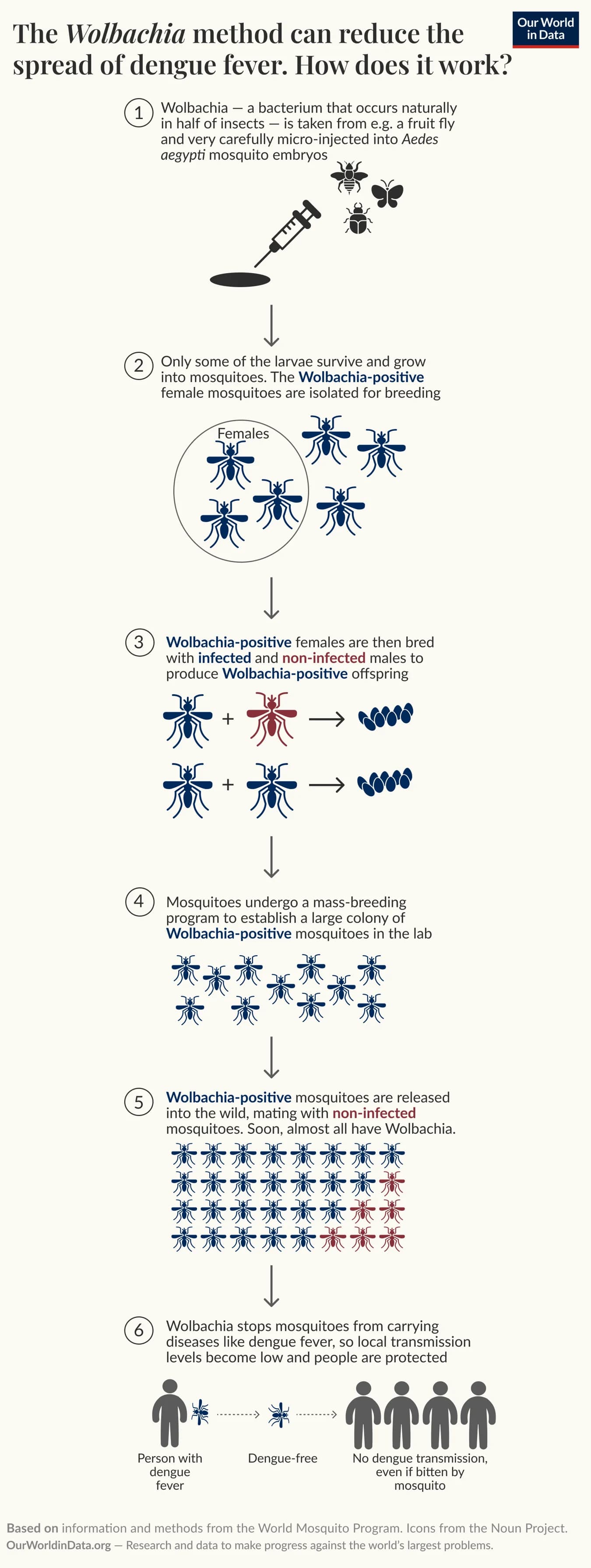
Posted by Dina Fine MaronMar 13Wolbachia is a naturally occurring bacterium being employed to fight dengueScientists are fighting dengue spread in a roundabout way: injecting bacteria into Aedes aegypti mosquito eggs, which blocks the dengue virus from replicating in the tissue of mosquitoes. Researchers hope the bacterium will be passed to future generations, inoculating them against dengue. Wolbachia is also being investigated to combat other mosquito-borne diseases. 11:06Bloomberghttps://www.youtube.com/watch?v=4jaqnQ_GMWU
Posted by Kevin KearneyMar 13, 2025How Disney World keeps out mosquitosDisney World may have been built on a swamp, but it's nearly free from the annoyance of mosquitos. That hasn't been an easy task; Disney has worked with engineers and pest specialists on minimizing the invasive bugs through a variety of different methods. This Reader's Digest article breaks down how they've successfully kept the park free from these unwanted guests. ZoomThis Is Why You Rarely See Mosquitoes at Disney WorldReader's Digesthttps://www.rd.com/article/no-mosquitoes-at-disney-world/
Posted by Drew SteigerwaldJan 5Wolbachia: the bacteria that could eliminate dengue feverDengue fever, transmitted by mosquitoes, kills more people annually than all types of natural disasters combined. However, mosquitoes that host Wolbachia bacterium have their ability to transmit the virus naturally suppressed, offering a route to eliminating nearly 25,000 deaths annually. ZoomHow Wolbachia bacteria could help us tackle some of the world’s most neglected tropical diseasesOur World in Datahttps://ourworldindata.org/wolbachia-neglected-tropical-diseases
Posted by Dina Fine MaronMar 13Wolbachia is also being used to slash mosquito numbersThe naturally occurring bacterium does not naturally infect Aedes aegypti mosquitoes, but communities in locations including California and Texas have released male mosquitoes infected with Wolbachia and reported a significant drop in subsequent mosquitoes: When infected males mate with uninfected wild females, the eggs don't hatch.US Centers for Disease Control and Preventionhttps://www.cdc.gov/mosquitoes/mosquito-control/mosquitoes-with-wolbachia.html
Posted by Dina Fine MaronMar 16Watch the safe way to remove a tick from your bodyMinimizing your risk of Lyme and other tickborne diseases hinges on quickly removing ticks. To do so, place tweezers on the animal as close to the skin as possible and then pull directly upwards to try to avoid leaving bits of the tick's body behind. If possible, try to take a photo of the tick to share with your doctor to better identify potential disease risks (since certain tick species can carry specific diseases). Next, dispose of the tick without crushing it in your fingers—flushing it down the toilet, or placing it in alcohol or a sealed bag—and then thoroughly wash the bite area and your hands. 1:00https://www.youtube.com/watch?v=S4Ny5YJh6Ws
Posted by Dina Fine MaronMay 18Horses have four licensed West Nile vaccines—but humans have noneA major hurdle for West Nile vaccine development is the lack of a market for it since so many people are symptomatic for the infections. Still, a growing number of infections, including a 40% spike in 2025, may change that calculation. ZoomSummary of human West Nile virus vaccine meeting, 2024: Investigating barriers to developmentVaccinehttps://www.sciencedirect.com/science/article/abs/pii/S0264410X25012356
Posted by Dina Fine MaronMay 18Hear from a NYC public health official who led the first US investigation into West Nile about the challenges investigators faced and their working theories about that outbreak.Show 2 more findingsWest Nile Virus Comes to America...and Stays!Inspired to Healhttps://open.spotify.com/episode/0UP7BRGRMO3t63sf23sWRK
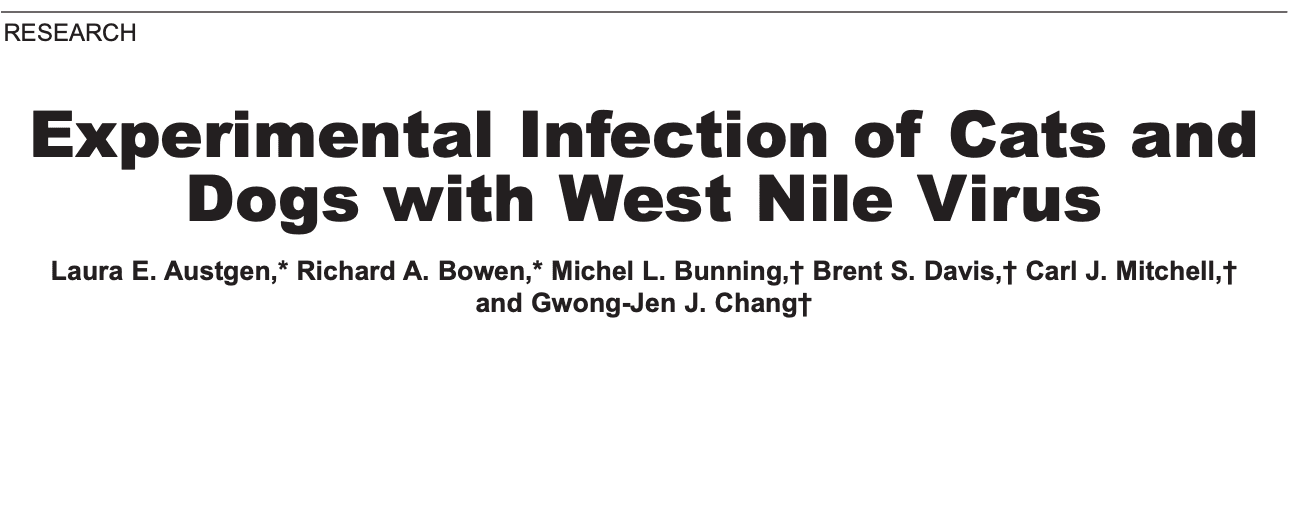
Posted by Dina Fine MaronMay 18Scientists found that if cats ate infected rodents, they could get West Nile in lab experiments.Show 2 more findings ZoomExperimental Infection of Cats and Dogs with West Nile Virus - PMCNational Library of Medicinehttps://pmc.ncbi.nlm.nih.gov/articles/PMC3322759/
Posted by Dina Fine MaronMar 13More than 20 mosquito-borne and tick-borne diseases are found in the USChildren, older adults, and people with compromised immune systems are at particular risk of poorer health outcomes from these diseases. But dog owners and outdoor enthusiasts are among those at particular risk of contracting these illnesses, which include Lyme disease, Zika, and the condition Alpha-gal Syndrome.US Centers for Disease Control and Preventionhttps://www.cdc.gov/vector-borne-diseases/risk-factors/index.html
Posted by Dina Fine MaronMar 13Hear what it's like to have malaria from a patient who suffered from the mosquito-borne disease.Show 4 more findingsEp 8 ABRACADABRA - Go Away Malaria!This Podcast Will Kill Youhttps://open.spotify.com/episode/1j0rB51Zl5sOhiGpV7ExBy
Posted by Dina Fine MaronMay 18Horses account for about 96% of known mammalian cases of West Nile virus infection beyond humans.Show 2 more findings 5:45Horse tests positive for West Nile virus in Yakima County | FOX 13 SeattleFox 13 Seattlehttps://www.youtube.com/watch?v=cmVZxRkw9xE
Posted by Teddy BurkhardtMay 15Explore inside a mosquito factory where millions of mosquitoes are bred weeklyIn Medellin, Colombia, scientists are infecting Aedes aegypti mosquitoes with Wolbachia, a bacterium that wouldn't otherwise infect the species, but does block its ability to transmit dengue, Zika, yellow fever, and chikungunya. In the wild, infected mosquitoes would breed with wild mosquitoes, pass down Wolbachia, and thus reduce disease transmission. 13:22I Visited a Mosquito FactoryPBS Terrahttps://www.youtube.com/watch?v=AI3HE7BcIBk
Posted by Dina Fine MaronMar 17Female Anopheles mosquito bites are the primary way malaria spreads.Show 2 more findingsUS Centers for Disease Control and Preventionhttps://www.cdc.gov/malaria/causes/index.html
Posted by Dina Fine MaronMay 20Twin studies helped scientists understand why mosquitoes like some of us more than othersA combination of carbon dioxide output, skin chemistry, genetic factors, hormones, and clothing choice can make us particularly vulnerable to mosquito bites. Watch how mosquitoes responded to one man in the video versus his wife, a research approach typically conducted with identical and fraternal twins to test mosquito attractiveness. 12:10Veritasiumhttps://www.youtube.com/watch?v=38gVZgE39K8
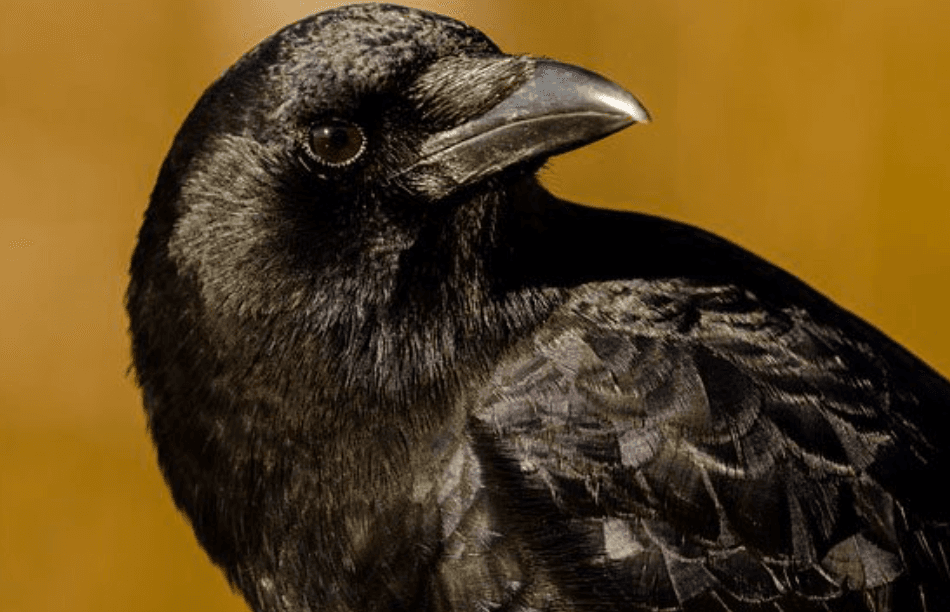
Posted by Dina Fine MaronMay 18Nearly 5,500 crows died during four months in 1999 from West Nile in NYC.Show 2 more findings ZoomCounting Crows: The Impact of the West Nile VirusCornell Lab of Ornithologyhttps://www.allaboutbirds.org/news/counting-crows-the-impact-of-the-west-nile-virus/
Posted by Teddy BurkhardtMay 15Disney World is largely mosquito-free, thanks to civil engineer Joe PotterAs a former governor of the mosquito-prone Panama Canal zone, Potter understood the danger of standing water. At Disney, Potter built ditches to reduce moisture, designed buildings to channel water away, and more. His efforts help visitors avoid bites, adding to the perceived magic of the magical kingdom. 11:15Why Disney World Has No Mosquitoes | Civil Engineering at Disneyhttps://www.youtube.com/watch?v=Bcm5pVp7RQo
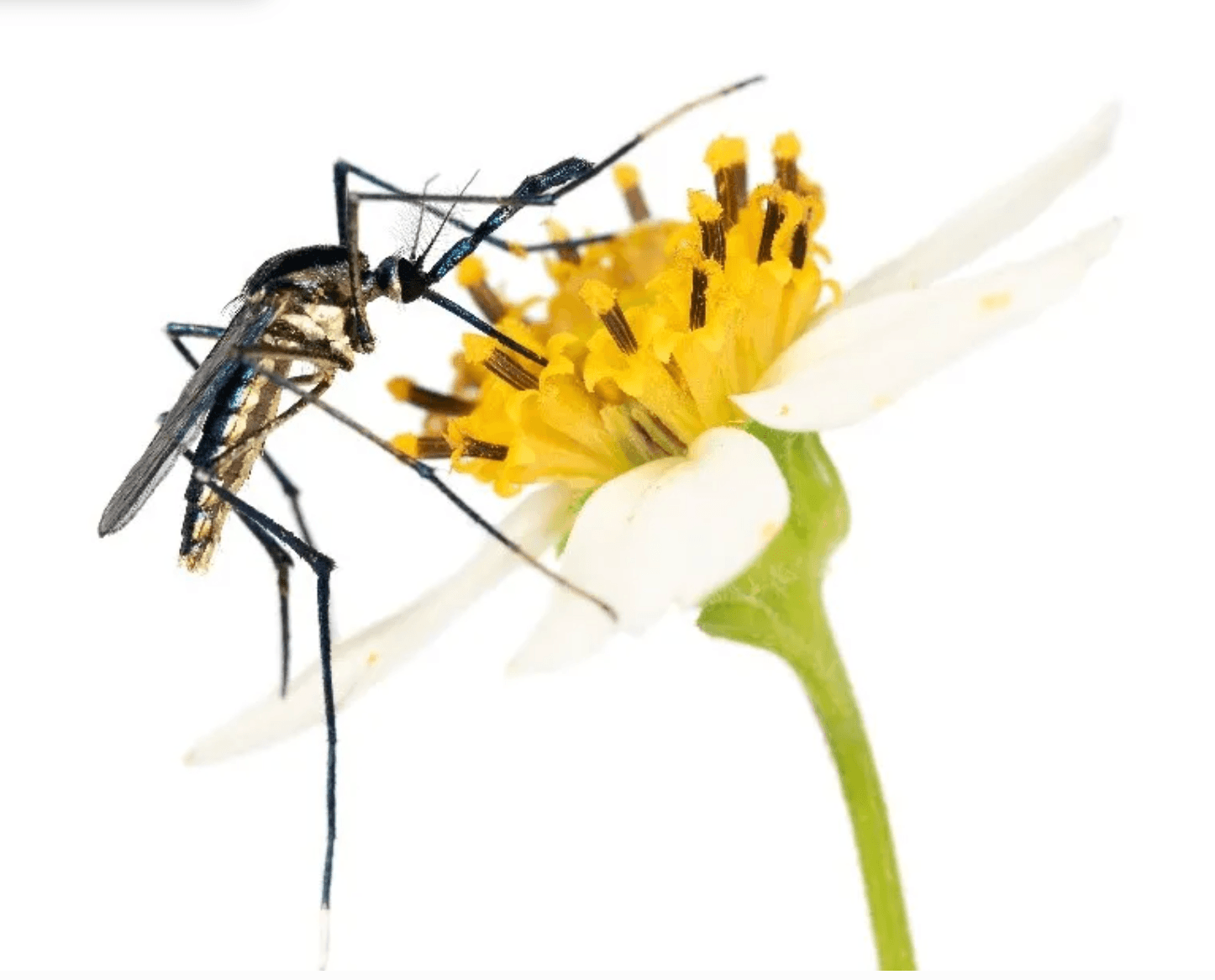
Posted by Dina Fine MaronMar 13Some mosquitoes are key pollinators—and eat disease-carrying mosquitoes.Show 3 more findings ZoomThe Secret Lives of Mosquitoes, the World’s Most Hated InsectsSmithsonian Magazinehttps://www.smithsonianmag.com/blogs/national-museum-of-natural-history/2021/08/19/secret-life-worlds-most-hated-insect/
Posted by Dina Fine MaronMar 17Anopheles mosquitoes are developing resistance to insecticides.Show 2 more findings ZoomNew tools saved a million lives from malaria last year but progress under threat as drug resistance risesWorld Health Organizationhttps://www.who.int/news/item/04-12-2025-new-tools-saved-a-million-lives-from-malaria-last-year-but-progress-under-threat-as-drug-resistance-rises
Posted by Dina Fine MaronJun 29Powassan virus, a rare tick-borne disease named after the Canadian town where it was discovered in 1958, is on the rise in the northeastern United States, and it kills roughly 10% to 15% of patients with symptomatic disease.Show 3 more findings ZoomA tick virus now surging in New England can be traced back to an Ontario 4-year-old's death in 1958Yahoo Newshttps://www.yahoo.com/news/science/articles/tick-virus-now-surging-england-041900533.html?guccounter=1&guce_referrer=aHR0cHM6Ly93d3cuZ29vZ2xlLmNvbS8&guce_referrer_sig=AQAAAN4Gf8bXwGDV1u-BhX5Ql-A6yLuju1ej5z3rB6HX-YwvZFXvnM_kiBbvAnI8rTE1hkJvTMX2T0cO2GJxZlJ1s3Z1CMvpSwByxdUNd5vxigEUl0ggL87kvIkdorzvgtdj0eKGqoBO5j6fwr8ImZURVCIFeE4er4Mp45ZsEMPG9V8I
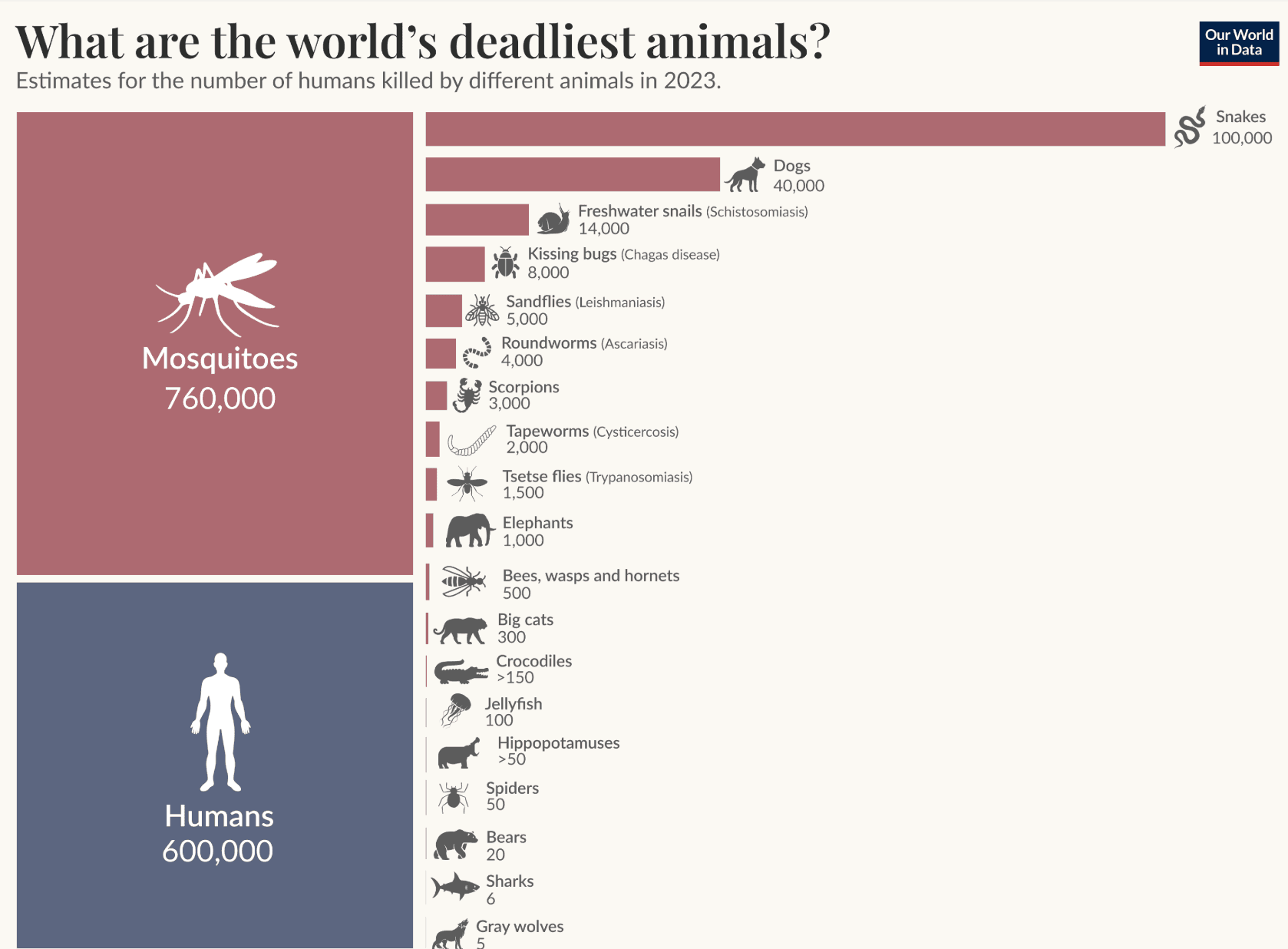
Posted by Dina Fine MaronMar 10Mosquitoes top the ranking of the world's deadliest animals.Show 3 more findings ZoomWhat are the world’s deadliest animals, and can we protect ourselves against them?Our World in Datahttps://ourworldindata.org/deadliest-animals
Posted by Dina Fine MaronMar 13Scientists still don't know why DEET is such an effective bug repellentThis chemical, used to keep ticks, fleas, mosquitoes, and other nuisance bugs away, is used by an estimated one-third of the US population and has been available to consumers since 1957. Researchers theorize that multiple mechanisms may be at work to deter bugs, including perhaps masking or confusing bugs' olfactory receptors.Consumer Reportshttps://www.consumerreports.org/health/insect-repellent/how-safe-is-deet-insect-repellent-safety-a4952100929/