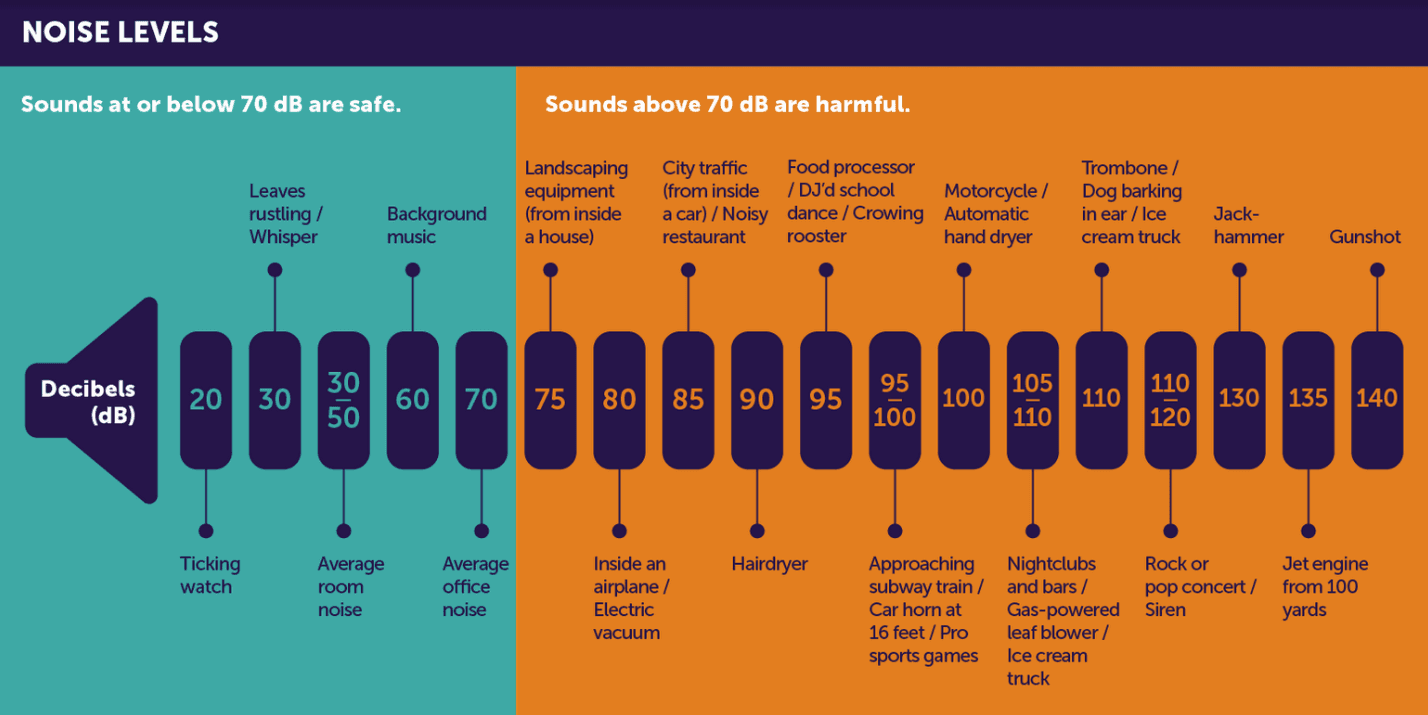
Posted by Dina Fine MaronMar 9See this graphic describing what different decibel levels mean for hearing loss.Show 1 more finding ZoomKeep Listening | What Are Safe Decibels? — Hearing Health FoundationHearing Health Foundationhttps://hearinghealthfoundation.org/keeplistening/decibels
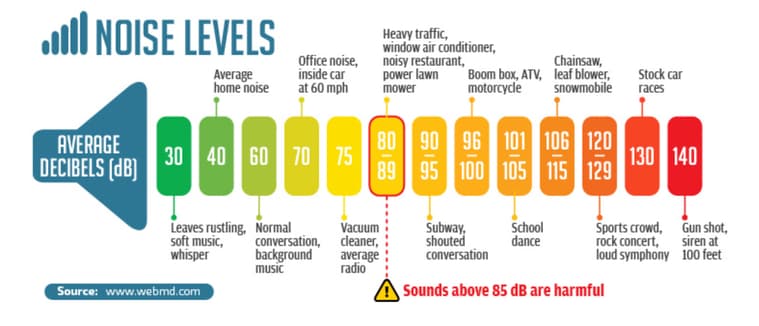
Posted by Marco Daniel MachadoJul 18The decibel scale measures sound intensity, with hearing damage occurring after prolonged exposure to sounds above 85 decibels—equivalent to a noisy lawnmower.Show 2 more findings ZoomThe Decibel Scale ExplainedEcho Barrierhttps://blog.echobarrier.com/blog/the-decibel-scale-explained
Posted by Dina Fine MaronMar 9More than 5% of the world's population has disabling hearing lossDisabling hearing loss is defined as hearing loss greater than 35 decibels in the better hearing ear. (For context, that means the sound of leaves rustling, at roughly 30 decibels, would be inaudible even to your better-hearing ear.) The World Health Organization's data suggests that more than 5% of the world's population has this level of loss requiring rehabilitation, which amounts to 430 million people—including 34 million children.World Health Organizationhttps://www.who.int/news-room/fact-sheets/detail/deafness-and-hearing-loss
Posted by Dina Fine MaronFeb 20One decibel of hearing loss increases tinnitus risk by 6% for older peopleThat's according to an analysis of more than 18,000 people published in BMC Medicine in 2023. The tinnitus risk is not just limited to older people: The research also concluded that one decibel of hearing loss increases the risk of developing tinnitus among young adults by 3 percent.https://www.aarp.org/health/conditions-treatments/lenire-new-tinnitus-treatment/
Posted by Teddy BurkhardtMar 8, 2024Mapping hearing loss in the USNearly 10% of Americans suffer from some degree of hearing loss, measured as the inability to hear sounds lower than 25 decibels. The incidence of hearing loss increases with age and is typically higher among men. Recent analysis produced a puzzling observation researchers can't quite explain: There's a larger incidence of hearing loss among rural populations than in urban centers. Explore the data with this map and explainer. ZoomMaphttps://soundcheckmap.org/map
Posted by Dina Fine MaronMar 9See worldwide hearing loss by age group and countryThis 2023 data from the Institute for Health Metrics and Evaluation shows the estimated number of people with complete hearing loss in different age groups per 100,000 people in the population. Individuals aged 70 or older make up the largest group with this type of hearing deficit.Our World in Datahttps://ourworldindata.org/grapher/hearing-loss-by-age-group
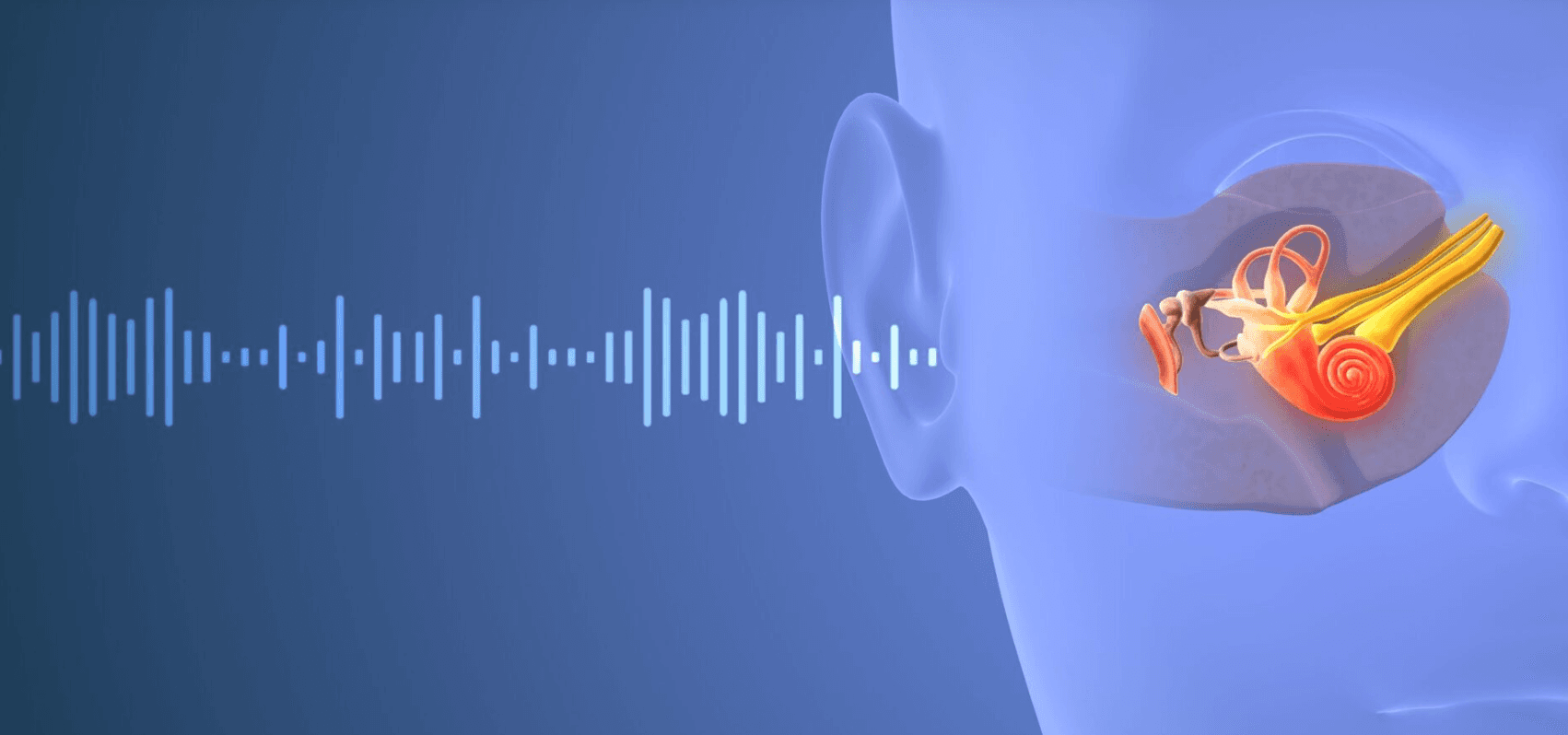
Posted by Dina Fine MaronMar 9See what loud noises do to inner ear hair cellsThis animation illustrates how louder music can affect inner ear hair cells. Damage to these cells is generally considered permanent. Hearing protection like ear plugs can reduce the level of sound entering into the ear and help protect those cells. 0:33https://www.youtube.com/watch?v=krqGja-pDcc&t=11s
Posted by Dina Fine MaronFeb 24People with tinnitus should avoid silence—sound-rich environments distract the brainThis podcast from an audiologist discusses common questions about tinnitus. It notes that tinnitus could be described as a phantom sound associated with hyperactivity in the brain. It's linked with loud sound exposures above 85 decibels, hearing loss associated with aging and stress, among other factors. 13:05https://youtu.be/36Ew4daafvo?si=jSVFs5paoGUZ9mH_
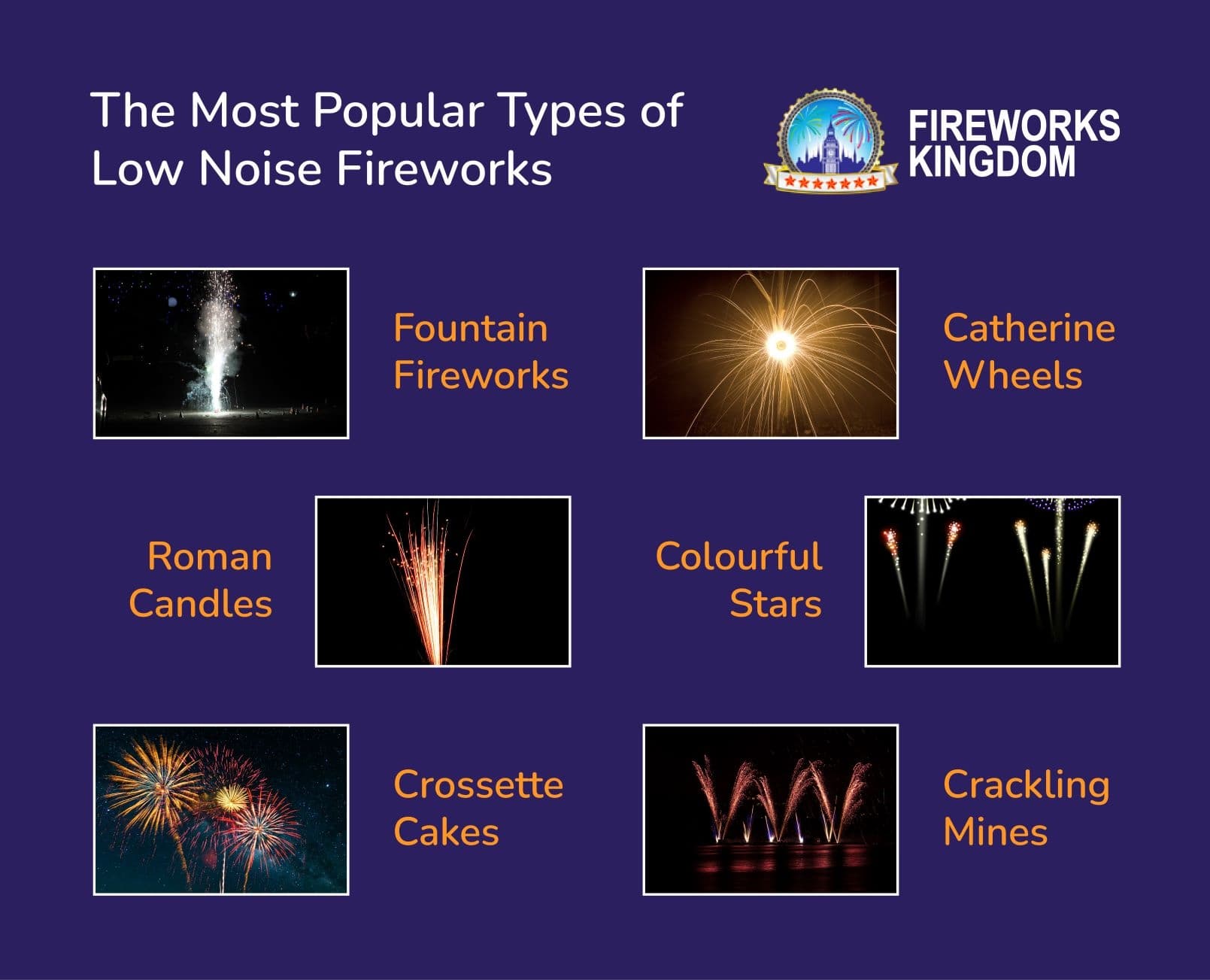
Posted by Marco Daniel MachadoDec 22, 2025'Silent' fireworks are not entirely noise-freeBy using a reduced amount of flash powder—the ingredient responsible for the loud explosions that fireworks make—"silent" fireworks produce displays between 70 and 90 decibels, rather than the approximately 175 decibels heard in professional displays. ZoomFireworks Kingdomhttps://fireworkskingdom.co.uk/a/blog/post/what-are-silent-fireworks
Posted by Dina Fine MaronFeb 24If hearing is damaged, the brain may amplify remaining sounds, perhaps causing tinnitus.Show 4 more findings ZoomNerve fibers in the inner ear adjust sound levels and help compensate for hearing loss in mice, study findshttps://keck.usc.edu/news/nerve-fibers-in-the-inner-ear-adjust-sound-levels-and-help-compensate-for-hearing-loss-in-mice-study-finds/
Posted by Dina Fine MaronMar 9Hearing loss can affect balance and make falls more likelyFor reasons that are not yet fully understood, hearing loss seems to increase the risk of falls. One explanation is that reduced environmental awareness due to hearing loss may put people at greater risk. Another theory is that the brain has to work harder to process sound with hearing loss and that cognitive load may also boost the chances of falls. One study found that for every 10 decibel increase in hearing loss, there was a 1.4 fold increased odds of falling in the preceding 12 months.National Institutes of Healthhttps://pmc.ncbi.nlm.nih.gov/articles/PMC3518403/
Posted by Dina Fine MaronFeb 24Tinnitus estimates vary, but may occur in 10%-15% of the populationThis video discusses the mechanisms underlying tinnitus and explores the knowns and unknowns about the condition. Tinnitus most commonly occurs among those with hearing loss, suggesting that cochlear damage may be a factor. 1:59https://www.youtube.com/watch?v=kiXPoTyTlt4
Posted by Dina Fine MaronFeb 24Watch how your nervous system's efforts to process silence can contribute to tinnitusCochlear cells can be damaged in numerous ways, including aging or exposure to loud noise. If enough cells die, the auditory system can become less sensitive, prompting the brain to compensate by amplifying sound, which is likely to contribute to tinnitus. 5:39TED-Edhttps://www.youtube.com/watch?v=TnsCsR2wDdk
Posted by Meher QazilbashApr 22Pickleballs' loud 'pop' sound can reach 120 decibels, equivalent to the sound of a hammer striking a nail.Show 3 more findingsPickleball Physics Explained, from Balls and Paddles to Shots | Scientific AmericanScientific Americanhttps://www.scientificamerican.com/article/pickleball-physics-explained-from-balls-and-paddles-to-shots/
Posted by Dina Fine MaronFeb 24Hear examples of what tinnitus can sound like to those suffering from it.Show 1 more finding 2:50NHS 24https://www.youtube.com/watch?v=kgIrfiyK4x8
Posted by Meher QazilbashMar 5, 2025How hearing protection became coolIn recent years, the WHO shared research findings that over 1 billion teens and young people face risks of hearing loss due to unsafe listening practices. While earplugs used to hold a reputation for being uncool, this article explores how awareness has led to more people fashioning different types of hearing protection. Explore the growing trend of earplugs at raves, concerts, and other loud events. ZoomEar Candy: How Hearing Protection Became Cool | The WalrusThe Walrushttps://thewalrus.ca/ear-candy-how-hearing-protection-became-cool/
Posted by Dina Fine MaronMar 9Hearing loss is linked with brain volume reductionsThe brain looks different as a result of hearing loss, with reductions in brain volume overall and in specific areas, and these changes are hypothesized to impact cognition. Exactly why hearing loss alters cognition is an active area of research, but theories include that the elevated cognitive load of straining to hear affects brain power available for thinking and memory and that hearing loss leads to social isolation which boosts dementia risk.https://www.audiology.org/consumers-and-patients/hearing-and-balance/dementia-and-hearing-loss/
Posted by Dina Fine MaronMar 9More than 90% of American deaf children are born to hearing parentsThe National Institute on Deafness and Other Communication Disorders have collated top statistics about hearing loss in the US including differences by age, racial groups, and other factors.https://www.nidcd.nih.gov/health/statistics/quick-statistics-hearing
Posted by Dina Fine MaronMar 9China reports the highest prevalence of hearing loss and South Africa reports the lowestThis conclusion comes from research published in 2025 that analyzed self-reported hearing loss and hearing aid use from long-term studies that covered 28 countries. Its findings included that the countries with the greatest prevalence of hearing loss (China, South Korea, Mexico, and Brazil) also had the lowest levels of hearing aid use.https://bmjgroup.com/countries-with-highest-reported-levels-of-hearing-loss-have-lowest-use-of-hearing-aids/
Posted by Dina Fine MaronMar 9Untreated hearing loss is linked with dementia riskHearing loss does not cause dementia, but it does increase the risk of developing dementia and research suggests that people who wear hearing aids for age-related hearing loss also maintain better brain function than those who don't.https://www.thelancet.com/article/S0140-6736(20)30367-6/fulltext
Posted by Teddy BurkhardtJan 17, 2024When common sounds become disturbingMisophonia causes certain sounds to feel violating, triggering a "very visceral kind of experience" filled with extremely unpleasant emotions, including annoyance, anger, and disgust. A 2017 study found that people with misophonia have elevated activity in the brain's anterior insula—a region associated with interoception, emotional processing, and behavioral responses—when exposed to trigger sounds. Ongoing research suggests trigger sound context affects the severity and manifestation of the condition. ZoomThe reason little noises drive you mad is about more than sounds | Psyche IdeasPsychehttps://psyche.co/ideas/the-reason-little-noises-drive-you-mad-is-about-more-than-sounds
Posted by Dina Fine MaronMar 9Age-related hearing loss, known as presbycusis, is a top cause of hearing lossThis video walks through the biology of why presbycusis (prez-buh-kyoo-sis) occurs and its etiology. This type of hearing loss is gradual and typically starts with reductions in the ability to hear high-pitched sounds. 5:05https://www.youtube.com/watch?v=dA9H8yRv0Pg
Posted by Dina Fine MaronFeb 24Musicians are 57% more likely to have tinnitus compared to the general publicMusicians have four times the risk of developing hearing loss, and their risk of developing tinnitus is increased by more than half.https://hearinghealthfoundation.org/hearing-loss-tinnitus-statistics
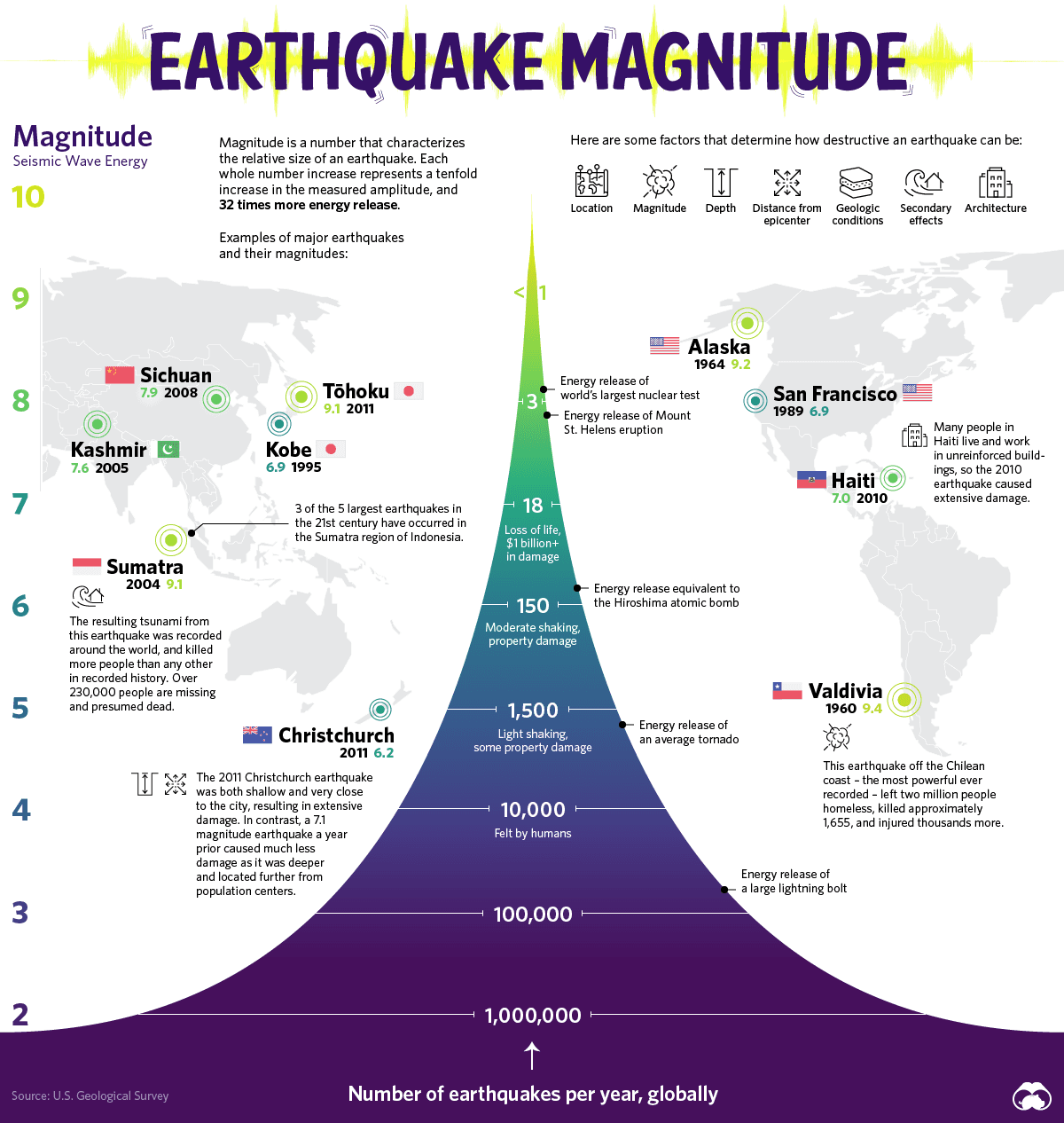
Posted by Marco Daniel MachadoJun 25Visualize the power and frequency of earthquakes across the moment magnitude scale, where a whole number increase corresponds to about 32 times more energy released.Show 3 more findings ZoomVisualizing the Power and Frequency of EarthquakesVisual Capitalisthttps://www.visualcapitalist.com/visualizing-the-power-and-frequency-of-earthquakes/
Posted by Dina Fine MaronJun 1Beyond burns, fireworks can harm respiratory, auditory, and visual health.Show 2 more findings ZoomThe Health Risks of FireworksTIMEhttps://time.com/6991261/fireworks-health-risks/
Posted by Dina Fine MaronFeb 24Notch music therapy may filter out some tinnitus frequenciesResearchers in Germany have developed a smartphone app-based therapy for individuals with tinnitus associated with hearing loss. Some people with tinnitus can use this Notch app with their hearing aids to at least partially block sound frequencies matching their tinnitus pitch—turning down the volume of their tinnitus.https://ki.se/en/research/popular-science-and-dialogue/spotlight-on/spotlight-on-our-senses/new-knowledge-on-tinnitus-gives-hope
Posted by Marco Daniel MachadoFeb 18Tornadoes produce inaudible signals to humans hours before formingResearchers at the National Oceanic and Atmospheric Administration have found that tornado-producing storms generate specific sounds below the range of human hearing, much like the infrasonic signals produced by earthquakes and avalanches. Although difficult to distinguish from wind noise, scientists hope to build systems that use these signals to improve tornado forecasting.IEEE Spectrumhttps://spectrum.ieee.org/spying-on-a-tornados-infrasonic-signals-to-improve-warnings
Posted by Marco Daniel MachadoJan 9Thunder occurs when fast-flowing electricity heats and pressurizes air, causing it to expand and produce a shockwave at each point along the bolt at multiple frequencies.Show 1 more finding 3:59MinuteEarthhttps://www.youtube.com/watch?v=D3_w2sUPItY
Posted by Marco Daniel MachadoJul 17Try out an online tone generator, which produces sounds of specific frequencies to help tune instruments, test your hearing, and generate beats by overlapping tones.Show 3 more findings ZoomOnline Tone Generator - generate pure tones of any frequencyTomasz P. Szynalskihttps://www.szynalski.com/tone-generator/
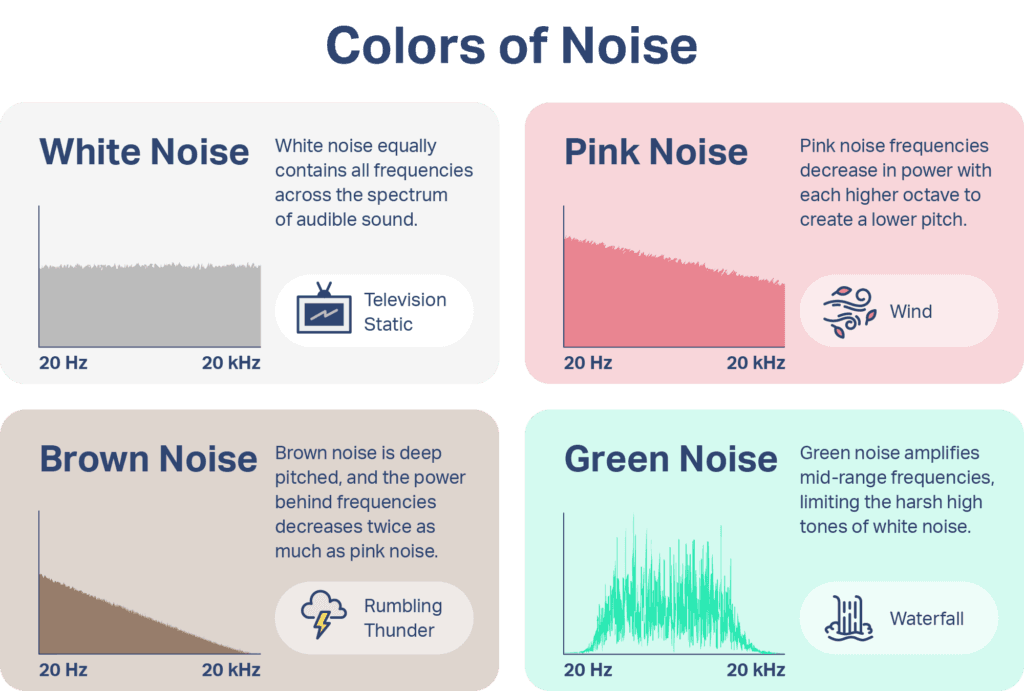
Posted by Teddy BurkhardtJul 17Some sounds that have been shown to affect mood and noise have been given color names, such as brown, pink, and green noise, corresponding their frequencies to those of light.Show 4 more findings ZoomThe science of noise colors: why white noise makes you sleepy and blue noise helps you focusTechRadarhttps://www.techradar.com/audio/the-science-of-noise-colors-why-white-noise-makes-you-sleepy-and-blue-noise-helps-you-focus
Posted by Teddy BurkhardtJun 11, 2025Steps for buying your first hearing aidsHearing aids have advanced in aesthetics, simplicity, and cost in recent years, but acquiring them can be daunting for first-timers. Experts suggest finding a high-quality audiologist and knowing your rights with medical services. They also recommend buying them sooner rather than later, as hearing issues can compound and grow more costly over time. ZoomHow to get a first hearing aid that you'll like and can afford | AP NewsAP Newshttps://apnews.com/article/getting-hearing-aids-audiologists-7e65a9bf63ff902e9d8791da602c8538
Posted by Dina Fine MaronFeb 24Pulsatile tinnitus is when you hear thumping synchronized with your heartbeatThis rare type of tinnitus, which sounds like rhythmic thumping or whooshing, is often linked to blood vessel conditions or high blood pressure. Lowering blood pressure through exercise and food choices can help reduce the severity of this condition.https://www.miracle-ear.com/hearing-diseases/tinnitus-ringing-ears/questions-about-tinnitus
Posted by Dina Fine MaronMar 9An ear doctor with hearing loss seeks to help those with hearing loss enjoy musicAlex Chern, an ear doctor who has hearing loss himself, dreams of restoring the ability to experience "all the richness and the beauty of the sound of music" for patients—not just functional hearing. Hearing aids amplify sound waves and aren't designed to work well with music that may have varied pitch and volume. Chern is studying how hearing loss and engaging with music may affect cognitive decline.STAThttps://www.statnews.com/2024/10/18/hearing-loss-music-cognition-wunderkinds/
Posted by Marco Daniel MachadoJul 17Objects that move faster than the speed of sound—Mach 1—create shockwaves called sonic booms by building up and forcing sound waves to combine as they lag behind the object.Show 4 more findings 5:44The sonic boom problem - Katerina KaouriTEDhttps://www.youtube.com/watch?v=JO4_VHM69oI
Posted by Marco Daniel MachadoJul 17In television and film, certain sounds, such as dialogue, may be difficult to understand due to sound mixing, device limitations, and technological advancements that have collectively reduced clarity.Show 3 more findings 10:43Why we all need subtitles nowVoxhttps://www.youtube.com/watch?v=VYJtb2YXae8
Posted by Dina Fine MaronFeb 24Certain medications can make tinnitus worseCertain antidepressants, antimalarial medications, antibiotics, ibuprofen, and cancer drugs have been linked with the condition. At higher doses, particularly, it seems they can trigger or worsen tinnitus in some individuals.https://www.nidcd.nih.gov/health/tinnitus
Posted by Dina Fine MaronFeb 24Beethoven's correspondence in 1801 documented his tinnitus sufferingLudwig van Beethoven's hearing loss is one of the best-known cases of this condition among historical artists. He also suffered from tinnitus and wrote in 1801, "My ears are buzzing and ringing perpetually, day and night. I can with truth say that my life is very wretched…"National Library of Medicinehttps://pmc.ncbi.nlm.nih.gov/articles/PMC8266716/
Posted by Marco Daniel MachadoFeb 6Noise pollution from humans and technology alters animal behaviorAnimals may experience chronic stress and health issues due to noise pollution, which often interferes with their mating sounds. Due to traffic, nightingales sing louder on weekday mornings, and birds near airports start singing earlier to avoid upticks in takeoffs and landings.Five Dramatic Ways Animals Respond to Human Noise, From Mimicking Car Alarms While Wooing Mates to Calling Higher Over the Din of TrafficSmithsonian Magazinehttps://www.smithsonianmag.com/science-nature/five-dramatic-ways-animals-respond-to-human-noise-from-mimicking-car-alarms-while-wooing-mates-to-calling-higher-over-the-din-of-traffic-180987190/
Posted by Teddy BurkhardtJan 5, 2024Making sense of Mexico City's traffic honks and hornsA car's horn makes just one sound, but somehow, drivers across the world manage to use the monotone for a surprising variety of purposes. This audio-inflected essay takes readers into the nuanced horns of Mexico City's famously congested traffic, providing a "claxonomy" (taxonomy + claxones, or horns) of its drivers' honks. ZoomA Claxonomy of Mexico City’s Traffic - Allegra Labhttps://allegralaboratory.net/a-claxonomy-of-mexico-citys-traffic/
Posted by Dina Fine MaronMar 9Pediatricians look for a list of behaviors to signal typical hearing developmentThese markers of typical hearing development among infants and toddlers include turning head to sound sources within the first five months of life, babbling by about 11 months, and trying to imitate simple words by 17 months of age.https://www.nationwidechildrens.org/specialties/hearing-program/speech-services-for-hearing-loss/hearing-developmental-milestones-checklist