Back

Posted by

Rather than measuring the rising and falling of the sun or pendulum swings, optical clocks track the passage of time using the extremely consistent vibrations of atoms.

Findings

Additional insights we found via NIST

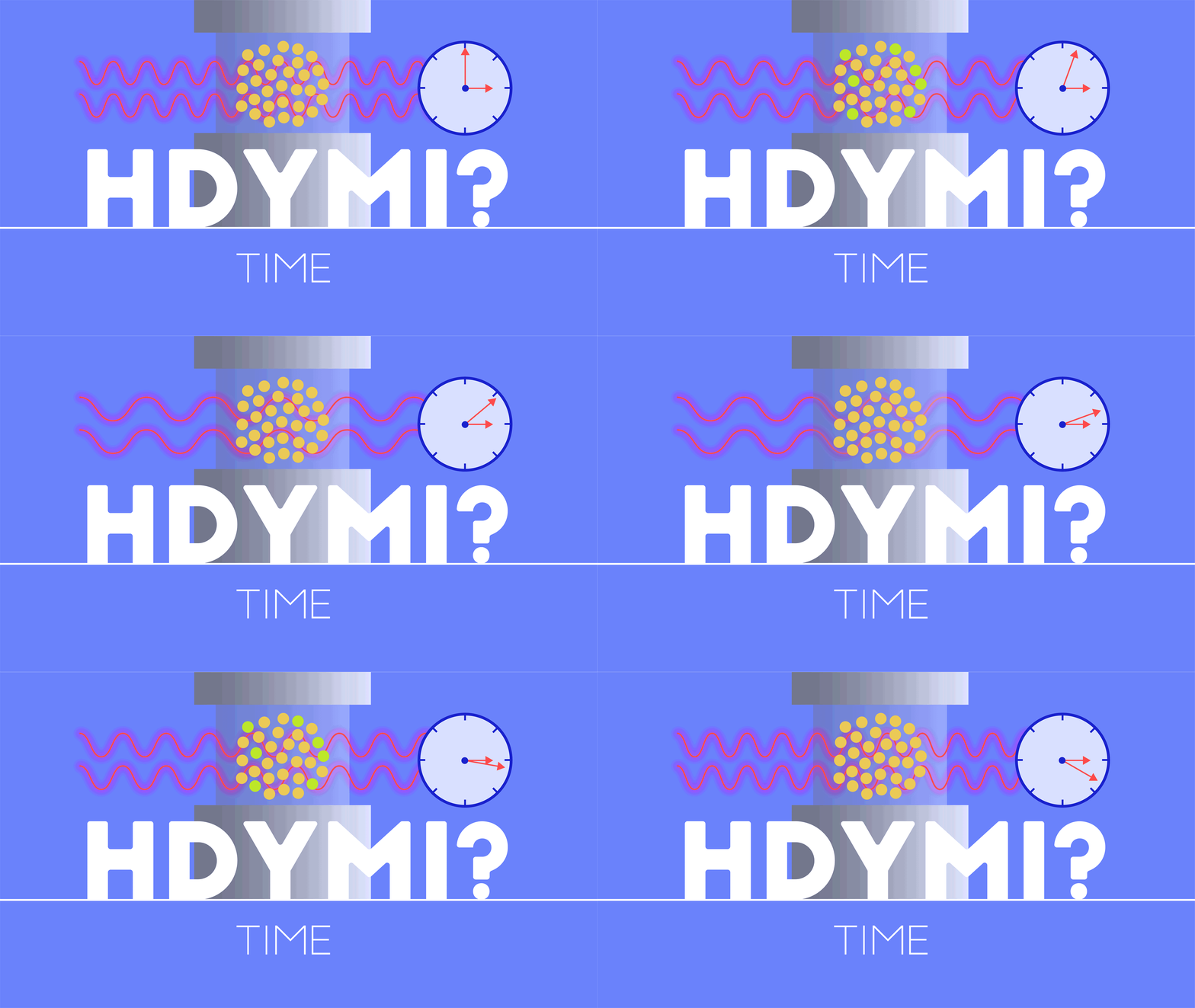
  1. In atomic clocks, including microwave and optical clocks, atoms are continuously exposed to lasers whose light is tuned to their natural frequencies, and the number of cycles at this frequency, such as 9,192,631,770 vibrations in cesium, which were defined as a second in 1971, is used to track the passage of time.

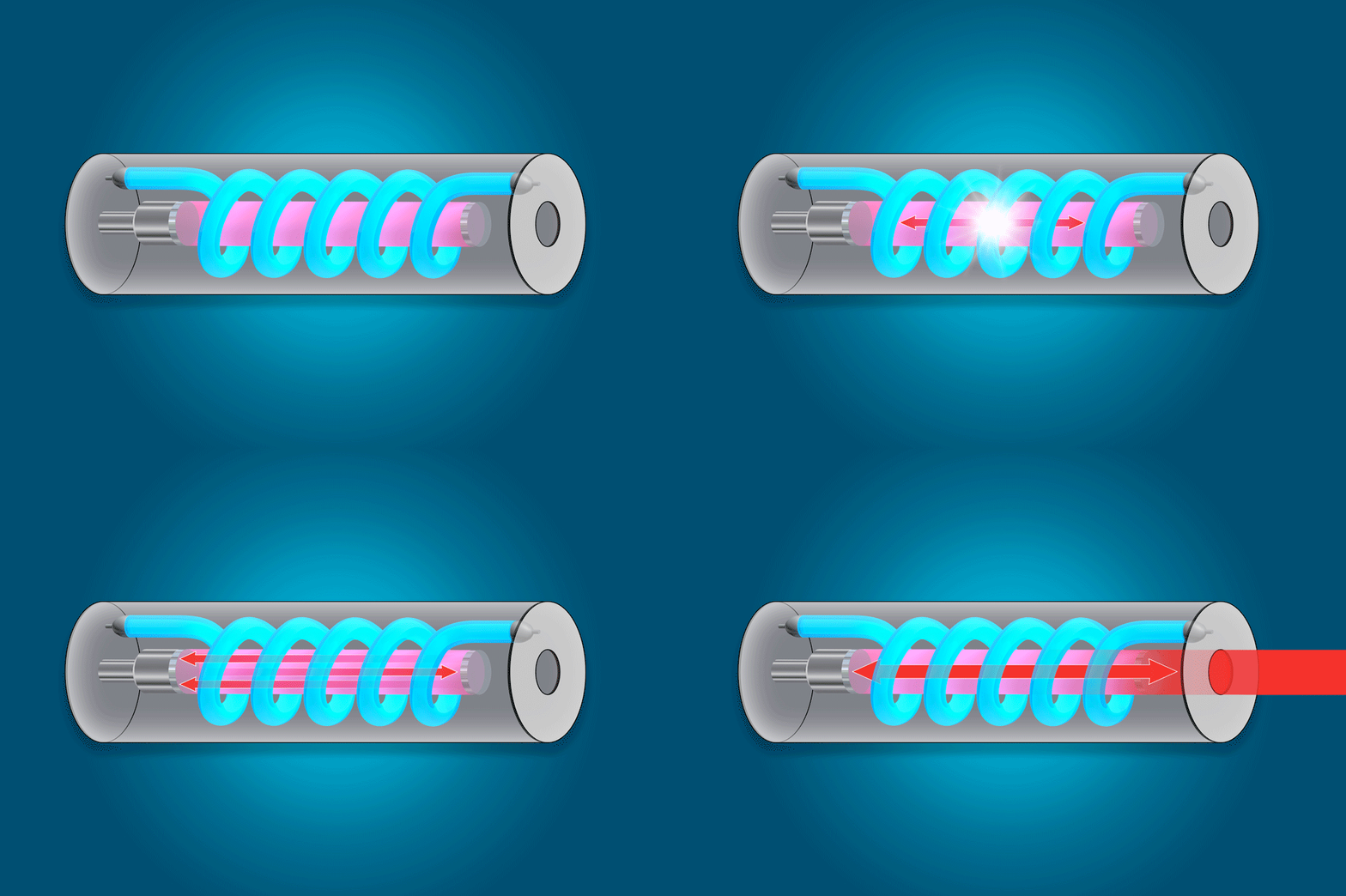
  2. Trapped ion optical clocks contain an ionized atom—typically one that has had an electron removed—held in place by an electromagnetic field, which emits light after being hit with a laser.

  3. Optical lattice clocks trap many ions in the valleys of an egg-carton-like structure formed by interfering laser beams and can average the oscillations of these atoms to achieve greater stability and precision.

  4. Optical clocks have used hydrogen, calcium, and mercury atoms, though aluminum, strontium, and ytterbium atoms have been shown to be better candidates, with optical clocks in 2026 shown to be about 100 times more accurate and stable than previous cesium microwave clocks.

Similar Posts

Showing 1440 posts similar to Rather than measuring the rising and falling of the sun or pendulum swings, optical clocks track the passage of time using the extremely consistent vibrations of atoms.

You've reached the end.