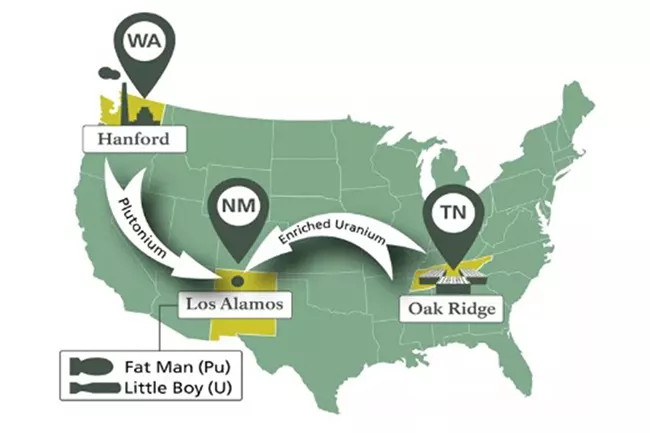
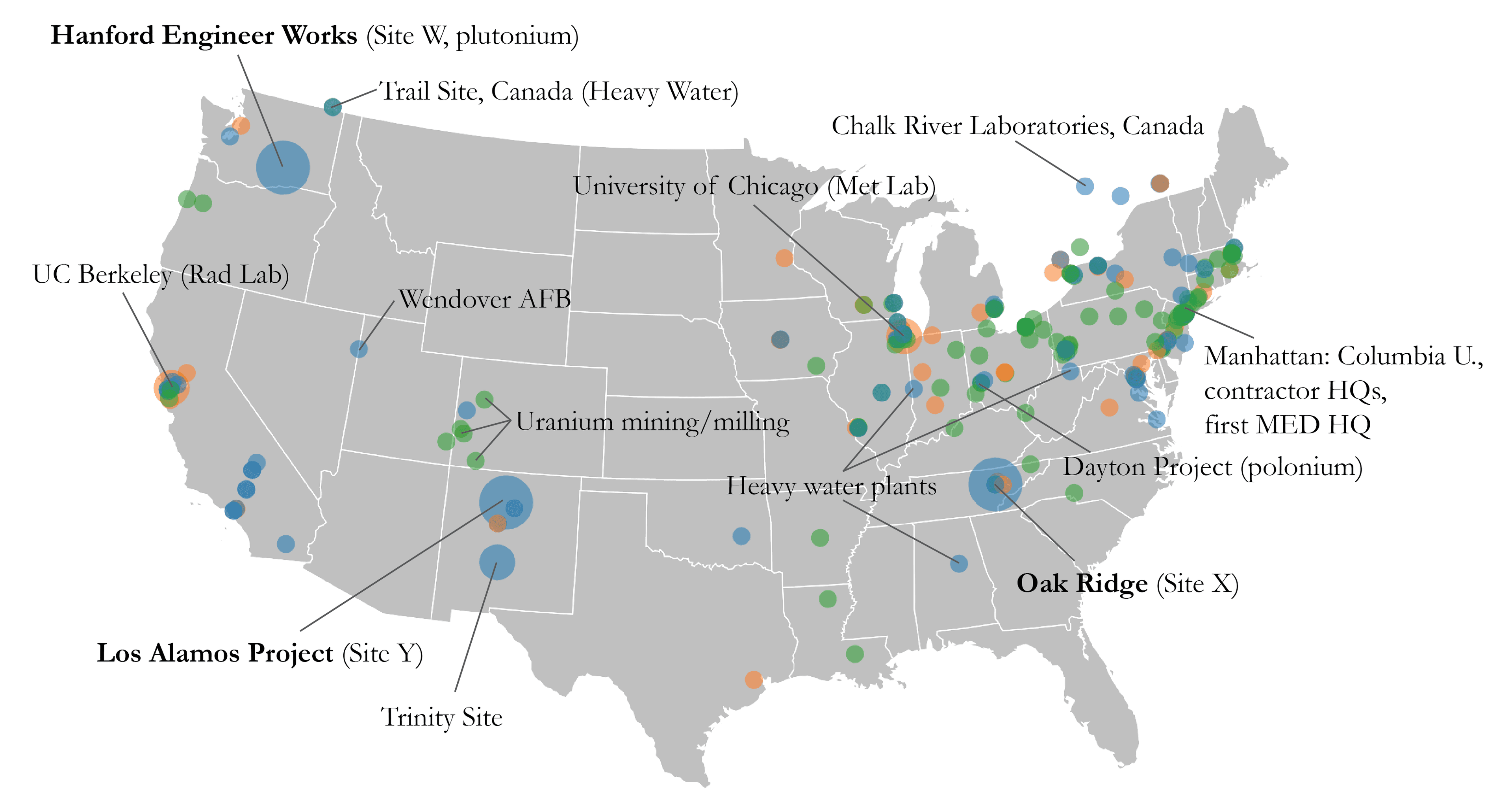
Posted by Drew SteigerwaldJul 14The Manhattan Project operated at three key sites, each with a distinct role in building the first atomic bomb.Show 3 more findings ZoomManhattan Project - Manhattan Project National Historical Park (U.S. National Park Service)National Park Servicehttps://www.nps.gov/mapr/learn/manhattan-project.htm
Posted by August MoonJun 24The Manhattan Project, the top-secret American program that built the world's first atomic bomb, cost $27B in today's dollars and reshaped global power.Show 4 more findings 5:13What Was the Manhattan Project?1440 Originalshttps://www.youtube.com/watch?v=HdhJSgcBvwY
Posted by Drew SteigerwaldAug 27, 2024Building the first atomic bomb required unprecedented coordinationCreating the first atomic bombs demanded breakthroughs in physics, engineering, and logistics—uniting elite scientists with tens of thousands of workers across the US. This in-depth history explains how the Manhattan Project overcame those challenges. ZoomManhattan Projecthttps://ethos.lps.library.cmu.edu/article/id/35/
Posted by Drew SteigerwaldAug 27, 2024The Manhattan Project was one of the most expensive undertakings of World War II Building the first atomic weapons required hundreds of thousands of workers, vast secret facilities, and enormous spending. This 1998 study details the full cost of the Manhattan Project and compares it to other major US wartime expenditures. ZoomThe Costs of the Manhattan Project | BrookingsThe Brookings Institutionhttps://www.brookings.edu/the-costs-of-the-manhattan-project/
Posted by Teddy BurkhardtJul 20, 2023Interviews from the Manhattan ProjectThis is an archive of interviews with people who worked on and were impacted by the Manhattan Project, the World War II-era effort that resulted in the atomic bomb. Listen to the "father of the atomic bomb," Julius Robert Oppenheimer, describe his daily routine during the project, which he reports officially started Dec. 6, 1941. This archive also includes interviews with survivors of the Hiroshima and Nagasaki bombings. ZoomVoices Home - Nuclear Museumhttps://ahf.nuclearmuseum.org/voices/
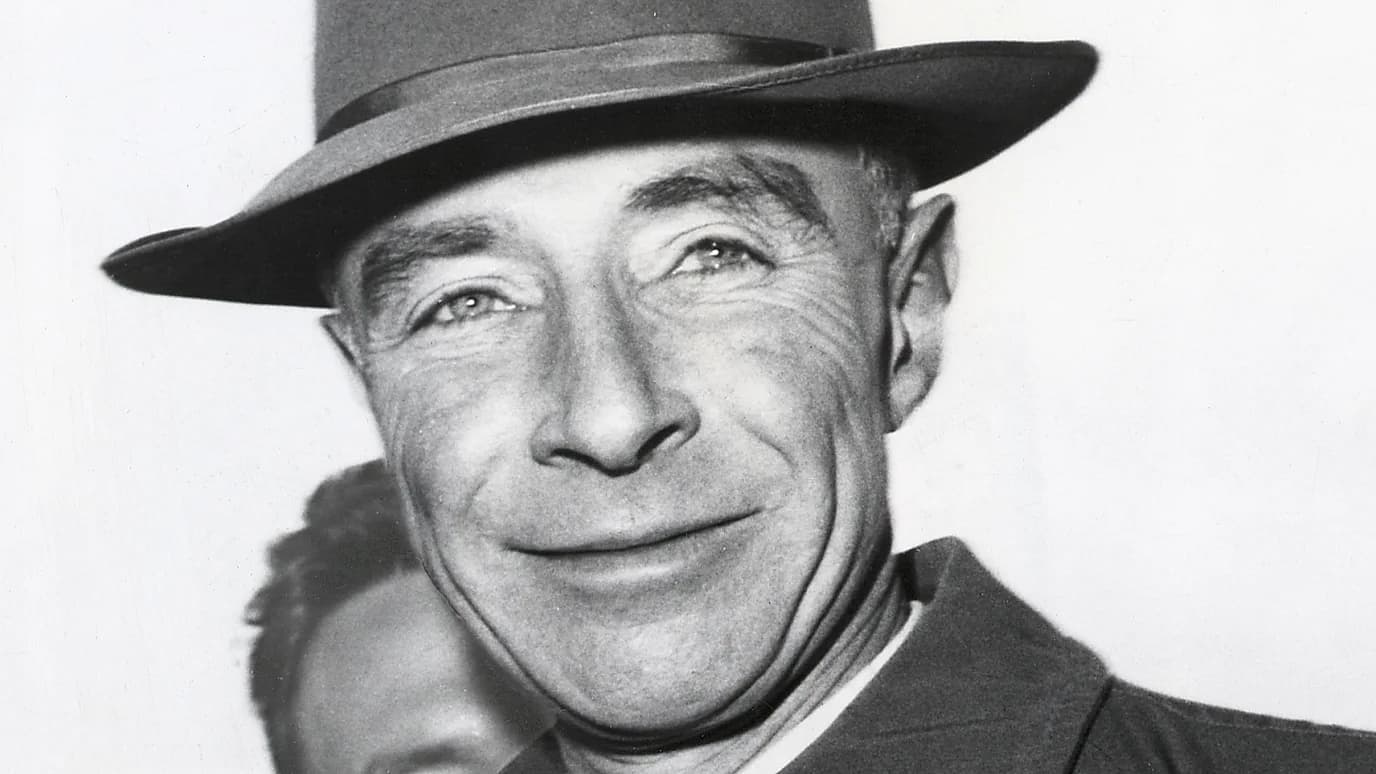
Posted by Drew SteigerwaldAug 27, 2024Robert Oppenheimer became the face of the Manhattan Project and the atomic bombThis feature explores Oppenheimer’s early life, the traits that made him central to the development of the atomic bomb, and how his later years were marked by tension between pride in his work and opposition to weapons of mass destruction. ZoomWho was the real Robert Oppenheimer?BBChttps://www.bbc.com/future/article/20230712-robert-oppenheimer-manhattan-project-nuclear-scientist-atomic-bomb
Posted by Teddy BurkhardtOct 1, 2024The story of the Manhattan Project's unused demon coreA 3-inch, 14-pound sphere of nuclear reactive plutonium-gallium was set to be delivered to the Pacific Theater in 1945 to become the third atomic bomb dropped over Japan. When Japan surrendered, it was returned to Los Alamos in New Mexico for experiment, where two scientists would die testing whether the core could reach criticality—where it would release intense energy—via the use of a dense reflector. Watch the story here. 14:16Demon Core - The True Storyhttps://www.youtube.com/watch?v=aFlromB6SnU
Posted by Drew SteigerwaldAug 27, 2024The Manhattan Project created secret cities that didn’t appear on mapsTo maintain secrecy, the US built three remote research facilities and entire “secret cities” to house thousands of workers and families. These communities—home to tens of thousands—were omitted from official maps until after World War II. ZoomOff the map: the secret cities behind the atom bombThe Guardianhttps://www.theguardian.com/cities/2018/may/03/off-the-map-the-secret-cities-behind-the-atom-bomb-manhattan-project
Posted by Teddy BurkhardtOct 9, 2025Spies working on the Manhattan Project propelled the Soviet bomb programSoviet infiltration—most notably by Klaus Fuchs—smuggled detailed implosion-design and hydrogen‑bomb data from Los Alamos to Moscow, cutting the USSR’s development time by at least a year and enabling their first atomic test in August 1949. ZoomSpies Who Spilled Atomic Bomb SecretsSmithsonian Magazinehttps://www.smithsonianmag.com/history/spies-who-spilled-atomic-bomb-secrets-127922660/
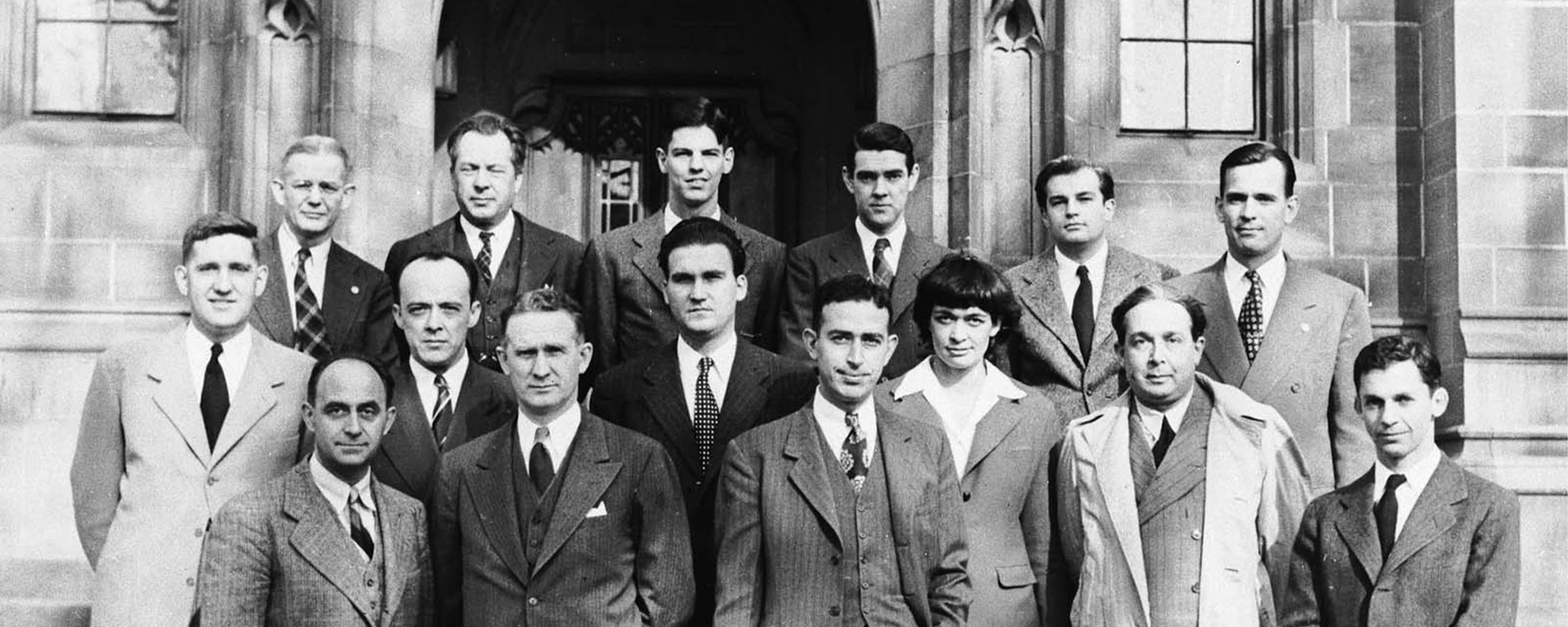
Posted by Drew SteigerwaldJul 14Meet the scientists who worked on the Manhattan Project.Show 3 more findings ZoomManhattan Project: People > Scientistshttps://www.osti.gov/opennet/manhattan-project-history/People/Scientists/scientists.html
Posted by Teddy BurkhardtApr 7Oppenheimer reflected on the atomic bomb's legacy two decades laterIn a 1965 CBS interview, J. Robert Oppenheimer discussed his role as Los Alamos director, expressing deeply mixed feelings about Hiroshima and Nagasaki and reflecting on how nuclear weapons had transformed the world since their first use. 8:13From the archives: Robert Oppenheimer in 1965 on if the bomb was necessaryhttps://www.youtube.com/watch?v=AdtLxlttrHg
Posted by Drew SteigerwaldJun 30A four-part podcast traces how the Manhattan Project reshaped the worldThis podcast series explores the origins of the Manhattan Project, its secret cities, and the scientists behind it—showing how the effort contributed to the end of World War II, launched the Atomic Age, and later led Oppenheimer to become a critic of nuclear weapons.American History Tellers - Season 64: The Manhattan ProjectAmerican History Tellershttps://open.spotify.com/episode/5o4hWE5hogO2xVox2ZyP8v?si=349516096d944069
Posted by Marco Daniel MachadoFeb 18Explore the components of the linear particle accelerator at Los AlamosLocated at the site of bomb design and development for the Manhattan Project, LANSCE features an injector system for hydrogen ions, a series of tanks with alternating electric fields for proton acceleration, and an isotope production facility that creates radioisotopes for medical treatments. 2:24How a particle accelerator workshttps://www.youtube.com/watch?v=gR7_4raNLes
Posted by Drew SteigerwaldJul 14On August 6, 1945, the Enola Gay dropped the first atomic bomb used in warfare on Hiroshima, Japan, killing at least 80,000 people instantly.Show 4 more findings ZoomThe Most Fearsome Sight: The Atomic Bombing of Hiroshima | The National WWII Museum | New Orleanshttps://www.nationalww2museum.org/war/articles/atomic-bomb-hiroshima
Posted by Meher QazilbashDec 11, 2024The first nuclear reactor was built three years after nuclear fission was discoveredAfter learning that large atomic nuclei release energy upon being split apart, scientists quickly researched how to control the reaction to make electricity. Fusion—combining small atomic nuclei—generates massive energy in stars and hydrogen bombs.The Difference Between Nuclear Fission and Nuclear Fusion, Explained | Britannicahttps://www.youtube.com/watch?v=MEN5XGaKgS8
Posted by Teddy BurkhardtOct 9, 2025The Soviet Union’s surprising first atomic test ended the US nuclear monopolyIn 1949, the USSR successfully tested its first atomic bomb—ending the US monopoly on nuclear weapons and sparking an arms race that would define the Cold War. 1:52Russian Atom Blast Shakes UN Assembly (1949)https://www.youtube.com/watch?v=sXwSbkdVQro
Posted by Drew SteigerwaldFeb 26While both are nuclear weapons, atomic bombs release nuclear energy by splitting large atomic nuclei, whereas hydrogen bombs derive most of their energy from fusing heavy hydrogen isotopes.Show 5 more findings 10:05How Atomic and Hydrogen Bombs Work In 10 MinutesRiddlehttps://www.youtube.com/watch?v=3p4NteQYhL0
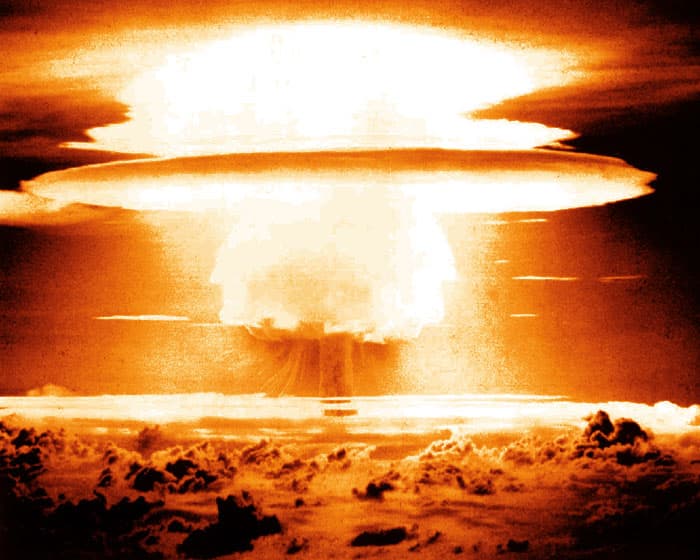
Posted by Teddy BurkhardtOct 9, 2025The H-bomb is hundreds of times more powerful than the bomb dropped on HiroshimaUnlike the atomic bombs dropped on Hiroshima, which relied on nuclear fission, the hydrogen bomb uses fusion to unleash vastly greater destructive power. Developed by both superpowers in the 1950s, it gave each the ability to destroy entire cities in seconds. ZoomWhat Is the Difference Between a Hydrogen Bomb and an Atomic Bomb?TIMEhttps://time.com/4954082/hydrogen-bomb-atomic-bomb/
Posted by Drew SteigerwaldAug 27, 2024Modern Marvels examines the Manhattan ProjectThis episode of the television program 'Modern Marvels' focuses on the Manhattan Project, combining archival footage and interviews with historians and scientists to shed light on one of the most ambitious military and scientific endeavors in human history. 45:36Modern Marvels: The Manhattan Project - Full Episode (S9, E21) | HistoryHISTORYhttps://youtu.be/1y1jGZnzB7U?si=onHd1fNj-ppURxUf
Posted by Drew SteigerwaldAug 27, 2024Cold War nuclear tests exposed thousands to atomic blastsAfter World War II, nuclear powers conducted thousands of weapons tests. This video pairs archival footage with interviews of veterans who witnessed Pacific test explosions, capturing the scale, shock, and human experience of being near a nuclear detonation. 12:17What Does a Nuclear Bomb Explosion Feel Like?https://www.youtube.com/watch?v=Y__dxTaGEp0
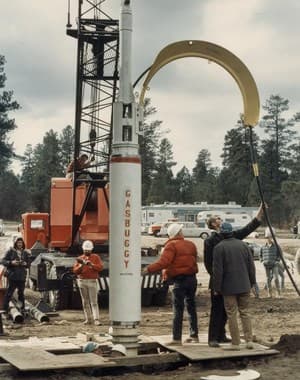
Posted by Marco Daniel MachadoDec 12, 2025The Gasbuggy Project detonated a nuclear bomb to fracture underground rock formationsPart of Project Plowshare—a program aimed at finding peaceful uses for nuclear devices—the 1967 experiment sought to extract natural gas trapped within shale in underground New Mexico. Gas radioactivity was found to be excessively high for use without expensive processing, and the project was deemed an economic failure. ZoomFracturing with a Nuke: The Gasbuggy Projecthttps://www.aapg.org/news-and-media/details/explorer/articleid/68208/fracturing-with-a-nuke-the-gasbuggy-project
Posted by Marco Daniel MachadoJul 9In 1962, the US detonated a nuclear weapon in space, which produced an electromagnetic pulse that disabled three low Earth orbit satellites and damaged electrical equipment in Hawaii.Show 4 more findings 5:55A Brief History of: The Starfish Prime Nuclear Test (Short documentary)Plainly Difficulthttps://www.youtube.com/watch?v=sXC9-sBoLEU
Posted by Marco Daniel MachadoApr 2The origin of atmospheric science while testing nuclear weapons during the Cold WarThe arms race between the US and the Soviet Union saw both countries stockpiling and detonating hundreds of bombs underground, underwater, and in the atmosphere. To better predict where nuclear fallout would travel after these tests, scientists developed models that would serve as a foundation for those used to explain atmospheric circulation.Third Pod from the Sunhttps://open.spotify.com/episode/77z9DADfgw1bAJND9yupkA
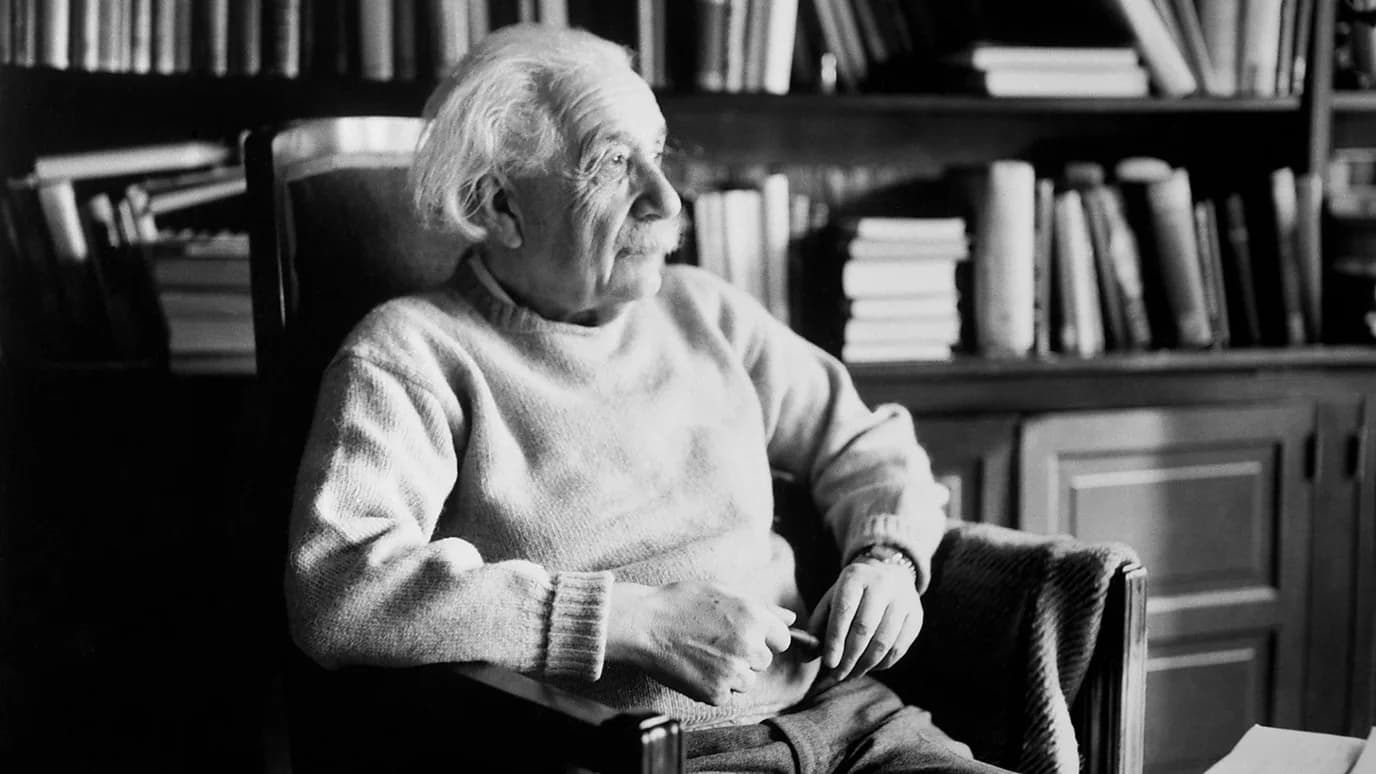
Posted by Drew SteigerwaldJul 14Worried that Nazi Germany could weaponize nuclear fission first, Albert Einstein wrote a 1939 letter warning President Roosevelt about the possibility of atomic bombs—a decision he later regretted.Show 4 more findings Zoom‘It was the one great mistake in my life’: The letter from Einstein that ushered in the age of the atomic bombBBChttps://www.bbc.com/culture/article/20240801-it-was-the-one-great-mistake-in-my-life-the-letter-from-einstein-that-ushered-in-the-age-of-the-atomic-bomb
Posted by Marco Daniel MachadoJun 30Before 1932, when particle accelerators were first used for nuclear research, scientists relied on naturally radioactive substances to advance their understanding of the atomic nucleus.Show 3 more findingsParticle accelerators have allowed physicists to create controlled nuclear experimentshttps://open.spotify.com/episode/2Blhv2WhjYWqrETPKKhaeC
Posted by Teddy BurkhardtSep 24, 2025Penicillin production was just behind the atom bomb in wartime priorities By 1943, the US War Department made penicillin its second-highest priority—just after the Manhattan Project. Producing enough of the antibiotic for the D-Day invasion became a central mission of Allied science and industry. Guns, not roses – here’s the true story of penicillin’s first patientThe Conversationhttps://theconversation.com/guns-not-roses-heres-the-true-story-of-penicillins-first-patient-178463
Posted by Jeremy CronigJul 21During the Cold War, a mid-air fire led to a nuclear bomber crash in Greenland that left a piece of a hydrogen bomb missing to this day.Show 4 more findings ZoomHow a B-52 Crash in Greenland Became One of the Cold War's Worst Nuclear Accidentshttps://www.military.com/daily-news/investigations-and-features/2026/01/16/how-b-52-crash-greenland-1968-became-one-of-cold-wars-worst-nuclear-accidents.html
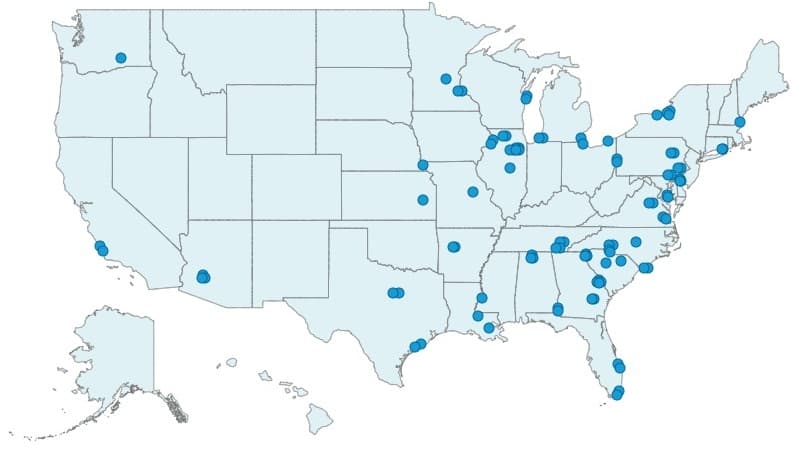
Posted by Meher QazilbashDec 11, 2024See where the 94 nuclear reactors in the continental US are locatedIn 2023, these reactors—located in 53 plants across 28 states—prevented 437 million tons of carbon dioxide emissions. A single fingertip-sized uranium pellet generates as much electricity as a ton of coal, enough for one household's annual electricity. ZoomU.S. Nuclear Plantshttps://www.nei.org/resources/fact-sheets/u-s-nuclear-plants
Posted by Teddy BurkhardtApr 10The US once had a plan to nuke the moonIn the 1950s, the US considered detonating a hydrogen bomb on the moon as part of a Cold War show of force. Known as Project A119, the classified plan aimed to create a visible explosion from Earth to signal American dominance in the space race. 0:53The Plan to Nuke the Moonhttps://www.youtube.com/watch?v=rdl5F1KZhow
Posted by August MoonMay 22, 2025The US once had a plan to nuke the moonIn the 1950s, the US considered detonating a hydrogen bomb on the moon as part of a Cold War show of force. Known as Project A119, the classified plan aimed to create a visible explosion from Earth to signal American dominance in the Space Race. 0:53The Plan to Nuke the Moon1440 Originalshttps://www.youtube.com/shorts/rdl5F1KZhow
Posted by Marco Daniel MachadoOct 2, 2025The discovery of the neutron paved the way for nuclear weaponsIn 1932, James Chadwick discovered the subatomic particle when trying to explain the radiation emitted by beryllium after it was bombarded with alpha particles. The radiation’s ability to eject protons from a target suggested a chargeless particle with slightly more mass than a proton.The discovery of the neutron paved the way for nuclear weaponshttps://www.aps.org/apsnews/2007/05/may-1932-chadwick-discovery-neutron
Posted by Meher QazilbashDec 11, 2024J. Robert Oppenheimer’s grandson says his grandfather would back nuclear powerWhile the "father of the atomic bomb" referred to the bomb as "an evil thing," after the Manhattan Project, he also described nuclear energy’s potential as an environmentally friendly solution to address the world's energy problem. ZoomNuclear Energy’s Moment Has ComeTIMEhttps://time.com/6278789/nuclear-energy-moment-has-come/
Posted by Meher QazilbashDec 11, 2024The discovery of nuclear fission was facilitated by the discovery of the neutronThe discovery of the neutron provided scientists with a particle that could penetrate the nucleus and advance atomic physics. Otto Hahn was the sole Nobel recipient for the discovery of fission, despite collaborating with Lise Meitner and Fritz Strassmann. ZoomOtto Hahn, Lise Meitner, and Fritz StrassmannScience History Institutehttps://www.sciencehistory.org/education/scientific-biographies/otto-hahn-lise-meitner-and-fritz-strassmann/
Posted by August MoonJan 14, 2025US secrets: Project PaperclipThe US launched Project Paperclip in 1946, covertly recruiting over 1,500 German scientists to advance American military and space programs. Among them was Wernher von Braun, a key architect of the V-2 rocket who later became instrumental in NASA’s Apollo missions. While these scientists accelerated technological breakthroughs, their recruitment raised moral debates about overlooking wartime affiliations in the name of progress—questions that remain unresolved today. 1:04US Secrets: Project Paperclip1440 Originalshttps://youtube.com/shorts/MMl238ixajw
Posted by Meher QazilbashDec 11, 2024For decades, the US has considered building a permanent nuclear waste repositoryAll nuclear waste would have been stored at Nevada's Yucca Mountain, but the Obama administration indefinitely stalled the project after intense community backlash. Spent fuel is now stored at more than 80 locations in 36 states, raising safety concerns. ZoomWhy US nuclear waste policy got stalled. And what to do about it.https://thebulletin.org/2024/07/why-us-nuclear-waste-policy-got-stalled-and-what-to-do-about-it/
Posted by Teddy BurkhardtAug 3, 2023Visualizing the chemistry of nuclear weaponsNuclear weapons have devastating effects, but the science of how they work is atomically small. There are two main types of nuclear reaction: fission and fusion. The fission bomb produces immense energy by splitting an atom, the result of firing a... ZoomThe Science of Nuclear Weapons, VisualizedVisual Capitalisthttps://www.visualcapitalist.com/science-of-nuclear-weapons/
Posted by Teddy BurkhardtJan 19, 2024The Bomb-proof, Cold War-era New York data center inspiring spy moviesAt 33 Thomas Street in Lower Manhattan, New York City, a 45-story concrete tower with no windows stands imperiously over the city. Inside, 18 floors of telecommunications technology have hummed for decades. The building's purpose—to protect US comms from nuclear fallout—and its design have played into spy movie plotlines. Dive into the building's curious role in pop culture with this long read. https://placesjournal.org/article/33-thomas-street-and-conspiracy-thrillers/
Posted by Jeremy CronigFeb 20South Africa: the only nation to build nuclear weapons—and dismantle them by choiceDuring the 1980s, South Africa secretly built six uranium "gun‑type" nuclear bombs. In the 1990s, the government dismantled all its weapons and joined the NPT in 1991—the only country to fully reverse its nuclear program.https://www.nti.org/countries/south-africa/
Posted by Jeremy CronigFeb 20The atomic bombs dropped on Japan had massive human costsThe US atomic bombings of Hiroshima and Nagasaki in August 1945 killed around 210,000 people—more than 38,000 of them estimated to be children—with tens of thousands more later dying from radiation-linked illnesses, leaving lifelong trauma and increased cancer risks.https://www.icanw.org/hiroshima_and_nagasaki_bombings