Freedom of Religion in the US
Overview
Freedom of religion—the right to practice, or not practice, faith without government interference—is protected by the First Amendment to the US Constitution. The Amendment states: "Congress shall make no law respecting an establishment of religion, or prohibiting the free exercise thereof." These two clauses, known as the establishment clause and the free exercise clause, work together to prevent the government from both endorsing religion and interfering with its practice.
The principle has deeper roots than the Constitution itself. Some of the original European settlers in America left Europe to escape religious persecution, only to establish repressive religious governments in the Colonies. Roger Williams founded Rhode Island in 1636 as the first government in the Western world to guarantee full religious liberty, and Thomas Jefferson's 1786 Virginia Statute for Religious Freedom served as the direct influence for the First Amendment's religion clauses.
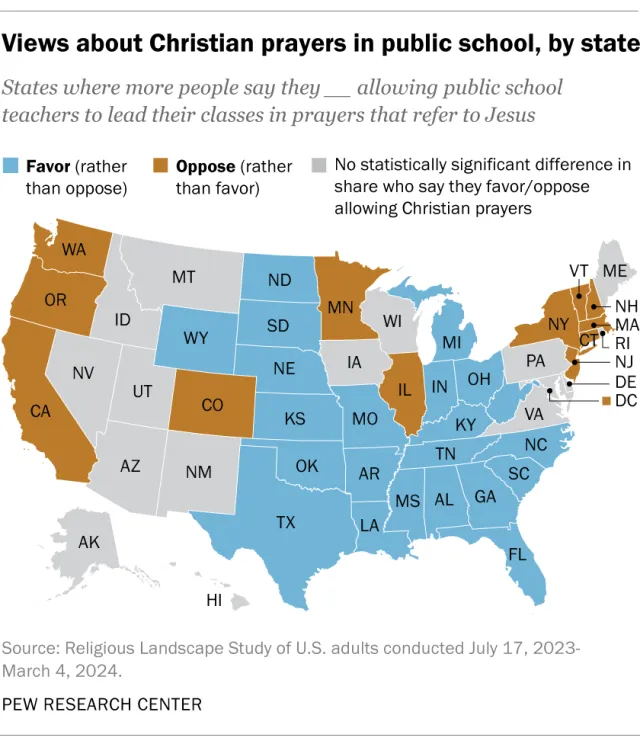
Since ratification, courts have consistently debated where the line is—between accommodating religious beliefs and enforcing the law. These disputes include prayer in public schools and religious symbols on public land, and whether religious objections can exempt individuals and businesses from laws that apply to everyone else. These issues remain some of the most contentious in American law today.
1440 Findings
Hours of research by our editors, distilled into minutes of clarity.



Explore Civics
An informed citizenry is the backbone and bulwark of a vibrant democracy. From the principles behind the founding of the country to the forces that shaped our modern institutions, explore the most illuminating and insightful Civics resources from across the internet.