Bill of Rights
Overview
The Bill of Rights comprises the first 10 amendments to the US Constitution, ratified on Dec. 15, 1791. These amendments provide broad protections, including freedom of speech, religion, and the press; the right to bear arms; protection against unreasonable searches; and extensive rights for the criminally accused, including the right to a speedy trial and legal counsel. The Ninth and 10th Amendments clarify that the listed rights are not exhaustive and that powers not granted to the federal government remain with the states and the people.
The amendments were drafted in response to fear that the new federal government outlined in the Constitution could infringe on individual rights—concerns so significant that several states ratified only after proposing amendments to protect individual rights. Most of the Bill of Rights' modern force stems from 20th-century Supreme Court decisions that applied its protections to the states.
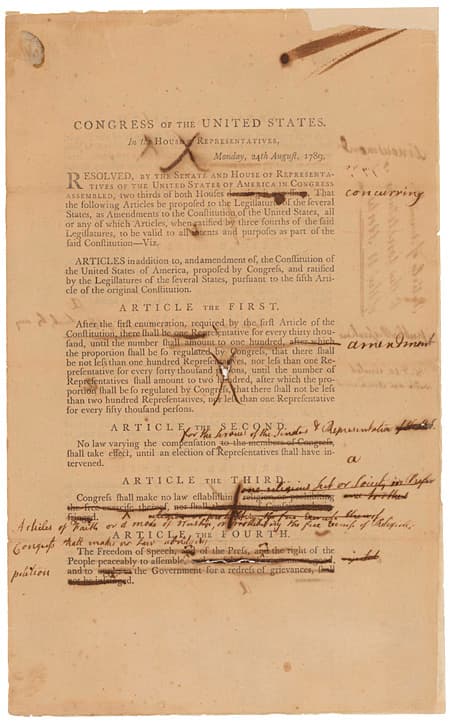
James Madison, initially skeptical that a bill of rights was needed given the Constitution's structure, became its chief author. Drawing on the Magna Carta, Virginia's Declaration of Rights, and England's 1689 Bill of Rights, Madison proposed 17 amendments to the First Congress in 1789. Twelve were approved by Congress, and 10 were ratified by the states, forming the Bill of Rights.
1440 Findings
Hours of research by our editors, distilled into minutes of clarity.




Explore Civics
An informed citizenry is the backbone and bulwark of a vibrant democracy. From the principles behind the founding of the country to the forces that shaped our modern institutions, explore the most illuminating and insightful Civics resources from across the internet.