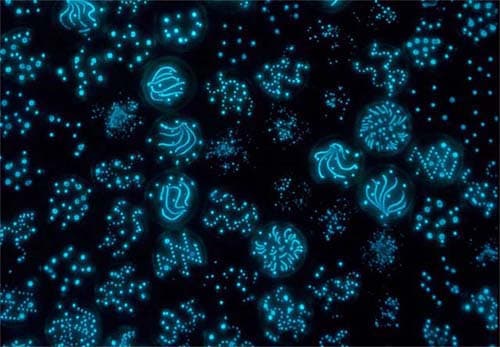
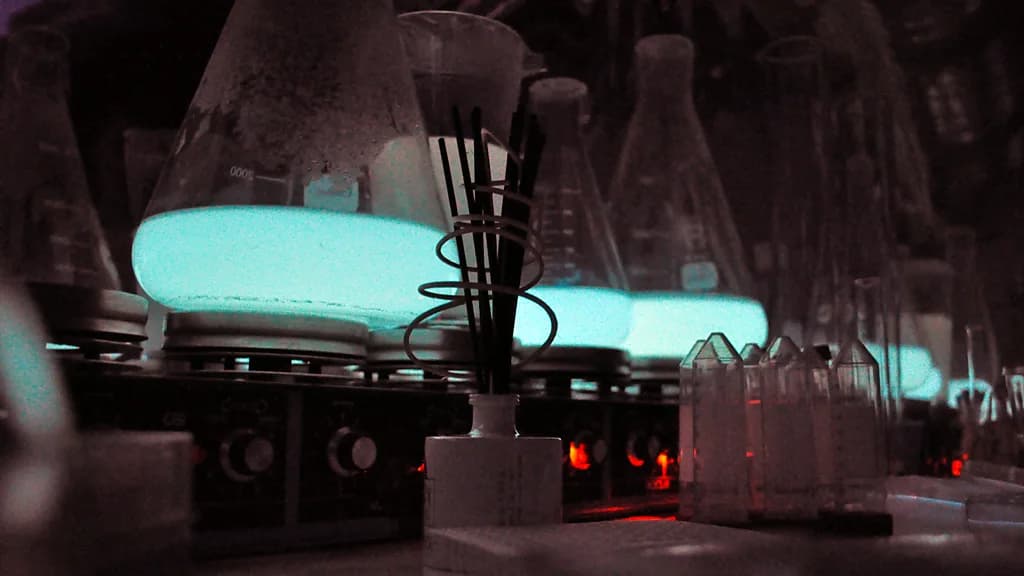
Posted by Marco Daniel MachadoMay 25Massive blooms of microscopic algae called dinoflagellates produce the neon blue light seen in glowing tides.Show 1 more finding 6:39This is Why Waves Glow | Bioluminescence | Wild to Knowhttps://www.youtube.com/watch?v=KX5YRXTNWIE
Posted by Marco Daniel Machado8 hours agoBioluminescent organisms produce their own light through chemical reactions involving unstable, energetic molecules, while biofluorescent organisms almost immediately re-emit light shone on them, but at a different wavelength.Show 4 more findings 2:38Biofluorescence vs BioluminescenceIFLSciencehttps://www.youtube.com/watch?v=TVpRiSjFmDk
Posted by Marco Daniel MachadoFeb 6Bioluminescence provides organisms with a method of hunting, defense, or matingUnlike glow sticks, bioluminescent reactions use renewable resources like oxygen and ATP. This ability allows fireflies to mate and deter predators, anglerfish to confuse and attract prey, and deep-sea shrimp to defend themselves by vomiting glowing slush. 4:09The brilliance of bioluminescence - Leslie KennaTED-Edhttps://www.youtube.com/watch?v=oKjFVBVGad0
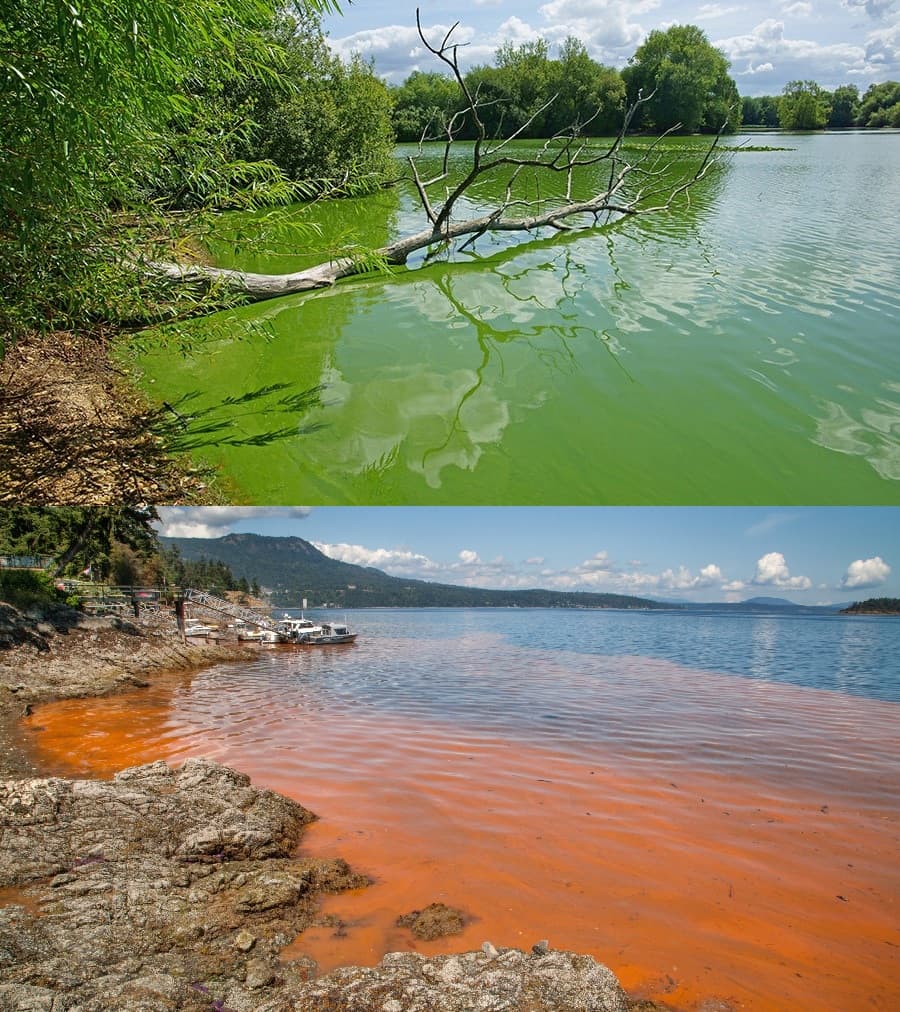
Posted by Marco Daniel MachadoJun 24Harmful algal blooms can occur in warm, nutrient-rich, stagnant waters and are often associated with the rapid reproduction of blue-green algae—a misnomer for cyanobacteria, not algae.Show 3 more findings ZoomHarmful Algal Blooms and Your HealthUS Centers for Disease Control and Preventionhttps://www.cdc.gov/harmful-algal-blooms/about/index.html
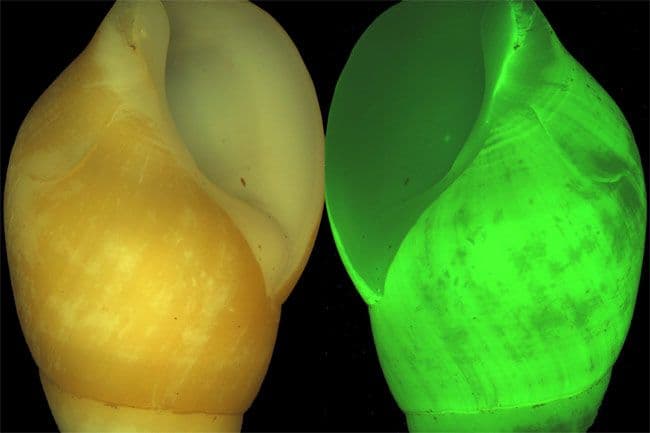
Posted by Marco Daniel MachadoFeb 6View a gallery of bioluminescent organisms, including jellyfish and mushroomsSome species produce a quick flash of light, while others glow steadily with an eerie glow, often to seek attention or in response to being disturbed. Snails, worms, fungi, and other organisms highlight that this ability evolved independently, rather than from one common ancestor. ZoomGallery: Eye-Catching Bioluminescent WondersLive Sciencehttps://www.livescience.com/14865-bioluminescent-creatures-gallery.html
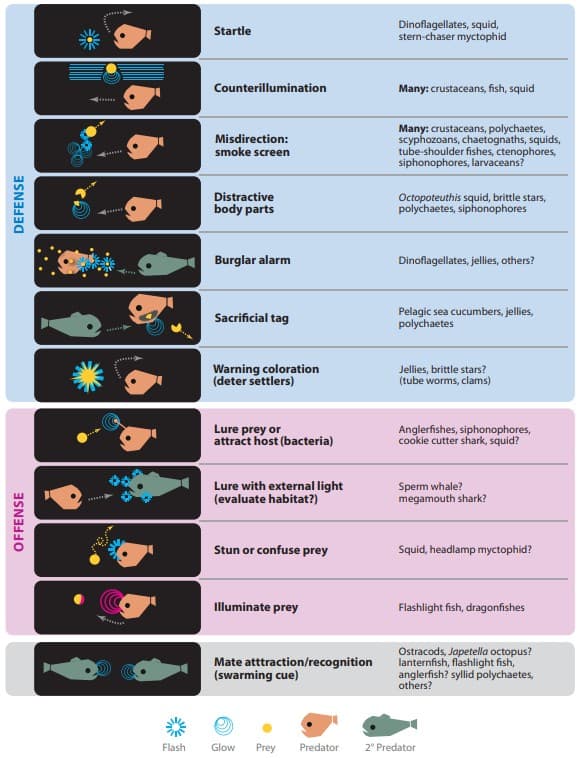
Posted by Marco Daniel MachadoMar 12View illustrations of bioluminescent functions in marine organismsBioluminescence can startle predators, camouflage, lure prey, confuse rivals, or facilitate mate recognition. One tactic—the burglar alarm—involves an organism releasing light to attract a larger predator to its attacker as a means of defense. ZoomBL Web: Functions of Bioluminescencehttps://biolum.eemb.ucsb.edu/functions.html
Posted by August MoonMar 12Why 75% of ocean animals glowAbout 75% of ocean creatures can make their own light. It's called bioluminescence—and it all comes down to a special chemical reaction happening inside their bodies. 1:20Why 75% of Ocean Animals Glow1440 Originalshttps://www.youtube.com/watch?v=gE9zbIr7bVU
Posted by Marco Daniel MachadoSep 12, 2025Bioluminescence became common in the ocean to support survival in dark environmentsDespite seeming like a rare ability in land animals and unseen in plants, bioluminescence has evolved at least 29 times across marine species, indicating its necessity for survival where hiding spots are rare and highlighting how environments provide evolutionary pressure. 15:28Why Is (Almost) All Bioluminescence in the Ocean?https://www.youtube.com/watch?v=jJdLiKYKWzY
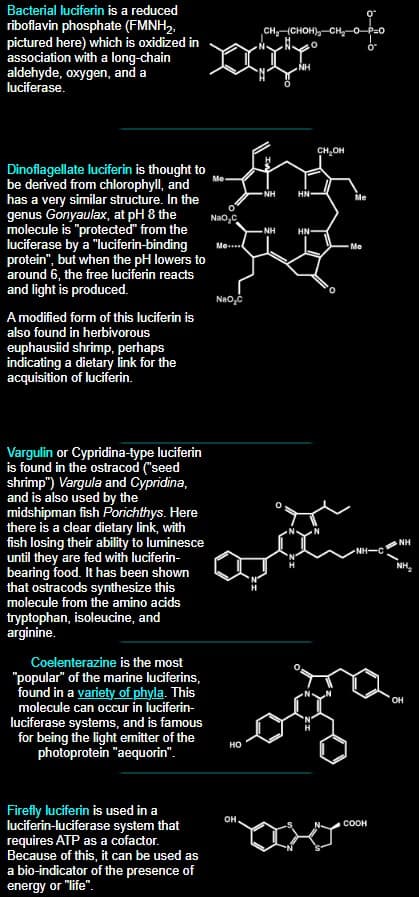
Posted by Marco Daniel MachadoMar 12View examples of luciferin, the light-emitting molecule behind bioluminescenceBioluminescent marine organisms rely on various unique luciferins, including Cypridina-type luciferin in seed shrimp and chlorophyll-based dinoflagellate luciferin, to react with oxygen to produce light. These chemicals require unique catalysts to help them bind with oxygen. ZoomBL Web: Chemistry Detailshttps://biolum.eemb.ucsb.edu/chem/detail2.html
Posted by Marco Daniel MachadoSep 12, 2025Humans have used bioluminescence as a means of military advantageDuring World War I, the British Navy sank a German U-boat after spotting the blue light forming at the sides and in the wake of the boat. Jellyfish slime was applied to a Roman walking stick for nighttime guidance, while bioluminescent fungi in Indonesia fulfilled the same purpose. ZoomThe Secret History of Bioluminescence | Hakai Magazinehttps://hakaimagazine.com/features/secret-history-bioluminescence/
Posted by Marco Daniel MachadoMar 12Solutions of bioluminescent bacteria can create FOMO-inducing living artA 2002 exhibition at Montana State University-Bozeman placed the bacteria onto petri dishes that served as macroscopic pixels to create images. Once the bacteria finished eating all the food in the sealed dishes, the light slowly faded away, ending the exhibit. ZoomWelcome To The Dark Side: Bioluminescent Art - The Yellow Sparrowhttps://www.theyellowsparrow.com/bioluminescent-art/
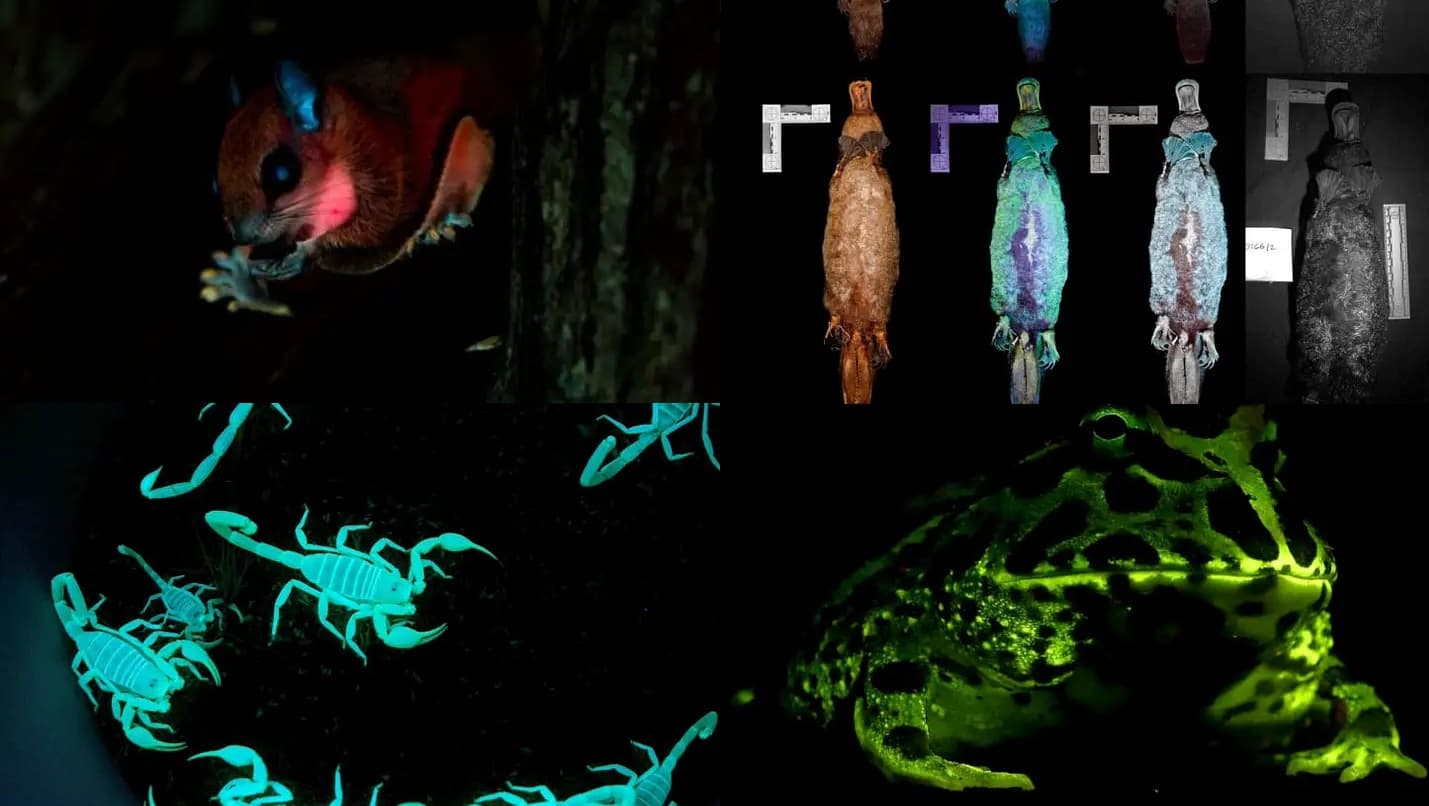
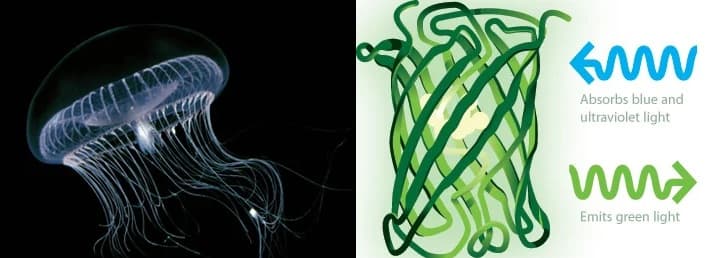
Posted by Marco Daniel Machado7 hours agoBiofluorescent animals—those that absorb light, such as ultraviolet rays, and re-emit other types of light, such as neon green—include some flying squirrels, scorpions, sea turtles, and platypuses.Show 4 more findings Zoom11 Animals You Wouldn't Expect to GlowMental Flosshttps://www.mentalfloss.com/animals/animals-you-wouldnt-expect-glow
Posted by Marco Daniel Machado8 hours agoTo protect the symbiotic algae they rely on for food, some corals absorb ultraviolet radiation and re-emit it as visible light, which these algae can photosynthesize.Show 1 more finding 2:05Fluorescent Coral Glows in the Depth of the Ocean | BBC EarthBBC Earthhttps://www.youtube.com/watch?v=OzvVMlx9rFA
Posted by Marco Daniel Machado16 hours agoWatch David Attenborough's documentary on bioluminescent creatures, which have been observed using light for hunting, mating, communication, and self-defense, and number in the thousands of species. 51:26David Attenborough Shines a Light on Glowing Animals | 4K Nature DocumentaryTerra Materhttps://www.youtube.com/watch?v=mqZDHb_eQlY
Posted by Marco Daniel MachadoSep 12, 2025The first appearance of bioluminescence was at least 540 million years agoAfter analyzing fossils, genetic data, and statistical methods, scientists believe octocorals were the first organisms to evolve light-producing abilities. As a result of independent evolution across at least 94 species, this phenomenon is connected to a diverse range of behaviors.Bioluminescence First Evolved in Animals at Least 540 Million Years AgoSmithsonian Magazinehttps://www.si.edu/newsdesk/releases/bioluminescence-first-evolved-animals-least-540-million-years-ago
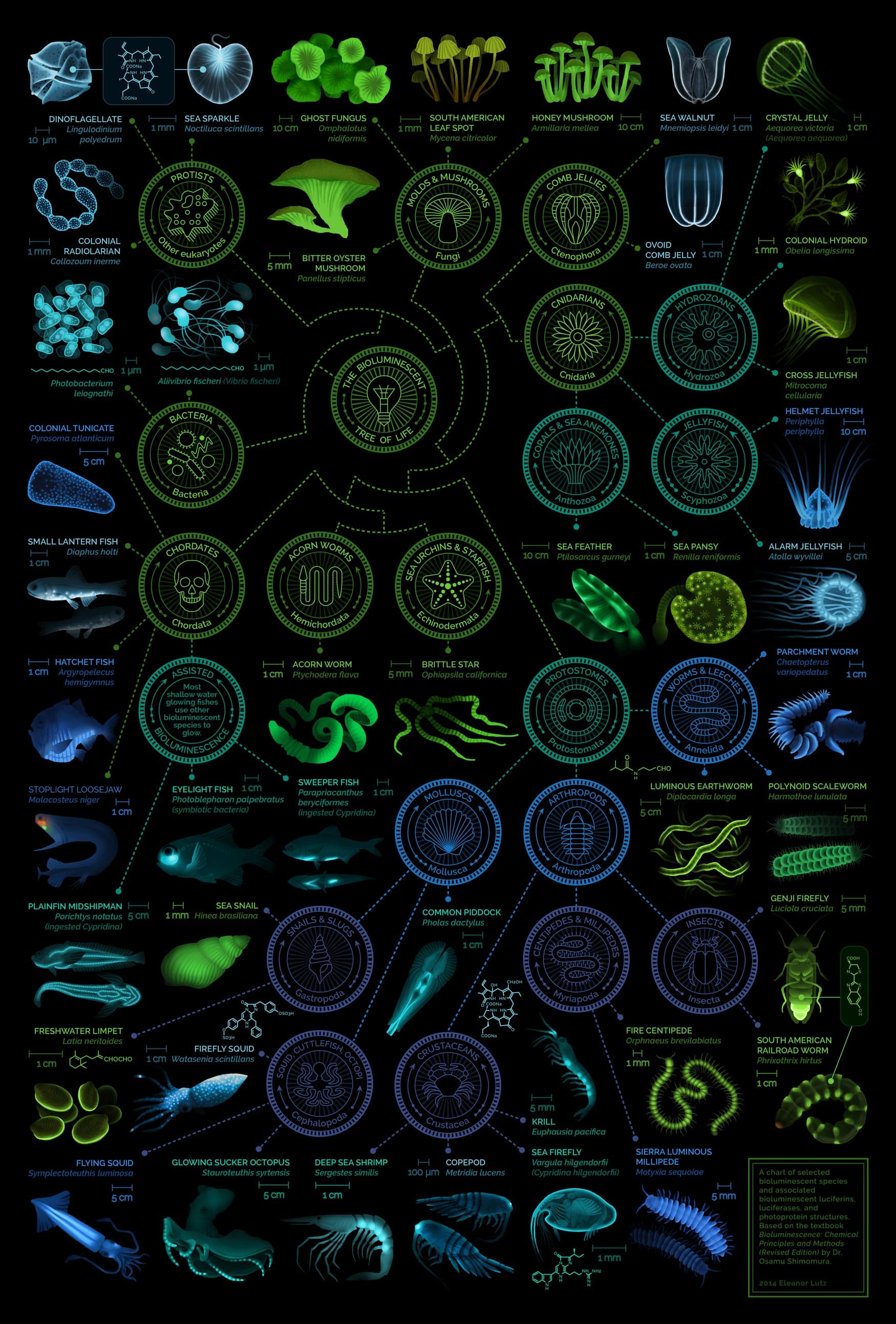
Posted by Marco Daniel MachadoFeb 20View a sample of the bioluminescent tree of lifeThis diagram shows 42 different light-producing organisms, from bacteria and fungi to worms, fish, and crustaceans. It illustrates how the ability to produce light has appeared multiple times across the tree of life, rather than stemming from a single ancestor. ZoomA visual compendium of glowing creatureshttps://tabletopwhale.com/2014/07/21/a-visual-compendium-of-glowing-creatures.html
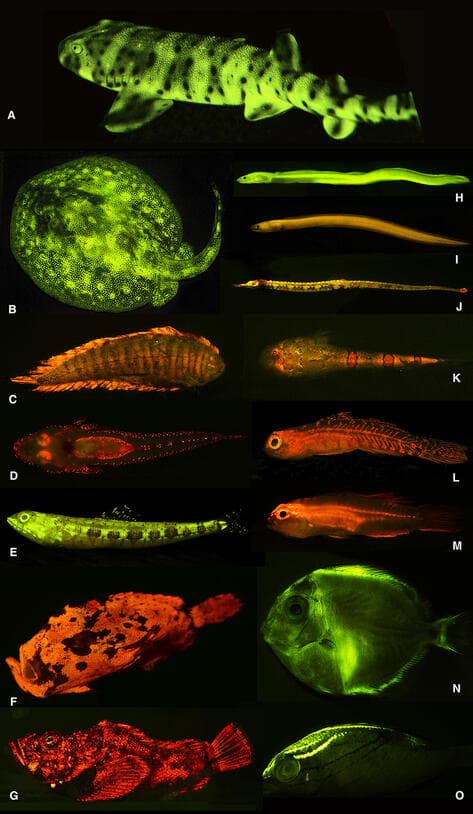
Posted by Marco Daniel Machado7 hours agoBecause it is observed in organisms that are not closely related, biofluorescence is thought to have emerged independently about 100 times in nature.Show 2 more findings ZoomStudies Reveal Fish Biofluorescence Dates Back 112 Million Years | AMNHAmerican Museum of Natural Historyhttps://www.amnh.org/explore/news-blogs/fish-biofluorescence
Posted by Marco Daniel MachadoSep 12, 2025Bioluminescence may provide a sustainable alternative to electric lightingFrench start-up Glowee is experimenting with lights made from bioluminescent microorganisms in public spaces to reduce energy use. While the technology shows promise, challenges remain with brightness, maintenance, and scaling it for widespread use. ZoomThe French town where the lighting is aliveBBChttps://www.bbc.com/future/article/20220407-the-living-lights-that-could-reduce-energy-use
Posted by Marco Daniel MachadoDec 31, 2025A nuclear reactor's characteristic blue light is produced from superluminal particlesWhen light travels through water, its effective speed is 25% lower than its speed in a vacuum. Just as sound waves bunch up and produce a sonic boom when objects move faster than the speed of sound, particles moving faster than this reduced speed generate a shock wave of light, visible as a blue hue. 11:54Be Smarthttps://www.youtube.com/watch?v=akBpQ-A7mCQ
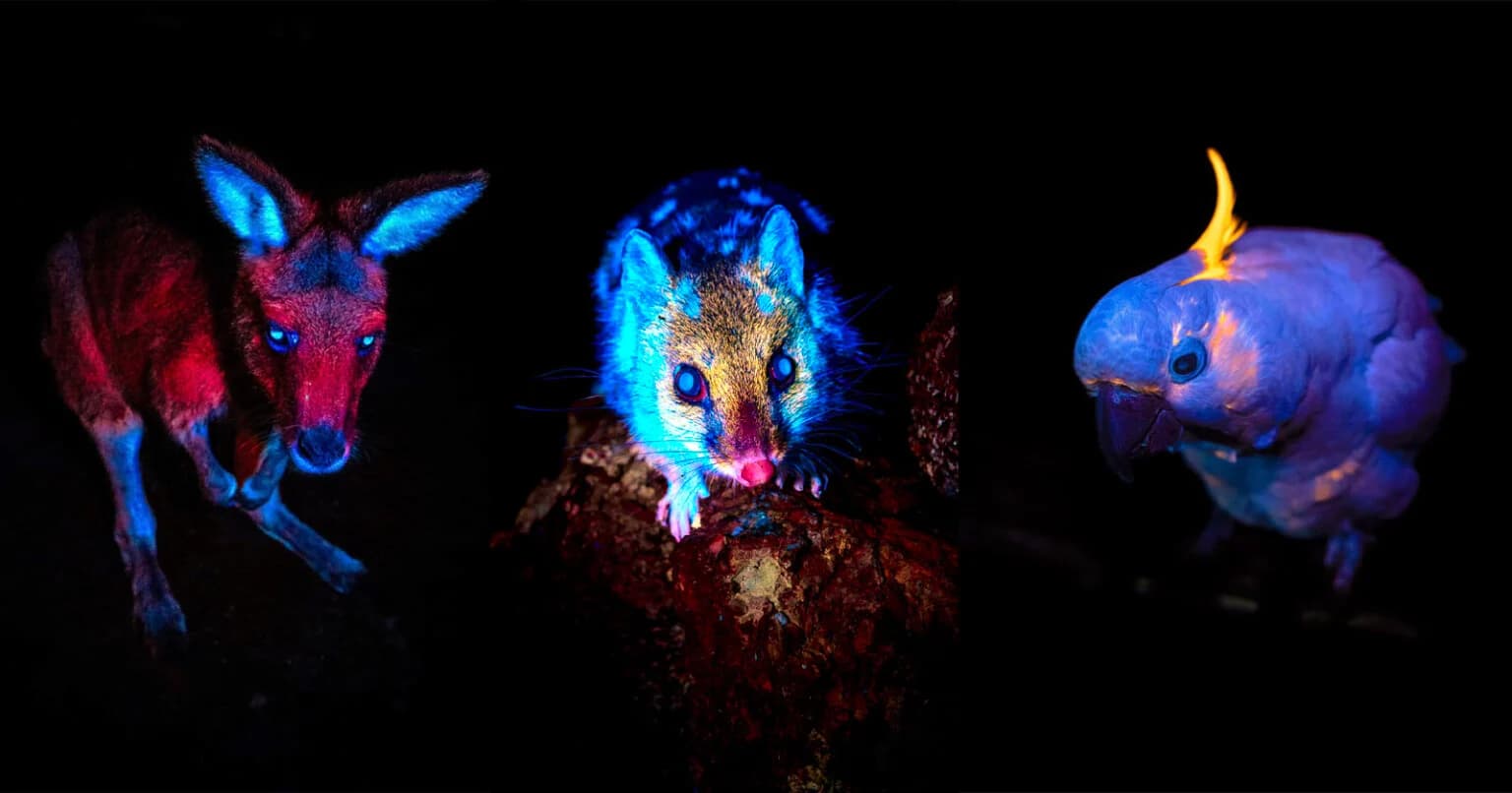
Posted by Marco Daniel Machado8 hours agoView a gallery of biofluorescent animals, which contain cells that emit various colors when exposed to ultraviolet light.Show 1 more finding ZoomPhotographer Captures the Hidden Light of AnimalsPetaPixelhttps://petapixel.com/2025/08/21/photographer-ben-alldridge-captures-the-hidden-light-of-animals/
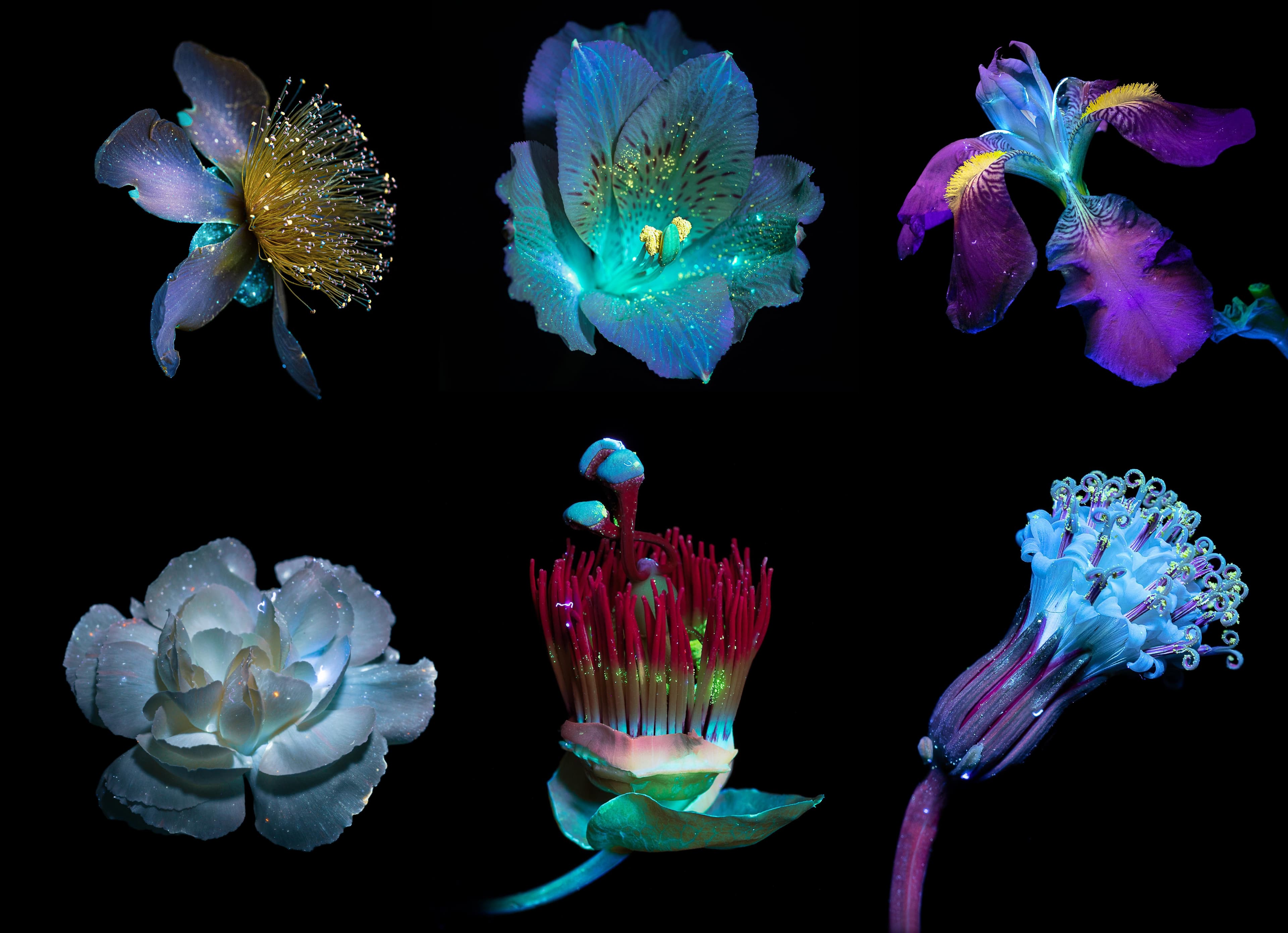
Posted by Marco Daniel Machado8 hours agoView a gallery of plants made to shine using ultraviolet-induced visible fluorescence photography, in which these organisms re-emit the ultraviolet light they are exposed to in vibrant, glowing colors.Show 1 more finding ZoomBetween Art and Science - Ultraviolet Induced Visible Fluorescence Photography by Debora Lombardi | World Photography OrganisationWorld Photography Organisationhttps://www.worldphoto.org/sony-world-photography-awards/winners-galleries/2022/professional/between-art-and-science
Posted by Marco Daniel MachadoApr 8Watch underwater photosynthesis make water look like champagneIn shallow waters where sunlight can reach, photosynthetic reactions absorb water and dissolved carbon dioxide, producing bubbles of oxygen at the surface of plants. As these bubbles rise to the water's surface, a fizzy appearance is created. 2:44PBShttps://www.youtube.com/watch?v=J8DsCzHzG8o
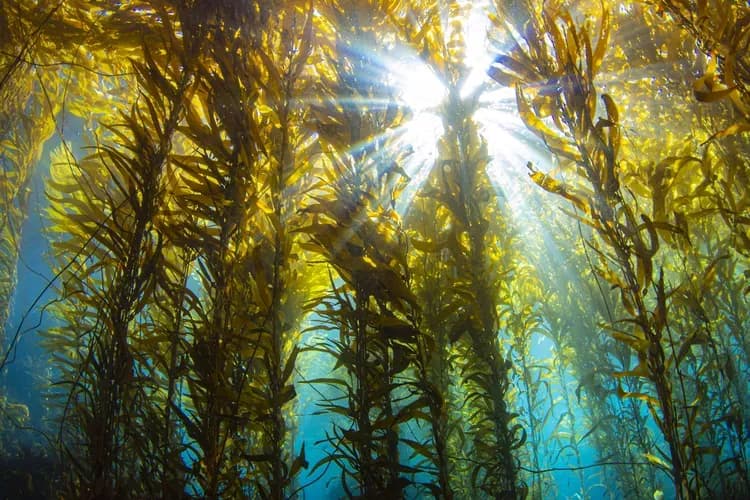
Posted by Marco Daniel MachadoJun 24The world's largest species of marine algae is giant kelp, which can grow as much as two feet per day from depths of about 100 feet up to the ocean surface.Show 3 more findings ZoomKelp Forest | Office of National Marine SanctuariesNOAAhttps://sanctuaries.noaa.gov/visit/ecosystems/kelpdesc.html
Posted by Marco Daniel MachadoApr 1Coral reefs get their colors from zooxanthellae—photosynthetic algae that line corals' digestive tracts and provide them with sugars in exchange for a home within this protective tissue.Show 2 more findings ZoomzooxanthellaeTetiaroa Societyhttps://www.tetiaroasociety.org/biosphere-tetiaroa/zooxanthellae
Posted by Marco Daniel MachadoSep 12, 2025Bioluminescent reaction enzymes are often used in biomedical researchNear-infrared luciferase systems allow researchers to image and analyze cellular activity in living animals because they penetrate tissue more deeply than visible light. This provides a means of studying gene expression and protein interactions without harming the animals. ZoomLuciferase: A Powerful Bioluminescent Research Toolhttps://www.the-scientist.com/luciferase-a-powerful-bioluminescent-research-tool-72013
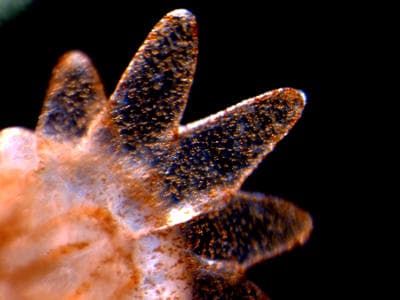
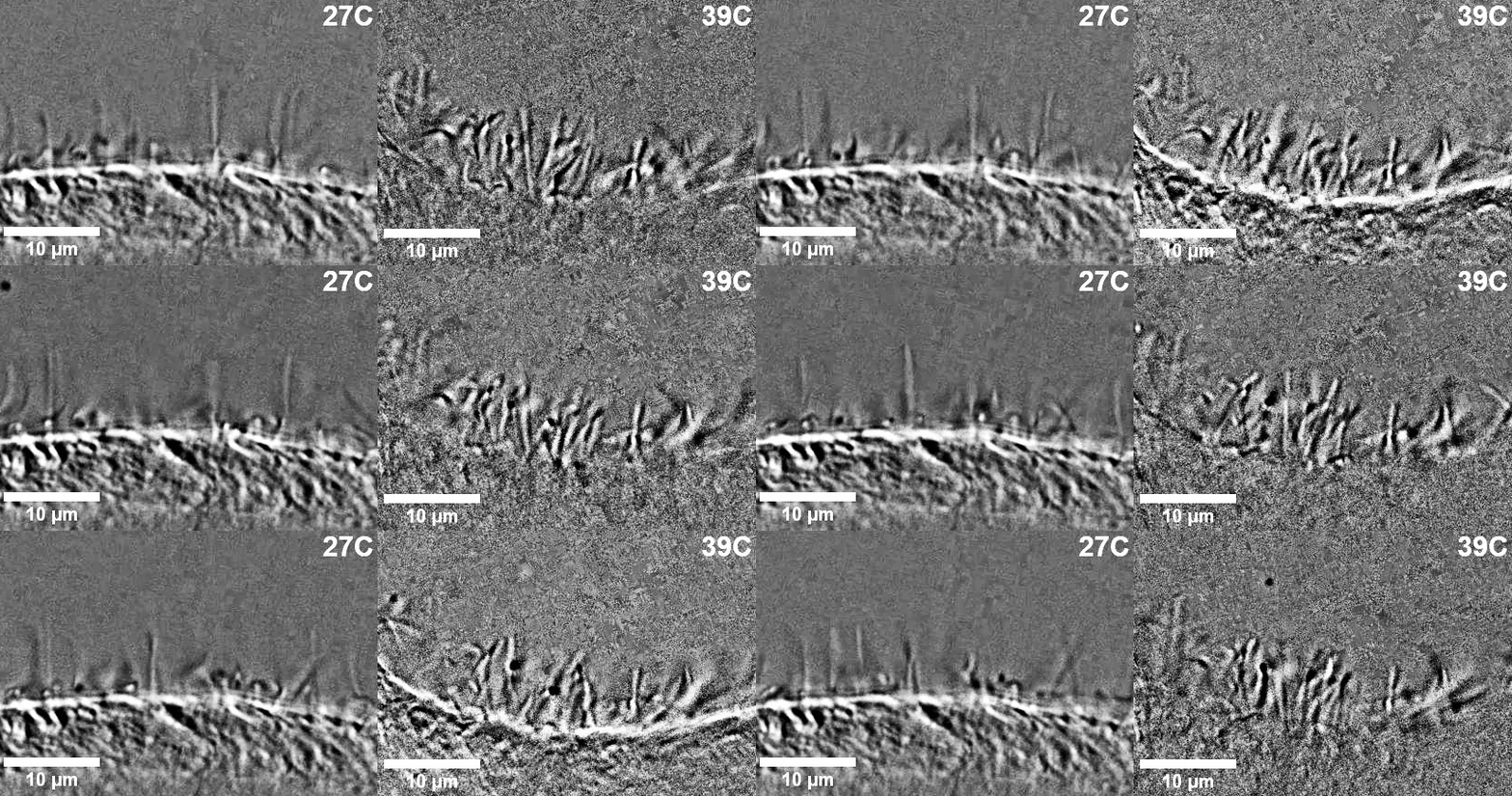
Posted by Marco Daniel MachadoAug 19Research has found that when their symbiotic algae are not producing oxygen via photosynthesis, corals twirl hairlike structures to circulate water and draw oxygen into their outer tissues.Show 2 more findings ZoomCorals Spin Tiny Vortices to Get Oxygen, but Not if It’s Too Hot | Quanta MagazineQuanta Magazinehttps://www.quantamagazine.org/corals-spin-tiny-vortices-to-get-oxygen-but-not-if-its-too-hot-20260805/
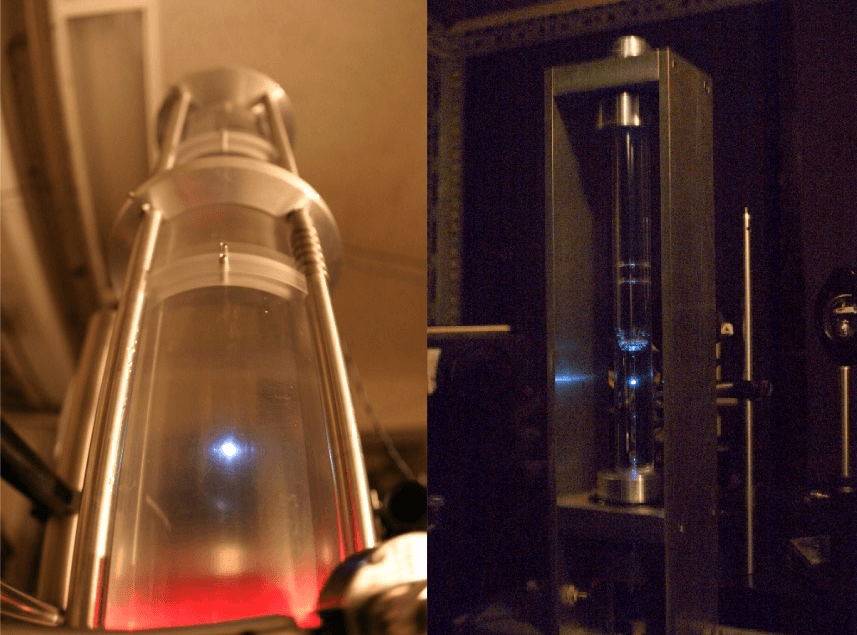
Posted by Marco Daniel MachadoJul 18Through sonoluminescence, concentrated sound waves can produce short, high-intensity flashes of light by rapidly collapsing microscopic bubbles to temperatures up to twice that of the sun's surface.Show 1 more finding ZoomSound Into Light | UCLA Putterman Research GroupUniversity of California Los Angeleshttps://acoustics-research.physics.ucla.edu/sonoluminescence/
Posted by Marco Daniel MachadoFeb 6When caught in the mouths of cardinal fish, seed shrimp release glowing, bioluminescent chemicals, which alert predators of the cardinal fish, prompting the shrimp's ejection.Show 2 more findings 0:53Cardinal fish spitting light as a defenceNowScienceNewshttps://www.youtube.com/watch?v=9j-8sU0XIYU
Posted by Dina Fine MaronJan 16Single-cell organisms have circadian clocks that direct daily biochemical routinesCyanobacteria, a type of light-sensitive bacteria, use this clock to signal when to alternate between making organic compounds through photosynthesis and when to convert atmospheric nitrogen into usable ammonia. Upregulating photosynthetic machinery before dawn helps ensure efficient photosynthesis.Knowable Magazinehttps://knowablemagazine.org/content/article/living-world/2020/beat-life-understanding-cells-rhythms
Posted by Teddy BurkhardtMar 20, 2023Aerial photos of red tide off the Gulf CoastThe toxic algae grows naturally in warmer oceans in small amounts and is typically harmless. With extended warm periods and unusually-high additions of nutrients from run-off, the algae blooms extensively, posing health risks to wildlife and humans... ZoomHere’s the aerial view as red tide blooms off Pinellas County right nowhttps://www.tampabay.com/news/environment/2023/03/10/red-tide-pinellas-spring-break-2023-florida-fish-kill-aerial/
Posted by Marco Daniel Machado9 hours agoVirtually all plants are biofluorescent because their photosynthesis is powered by chlorophyll, a pigment that glows red as a way to get rid of excess energy when exposed to ultraviolet light.Show 3 more findings 7:18When Green is Red—Making Plants BleedThe Action Labhttps://www.youtube.com/watch?v=_tK8q7wAmy0
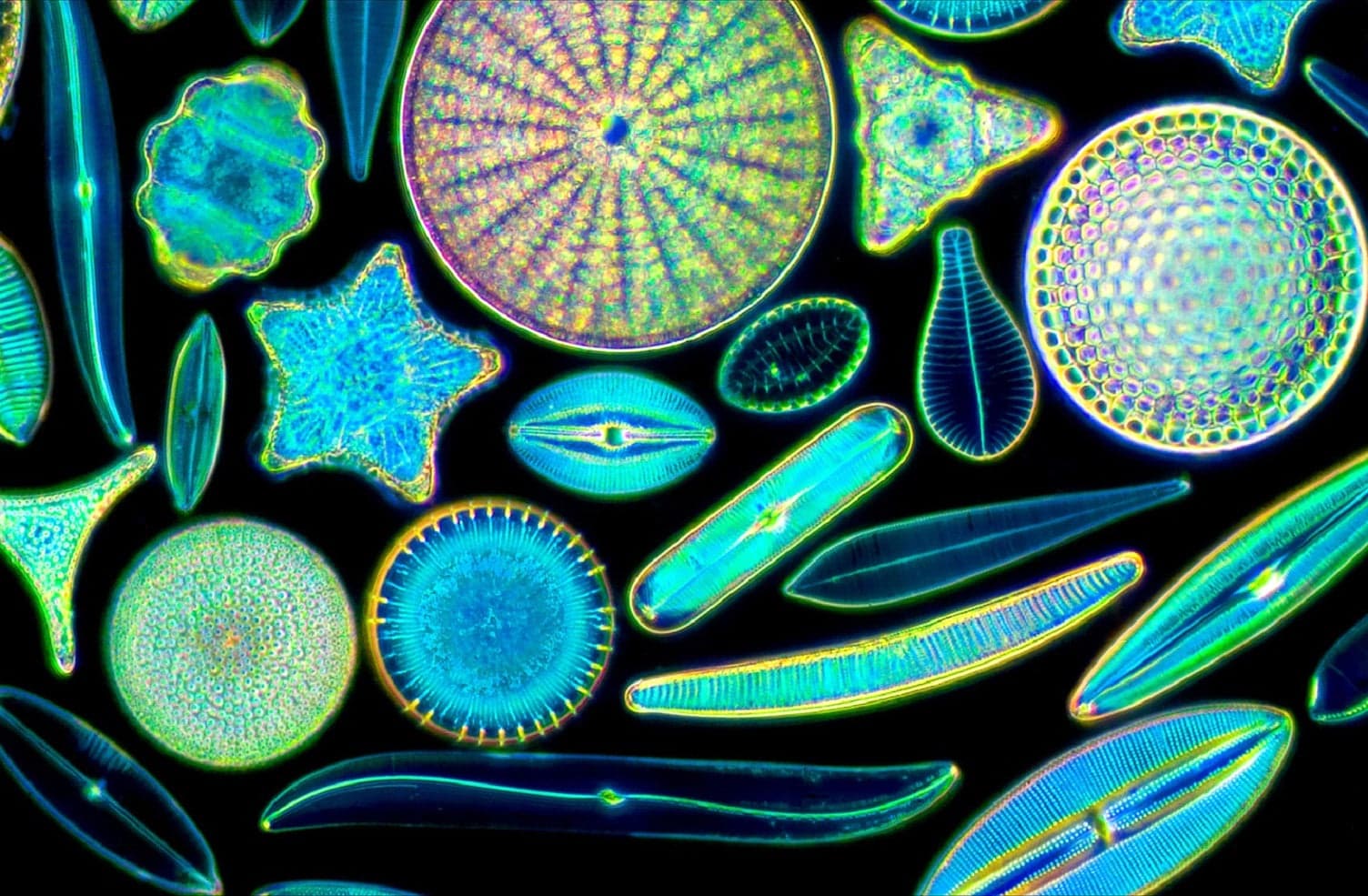
Posted by Marco Daniel MachadoJun 24View a gallery of diatoms—algae surrounded by glass-like shells—captured via microscope.Show 1 more finding ZoomDiatoms - Nature’s Jewels viewed with a MicroscopeMotic Microscopeshttps://moticmicroscopes.com/blogs/articles/diatoms-nature-s-jewels-viewed-with-a-microscope
Posted by Dina Fine MaronFeb 23, 2024Light pollution is giving oysters insomniaOysters, bivalve mollusks that have light-detecting cells along their skin, can't sleep with all this artificial light. According to a 2022 study, oysters' sleep cycles are disturbed by light dimmer than that provided by the full moon. As with humans, it's possible that these bouts of insomnia could have adverse health effects and contribute to the development of disease over time. ZoomLight Pollution Is Causing Oyster Insomnia | Hakai Magazinehttps://hakaimagazine.com/news/light-pollution-is-causing-oyster-insomnia/
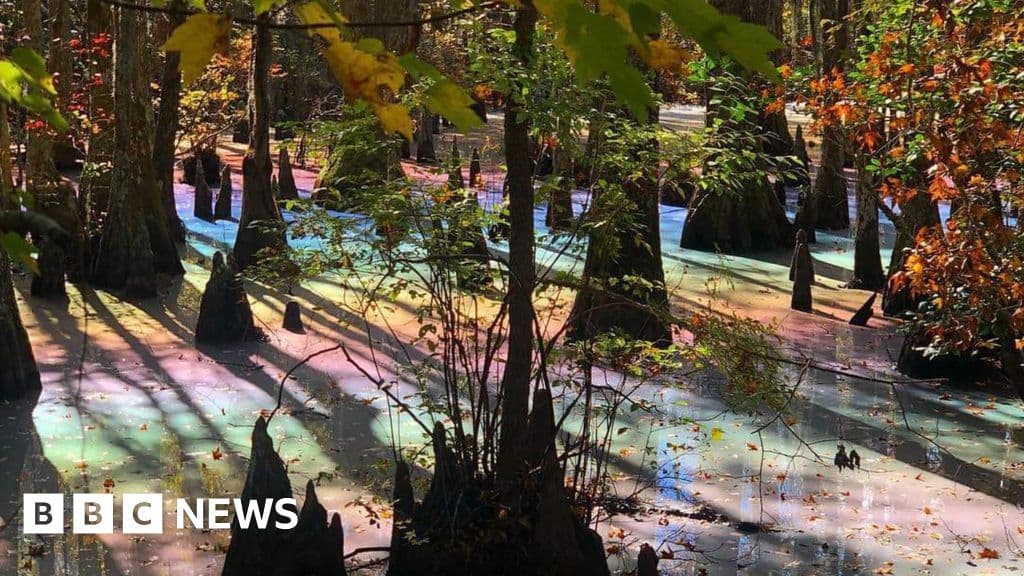
Posted by Marco Daniel MachadoMay 21View the rainbow effect on the waters at First Landing State ParkThe phenomenon results from light interacting with a thin film of natural oils on the surface of swamps and marshes at the site, not unlike the coloration seen in soap bubbles. The oils originate from decaying vegetation or from anaerobic bacteria reducing iron in soil. (Some readers may experience a paywall.) ZoomWhy this rainbow swamp has got people talkingBBChttps://www.bbc.com/news/blogs-trending-46346026
Posted by Marco Daniel MachadoJun 25Starting with red, colorful objects will appear to lose their colors the deeper they are submerged because water scatters light, reducing the amount available to reflect off objects and be observed.Show 5 more findings 0:50Light and Color Below the SurfaceCatalina Island Marine Institute (CIMI)https://www.youtube.com/watch?v=44c8gZlm0CQ
Posted by Marco Daniel MachadoJun 30Glow sticks feed energy released in chemical reactions to fluorescent dyesWhen bent, the glass tube inside the stick breaks, releasing hydrogen peroxide into the surrounding solution. The ensuing reaction creates unstable molecules that decompose and release energy, which is then absorbed by molecular dyes that emit light when their excited electrons return to lower energy states.How do glowsticks glow? - Chemistry For Your Life | Podcast on SpotifyChemistry For Your Lifehttps://open.spotify.com/episode/7wWaHsBsRxHiRwfdSJdW7f
Posted by Marco Daniel MachadoApr 1During coral bleaching, corals sacrifice their food source and expel colorful microorganisms to protect themselves, a phenomenon that resembles an organism's immune system attacking itself.Show 3 more findings 3:03California Academy of Scienceshttps://www.youtube.com/watch?v=n2hQT8nHtNo