Birthright Citizenship
Overview
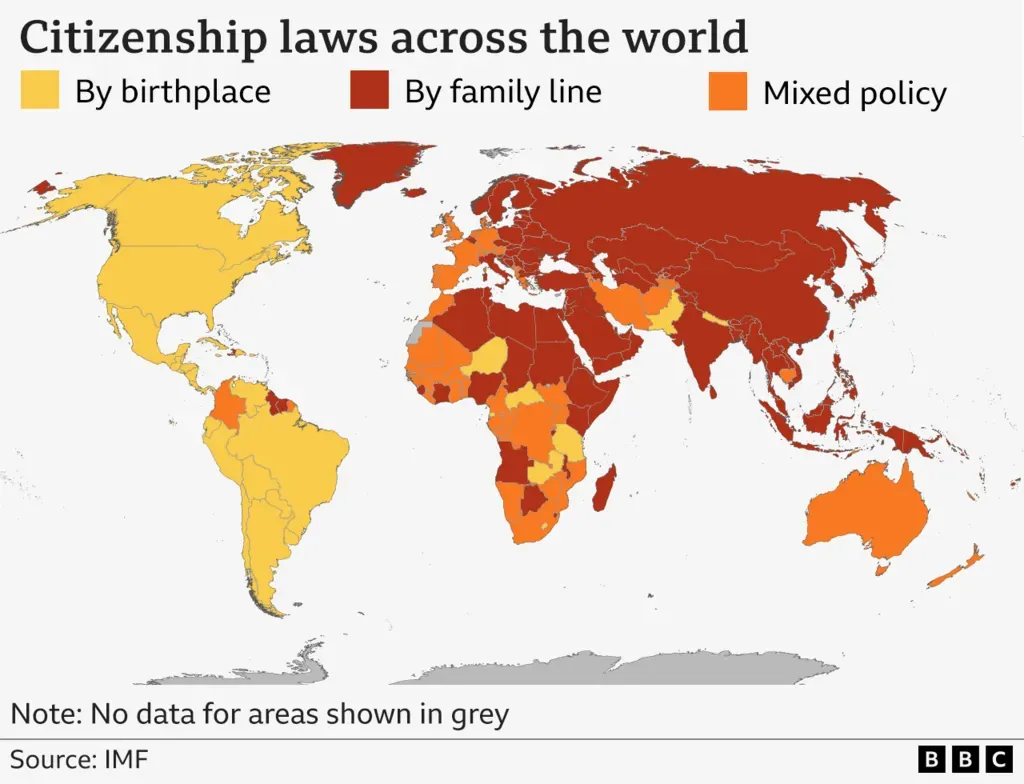
Birthright citizenship is the principle that a person acquires citizenship by being born within a country's territory, regardless of parental nationality or immigration status. In the United States, this practice—known as jus soli ("right of the soil")—was established by the Constitution's 14th Amendment, ratified in 1868.
The amendment was adopted after the Civil War to resolve questions of legal status and to ensure citizenship for formerly enslaved people. It also shifted authority over citizenship from individual states to the federal government. In United States v. Wong Kim Ark (1898), the Supreme Court set a clear precedent that anyone born in the United States, regardless of their parents' immigration status, is a citizen at birth.
The concept is relatively rare among developed democracies, which typically base citizenship on ancestry (jus sanguinis). Throughout American history, birthright citizenship has periodically been the subject of legal and political debate, especially during periods of heightened immigration or shifts in national policy.
1440 Findings
Hours of research by our editors, distilled into minutes of clarity.







Explore Civics
An informed citizenry is the backbone and bulwark of a vibrant democracy. From the principles behind the founding of the country to the forces that shaped our modern institutions, explore the most illuminating and insightful Civics resources from across the internet.