American Revolution

1440 Findings

Hours of research by our editors, distilled into minutes of clarity.

  • Pinned

    Delegates at the First Continental Congress affirmed loyalty to Britain while protesting

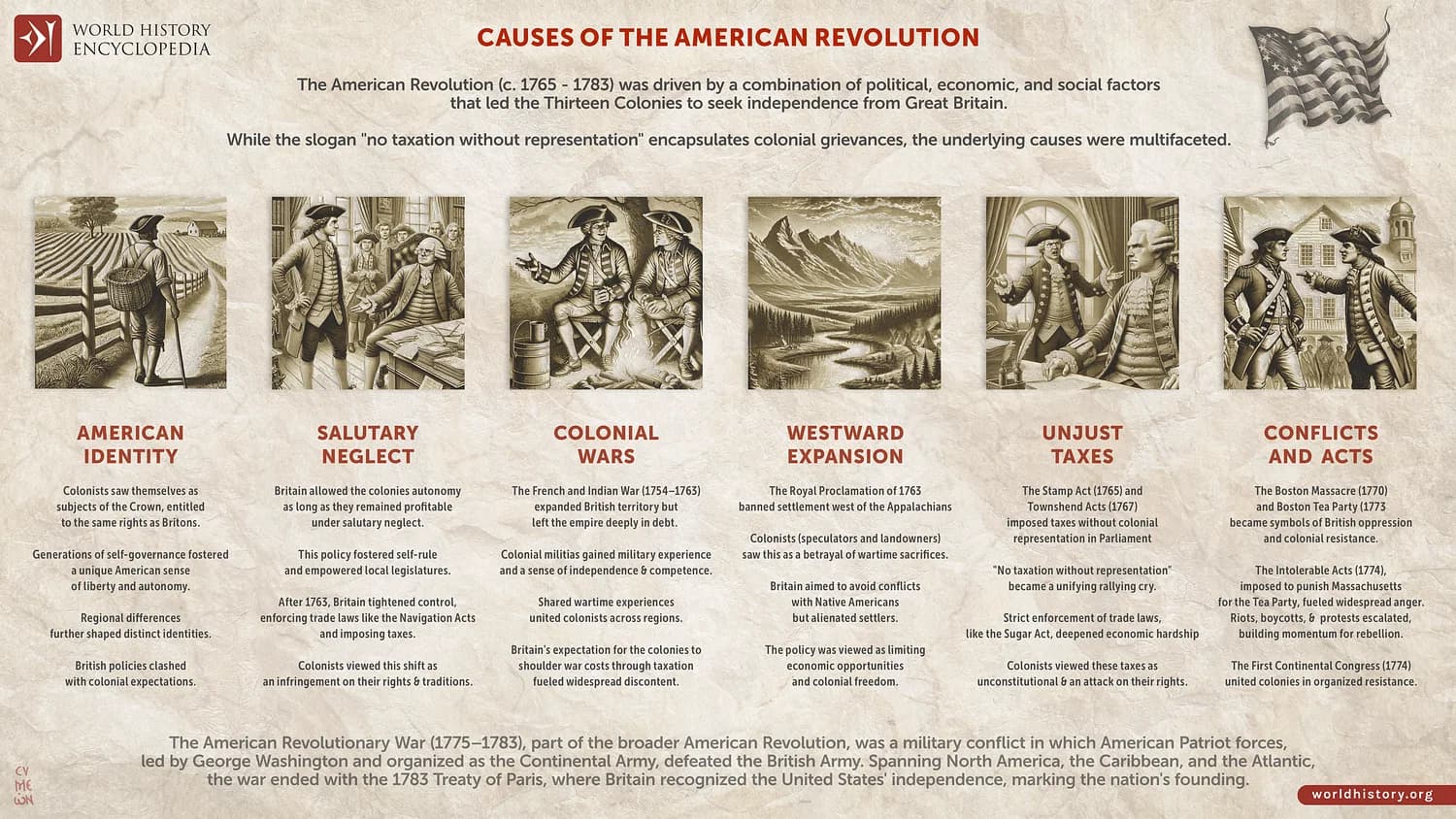
    Delegates met in Philadelphia in 1774 to debate how to respond to British acts clamping down on trade and increasing taxes. The result of the congress was to call for the formation of colonial militias and to embargo British goods. Delegates also adopted the Declaration of Rights and Grievances, though there was broad disagreement about how to respond to Britain’s policies.
  • Revolutionary ideas were brewed in 18th-century coffeehouses

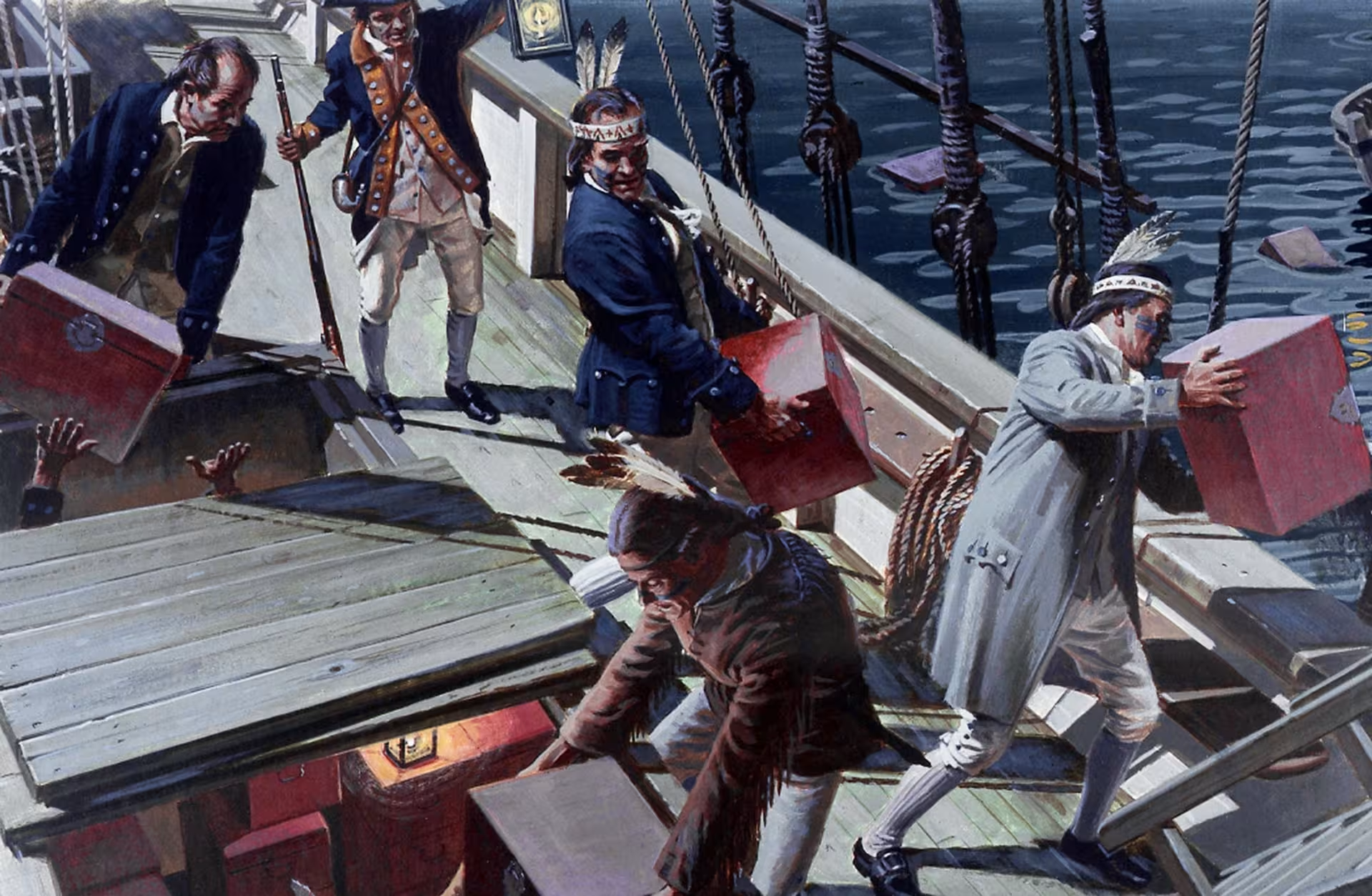
    After the Boston Tea Party (1773), colonists boycotted tea and turned to coffee, with coffeehouses becoming hubs for revolutionary discussions. The stimulating import from the Caribbean helped shape the nascent American taste.

  • Enlightenment ideals of reason informed the foundation of the Revolution

    From the 17th to 19th centuries, an intellectual movement took place in Europe and its colonies that emphasized reason over authority. Following the Scientific Revolution, thinkers like Descartes, Kant, and Locke sought to explain the world in rational—rather than religious—terms. The movement caused a paradigm shift in how societies are organized and how people perceive themselves.