Posted by Kevin KearneyAug 10A 'third place' is a sociological term for a communal space that isn't a home or a workplace.Show 3 more findings ZoomRay OldenburgProject for Public Spaceshttps://www.pps.org/article/roldenburg
Posted by Teddy BurkhardtMar 31, 2023Defining the use of 'Third World' in geopoliticsThe term "Third World" is mostly out of use today for its limiting connotations, but in light of a reordering of geopolitical alliances amid the Ukraine war, historians are reevaluating the term's usefulness. Read the history of the term starting from the 1950s, and learn what several experts claim about its contemporary efficacy. ZoomDoes the Concept of the Third World have any Historical Value?https://www.historytoday.com/archive/head-head/does-concept-third-world-have-any-historical-value
Posted by Kevin KearneyApr 27Why Henry David Thoreau was not a hermitWhen many people think of "Walden," they think of a man who intentionally exiled himself from society. But that's inaccurate. Thoreau regularly welcomed guests and explained that he kept three chairs in his modest cabin: "one for solitude, two for friendship, three for society." ZoomNot Exactly a Hermit: Henry David ThoreauNational Endowment for the Humanitieshttps://www.neh.gov/humanities/2012/septemberoctober/feature/not-exactly-hermit
Posted by Jeremy CronigMay 20A sociologist makes the case for libraries and parks as essential public infrastructureEric Klinenberg argues that social infrastructure that brings people together is as vital to a community as roads or power grids. He contends that when communities invest in these spaces, residents grow more connected, and when they are neglected, isolation follows.Palaces for the People99% Invisiblehttps://open.spotify.com/episode/7fE5rzAYtoCyVMzJnuwf0H
Posted by Phoebe BainJun 11The 'Gruen transfer' refers to the price psychology behind large shopping malls, where shoppers make spontaneous purchases due to the overwhelming exposure to a variety of stores. Show 4 more findings 18:12How Shopping Malls are Designed to Overwhelm You | Architectural DigestArchitectural Digesthttps://www.youtube.com/watch?v=UT0xBbHl5Q4
Posted by Teddy BurkhardtApr 30, 2025A gallery of places without addresses on Google Street ViewGoogle Street View records billions of images of streets across the world. Within those photos are many "unplaces," locations that appear to have some purpose or former history but do not have an address. This site curates some of those images and seeks further information from users. You can peruse the odd, fascinating locations spread across both rural and urban areas. ZoomUnplaceshttps://unplaces.tumblr.com/
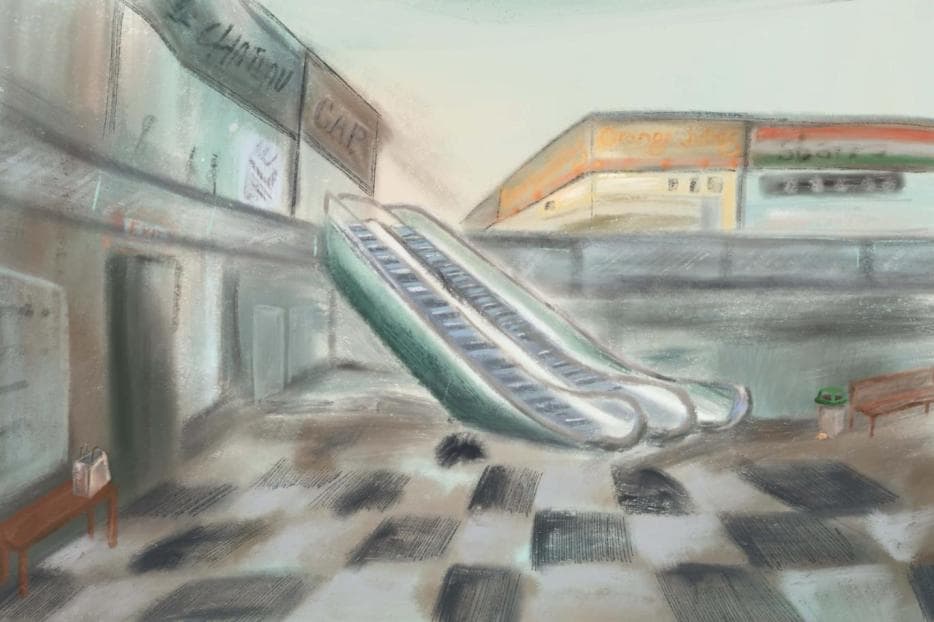
Posted by Teddy BurkhardtDec 18, 2025Abandoned malls prompt 'liminal' vibes of being stuck in timeA Toronto-area tour of empty malls brings participants face-to-face with the past. Part nostalgia, part archaeology, this meditation on the "liminal" spaces of a bygone era provokes eerie reflections on our relationship to time and place. ZoomThe Dead Mall Society | Hazlitthttps://hazlitt.net/longreads/dead-mall-society
Posted by Phoebe BainDec 2, 2025The ‘three-martini lunch’ was popularized on Madison AvenueAdvertising executives working on Madison Avenue in the 1960s and ’70s popularized the so-called “three-martini lunch” between businesspeople during the work week. Admen of the time supposedly believed alcohol brought more creativity to the second half of their workday. This article explains why three-martini lunches are no longer commonplace.The ‘three-martini lunch’ was popularized on Madison Avenuehttps://www.thetakeout.com/1793283/what-happened-three-martini-lunch/
Posted by Kevin KearneyFeb 11Some art critics believe that Liminalism, a form of art exploring the uncanny yet familiar, defines our present momentWhile analyzing images of abandoned malls or empty hallways, art historians and critics argue that this style captures the feelings of this moment in time. Liminalism, they propose, expresses prominent themes in our age like anonymity, alienation, and anxiety. ZoomHow Liminalism Became the Defining Aesthetic of Our Timehttps://hyperallergic.com/how-liminalism-became-the-defining-aesthetic-of-our-time/
Posted by Dina Fine MaronJun 18Blue zones are geographic locations, such as Sardinia, Italy, where there have appeared to be disproportionately high numbers of healthy agers, perhaps due to factors including genetics, diet, social connections, and more. Show 4 more findingsBlue ZonesMaintenance Phasehttps://open.spotify.com/episode/2VmuFmpfgy2coHewsixunR
Posted by Phoebe BainMay 4Being a 'digital nomad' has become more common since the pandemic popularized remote workDigital nomads are people who often work remotely without a specific home base, traveling from country to country or city to city, often without returning to a home address in-between.https://www.uschamber.com/co/grow/thrive/what-is-a-digital-nomad
Posted by Teddy BurkhardtJun 26, 2022What is mixed reality?Mixed reality is a technology that blends the physical and digital worlds, allowing virtual and real objects to coexist and interact in real-time. It combines elements of both virtual reality and augmented reality, enabling users to perceive and manipulate digital content as if it were part of their physical environment. 3:33What is mixed reality? A Simple explanation for anyonehttps://www.youtube.com/watch?v=P_I873tL3jw
Posted by Kevin KearneyNov 14, 2024'Dystopia' is an inversion of Sir Thomas More's 'utopia'The word is derived from the Greek for “bad place," but it's also an inversion of “utopia,” a term popularized by Sir Thomas More in his 1516 book, "Utopia," which imagined an ideal society free of oppression, inequity, and want. More recognized this place was a fantasy; "utopia" is derived from the Greek for "no place." ZoomHow Utopia shaped the worldBBChttps://www.bbc.com/culture/article/20160920-how-utopia-shaped-the-world
Posted by Meher QazilbashApr 17, 2025The 'Goldilocks zone' is the region around a star where liquid water can existAlso referred to as the habitable zone, this region varies based on the properties of a planetary system's host star, including its size and luminosity, which measure the rate at which the star radiates energy per unit area. 2:02What Is the Habitable Zone?NASAhttps://www.youtube.com/watch?v=J04YN9azln8
Posted by August MoonJan 3, 2025'Dystopia,' explainedJohn Stuart Mill introduced the term "dystopia" in 1868 to critique harmful policies, calling it the opposite of utopia, or an ideal world. The concept grew as industrialization and totalitarian regimes exposed societal flaws, inspiring works like George Orwell's "1984" to warn against oppression and moral decay. 1:23The History of Dystopia1440 Originalshttps://www.youtube.com/shorts/GI7kKSnAEqU
Posted by Kevin KearneyApr 27Why Thoreau considered himself spiritual but not religiousThis interview with Richard Higgins, author of "Thoreau's God," unpacks the writer's deep spirituality, which underlies his exploration of "deliberate" living. Higgins notes that Thoreau was opposed to the dogma of organized religion but took his spirituality seriously, treating July 4, 1845, when he moved to Walden Pond, as his own "spiritual independence day."https://open.spotify.com/episode/48zo60q6WEjlrHSRnhTxRs
Posted by Teddy BurkhardtFeb 27A mother goes viral for sharing tips for making her home a "hang out" spot for her son and his friendsA mom shared an Instagram reel of her college-aged son and friends hanging out and playing cards in her dining room. She wrote a note explaining how she helped make this happened, and provided tips to other parents hoping to keep their children visiting home for a long time. She encouraged parents to keep snacks in the house, say yes when their kids asked to hang with friends, and to be okay with a bit of a mess, among other things.https://www.upworthy.com/how-to-be-the-hangout-house-mom-shares-4-part-secret-ex1/?user_id=66ed75f83712bb10b605e5d3
Posted by Marco Daniel MachadoJun 30Blue zones are regions with unusually high numbers of centenariansFactors thought to contribute to longevity in these regions include diet and social connections, but their legitimacy is often questioned due to a lack of rigorous scientific methodology and potential record inaccuracies.What are Blue Zones? - Stuff You Should Know | Podcast on SpotifyStuff You Should Knowhttps://open.spotify.com/episode/3lSEZSBg6tAitbbr3rj1Lz
Posted by Jeremy CronigMay 12See who Americans spend time with over their livesTime with friends peaks in the teens and falls sharply by the 30s, while time with coworkers dominates middle age. After retirement, both nearly vanish, and time spent alone climbs steadily to nearly 8 hours a day by age 80. ZoomLatestOur World in Datahttps://ourworldindata.org/latest#who-do-americans-spend-time-with-over-their-lives
Posted by Jeremy CronigMar 27'Our Towns' offers a portrait of civic life in smaller cities in AmericaBased on the book of the same name by journalists James and Deborah Fallows, the 2021 documentary follows the pair as they travel across small and mid-sized American cities to show how communities handle economic setbacks and reinvent themselves locally. 1:37https://www.youtube.com/watch?v=gyONWu__7sI
Posted by Teddy BurkhardtJun 26, 2023The world's 10 best places to liveThe Economist Intelligence Unit's Global Liveability Index ranked 173 cities based on stability, healthcare, culture and environment, education, and infrastructure. The report shows an overall increase in livability scores compared to previous... ZoomThese are the 10 best places to live in the worldhttps://www.cntraveller.com/gallery/the-best-places-to-live-in-the-world
Posted by Meher QazilbashMar 17Joan Didion's 1975 commencement speech at UCR encouraged graduates to think outside of themselvesFilled with many widely circulated quotes, the talk addresses people's tendency to focus only on their personal ideologies and perceptions of the world. Didion advocates for being an active participant in the world, rather than existing only in our own bubbles. ZoomJoan Didion's 'lost' commencement address, revealedhttps://news.ucr.edu/articles/2022/01/10/joan-didions-lost-commencement-address-revealed
Posted by Teddy BurkhardtDec 27, 2024How the buildings you occupy may affect your brain healthBeautiful spaces filled with light and natural motifs aren't just aesthetic, but likely key to your health. Researchers had study participants view photographs of two distinct buildings, one designed with more natural elements while the other featured more abstract shapes and lines. Using electroencephalograph readings of each participant, they discovered participants had less brain inflammation while viewing the "biophilic," or natural, architecture. Learn more about the interdisciplinary framework of so-called neuroarchitecture here. ZoomHow the buildings you occupy might be affecting your brain | Psyche IdeasPsychehttps://psyche.co/ideas/how-the-buildings-you-occupy-might-be-affecting-your-brain
Posted by Kevin KearneyApr 22Why some writers believe there's a new romanticismJournalist and novelist Ross Barkan argues that a crushing political system and alienating technology have led people to become more interested in the offline, analog world and the beauty of nature and emotion. In this essay, he defines this as "the new romanticism," and predicts it will come to define the culture of the 2020s. ZoomThe Rise of the New Romanticismhttps://rosselliotbarkan.com/p/the-rise-of-the-new-romanticism
Posted by Kevin KearneyJun 17Years before the 1969 Stonewall Uprising, patrons at another New York bar staged a protest against an antigay liquor law.Show 6 more findings ZoomThe "Sip-In" at Julius' Bar in 1966 (U.S. National Park Service)National Park Servicehttps://www.nps.gov/articles/julius-bar-1966.htm
Posted by Teddy BurkhardtMay 31, 2022Visit these 'blue zones,' where people live the longestBlue zones, a term coined in 2004 by National Geographic Fellow Dan Buettner, are regions in the world where people live the longest and healthiest lives. Researchers have identified a few key aspects defining the culture of these areas—physical activity, diet, purpose-driven lives, and more. Explore the top five blue zones from across the world here. Zoom5 Places Around the World Where People Live the LongestTravel + Leisurehttps://www.travelandleisure.com/travel-tips/blue-zones-places-where-people-live-the-longest
Posted by Kevin KearneyNov 20, 2025Critics argue social media made 'foodie' culture increasingly superficialFor 40 years, being a "foodie" meant possessing knowledge and expertise about ingredients, restaurants, and flavors. Now, the author argues, being a foodie has more to do with documenting aesthetically pleasing meals than critical consumption. She argues for increased attention toward the complex systems that bring food to our tables.Alicia Kennedy: “Who Was the Foodie?”https://yalereview.org/article/alicia-kennedy-who-was-the-foodie
Posted by Phoebe BainNov 4, 2024Former New Yorker editor Tina Brown coined the term “gig economy” in 2009Although this article was written pre-pandemic, the workers interviewed in it still feel representative of the sector’s modern ethos. In the piece, the writer interviews a handful of gig workers about why, exactly, they’ve chosen to make a living off of Airbnbs or TaskRabbit gigs rather than doing something else. ZoomIs the Gig Economy Working?The New Yorkerhttps://www.newyorker.com/magazine/2017/05/15/is-the-gig-economy-working
Posted by Teddy BurkhardtJan 25, 2024An exploration of the life and death of US mallsAmerican malls sought to recreate the cohesion of a downtown shopping center but with the indoor, quiet convenience of a rural or suburban setting. First developed in the 1950s, malls quickly took off and became the spine of American retail shopping. In the last two decades, online retail has forced many to close, leaving behind peculiar, vast abandoned spaces. Pick through the stark nostalgia with this fascinating photo essay. ZoomThe Life and Death of the American MallAtlas Obscurahttps://www.atlasobscura.com/articles/the-life-and-death-of-the-suburban-american-mall
Posted by Teddy BurkhardtMay 1The 'overview effect' heightens one's sense of unity and connectednessCoined by space philosopher Frank White in 1987, the term refers to the paradigm-shifting experience a person undergoes upon viewing Earth from space. Commercial spaceflights aim to bring this perspective to a broader audience, inspiring changes in behavior and worldview among participants.The Overview Effect - NASAhttps://open.spotify.com/episode/5J1aA9hhXEmXYZYM9n6V5g
Posted by Teddy BurkhardtJun 30Revisiting the milieu of the Greenwich Village music sceneFew neighborhoods of the world stand out as more productive of a robust music scene than New York City's Greenwich Village, the bohemian launchpad of Joan Baez, Bob Dylan, and other folk artists of the 1960s and '70s. Expert David Browne discusses why it became so significant in this episode of "Sound Opinions."The Greenwich Village Music Scene - Sound Opinions | Podcast on Spotifyhttps://open.spotify.com/episode/5hXIIH3fZrUyabPExyhnNu
Posted by Kevin KearneyApr 27The political theory of Henry David ThoreauThe two years, two months, and two days that Thoreau spent living in a modest cabin at Walden Pond informed his beliefs that people should live simply, deliberately, and become self-reliant. Those beliefs were later articulated, in a political sense, in his landmark essay, "Civil Disobedience." 5:48POLITICAL THEORY - Henry David Thoreauhttps://www.youtube.com/watch?v=JJL9S0J8-4k
Posted by Kevin KearneyJul 1, 2025Postmodernism is a cultural movement that valued pluralismPostmodernism is an artistic movement (in architecture, fashion, music, literature, and more) that embraced fragmentation, eclecticism, pastiche, and pluralism. The movement's practitioners reacted against modernism, which valued Enlightenment ideals, high culture, and clean aesthetics. 12:18What is Postmodernism?https://www.youtube.com/watch?v=5x4ntciHTXU&ab_channel=VictoriaandAlbertMuseum
Posted by Kevin KearneyJun 3John Steinbeck's philosophical ideas, which he often explored in his novels, wrestled with the role of the individual and the power of community.Show 2 more findings ZoomJohn Steinbeck - Steinbeck's Philosophy | Steinbeck in the SchoolsSteinbeck in the Schoolshttps://www.steinbeckintheschools.com/authors-context/steinbecks-philosophy
Posted by Kevin KearneyApr 27A prominent writer analyzes Thoreau's apparent contradictionsSome call Thoreau a monkish hermit living in the woods, while others say he's a privileged layabout who was playacting a simple life. In this essay, Rebecca Solnit argues that both of those assessments are caricatures that reduce a complex man who reckoned with complex ideas. ZoomThe Thoreau Problem - Orion MagazineOrion Magazinehttps://orionmagazine.org/article/the-thoreau-problem/
Posted by Phoebe BainAug 4The 'Lindy effect' is a theory that says the longer things that don't physically wear out (like ideas, brands, or institutions) have been around, the more likely they are to exist for longer. Show 4 more findingsThe Lindy Effect ExplainedThe Incerto Podcasthttps://open.spotify.com/episode/43bd9JdIIv3X7ONrNQrOIe?dlsi=77133377de934efb&nd=1
Posted by Teddy BurkhardtMar 15, 2024How to bridge political divides Can people who believe in opposing ultimate views of the world really live in peace together? That's a core requirement of individuals living in pluralistic societies. Law professor Samar Ali and public affairs strategist Clint Brewer don't agree on much, but they're great friends. In this TED Talk, the two share why political polarization in the US isn’t as intractable as we might think. Learn some tips for getting along in the free world here. ZoomHow to bridge political divides — from two friends on opposing sidesTEDhttps://www.ted.com/talks/samar_ali_and_clint_brewer_how_to_bridge_political_divides_from_two_friends_on_opposing_sides
Posted by Kevin KearneyApr 27What it means to call something 'Orwellian'The adjective often refers to anything that resembles the dystopian governments of George Orwell, usually a state like the one in "1984" that monitors its citizens to ensure compliance. But as this video essay from Noah Tavlin makes clear, the more precise definition is a society that redefines language to control thought. 5:32What "Orwellian" really means - Noah TavlinTED-Edhttps://www.youtube.com/watch?v=oe64p-QzhNE