Back

Posted by

Hydrogen fuel cells, which combine hydrogen and oxygen to generate electricity and water, can be run in reverse to produce hydrogen fuel from water.

Similar Posts

Here’s what we found related to above. Click through to dive even deeper.

  • Posted by

    Oxygen is produced in the International Space Station from recycled water, which is split into hydrogen and oxygen gases using an electric current.

  • Posted by

    Electricity is produced when the ends of a battery are connected by a conducting wire, triggering chemical reactions that release the energy stored in chemical bonds.

  • Posted by

    Pure water does not conduct electricity because this flow of energy requires the movement of charged particles, and water is a neutral molecule.

  • Posted by

    Artificial photosynthesis turns CO₂ into sustainable fuel

    Carbon conversion focuses on a central perplexing question: if carbon dioxide is a leading driver of climate change, and fossil fuels are made of carbon-based molecules, can we devise a way to convert CO₂ into useful alternatives efficiently? This video breaks down a potential pathway using artificial photosynthesis, which uses sunlight to convert CO₂ into fuel.

  • Posted by

    An overview of oxygenic photosynthesis, which releases oxygen from breaking down water

    Within the membranes of chloroplasts, electrons in pigments are energized by light and transferred across a series of molecules until they create the energetic NADPH molecule. This transfer also powers a hydrogen pump, which creates an ion imbalance that, when relieved, produces energetic ATP molecules. Outside the membranes, both NADPH and ATP are used to synthesize G3Ps, which are funneled into other metabolic pathways to produce sugars.

  • Posted by

    Instead of consuming water and carbon dioxide to produce oxygen and sugar, anoxygenic photosynthesis involves alternative reactants and products.

  • Posted by

    Hydrogen vehicle adoption has struggled due to high costs and stiff EV competition

    Despite features like fast refueling and zero emissions, hydrogen vehicles face significant hurdles in affordability and infrastructure. As of 2025, there are about 200,000 electric vehicle charging stations compared to fewer than 100 hydrogen fuel ones.

  • Posted by

    In the photovoltaic effect, light generates electricity by creating a charge imbalance after knocking electrons out of atoms in the semiconducting materials of solar cells.

  • Posted by

    Desalination involves costly, energy-intensive methods for producing freshwater

    Thermal desalination heats saltwater to produce steam, and reverse osmosis forces saltwater through a membrane that only allows water through. In both cases, freshwater is collected and remineralized for consumption, while wastewater brine is often returned to the ocean, where it may harm marine organisms.

  • Posted by

    Water is considered the universal solvent, despite not being good at dissolving many substances.

  • Posted by

    How artificial photosynthesis can help make plastics and fuels using sunlight

    These systems link a molecular light absorber to a catalyst that can synthesize fuels—such as ethanol—and ethylene, a precursor to plastics, in a carbon-neutral manner. Because these byproducts have greater energy concentrations than the carbohydrates produced by photosynthetic organisms, research is ongoing to engineer the necessary catalysts.

  • Posted by

    Making up about three-quarters of the visible matter in the universe, hydrogen is the only element whose isotopes have distinct, recognizable names: deuterium and tritium.

  • Posted by

    Watch how metals are extracted from rechargeable devices during recycling

    Recyclable batteries found in cars, phones, power tools, and other electronics contain lithium, cobalt, nickel, and other precious metals, whose reuse generates 70% fewer emissions than during their initial mining. Upon shredding these devices, a filter press squeezes the pieces through a proprietary fluid, which separates them for future reuse.

  • Posted by

    Unlike solar panels, which convert sunlight directly into electricity, concentrated solar power systems focus sunlight to heat a material that boils water, which then drives a turbine-generator to produce electricity.

  • Posted by

    Nuclear fusion can produce near-limitless clean energy, but it requires extreme conditions to get started because of the natural repulsion between atomic nuclei.

  • Posted by

    Rechargeable batteries rely on chemical reactions to generate electricity, but unavoidable reactions cause them to gradually lose capacity.

  • Posted by

    How does your body turn food into energy?

    Cells get energy via a process known as cellular respiration, which involves turning glucose into ATP or adenosine triphosphate. Breaking the phosphate bonds of ATP results in usable energy being released into cells, which can then use that energy to power biological processes. This 10-minute video explains how glucose turns into ATP, giving the body the energy it needs to survive.

  • Posted by

    Sand 'batteries' can store excess electricity from the power grid as thermal energy

    Energy collected from solar or wind power is used to heat insulated silos full of sand to temperatures as high as 450 degrees Celsius (842 degrees Fahrenheit), which can be retained for long periods. These thermal energy storage systems can be designed to boil water and generate electricity when needed.

  • Posted by

    Visualize how alternating currents—electricity that periodically changes direction—are generated by rotating magnetic fields, as occurs in turbine-generator systems.

  • Posted by

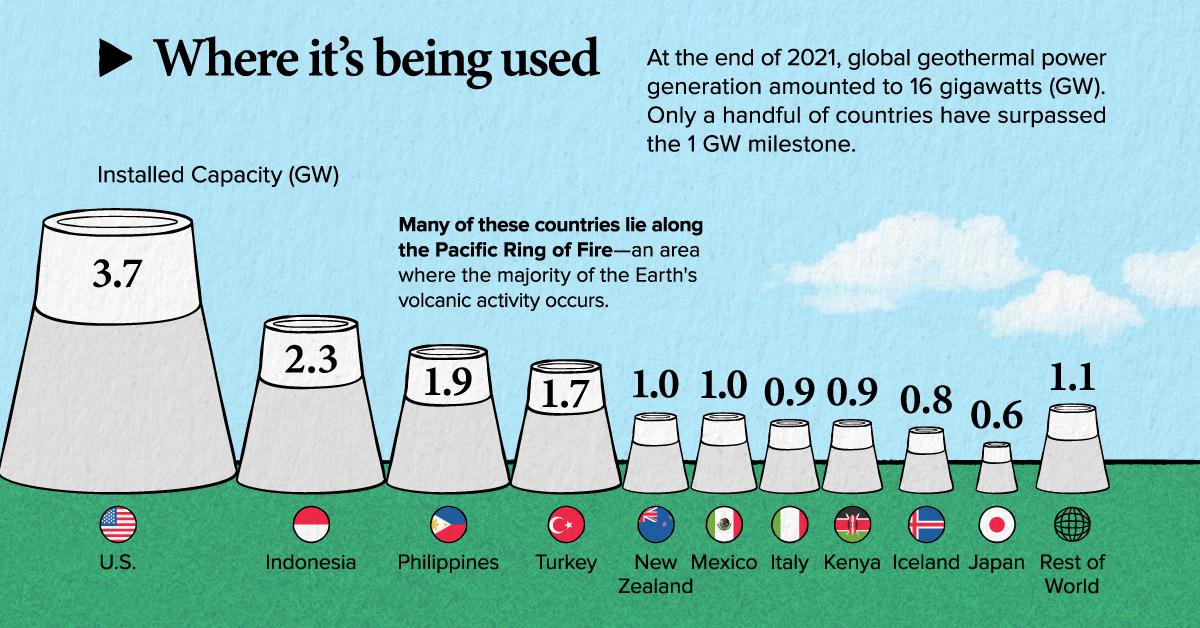
    Geothermal power plants harness energy in Earth's interior to generate electricity and provide direct heating for homes.

  • Posted by

    Heat pumps can operate at efficiencies beyond 100% when moving thermal energy to regulate a space's temperature.

  • Posted by

    If they could be built, antimatter drives, which run on energy released from the collision of matter and antimatter particles, would be the most efficient engines in existence.

  • Posted by

    Solar energy alone can fully power the world if transmission hurdles can be resolved

    When light strikes a photovoltaic cell, electrons are loosened, which travel through a circuit where the energy can be used. Distributing energy from high solar intensity regions and storing energy for non-daylight hours is logistically challenging and costly.

  • Posted by

    If two strands of conducting materials are connected at two junctions, electricity can be generated if one junction is heated while the other is cooled—a phenomenon known as the Seebeck effect.

  • Posted by

    Iron rusts in the presence of water and oxygen because these ingredients enable the metal atoms to release energy and enter a more stable state.

  • Posted by

    Metabolism, a collection of chemical reactions at the cellular level, processes food and converts it into energy to power the body.

  • Posted by

    Some renewable energy sources may weaken the resiliency of electric grids by removing outage buffers provided by coal- and natural gas-fired plants, which provide the system with more time to find a new power source if a plant goes down.

  • Posted by

    Watch underwater photosynthesis make water look like champagne

    In shallow waters where sunlight can reach, photosynthetic reactions absorb water and dissolved carbon dioxide, producing bubbles of oxygen at the surface of plants. As these bubbles rise to the water's surface, a fizzy appearance is created.

You've reached the end.