Posted by Phoebe BainAug 27Open-end and closed-end mutual funds differ in how they create and distribute shares.Show 3 more findings 11:53Open-End and Closed-End Mutual FundsKhan Academyhttps://www.youtube.com/watch?v=_ZJary7yZyU
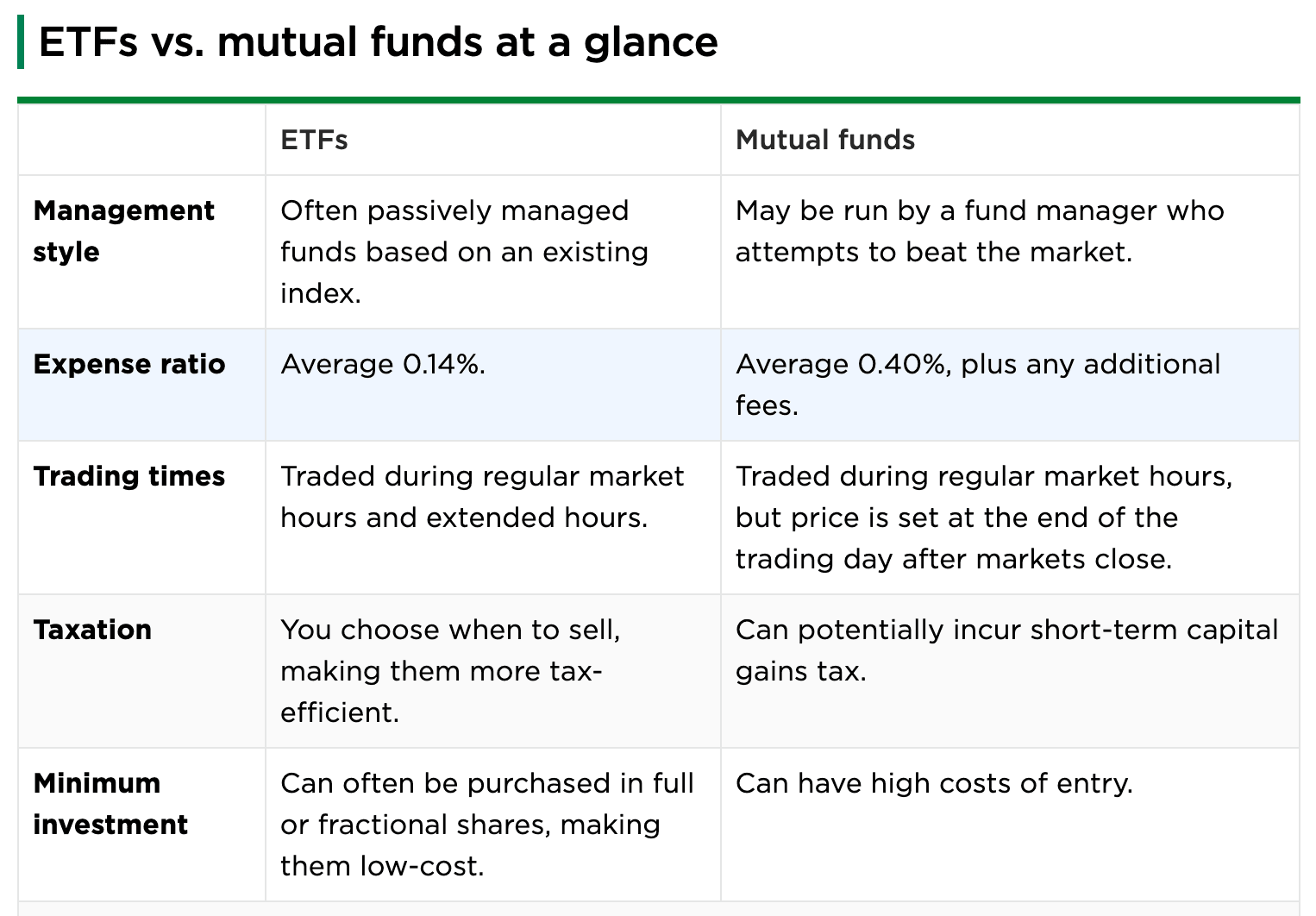
Posted by Phoebe BainAug 27ETFs and mutual funds both pool money into a basket of investments—but the key difference between them is that mutual funds trade just once per day after the market closes, while ETFs trade like stocks throughout the day at fluctuating prices.Show 4 more findings ZoomETF Vs. Mutual Fund: Which Is Right For You? | BankrateNerdWallethttps://www.nerdwallet.com/investing/learn/etfs-vs-mutual-funds
Posted by Phoebe BainAug 27Mutual funds invest in multiple different companies with money from many investors, while an individual stock invests in one company with funds from a single investor. Show 4 more findings ZoomMutual Funds vs. Stocks: Which Are Better Investments?US Newshttps://money.usnews.com/investing/articles/mutual-funds-vs-stocks-which-are-better-investments
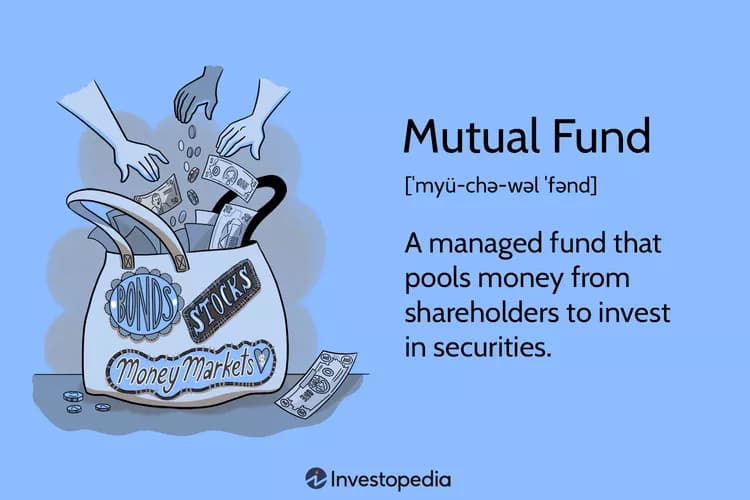
Posted by Phoebe BainAug 27Mutual funds are categorized as stock, bond, money market, and target-date funds.Show 5 more findings ZoomInvesting in Mutual Funds: What They Are and How They WorkInvestopediahttps://www.investopedia.com/terms/m/mutualfund.asp#toc-types-of-mutual-funds
Posted by Phoebe BainAug 27Mutual fund share classes are rankings of different types of services for investors.Show 3 more findings ZoomUnderstanding Mutual Fund Share ClassesKiplingerhttps://www.kiplinger.com/investing/mutual-funds/understanding-mutual-fund-share-classes
Posted by Phoebe BainJul 7Mutual funds pool money to create larger investment opportunities with higher returns for anyone who initially invests in the fund.Show 2 more findings 5:391440 Originalshttps://www.youtube.com/watch?si=sg_PI6zA3FbE8ojM&v=PF6hf2qkhZg&feature=youtu.be
Posted by Phoebe BainSep 24, 2024How mutual funds workMutual funds function similarly to other types of investments. If you want to invest, you go through a brokerage firm. However, they have a few key differentiators. Most are actively managed by a broker instead of passively earning you returns. Plus, they can carry some hefty fees. ZoomWhat are mutual funds? - Fidelityhttps://www.fidelity.com/learning-center/investment-products/mutual-funds/what-are-mutual-funds
Posted by Phoebe BainAug 27Mutual funds come with a few associated fees.Show 3 more findings ZoomNerdWallethttps://www.nerdwallet.com/article/investing/mutual-fund-fees-what-investors-need-to-know#:~:text=Mutual%20fund%20expense%20ratios%20are,are%20typically%20the%20cheapest%20funds.
Posted by Phoebe BainAug 27Investing in mutual funds can give you access to a wide range of securities, such as stocks and bonds, with just a single investment. Show 4 more findings 5:39How Mutual Funds Work1440 Originalshttps://youtu.be/PF6hf2qkhZg?si=sg_PI6zA3FbE8ojM
Posted by Phoebe BainAug 27Mutual fund investors typically must pay a variety of different types of taxes associated with their investment, unless the funds are within tax-advantaged accounts like a 401(k) or IRA.Show 2 more findings ZoomHow to Invest in Mutual FundsThe Wall Street Journalhttps://www.wsj.com/buyside/personal-finance/investing/how-to-invest-in-mutual-funds
Posted by Phoebe BainAug 27Read about the pros and cons of mutual funds.Show 3 more findings ZoomMutual Funds: What They Are and How They WorkNerdWallethttps://www.nerdwallet.com/article/investing/mutual-funds
Posted by Phoebe BainJul 7Index funds are typically structured as either mutual funds or exchange-traded funds, but investors can manually recreate an index through 'direct indexing.'Show 5 more findings 4:49What Are Index Funds?Charles Schwabhttps://www.youtube.com/watch?v=qO3v3F31Vow
Posted by Phoebe BainAug 27The price of a mutual fund is based on its net asset value (or NAV).Show 2 more findings ZoomNet Asset Value | Investor.govInvestor.govhttps://www.investor.gov/introduction-investing/investing-basics/glossary/net-asset-value
Posted by Phoebe BainApr 8Contrary to popular belief, random investments can outperform managed funds.Show 4 more findingsLearn How Random Investments Can Outperform Managed FundsNerdWallet's Smart Money Podcasthttps://open.spotify.com/episode/1C1FxiWlbCdZxQLWUty8Nu
Posted by Phoebe BainSep 25, 2025Companies often use different share classes, like Class A or Class B, to structure ownershipShare classes refer to specific types of company stock that are distinguished by the rights they grant, such as voting power and dividend access.Understanding Class of Shares: Types, Voting Rights, and DividendsInvestopediahttps://www.investopedia.com/terms/c/class.asp
Posted by Phoebe BainMay 4What's the difference between a stock and a share?While the words "stock" and "share" are often used interchangeably in casual conversation, they have different meanings. For instance, "stock" is more general, whereas "share" is more precise.Shares vs Stocks: What’s the Difference?https://www.sofi.com/learn/content/shares-vs-stocks/
Posted by Phoebe BainAug 27Mutual funds were first created and sold in the US in 1924.Show 2 more findings ZoomThe Evolution of Mutual Funds: From Dutch Origins to Modern InvestmentInvestopediahttps://www.investopedia.com/articles/mutualfund/05/mfhistory.asp
Posted by Meher QazilbashAug 27ETFs and mutual funds are both taxed on capital gains and on dividends.Show 3 more findings ZoomTax Efficiency: ETF vs Mutual FundTurboTaxhttps://turbotax.intuit.com/tax-tips/investments-and-taxes/tax-efficiency-etf-vs-mutual-fund/L1sYF0Ec3
Posted by Meher QazilbashMar 28, 2025Retail investors are average joes, while institutional investors often move billions of dollars a dayRetail investors often trade 100 shares at a time, while institutional investors trade 10,000 or more. The biggest difference is that, unlike retail investors, institutional investors are professionals who are trading someone else’s money. ZoomInstitutional Investors vs. Retail Investors: What’s the Difference?Investopediahttps://www.investopedia.com/ask/answers/06/institutionalinvestor.asp
Posted by Phoebe BainAug 27Figure out what type of mutual fund is right for you with a tool that lets you compare different mutual funds, from rates to returns. ZoomFund Analyzer | Tools & CalculatorsFINRAhttps://tools.finra.org/fund_analyzer/
Posted by Phoebe BainJun 26'The stock market' can be loosely defined as a set of exchanges and other places where shares of public companies are bought and sold. Show 3 more findings 3:10Stock Market Explained in 3 Minutes1440 Originalshttps://youtu.be/jXLGDe5Y1j4
Posted by Phoebe BainFeb 20Explore the differences between private equity, venture capital, and hedge fundsPrivate equity firms focus on buying and improving private companies with the intent to sell them for profit or take them public. Venture capital is technically a form of private equity in which investors focus on startups and generally don't seek majority control of the company. Hedge funds are pooled investments for sophisticated investors that pursue a wide range of often complex strategies.https://guides.library.harvard.edu/law/private_equity#s-lg-page-section-6740464
Posted by Phoebe BainMay 4Visualize the differences between the New York Stock Exchange and the Nasdaq.Show 3 more findings ZoomVisual Capitalisthttps://www.visualcapitalist.com/difference-nyse-nasdaq/
Posted by Phoebe BainOct 9, 2024Periodically, the Federal Open Market Committee decides whether to raise, hold, or lower the federal funds rateThe federal funds rate is the interest rate at which banks lend their excess funds through the Fed. This influences what banks are willing to pay consumers for their deposits in savings and CD accounts. Typically, the higher the federal funds rate, the higher the interest rates on CDs. ZoomHow the Fed Implements Monetary Policy with Its Tools: In Plain EnglishFederal Reserve Bank of St. Louishttps://www.stlouisfed.org/in-plain-english/the-fed-implements-monetary-policy
Posted by Phoebe BainApr 9Stock options give investors the right to buy or sell a stock at an agreed-upon price and dateThere are two types of options: calls, which are bets that a stock will rise (or not rise past a certain point), and puts, bets that a stock will fall (or not fall past a specific level). While stock options give investors the right to do these trades, they do not obligate buyers to follow through with them—sellers, on the other hand, must perform the option if it is exercisedWhat Are Stock Options? Parameters and Trading, With ExamplesInvestopediahttps://www.investopedia.com/terms/s/stockoption.asp
Posted by Phoebe BainAug 20, 2024The difference between stocks and bondsWhile more people invest in stocks than bonds, experts say owning both can make for a healthier portfolio. Stocks are considered a riskier investment than bonds, but tend to have higher returns. While bonds might be the safer option, they won’t grow your wealth as quickly. ZoomThe Wall Street Journalhttps://www.wsj.com/buyside/personal-finance/investing/bonds-vs-stocks
Posted by Phoebe BainApr 29Retail investors are individuals who trade stock for themselvesInstitutional investors, on the other hand, are investing for someone else. There are big differences between the two, one being that institutional investors can be granted certain special treatment (like being able to purchase IPOs right away). ZoomIndividual Investors Vs. Institutional Investors: How They Differ | BankrateSofihttps://www.sofi.com/learn/content/institutional-vs-retail-investors/
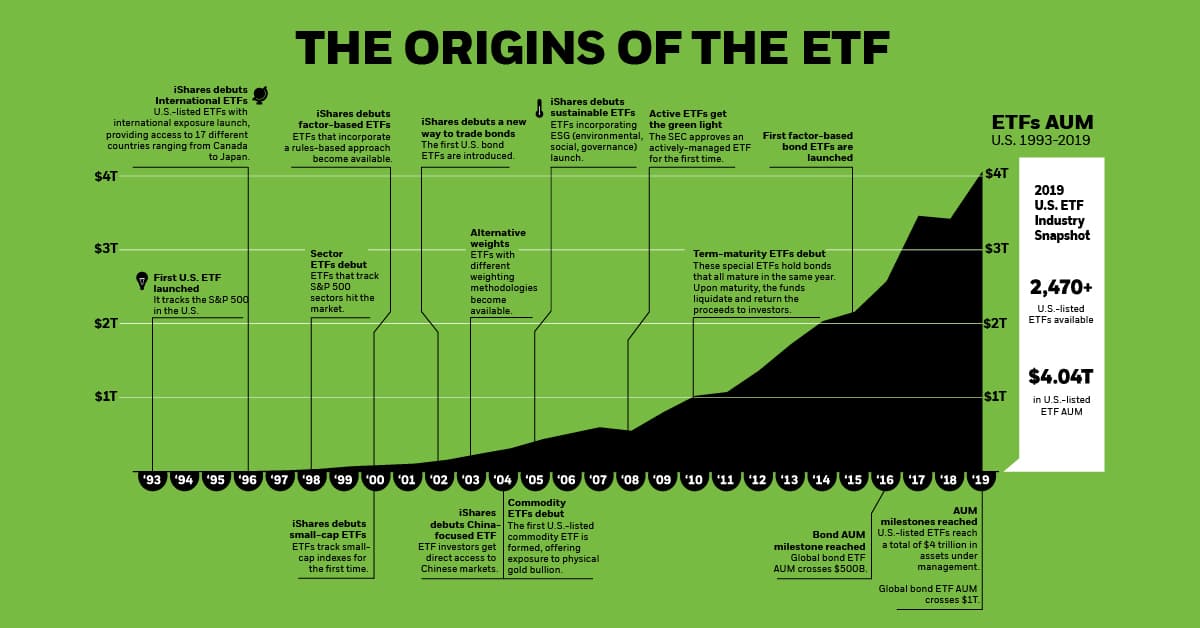
Posted by Meher QazilbashJan 21, 2020ETFs were first created as an alternative to mutual funds, combining the diversification benefits of a mutual fund with the ability to trade throughout the day on a stock exchange. Show 4 more findings ZoomThe 26-Year History of ETFs, in One InfographicVisual Capitalisthttps://www.visualcapitalist.com/sp/the-26-year-history-of-etfs-in-one-infographic/
Posted by Phoebe BainNov 13, 2024Shares are parts of a stock that represent ownership of a companyShares are traded on the stock market. Once you buy a single share of a company, you are considered a shareholder of that company and may have certain rights as a partial owner, such as voting on business decisions. ZoomWhat Are Shares? How They Compare to StocksInvestopediahttps://www.investopedia.com/terms/s/shares.asp#:~:text=Shares%20are%20units%20of%20stocks,raise%20capital%20for%20the%20company.
Posted by August MoonMay 13Hedge funds make money from imposing steep fees on investors, as well as from investment performanceHedge funds often operate on a "2 and 20" model: Investors pay fund managers a 2% management fee, and the hedge fund keeps 20% of their profits. (The 2% is imposed annually, irrespective of performance.) Hedge funds are known for chasing big returns—and taking big risks to get them. This explainer not only breaks down how they work in detail, but also the strategy first introduced in 1949 that still shapes hedge fund investing today. Show 2 more findings 1:03How Hedge Funds Work1440 Originalshttps://www.youtube.com/watch?v=ENAmVLKUbsA
Posted by Phoebe BainAug 27Explore a list of the world's largest mutual funds. Show 3 more findings ZoomTop 5 Largest Mutual Funds: Maximize Your InvestmentsInvestopediahttps://www.investopedia.com/investing/biggest-mutual-funds/
Posted by Phoebe BainAug 20, 2024There are three main ways to start investing in the bond marketInvest in the boind market through a brokerage, mutual fund or ETF, or the US government. Each has different steps and terms to follow, from starting rates to opening specific accounts. Some bonds are relatively easy to purchase, but the process differs depending on the type of bond you want. ZoomHow to Buy Bonds: A Complete GuideBusiness Insiderhttps://www.businessinsider.com/personal-finance/investing/how-to-buy-bonds
Posted by Phoebe BainAug 20, 2024Investors can buy three main types of bonds: government, corporate, and municipalEach type has variations of its bond offerings with different interest rates, loan lengths, maturity dates, and terms. Each type also carries its own risks and rewards. Zoomhttps://www.investor.gov/introduction-investing/investing-basics/investment-products/bonds-or-fixed-income-products/bonds
Posted by Meher QazilbashMay 29, 2025Different types of endowments, explainedThis Investopedia article provides a comprehensive overview of financial endowments—donations made to nonprofit institutions like universities, museums, or hospitals. It explains how endowments are structured, the various types (such as restricted and quasi-endowments), and how they are managed to support an institution's mission over time. ZoomUnderstanding Endowments: Types and Policies That Govern ThemInvestopediahttps://www.investopedia.com/terms/e/endowment.asp#toc-where-do-endowments-get-their-money
Posted by Phoebe BainMar 31Some private credit funds trade on the stock marketThese funds, which trade at market prices, are called "public BDCs," which stands for "business development companies." For instance, the global alternative investment manager Ares Management Corp. has a public BDC.https://privatebank.jpmorgan.com/latam/en/insights/markets-and-investing/private-credit-under-the-microscope-separating-headlines-from-fundamentals
Posted by Phoebe BainSep 11, 2025When compared to stocks and bonds, alternative investments are often less regulatedAlternative investments are also often less liquid than traditional investments; they carry unique risk, return, and tax considerations. https://online.hbs.edu/blog/post/what-are-alternative-investments
Posted by Phoebe BainMar 26Many hedge funds use short selling as an alternative investment strategy to offset riskHedge funds typically use a "long-short" investment strategy—where funds diversify by investing in a mix of long positions and short positions—to balance risk and maximize profits. Including short positions gives hedge funds some protection against downturns in the market, although the strategy can have uncapped losses for investors. 5:50https://www.youtube.com/watch?v=yCxjWmAusUo
Posted by Meher QazilbashAug 4, 2025Test your ETF knowledge A 10-question quiz from the SEC allows investors to test their basic knowledge about exchange-traded funds and their investing counterparts, mutual funds. Here’s a sample question: Is the past performance of a fund a good indicator of future results? (Hint, the answer is no). ZoomMutual Funds and ETFs – Investing Quiz | Investor.gov(link is external)(link is external)https://www.investor.gov/additional-resources/spotlight/investing-quizzes/mutalfund-etfs-quiz