Posted by Phoebe BainAug 27Mutual fund share classes are rankings of different types of services for investors.Show 3 more findings ZoomUnderstanding Mutual Fund Share ClassesKiplingerhttps://www.kiplinger.com/investing/mutual-funds/understanding-mutual-fund-share-classes
Posted by Phoebe BainSep 25, 2025Companies often use different share classes, like Class A or Class B, to structure ownershipShare classes refer to specific types of company stock that are distinguished by the rights they grant, such as voting power and dividend access.Understanding Class of Shares: Types, Voting Rights, and DividendsInvestopediahttps://www.investopedia.com/terms/c/class.asp
Posted by Phoebe BainAug 27Mutual funds come with a few associated fees.Show 3 more findings ZoomNerdWallethttps://www.nerdwallet.com/article/investing/mutual-fund-fees-what-investors-need-to-know#:~:text=Mutual%20fund%20expense%20ratios%20are,are%20typically%20the%20cheapest%20funds.
Posted by Phoebe BainAug 27Mutual funds are categorized as stock, bond, money market, and target-date funds.Show 5 more findings ZoomInvesting in Mutual Funds: What They Are and How They WorkInvestopediahttps://www.investopedia.com/terms/m/mutualfund.asp#toc-types-of-mutual-funds
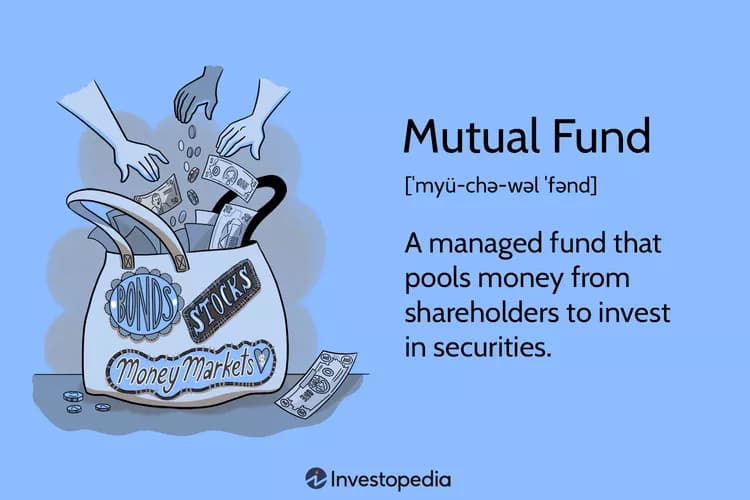
Posted by Phoebe BainJul 7Mutual funds pool money to create larger investment opportunities with higher returns for anyone who initially invests in the fund.Show 2 more findings 5:391440 Originalshttps://www.youtube.com/watch?si=sg_PI6zA3FbE8ojM&v=PF6hf2qkhZg&feature=youtu.be
Posted by Phoebe BainAug 27Investing in mutual funds can give you access to a wide range of securities, such as stocks and bonds, with just a single investment. Show 4 more findings 5:39How Mutual Funds Work1440 Originalshttps://youtu.be/PF6hf2qkhZg?si=sg_PI6zA3FbE8ojM
Posted by Phoebe BainAug 27Mutual fund investors typically must pay a variety of different types of taxes associated with their investment, unless the funds are within tax-advantaged accounts like a 401(k) or IRA.Show 2 more findings ZoomHow to Invest in Mutual FundsThe Wall Street Journalhttps://www.wsj.com/buyside/personal-finance/investing/how-to-invest-in-mutual-funds
Posted by Phoebe BainSep 24, 2024How mutual funds workMutual funds function similarly to other types of investments. If you want to invest, you go through a brokerage firm. However, they have a few key differentiators. Most are actively managed by a broker instead of passively earning you returns. Plus, they can carry some hefty fees. ZoomWhat are mutual funds? - Fidelityhttps://www.fidelity.com/learning-center/investment-products/mutual-funds/what-are-mutual-funds
Posted by Phoebe BainAug 27Read about the pros and cons of mutual funds.Show 3 more findings ZoomMutual Funds: What They Are and How They WorkNerdWallethttps://www.nerdwallet.com/article/investing/mutual-funds
Posted by Phoebe BainAug 27Mutual funds invest in multiple different companies with money from many investors, while an individual stock invests in one company with funds from a single investor. Show 4 more findings ZoomMutual Funds vs. Stocks: Which Are Better Investments?US Newshttps://money.usnews.com/investing/articles/mutual-funds-vs-stocks-which-are-better-investments
Posted by Phoebe BainAug 27Open-end and closed-end mutual funds differ in how they create and distribute shares.Show 3 more findings 11:53Open-End and Closed-End Mutual FundsKhan Academyhttps://www.youtube.com/watch?v=_ZJary7yZyU
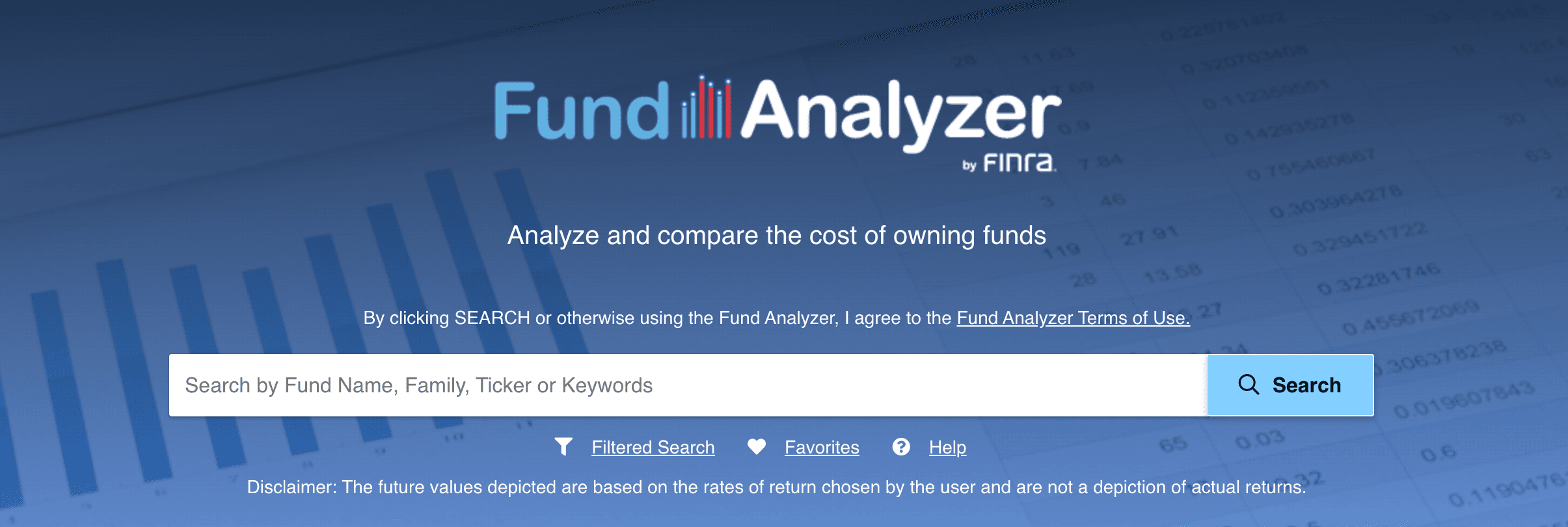
Posted by Phoebe BainAug 27Figure out what type of mutual fund is right for you with a tool that lets you compare different mutual funds, from rates to returns. ZoomFund Analyzer | Tools & CalculatorsFINRAhttps://tools.finra.org/fund_analyzer/
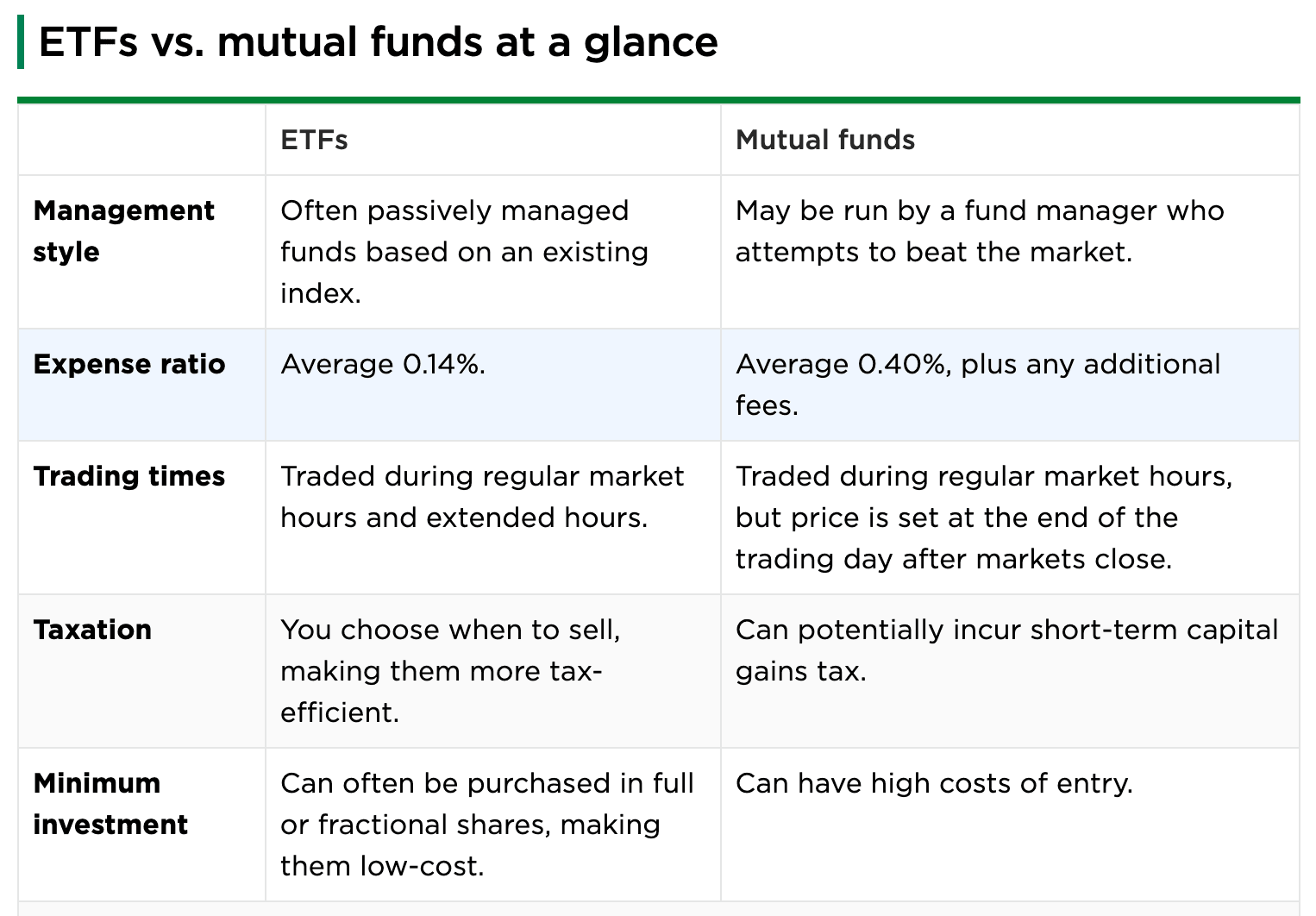
Posted by Phoebe BainAug 27ETFs and mutual funds both pool money into a basket of investments—but the key difference between them is that mutual funds trade just once per day after the market closes, while ETFs trade like stocks throughout the day at fluctuating prices.Show 4 more findings ZoomETF Vs. Mutual Fund: Which Is Right For You? | BankrateNerdWallethttps://www.nerdwallet.com/investing/learn/etfs-vs-mutual-funds
Posted by Phoebe BainApr 8Contrary to popular belief, random investments can outperform managed funds.Show 4 more findingsLearn How Random Investments Can Outperform Managed FundsNerdWallet's Smart Money Podcasthttps://open.spotify.com/episode/1C1FxiWlbCdZxQLWUty8Nu
Posted by Phoebe BainAug 27The term 'securities' refers to different types of investments, such as stocks or bonds. Show 3 more findings ZoomSecurities DefinedUS Newshttps://money.usnews.com/investing/term/securities
Posted by Phoebe BainJul 7Index funds are typically structured as either mutual funds or exchange-traded funds, but investors can manually recreate an index through 'direct indexing.'Show 5 more findings 4:49What Are Index Funds?Charles Schwabhttps://www.youtube.com/watch?v=qO3v3F31Vow
Posted by Phoebe BainAug 27Mutual funds in seven broad categories averaged a 13.1% annual return in 2023.Show 3 more findings ZoomWhat Is the Average Mutual Fund Return?The Balancehttps://www.thebalancemoney.com/what-is-the-average-mutual-fund-return-4773782
Posted by Phoebe BainJul 7The 'Big Three' asset managers—Vanguard, State Street, and BlackRock—collectively manage more than $30T in assets and are the largest shareholders in roughly 88% of all the companies listed on the S&P 500.Show 3 more findingsBlackRock, Vanguard, State Street: The Big Three ExplainedInstitute of Business & Financehttps://icfs.com/specialists-desk/big-three-blackrock-vanguard-state-street
Posted by Phoebe BainAug 27Mutual funds were first created and sold in the US in 1924.Show 2 more findings ZoomThe Evolution of Mutual Funds: From Dutch Origins to Modern InvestmentInvestopediahttps://www.investopedia.com/articles/mutualfund/05/mfhistory.asp
Posted by Phoebe BainAug 27Explore a list of the world's largest mutual funds. Show 3 more findings ZoomTop 5 Largest Mutual Funds: Maximize Your InvestmentsInvestopediahttps://www.investopedia.com/investing/biggest-mutual-funds/
Posted by Phoebe BainAug 20, 2024Investors can buy three main types of bonds: government, corporate, and municipalEach type has variations of its bond offerings with different interest rates, loan lengths, maturity dates, and terms. Each type also carries its own risks and rewards. Zoomhttps://www.investor.gov/introduction-investing/investing-basics/investment-products/bonds-or-fixed-income-products/bonds
Posted by Meher QazilbashAug 4, 2025Test your ETF knowledge A 10-question quiz from the SEC allows investors to test their basic knowledge about exchange-traded funds and their investing counterparts, mutual funds. Here’s a sample question: Is the past performance of a fund a good indicator of future results? (Hint, the answer is no). ZoomMutual Funds and ETFs – Investing Quiz | Investor.gov(link is external)(link is external)https://www.investor.gov/additional-resources/spotlight/investing-quizzes/mutalfund-etfs-quiz
Posted by Meher QazilbashAug 27ETFs and mutual funds are both taxed on capital gains and on dividends.Show 3 more findings ZoomTax Efficiency: ETF vs Mutual FundTurboTaxhttps://turbotax.intuit.com/tax-tips/investments-and-taxes/tax-efficiency-etf-vs-mutual-fund/L1sYF0Ec3
Posted by Phoebe BainAug 27The price of a mutual fund is based on its net asset value (or NAV).Show 2 more findings ZoomNet Asset Value | Investor.govInvestor.govhttps://www.investor.gov/introduction-investing/investing-basics/glossary/net-asset-value
Posted by August MoonMay 13Hedge funds make money from imposing steep fees on investors, as well as from investment performanceHedge funds often operate on a "2 and 20" model: Investors pay fund managers a 2% management fee, and the hedge fund keeps 20% of their profits. (The 2% is imposed annually, irrespective of performance.) Hedge funds are known for chasing big returns—and taking big risks to get them. This explainer not only breaks down how they work in detail, but also the strategy first introduced in 1949 that still shapes hedge fund investing today. Show 2 more findings 1:03How Hedge Funds Work1440 Originalshttps://www.youtube.com/watch?v=ENAmVLKUbsA
Posted by Meher QazilbashMar 28, 2025Retail investors are average joes, while institutional investors often move billions of dollars a dayRetail investors often trade 100 shares at a time, while institutional investors trade 10,000 or more. The biggest difference is that, unlike retail investors, institutional investors are professionals who are trading someone else’s money. ZoomInstitutional Investors vs. Retail Investors: What’s the Difference?Investopediahttps://www.investopedia.com/ask/answers/06/institutionalinvestor.asp
Posted by Phoebe BainSep 11, 2025Alternative investments can be sorted into seven major categories, according to some expertsThese categories include real estate, private equity, private debt, hedge funds, collectibles, and more. ZoomThe 7 Alternative Investments You Should Know | HBS Onlinehttps://online.hbs.edu/blog/post/types-of-alternative-investments
Posted by Phoebe BainNov 13, 2024Shares are parts of a stock that represent ownership of a companyShares are traded on the stock market. Once you buy a single share of a company, you are considered a shareholder of that company and may have certain rights as a partial owner, such as voting on business decisions. ZoomWhat Are Shares? How They Compare to StocksInvestopediahttps://www.investopedia.com/terms/s/shares.asp#:~:text=Shares%20are%20units%20of%20stocks,raise%20capital%20for%20the%20company.
Posted by Phoebe BainSep 11, 2025Not all alternative investments are easy to invest inFor instance, some alternative investments are only available to accredited investors or high-net-worth individuals. Others have relatively high fees compared to traditional investments. Investopediahttps://www.investopedia.com/articles/financial-advisors/092515/alternative-investments-look-pros-cons.asp
Posted by Phoebe BainApr 29Retail investors are individuals who trade stock for themselvesInstitutional investors, on the other hand, are investing for someone else. There are big differences between the two, one being that institutional investors can be granted certain special treatment (like being able to purchase IPOs right away). ZoomIndividual Investors Vs. Institutional Investors: How They Differ | BankrateSofihttps://www.sofi.com/learn/content/institutional-vs-retail-investors/
Posted by Phoebe BainOct 24, 2025Angel investors often come together as a syndicateStartups raise money in different rounds from investors that include their friends and family, angels, and venture capital funds. These types of investors serve different purposes.Angel investors often come together as a syndicatehttps://www.sec.gov/resources-small-businesses/capital-raising-building-blocks/early-stage-investors
Posted by Phoebe BainMay 28Dual-class stock structures separate equity and decision-making authorityIn the past few decades, dual-class stock structures have become an increasingly popular way for companies to raise capital in public markets without allocating traditional shareholder voting rights. Meta, Estée Lauder, and The New York Times are companies that are famously dual-class. 3:50Fortune Explains: Dual Class Shares I FortuneFortunehttps://www.youtube.com/watch?v=Egcv-WIOEPY
Posted by Teddy BurkhardtDec 31, 202590 percent of active managers of large public funds underperformHigh fees tend to eat away at whatever edge professional managers accrue, resulting in most such funds performing worse than their underlying benchmark indexes like the S&P 500. ZoomOver 90% of Fund Managers Are (Still) Underperforming Their Benchmarkshttps://www.ancapfinancial.com/post/over-90-of-fund-managers-are-still-underperforming-their-benchmarks
Posted by Meher QazilbashJul 22, 2025One $100 investment in the Medallion Fund skyrockets over timeThe Medallion Fund, the famously secretive quant fund that invests billions of dollars for the partners and employees of a single firm with a legendary track record, has trounced the market for more than three decades. While its results are an extreme outlier, this visualization showcases the power of compound interest. ZoomThe Growth of $100 Invested in Jim Simons’ Medallion FundVisual Capitalisthttps://www.visualcapitalist.com/growth-of-100-invested-in-jim-simons-medallion-fund/
Posted by Phoebe BainFeb 20Explore the differences between private equity, venture capital, and hedge fundsPrivate equity firms focus on buying and improving private companies with the intent to sell them for profit or take them public. Venture capital is technically a form of private equity in which investors focus on startups and generally don't seek majority control of the company. Hedge funds are pooled investments for sophisticated investors that pursue a wide range of often complex strategies.https://guides.library.harvard.edu/law/private_equity#s-lg-page-section-6740464
Posted by Phoebe BainAug 21, 2024A bond ETF lets someone invest in multiple bonds through one single fundThere are risks, there are also major perks to buying a bond ETF, like the ability to purchase bonds on the stock market. ZoomWhat Is A Bond ETF And Is It A Good Investment? | BankrateBankratehttps://www.bankrate.com/investing/bond-etfs-portfolio-benefits/
Posted by Phoebe BainSep 11, 2025People often invest in alternative investments to diversify their portfoliosBecause alternatives often have little correlation with traditional investments like stocks and bonds, adding them to a traditional portfolio can reduce its overall risk exposure.https://www.preqin.com/academy/lesson-1-alternative-assets/why-invest-in-alternatives