Back

Posted by

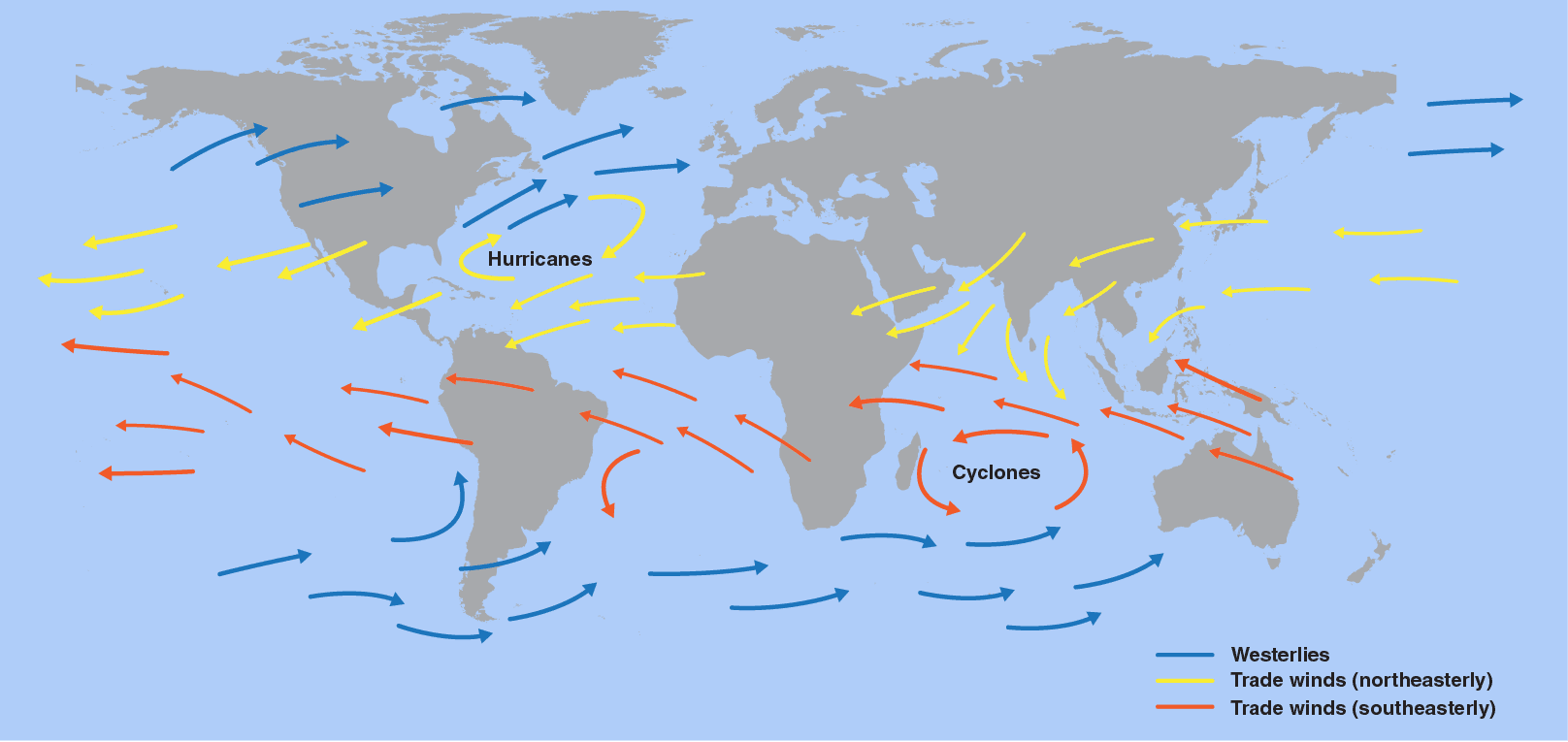
Surface ocean currents are primarily driven by wind, tides, and Earth's rotation, while deep-ocean currents are driven by differences in temperature and salt concentration that create vertical circulation.

Findings

Additional insights we found via TED-Ed

  1. Because the sun warms the equator more than the poles due to Earth's curved surface, warmer ocean currents move toward the poles while colder water moves toward the equator, driven by wind.

  2. The Earth's rotation causes material near the equator to move faster than at the poles, which causes surface currents moving between the equator and the poles to turn and form loops called gyres.

  3. At the poles, seawater expels its salt when freezing, creating denser, saltier water around ice that sinks, while less dense, less salty water rises from deep within the ocean, forming a pattern of deep-ocean currents called thermohaline circulation.

  4. Together, surface ocean movements and the thermohaline circulation form a planet-wide system of currents called the global conveyor belt, which distributes thermal energy and nutrients from the deep ocean across the planet.

  5. The global conveyor belt flows a few centimeters per second, meaning a single drop of water can take about a thousand years to return to where it started.

  6. The increased melting of ice sheets and glaciers due to global warming gradually undoes the salinity differential created by freezing water at the poles, thereby disrupting thermohaline circulation, and is thought to contribute to the weakening of the global conveyor belt.

Similar Posts

Here’s what we found related to above. Click through to dive even deeper.

You've reached the end.