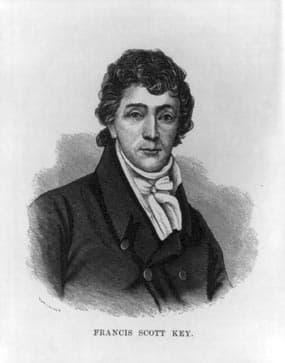
Posted by Meher QazilbashJun 25Francis Scott Key was opposed to slavery in principle, though he held slaves and was opposed to abolition.Show 2 more findings ZoomFrancis Scott Key: One of the anti-slavery movement’s great villainsThe Conversationhttps://theconversation.com/francis-scott-key-one-of-the-anti-slavery-movements-great-villains-165297
Posted by Meher QazilbashJun 25Francis Scott Key initially opposed the War of 1812, the war that eventually inspired him to write the national anthem.Show 2 more findings ZoomFrancis Scott Key, the Reluctant PatriotSmithsonian Magazinehttps://www.smithsonianmag.com/history/francis-scott-key-the-reluctant-patriot-180937178/
Posted by Meher QazilbashJun 25Francis Scott Key was a prominent lawyer before he became known as the writer of the national anthem.Show 2 more findings ZoomFrancis Scott Key - Fort McHenry National Monument and Historic Shrine (U.S. National Park Service)National Park Servicehttps://www.nps.gov/fomc/learn/historyculture/francis-scott-key.htm
Posted by Jeremy CronigMar 20Adams was a vocal opponent of slavery during the Revolutionary eraIn letters written during the Revolution, Adams clearly opposed slavery—calling it an unjust scheme and highlighting the contradiction of fighting for freedom while enslaving others. Read it in her own words here in a letter to John Adams.Founders Online: Abigail Adams to John Adams, 22 September 1774National Archiveshttps://founders.archives.gov/documents/Adams/04-01-02-0107
Posted by Kevin KearneyMay 22, 2025Whitman's antislavery writing often focused on white AmericansThe poet was openly opposed to slavery, though some of his writing focuses on abolition’s benefits for white people rather than for the lives of the enslaved. Zoom Racial Attitudes | Whitman Archive https://whitmanarchive.org/item/encyclopedia_entry44
Posted by Jeremy CronigJan 28Later in life, Washington privately grew critical of slavery—while continuing to uphold it publiclyHis private letters increasingly described slavery as unjust and incompatible with Republican ideals, and his final will ordered the eventual emancipation of those he legally owned. At the same time, he enforced slave labor, signed pro-slavery laws, and took no public action to dismantle the system.https://encyclopediavirginia.org/entries/washington-george-and-slavery/
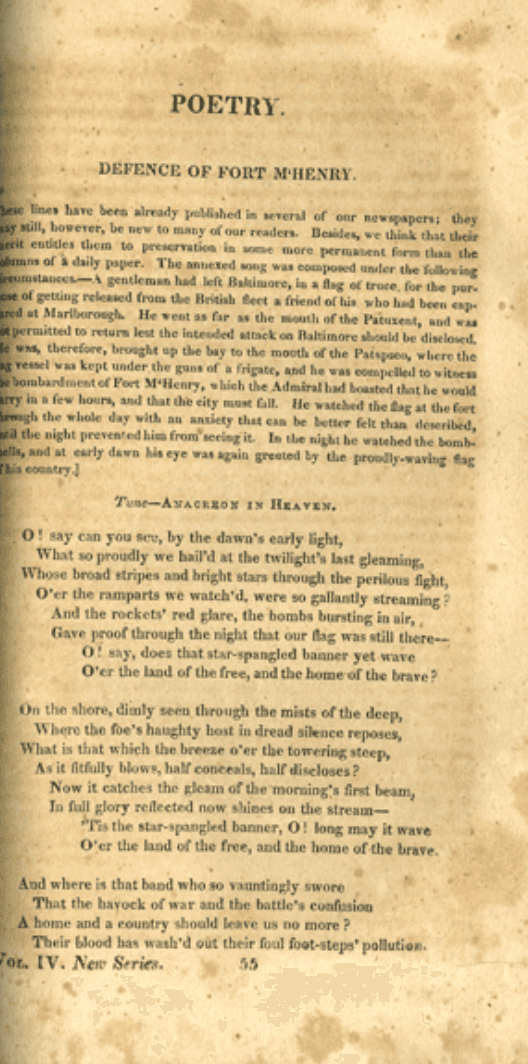
Posted by Meher QazilbashJun 30, 2025The enduring relevance of ‘The Star-Spangled Banner’Some critics have argued that Key’s past as a slaveholder and his lyrics demeaning slaves mean the country should select a new national anthem. Mark Clague, a professor of musicology, understands that perspective, but suggests Key’s song, despite its warts, is still a fitting anthem. ZoomThe Problem and Potential of “The Star-Spangled Banner” | Chorus Americahttps://chorusamerica.org/publications/blog/problem-potential-%25E2%2580%259C-star-spangled-banner%25E2%2580%259D
Posted by Jeremy CronigFeb 11Hamilton opposed slavery in principle but participated in the institutionAlexander Hamilton spoke against slavery, helped found the New York Manumission Society, and supported gradual emancipation while also participating in transactions involving enslaved people through his in-laws—and possibly within his own household, though historians debate this.HISTORYhttps://www.history.com/articles/alexander-hamilton-slavery-facts
Posted by Jeremy CronigJan 19Madison condemned slavery in theory while owning slavesJames Madison argued that slavery violated Revolutionary ideals. Yet, he inherited and managed more than 100 enslaved people to operate the family's 3,000-acre plantation, brought enslaved laborers to the White House, and later sold them for personal profit.https://slavery.princeton.edu/stories/james-madison
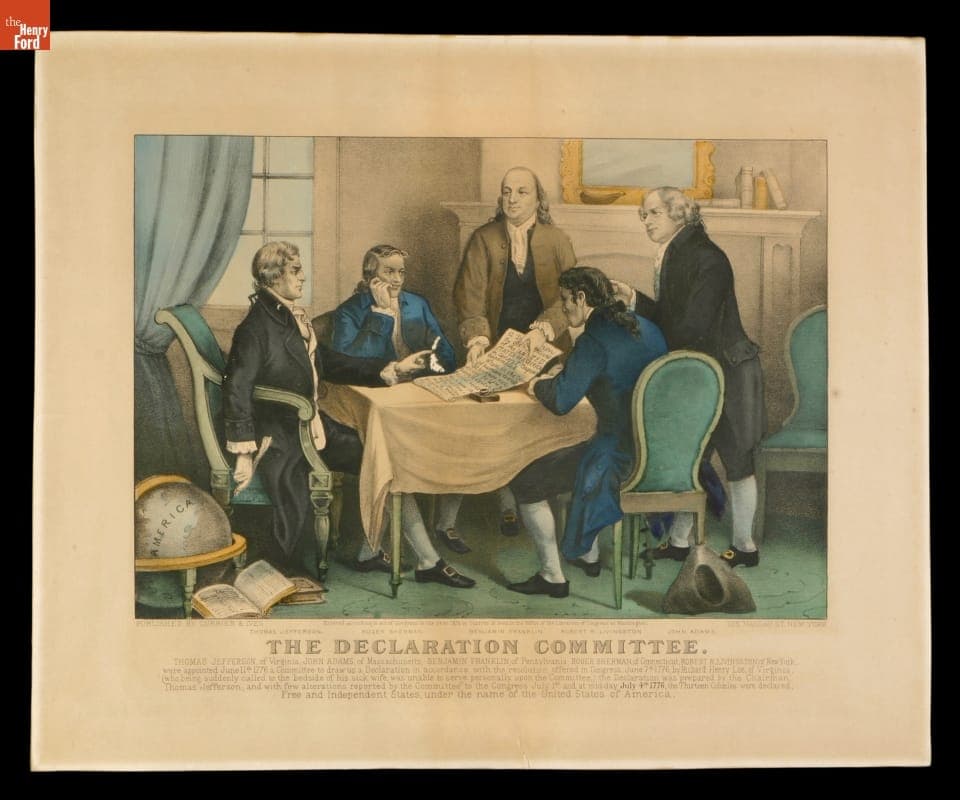
Posted by Jeremy CronigAug 26A section condemning slavery, originally written by Thomas Jefferson, was cut from the Declaration of Independence.Show 3 more findings ZoomDeleted Slavery Passage | Declaration of Independencehttps://www.thehenryford.org/collections/explore/articles/the-deleted-slavery-passage-from-the-declaration-of-independence
Posted by Jeremy CronigFeb 26The Dred Scott decision denied citizenship to people of African descentIn 1857, the Supreme Court ruled in Dred Scott v. Sandford that Black Americans could not be US citizens. The decision heightened an already brewing conflict and became a key factor in pushing the nation toward civil war.Oyezhttps://www.oyez.org/cases/1850-1900/60us393
Posted by Jeremy CronigMar 20Abolitionists shaped American history from the Revolution to the Civil WarAbolitionists of all backgrounds organized against slavery from the founding era onward. Historian Manisha Sinha argues that their decades of activism fundamentally shaped American democracy and made emancipation possible.Episode 105: Slavery and Abolition - 15 Minute Historyhttps://open.spotify.com/episode/4BmpIaeqR4qqJSD2FPlStX
Posted by Jeremy CronigFeb 8The abolitionist movement long predated the Civil WarBeginning in the late 18th century, abolitionists like Frederick Douglass, William Lloyd Garrison, and Sojourner Truth campaigned through newspapers, lectures, and political action to end slavery.HISTORYhttps://www.history.com/articles/abolitionist-movement
Posted by Jeremy CronigJul 16Robert Smalls escaped slavery by piloting a stolen Confederate ship to freedom, then became an influential Black political leader during Reconstruction.Show 4 more findings 5:21Robert Smalls - Radical Gracehttps://www.youtube.com/watch?v=4d4t9k8An1k
Posted by Jeremy CronigFeb 21John Marshall owned enslaved people and ruled against them in slavery casesThough Marshall wrote that slavery was "contrary to the law of nature," he enslaved nearly 200 people at his death in 1835 and ruled against enslaved claimants in several cases. His will offered conditional emancipation to Robin Spurlock, his first slave.https://virginiahistory.org/learn/john-marshall/john-marshall-slavery
Posted by Meher QazilbashJun 25The 'Star-Spangled Banner' is based on a poem written by Francis Scott Key in 1814, while witnessing a battle during the War of 1812. Show 2 more findings ZoomThe Star-Spangled Bannerhttps://www.kennedy-center.org/education/resources-for-educators/classroom-resources/media-and-interactives/media/music/story-behind-the-song/the-story-behind-the-song/the-star-spangled-banner/
Posted by Kevin KearneyMay 21, 2025Whitman's view on slavery was informed by a trip to New OrleansIn 1848, Walt Whitman traveled with his brother to New Orleans to pursue a job opportunity at the Daily Crescent newspaper. While there, he witnessed firsthand the horrors of the slave trade, an experience that would inform the political and artistic projects that followed. ZoomWhat Happened to Walt Whitman in New Orleans? | School of Liberal Arts at Tulane Universityhttps://liberalarts.tulane.edu/magazine/spring-2020/walt-whitman-nola
Posted by Jeremy CronigJan 9A section condemning slavery was cut from the DeclarationThomas Jefferson included a passage in his original draft denouncing slavery. This explainer from the Henry Ford Museum explores why Congress removed it to preserve colonial unity and how that decision shaped the nation's earliest political compromises.https://www.thehenryford.org/explore/blog/the-deleted-slavery-passage-from-the-declaration-of-independence#:~:text=Included%20in%20this%20list%20was,Great%20Britain%20and%20the%20colonies
Posted by Jeremy CronigFeb 8According to Confederate leaders, the defense of slavery was the primary reason for secession.Show 3 more findings ZoomSlavery as a Cause of the Civil War - Lincoln Home National Historic Site (U.S. National Park Service)National Park Servicehttps://www.nps.gov/liho/learn/historyculture/slavery-cause-civil-war.htm
Posted by Teddy BurkhardtFeb 10The Dred Scott decision denied African Americans citizenship, upheld slavery, and marked the first use of judicial review since Marbury v. MadisonThis page explores the case, providing information on Dred Scott and his case before the Supreme Court. Explore the implications of one of the most critical cases in the history of the court. ZoomDred Scott decision | Definition, History, Summary, Significance, & Facts | BritannicaBritannicahttps://www.britannica.com/event/Dred-Scott-decision
Posted by Jeremy CronigFeb 8Hear how the world reacted to the American Civil WarEuropean nations closely watched the Civil War for its economic and political consequences. Some European nations quietly engaged diplomatically with the Confederacy but withheld recognition. When the Union made slavery's abolition a central cause, European public opinion turned sharply against the South. 4:08https://www.youtube.com/watch?v=xycPUC2f6xA
Posted by Kevin KearneyMay 21, 2025Whitman founded an antislavery newspaper in BrooklynIn 1948, Whitman founded a “free soil” newspaper called the Brooklyn Freeman, which explicitly argued against slavery. That activism led to problems for the paper, including an attack on its headquarters after the release of its first issue. Zoom Brooklyn Freeman | Whitman Archive https://whitmanarchive.org/item/encyclopedia_entry390
Posted by Meher QazilbashJun 30, 2025Poet Oliver Wendell wrote an unofficial fifth verse for the anthemFrancis Scott Key’s version features four verses, though only one is usually performed. American poet Oliver Wendell Holmes wrote an additional fifth verse during the Civil War, lamenting the country’s internal division. ZoomThe Star-Spangled Banner Verse You've Probably Never HeardNPRhttps://www.npr.org/2017/07/04/518876922/the-star-spangled-banner-verse-youve-probably-never-heard
Posted by Jeremy CronigJan 14Learn about the life of Coretta Scott King in her own wordsCoretta Scott King, married to Martin Luther King Jr. in 1953, was a civil rights leader, author, and organizer who advanced the principles of nonviolence, racial equality, and women's rights—founding The King Center to promote education and social justice worldwide.https://open.spotify.com/episode/3Sj9iaobXBDfbnaLENojAR
Posted by Meher QazilbashJun 18See how the Declaration evolved from draft to final textJohn Adams urged Congress to choose Thomas Jefferson to draft the Declaration because of his literary skill and low-profile reputation. Read Jefferson's initial draft, which included passages later removed, including a forceful denunciation of slavery. ZoomTranscript of Declaration of Independence (Rough Draft)https://www.monticello.org/the-declaration-of-independence/jefferson-and-the-declaration
Posted by Kevin KearneyJun 12Despite the Juneteenth announcement that they were free, some enslaved people were still held captive.Show 3 more findings ZoomSlavery Didn't End On Juneteenth. What You Should Know About This Important DayNPRhttps://www.npr.org/2021/06/17/1007315228/juneteenth-what-is-origin-observation
Posted by Kevin KearneySep 2, 2025Private education offered an alternative for Black AmericansThe early public school system was ostensibly designed for all Americans, but it was also racially segregated, offering substandard schools for Black Americans. Some private schools were founded to combat that problem, including St. Frances Academy in Baltimore, the United States' oldest predominantly Black Catholic high school. 8:29Five Minute Histories: St. Frances Academyhttps://www.youtube.com/watch?v=yIKbsgNHEVI
Posted by Teddy BurkhardtJan 14Jefferson feared European control in the West of North AmericaJefferson pushed for the Louisiana Purchase to prevent France or Spain from dominating the western frontier, securing control of the Mississippi River and vast lands that he felt were essential to America’s strategic and economic future.https://www.monticello.org/thomas-jefferson/louisiana-lewis-clark/the-louisiana-purchase/
Posted by Kevin KearneyApr 27Thoreau's 'Civil Disobedience' was largely a protest against the Mexican-American WarHenry David Thoreau refused to pay taxes that funded what he saw as an unjust war waged to expand slavery. His act of protest inspired his famous essay "Civil Disobedience," a foundational text for nonviolent resistance. 5:29Thoreau and Civil Disobediencehttps://www.youtube.com/watch?v=gugnXTN6-D4
Posted by Teddy BurkhardtJan 23, 2023What was life like as a slave in the US?Over 2,500 former slaves were interviewed by writers and journalists in the late 1930s as part of the US Federal Writer's Project. The collection recorded images and firsthand verbal accounts of life as a slave, eight of which are highlighted in this article at the Library of Congress. See the humanity in each of these individuals with their firsthand accounts. ZoomVoices and Faces from the Collection | Articles and Essays | Born in Slavery: Slave Narratives from the Federal Writers’ Project, 1936-1938 | Digital Collections | Library of CongressLibrary of Congresshttps://www.loc.gov/collections/slave-narratives-from-the-federal-writers-project-1936-to-1938/articles-and-essays/voices-and-faces-from-the-collection/
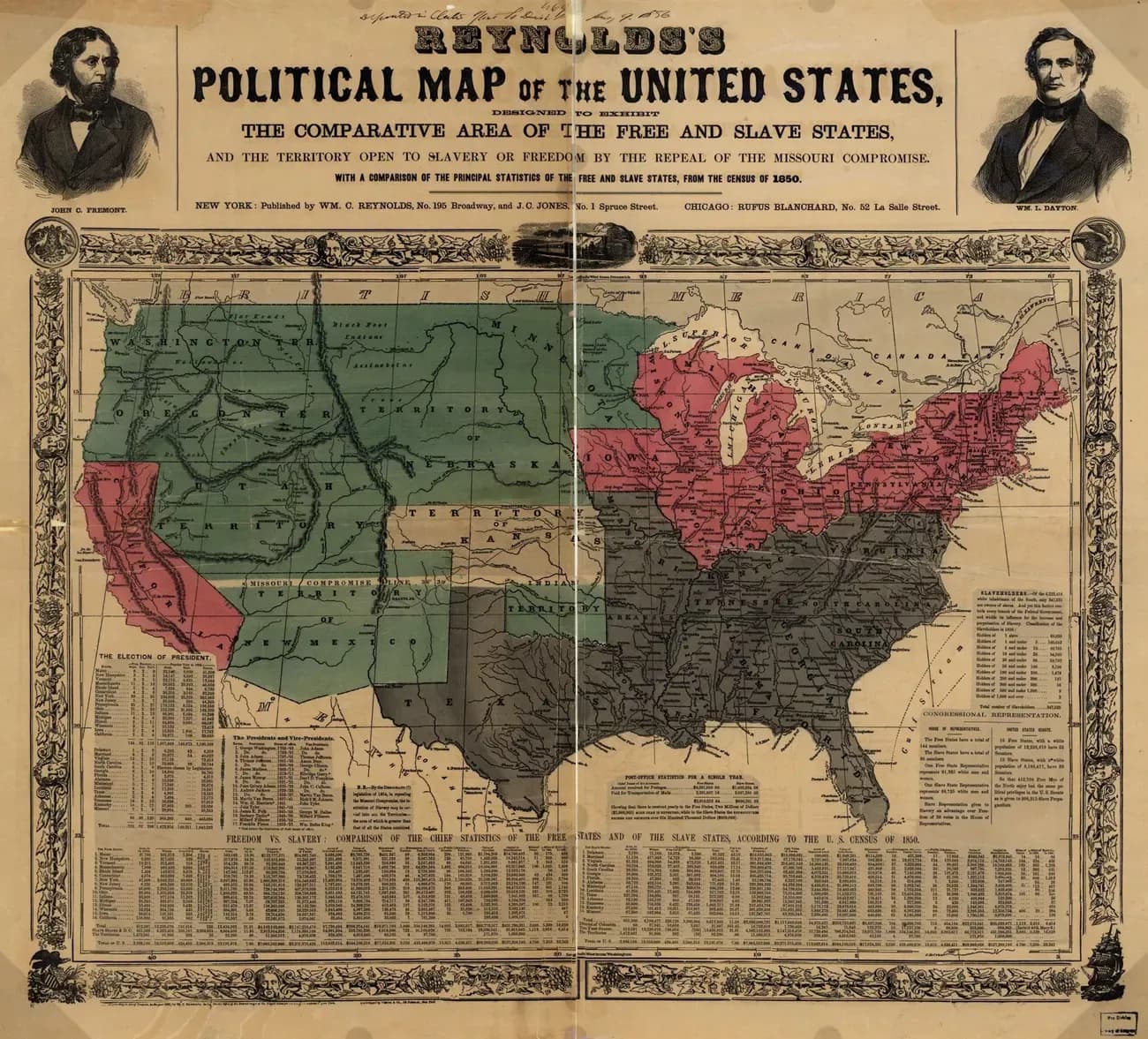
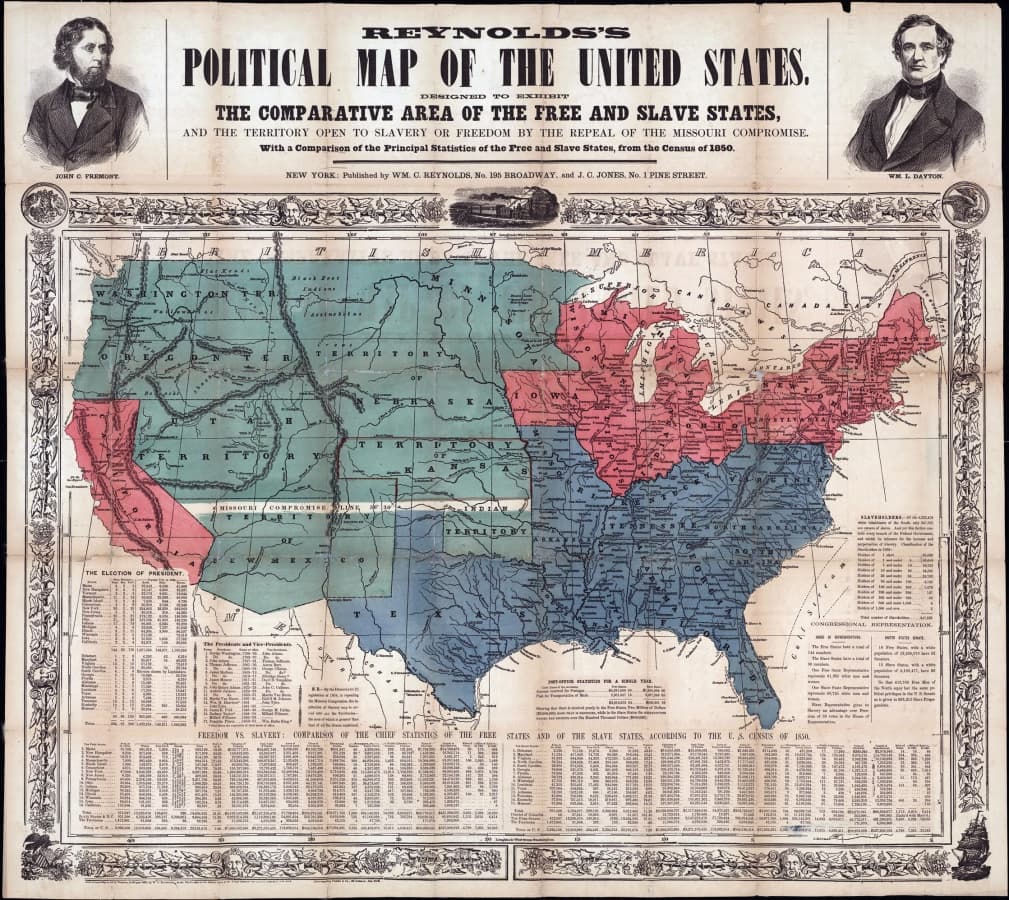
Posted by Jeremy CronigFeb 8US westward expansion—and the status of slavery in the new territories—was a major cause of the American Civil WarThe addition of new western lands forced the nation to confront whether slavery would spread beyond the South. Each debate over the admission of a new state sharpened the divide between free and slaveholding regions. Zoomhttps://ushistoryscene.com/article/civil-war-west-expansion/
Posted by Jeremy CronigJul 13Read an annotated 1866 essay by abolitionist Frederick Douglass, where he laid out his vision for reshaping America after the Civil War.Show 3 more findings ZoomThe Annotated Frederick DouglassThe Atlantichttps://www.theatlantic.com/magazine/archive/2023/12/frederick-douglass-atlantic-reconstruction-essay/675485/
Posted by Meher QazilbashApr 8, 2025Many of the founding fathers were deists—believers in a God of reasonA uniquely American iteration of the Enlightenment movement thrived during the Revolution. This selection from a longer write-up on the American Enlightenment highlights six core ideas: deism, liberalism, republicanism, conservatism, toleration, and scientific progress. ZoomAmerican Enlightenment Thought | Internet Encyclopedia of Philosophyhttps://iep.utm.edu/american-enlightenment-thought/#H2
Posted by Meher QazilbashJul 2, 2025Ben Franklin’s edit helped define the Declaration’s philosophyWhen Thomas Jefferson drafted the Declaration, he wrote that its truths were “sacred and undeniable.” Benjamin Franklin urged replacing that phrase with “self-evident,” grounding the document in reason rather than religious authority and sharpening its Enlightenment logic. ZoomThe Declaration of Independence | Benjamin FranklinPBShttps://www.thirteen.org/programs/benjamin-franklin/declaration-independence-ev7upl/
Posted by Jeremy CronigMar 20Read Truth's account of escaping slavery in 1826After her enslaver broke his promise to free her, Truth left before dawn, carrying her infant daughter and a bundle of clothes. She later found refuge with the Van Wagener family, who paid her master $20 for her freedom and $5 for her infant daughter.Sojourner Truth's Escape from SlaveryWorld History Encyclopediahttps://www.worldhistory.org/article/2694/sojourner-truths-escape-from-slavery/
Posted by Meher QazilbashSep 9, 2025Learn how Mexico’s anti-slavery stance shaped the US–Texas conflictHistorian Alice Baumgartner explores how Mexico’s abolition of slavery clashed with Anglo settlers' ambitions in Texas. The episode reveals how enslaved people fled south to freedom, reshaping the politics that led to Texas independence and the Mexican-American War. ZoomFronteras: The complicated ties between Mexico, US and slavery unraveled in ‘South to Freedom’https://www.tpr.org/podcast/fronteras/2021-10-01/fronteras-the-complicated-ties-between-mexico-us-and-slavery-unraveled-in-south-to-freedom
Posted by Teddy BurkhardtJun 30Was the Civil War really about states' rights?The Civil War was fought over slavery, and Confederate leaders and supporters admitted as much in the build-up to the war and after. But later on, after the South's defeat, the lie of the Lost Cause was pushed—and it persists to this day. This four-minute video details the story of the Lost Cause, "state's rights", Confederate monuments, and the machinations behind them. 4:43Debunking the myth of the Lost Cause: A lie embedded in American history - Karen L. CoxTED-Edhttps://www.youtube.com/watch?v=XP0_wnaW-a0
Posted by Jeremy CronigAug 9The Founding Fathers were divided in their reactions to the Boston Tea Party.Show 4 more findings ZoomWhy Some Founding Fathers Disapproved of the Boston Tea Party | HISTORYHISTORYhttps://www.history.com/articles/boston-tea-party-critics-ben-franklin
Posted by Meher QazilbashJun 25A 2020 poll found that 60% of Americans want 'The Star-Spangled Banner' to remain the national anthem.Add description...Show 2 more findings ZoomMost Americans do not want the national anthem to be changedYouGovhttps://business.yougov.com/content/30654-national-anthem-change-poll