Posted by Kevin KearneyAug 18At the height of its popularity, ragtime, a precursor to jazz, was criticized as dangerous, 'unmusical rot.'Show 3 more findingsLibrary of Congresshttps://www.loc.gov/collections/songs-of-america/articles-and-essays/musical-styles/popular-songs-of-the-day/ragtime/
Posted by Kevin KearneyFeb 15Jazz's popularity inspired a moral panicWhen jazz exploded in the 1920s, some believed the music's sudden popularity was the sign of a rotten nation, with one 1920 address at the University of Wisconsin proclaiming, "We are in deadly fear of the Jazz Devil, the demon which is consuming the country." Often, the connections were racialized, with columnists and preachers suggesting that jazz's Black artists were attempting to degrade white America.https://www.historytoday.com/history-matters/whos-afraid-jazz-monsters
Posted by Kevin KearneyFeb 15Jazz brought together ragtime and bluesRagtime was a popular music genre that blended African-American spirituals, European folk songs, and military marches. Blues, brought to New Orleans by free Black people seeking opportunities, allowed musicians to play within basic standards. Jazz combined both forms by merging the syncopated, dance-friendly sounds of ragtime with the soulful, brass-instrumental style of the blues.PBShttps://klrn.pbslearningmedia.org/resource/jazz-origins-ragtime-video/ken-burns-jazz/
Posted by Kevin KearneyFeb 15Some critics argue bebop and free jazz led to jazz's decline in popularityAlthough jazz was once a popular art form, it has largely been confined to the margins of pop culture, with many of the genre's current bestselling albums from previous decades. Some critics argue that this is because the music betrayed its position as dance music and focused instead on musical proficiency.CNNhttps://www.cnn.com/2016/09/25/entertainment/cnnphotos-jim-marshall-jazz
Posted by Kevin KearneyFeb 15Jelly Roll Morton claimed he invented jazz, though experts disagreeThe pianist and arranger was one of the genre's biggest names in the early 20th century, though very few believed him when he claimed he had invented the music in 1902. One of his biggest contributions to the genre was a 1938 session with ethnomusicologist Alan Lomax, who recorded nearly 8 hours of music and stories that have become an essential part of the music's history. 9:01:25https://www.youtube.com/watch?v=mAieghW4Oss
Posted by Kevin KearneyFeb 15A lot of jazz relies on syncopationThe style is when a musician plays a rhythm on the opposite side of the beat. That means notes are played on the "upbeats," or the spaces between the main beats of a musical bar. The effect is music that can sound unpredictable, even if it's been carefully constructed. 18:42https://www.youtube.com/watch?v=_uqu-aD9HpU
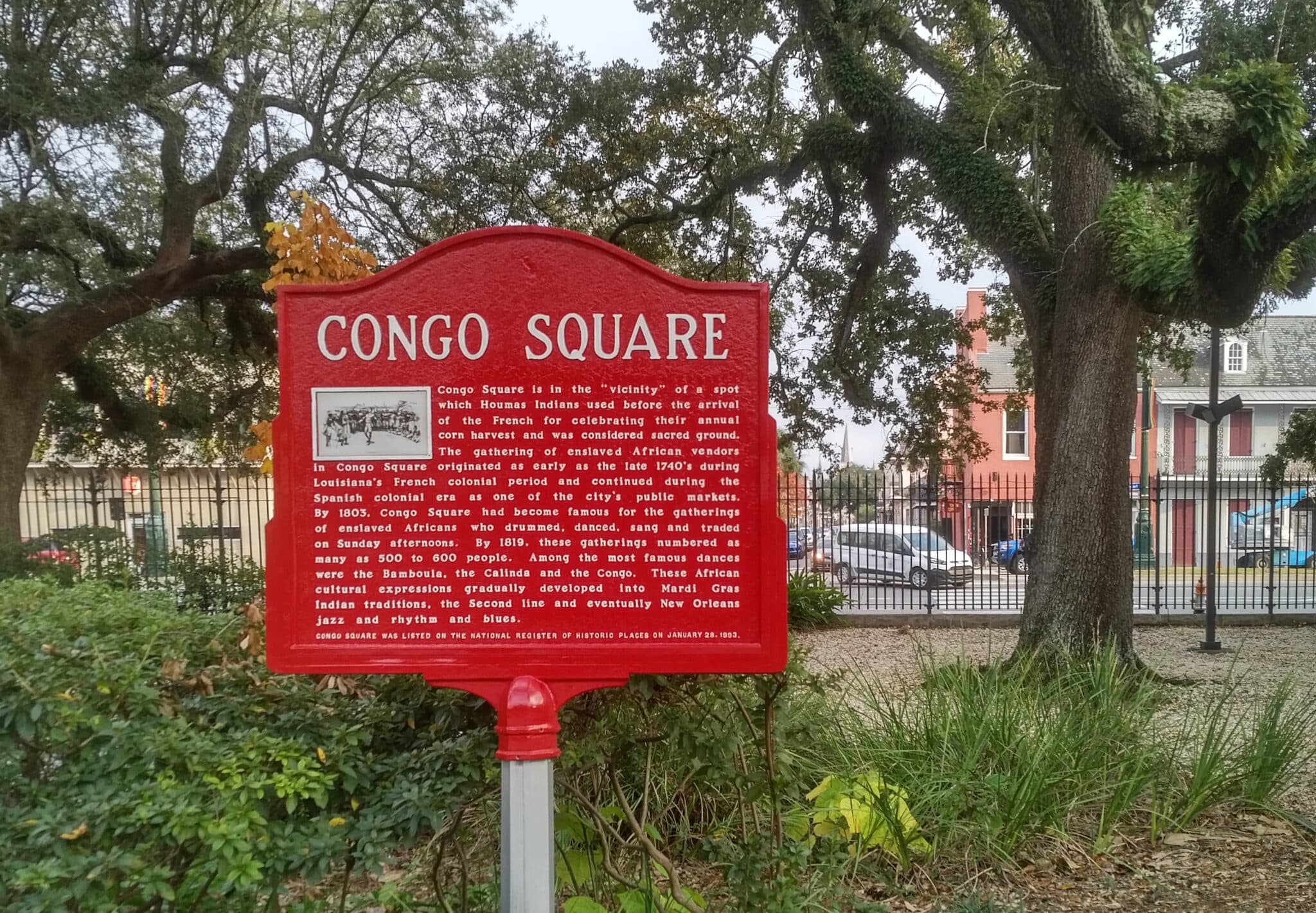
Posted by Kevin KearneyFeb 15New Orleans' Congo Square birthed what would become jazzThe city's enslaved people congregated in the city square on Sundays, bringing together the musical traditions of their disparate cultures through drum circles, communal dancing, and call-and-response singing. The rhythmic style that evolved in the area would eventually give rise to ragtime and, subsequently, jazz. Zoomhttps://folkways.si.edu/magazine-winter-spring-2015-some-kind-of-something-is-going-on-down-there-crossroads-at-congo-square/article/smithsonian
Posted by Kevin KearneyFeb 15Wynton Marsalis believes syncopation is part of jazz's American characterThe trumpeter argues that jazz's approach to syncopation is part of an American tradition that offers the unexpected, citing Jonas Salk, Mark Twain, and fusion cuisine as parallels. 4:25Harvard Universityhttps://www.youtube.com/watch?v=yn4KbJ1Xtsc
Posted by Kevin KearneyFeb 26, 2018The word 'jazz' evolved from slang for 'energy' and was used to describe a baseball pitch before it came to mean a genre of music.Show 3 more findingsWhere Did 'Jazz,' the Word, Come From? Follow a Trail of Clues, in Deep Dive with Lewis PorterWBGOhttps://www.wbgo.org/music/2018-02-26/where-did-jazz-the-word-come-from-follow-a-trail-of-clues-in-deep-dive-with-lewis-porter
Posted by Kevin KearneyFeb 22'Shuffle Along,' a 1921 Broadway musical, brought jazz to American musical theater and helped pave the way for Black culture in the 20th century.Show 4 more findingsKennedy Centerhttps://www.kennedy-center.org/education/resources-for-educators/classroom-resources/media-and-interactives/interactives/drop-me-off-in-harlem/theme-and-variations/shuffle-along/
Posted by Kevin KearneyApr 27How smooth jazz took over the '90sAs jazz entered the '70s, it was at a crossroads. While the genre's figureheads explored fusion and free jazz, which intentionally flouted mainstream convention, other artists began veering towards pop. Eventually, that sound would be called "smooth jazz." 13:05How smooth jazz took over the ‘90sVoxhttps://www.youtube.com/watch?v=TBDWomgRgWU
Posted by Kevin KearneyJun 2Fearing the corruption of its youth, Santa Cruz, California, banned rock 'n' roll in 1956.Show 3 more findingsSanta Cruz Bans Rock and Roll?Santa Cruz Museum of Art & Historyhttps://www.santacruzmah.org/blog/santa-cruz-bans-rock-and-roll-1
Posted by Meher QazilbashApr 7, 2025Western swing merged country with jazzFor as long as country music has been set to record, its artists have experimented with the genre’s boundaries. Look no further than this track from 1946, Bob Wills’ “Roly Poly.” The song is a classic example of Western swing, a country subgenre that blended country and jazz. 2:50Roly Polyhttps://youtu.be/dP28DIewLMk
Posted by Meher QazilbashJan 29, 2025The distinctions between 'R&B' and 'rock 'n' roll' were mostly racial"Rhythm and blues” was a broad name used for African American music in the 1940s after “race music” fell out of favor. Musically speaking, "rock 'n' roll" sounded very similar, though it was marketed to white teenagers rather than Black audiences.Rhythm and Blues | Popular Songs of the Day | Musical Styles | Articles and Essays | The Library of Congress Celebrates the Songs of America | Digital Collections | Library of CongressLibrary of Congresshttps://www.loc.gov/collections/songs-of-america/articles-and-essays/musical-styles/popular-songs-of-the-day/rhythm-and-blues/
Posted by Kevin KearneyFeb 15Jazz built the template for hip-hopHip-hop was born out of obscure samples, including many that were taken from the annals of jazz. That style was especially popular in rap's early eras, with the subgenre "jazz rap" becoming an accurate descriptor for New York groups like A Tribe Called Quest and Gangstarr.https://open.spotify.com/episode/1JH8hn7MNIhqyPPLcQtOhb
Posted by Kevin KearneyFeb 15'Livery Stable Blues' was the first jazz recording and helped popularize the genreThe 1917 song by the Original Dixieland Jass Band was the first jazz recording to be issued and put the New Orleans sound on the national stage, along with inspiring several soundalikes. 3:11https://www.youtube.com/watch?v=5WojNaU4-kI
Posted by Kevin KearneyFeb 15Free jazz embraced the avant-gardeOrnette Coleman's 1959 album "The Shape of Jazz to Come" abandoned traditional notions of melody and structure, inadvertently creating "free jazz," a subgenre that embraced absolute musical freedom and gained popularity in the countercultural 1960s.https://www.udiscovermusic.com/stories/free-jazz-explained/
Posted by Kevin KearneyFeb 15Jazz was an integral part of the Harlem RenaissanceThe Great Migration transformed New York City's Harlem neighborhood into the epicenter of Black American art, with artists such as Duke Ellington, Louis Armstrong, and Bessie Smith regularly performing. The music not only provided the backbeat to the cultural scene—it often influenced it, with Harlem Renaissance poets, in particular, inspired by jazz's approach to rhythm and improvisation.TheCollectorhttps://www.thecollector.com/harlem-renaissance-arts-and-culture/
Posted by Meher QazilbashApr 7, 2025In the 1920s, country was often called 'hillbilly music'The term was meant to describe the rural people who typically performed the Appalachian folk music. Though Black people were also making country music at the time, their records were categorized as “race music.”Part One · Hillbilly Music: Source & Symbol · UNC Librarieshttps://exhibits.lib.unc.edu/exhibits/show/hillbilly_music/green_hillbilly/part_one
Posted by Kevin KearneyFeb 15See a timeline of jazz's historyJazz began in 19th-century New Orleans, though its roots go back even further. This timeline situates the music's evolution alongside American and world history, offering an illuminating exploration of the genre.https://www.jazzinamerica.org/jazzresources/timeline
Posted by Kevin KearneyFeb 15Buddy Bolden assembled the first jazz ensembleThe New Orleans cornetist was a legend in the city, sometimes referred to as "king," for his electrifying performances, which captivated local dance halls by blending ragtime, blues, and gospel music. Unfortunately, recording technology was limited at the time, so there are no recordings of Bolden, though the song "Buddy Bolden's Blues" remains a standard to this day. 2:09https://www.youtube.com/watch?v=ffdM8-vat6o
Posted by Meher QazilbashJan 29, 2025Blues was a major influence on early rockEarly rock ‘n’ roll had a straightforward sound, relying mostly on guitar, bass, drums, piano, and saxophone playing up-tempo 12-bar blues. In subsequent decades, the form evolved and splintered into countless subgenres that used more diverse sounds, instruments, and lyrics. 11:43Is Blues the Mother of All Modern Music?https://www.youtube.com/watch?v=HYy-6ltraVQ
Posted by Kevin KearneyFeb 15Jazz provided a soundtrack for the Civil Rights MovementSongs like Billie Holiday's "Strange Fruit," which portrayed the grim brutality of lynching, and John Coltrane's "Alabama," which was modeled on the rhythm of a speech by Martin Luther King Jr., were the backbeat of the movement.https://www.carnegiehall.org/Explore/Articles/2021/04/26/Six-Jazz-Classics-and-the-Fight-for-Civil-Rights
Posted by August MoonMar 28, 2025Rock 'n' roll's history in 60 secondsIn the late 1940s, rock 'n' roll emerged from a mix of blues, country, gospel, and jazz. It gained traction through radio, rebellious icons, and evolving sound. This overview traces the genre’s roots, rise, and lasting influence—from early pioneers to the British Invasion and beyond. 1:04Rock 'N' Roll's History in 60 Seconds1440 Originalshttps://www.youtube.com/shorts/khY18CV3G-I
Posted by Meher QazilbashJan 29, 2025Rock 'n' roll began as a hybrid of several American musical stylesRock ‘n’ roll combined blues, swing, country, and other American musical forms in the late 1940s. From there, it splintered into countless subgenres and is still evolving.History of Rock ‘n’ Rollhttps://timeline.carnegiehall.org/genres/rock-n-roll
Posted by Kevin KearneyApr 10Jean-Paul Sartre was amazed by American jazzThe French philosopher wrote about a 1947 trip to a New York jazz club as a transcendent experience, describing the magic of the relationship between performer and audience: "You shout, they shriek, they whistle, they are possessed, you are possessed."Far Out Magazinehttps://faroutmagazine.co.uk/jean-paul-sartre-existentialist-freedom/
Posted by Meher QazilbashMar 10Take a look at an early rock 'n' roll artifactThis 1956 jukebox musical, "Rock, Rock, Rock!," is an early example of the burgeoning rock 'n' roll culture—with performances from Chuck Berry, Frankie Lymon and the Teenagers, D.J. Alan Freed, and several others. It was also a catalyst, sending the new youth culture into theaters around the country. 1:25:27Rock, Rock, Rock : Max Rosenberg : Free Download, Borrow, and Streaming : Internet Archivehttps://youtu.be/U8KE2yb1zpM?feature=shared
Posted by Kevin KearneyFeb 22Watch a 1934 short film starring Cab CallowaySinger and bandleader Cab Calloway was a major figure in the Harlem Renaissance's music scene. He was also one of the biggest names in jazz's swing era and would go on to be the first Black American to have a nationally syndicated radio show and the first to sell a million copies of a record. In this 1934 short film, "Cab Calloway's Hi-De-Ho," he reenacts his upbeat performances at Harlem's Cotton Club.Show 2 more findings 9:54Cab Calloway's Hi-De-Ho (1934)https://www.youtube.com/watch?v=spBLdH5mtyk
Posted by Kevin KearneyFeb 15Jazz improvisations are often based on well-known standardsSimilar to blues, folk, and country music, jazz relies on a shared tradition of common songs that its artists learn, cover, and rework in their own unique ways. Jazz musicians are often able to easily improvise with other musicians because they share a knowledge of the songs and their languages.https://www.jazzstandards.com/overview.definition.htm
Posted by Kevin KearneyFeb 15The Great Migration spread jazz to various parts of the countryThe large-scale migration of Black Americans looking to escape Jim Crow laws in the South began in 1915 and helped bring New Orleans music to other parts of the country, including Chicago, New York, Kansas City, Detroit, and Los Angeles.https://jazz.org/education/school-programs/let-freedom-swing/jazz-and-the-great-migration/
Posted by Kevin KearneyFeb 15Bebop's freedom inspired the Beat GenerationThe jazz style took off in the 1940s, mesmerizing listeners with its wild, improvised solos. It had a particular impact on the writers of the Beat Generation, including Jack Kerouac and Allen Ginsberg, who saw in bebop's freedom a model for what they could achieve through the written word. Beat writers like Lawrence Ferlighetti and Kenneth Rexroth even incorporated live jazz in their poetry readings.https://www.litkicks.com/Topics/Jazz.html
Posted by Kevin KearneyFeb 21The Parents Music Resource Center criticized rock 'n' roll's lyrics in the 1980sThe group, spearheaded by Tipper Gore, the wife of then-Senator and eventual Vice President Al Gore, argued that rock music, especially heavy metal, was having an adverse effect on the country, particularly young children. One of the group's fiercest critics was musician Frank Zappa. In the video below, he appears on a 1986 episode of "Crossfire," arguing about the proposed ban of so-called obscene music. 21:18Frank Zappa on Crossfire 1986https://www.youtube.com/watch?v=B9856_xv8gc
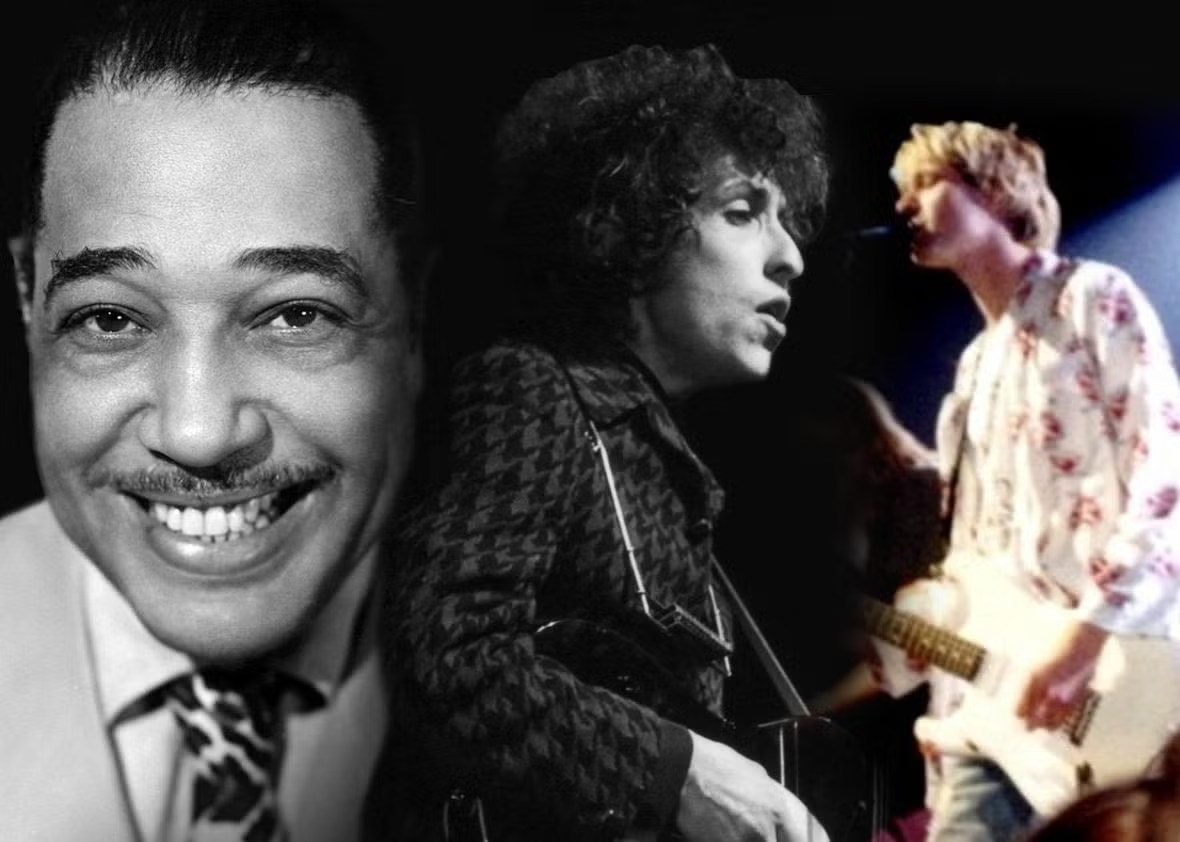
Posted by Kevin Kearney15 hours agoArnold Schoenberg's atonal music influenced generations of musicians who followed.Show 4 more findings 9:27Is This Even Music? John Cage, Schoenberg and Outsider ArtistsSound Fieldhttps://www.youtube.com/watch?v=ANtPDhjjRsw
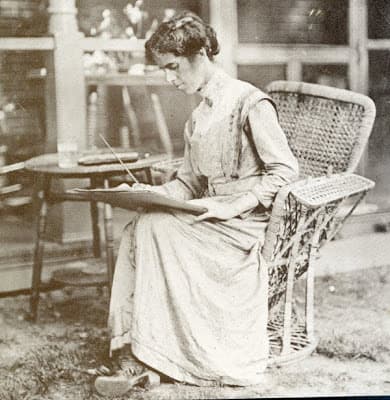
Posted by Meher QazilbashApr 7, 2025Read an early piece of journalism on country musicThis 1904 Harper’s Weekly article from Emma Bell Miles offers an early example of country music criticism. Miles traces the music’s roots to the mountaineers who pioneered it. It’s a famous piece for music writers: Miles saw a phenomenon building in the hills long before any major record label. ZoomSome Real American Musichttps://rootsrockweirdo.tumblr.com/post/151407968271/appalachian-writer-poet-and-artist-emma-bell
Posted by Meher QazilbashApr 7, 2025The first known mention of the term 'country' to describe music was in 1736The November 26, 1736 issue of the Virginia Gazette described a fiddling contest for "country" musicians. While the musical style would go by many names over the next two centuries, "country" was the one that eventually stuck.Country Music: The Most Diverse Genre?https://sciendo.com/article/10.2478/meiea-2024-0003?tab=article
Posted by Kevin KearneyJan 26Billboard's early music charts were racially segregatedIn 1942, the publication introduced the Harlem Hit Parade chart, listing the top 10 records sold at select record stores in the majority-Black borough of New York. In 1945, it changed the chart’s name to Most Played Juke Box Race Records, using the music industry term (“race record”) that identified recordings by Black artists, even if they played music markedly similar to the white artists on the other charts.The Development of National Record Charts – Pay for Play: How the Music Industry Works, Where the Money Goes, and WhyUniversity of Oregonhttps://opentext.uoregon.edu/payforplay/chapter/chapter-10-the-development-of-national-record-charts/
Posted by Kevin KearneyDec 5, 2025The criticism of 'selling out' has waned in the 21st centuryAlthough patronage was a regular part of artists’ income throughout the 19th century, the insult “sell out” gained prominence in the 1950s. The jazz and folk communities, in particular, levied the term at artists they believed had sacrificed their integrity for financial gain. ZoomThe criticism of 'selling out' has waned in the 21st centurySlatehttps://slate.com/culture/2017/07/the-history-of-calling-artists-sellouts.html