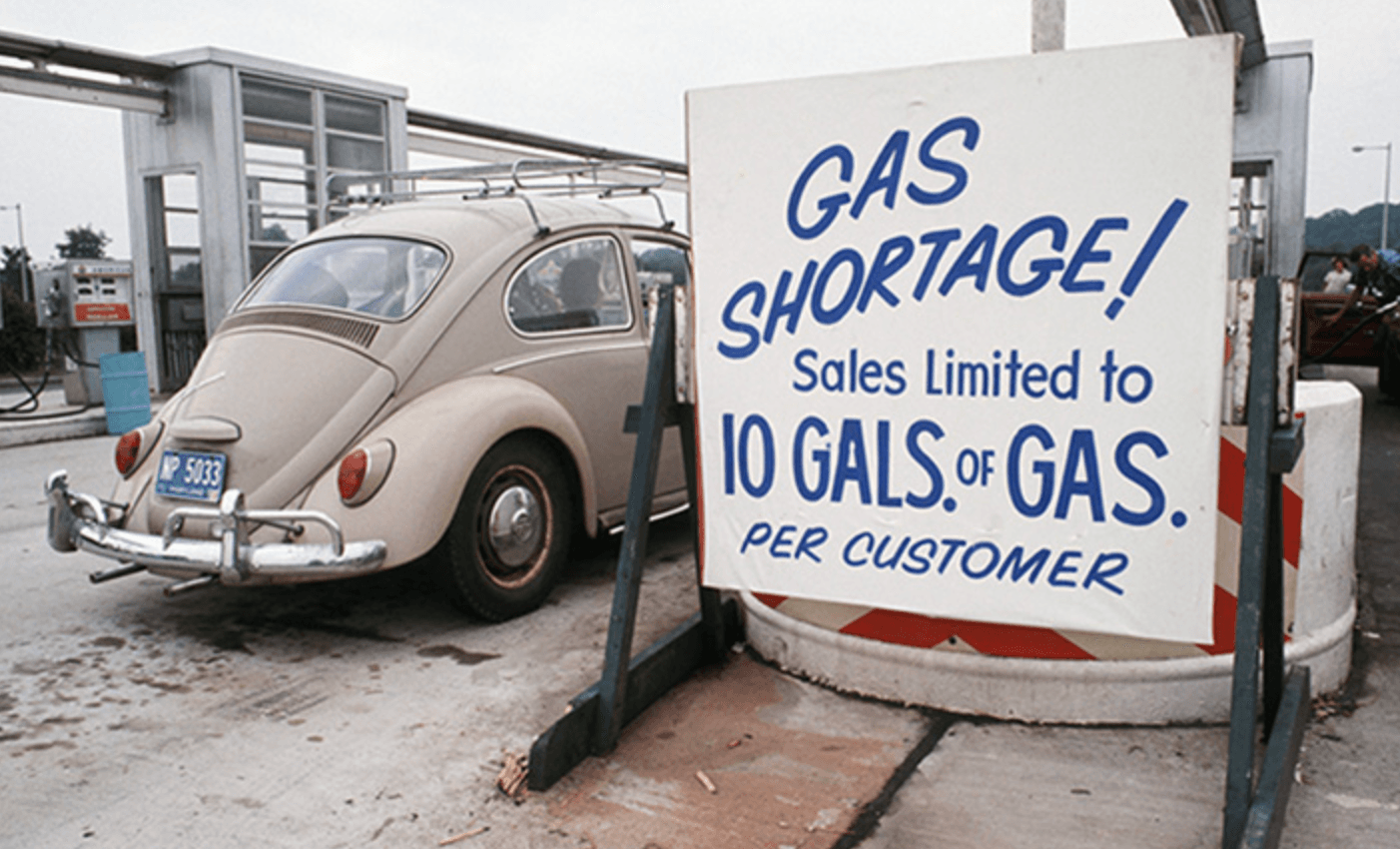
Posted by Jeremy CronigAug 14OPEC's 1973 embargo sparked the first global energy shock.Show 2 more findings Zoom1973 Energy Crisis: Causes and EffectsInvestopediahttps://www.investopedia.com/1973-energy-crisis-definition-5222090
Posted by Marco Daniel MachadoAug 18, 2025The 1973 oil embargo by OPEC inspired advances in alternative energy technologyThe shortages imposed by the Organization of Petroleum Exporting Countries (OPEC) created a global energy crisis and economic instability after the Arab-Israeli War. This led to investments in green technologies and improvements in automobile fuel efficiency and manufacturing.Looking Back on the 1973 Oil Crisis, New Perspectives on Energy Innovation | Lemelsonhttps://invention.si.edu/invention-stories/looking-back-1973-oil-crisis-new-perspectives-energy-innovation
Posted by Meher QazilbashSep 10, 2025The 1967 war was the first use of oil as a geopolitical weaponFollowing the June 1967 Arab–Israeli war, Saudi Arabia, Kuwait, Iraq, Libya, and Algeria embargoed oil shipments to the US, UK, and West Germany. While the move did not have a large impact, it reshaped global oil flows, and foreshadowed OAPEC's later actions.The 1967 War and the “oil weapon” | BrookingsThe Brookings Institutionhttps://www.brookings.edu/articles/the-1967-war-and-the-oil-weapon/
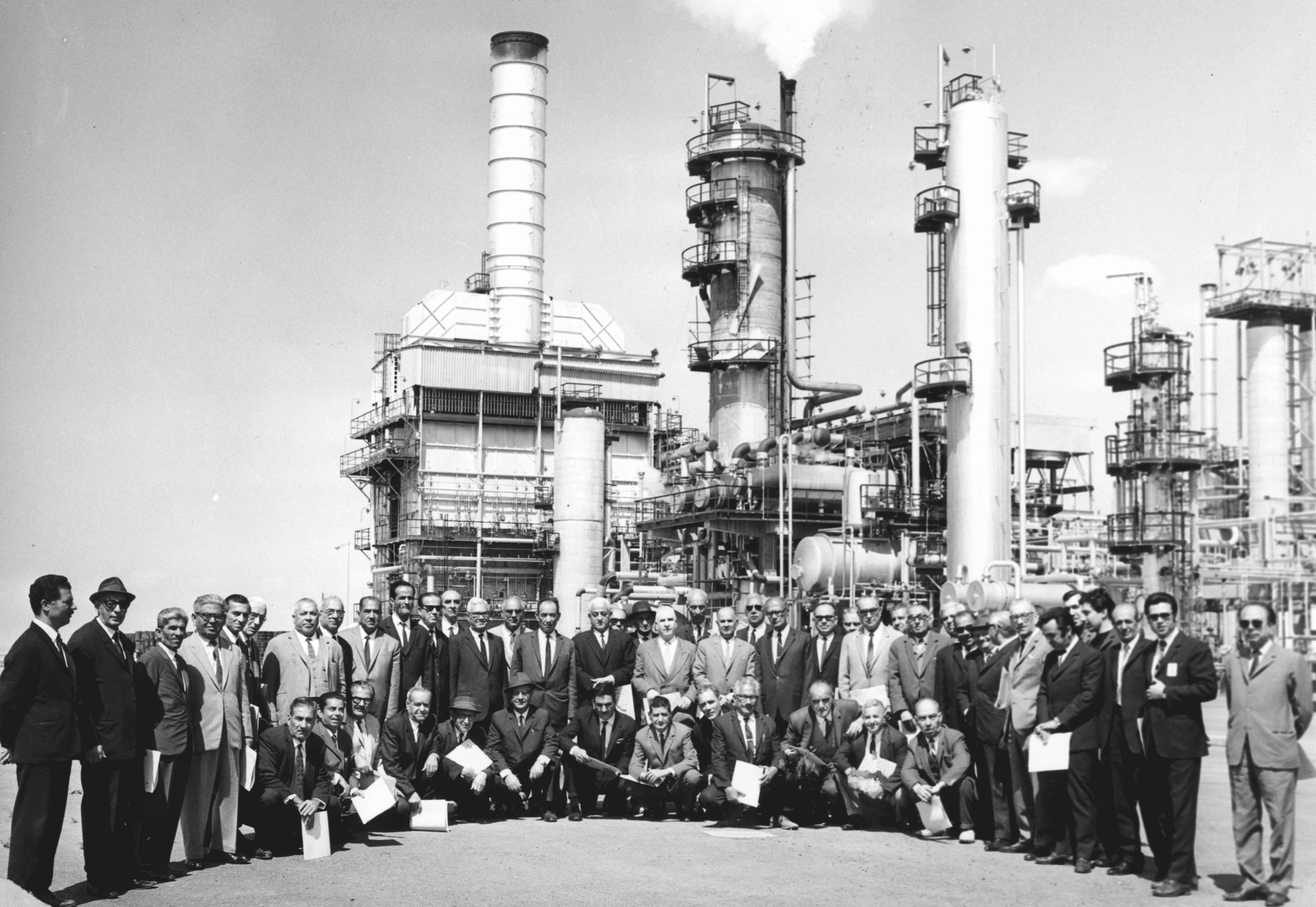
Posted by Meher QazilbashMar 5, 2019Iran's 1979 revolution sparked a second oil shock—and reconfigured global energy markets.Show 2 more findings ZoomWhat Iran’s 1979 revolution meant for US and global oil markets | BrookingsThe Brookings Institutionhttps://www.brookings.edu/articles/what-irans-1979-revolution-meant-for-us-and-global-oil-markets/
Posted by Meher QazilbashJun 30Oil shocks, war, and the 1970s crisis that remade American energy and economicsThe oil crises of the 1970s—fueled by Middle East conflict and OPEC's dominance—triggered inflation, price controls, and policy failure. But they also accelerated fracking, alternative energy, and the rise of free-market economics.Oil Shocks, Price Controls, and War - The Marginal Revolution Podcast | Podcast on SpotifySpotifyCalifornia Consumer Privacy Act (CCPA) Opt-Out IconBack ButtonSearch IconFilter Iconhttps://open.spotify.com/episode/6SFwOlsU186EQ73YlyOlOA
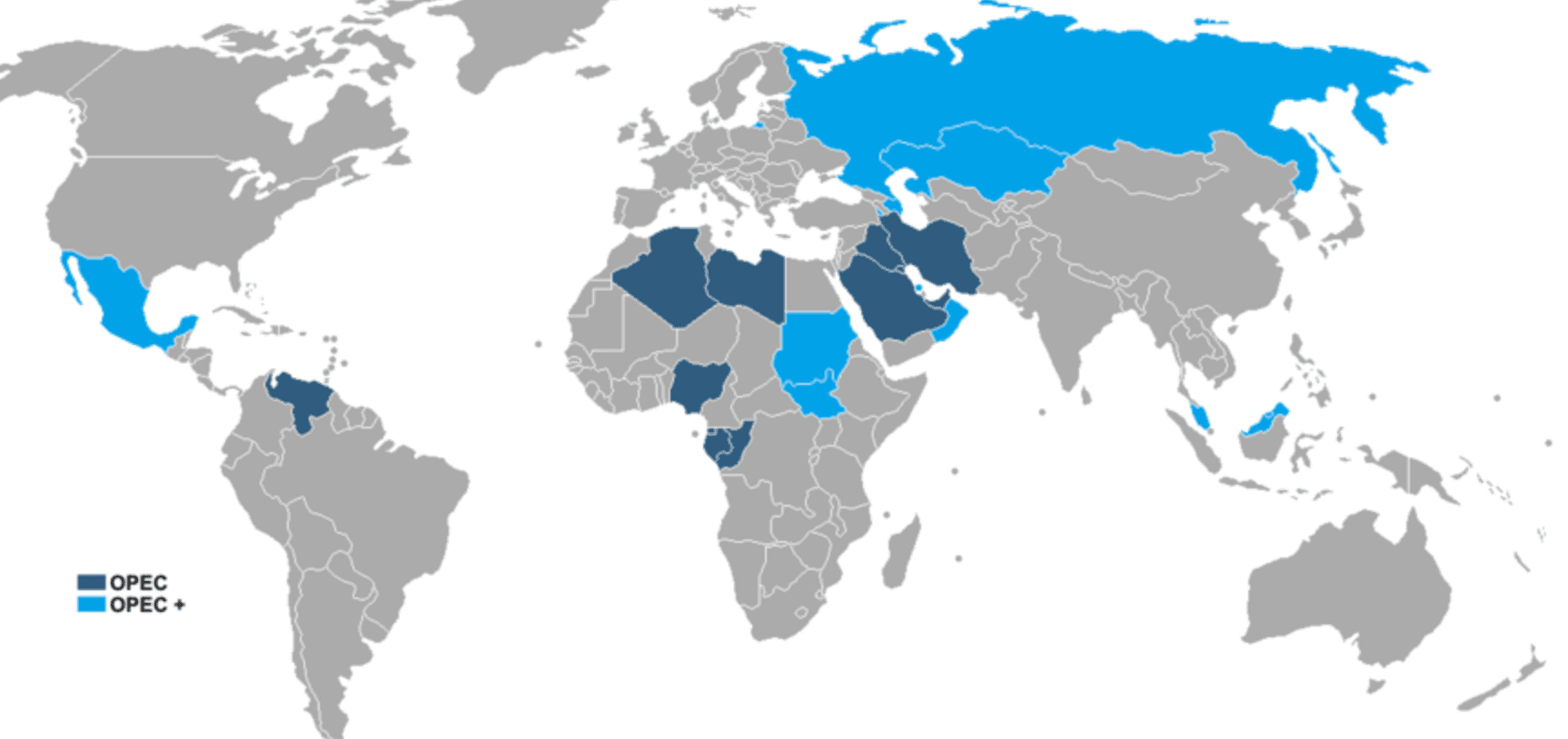
Posted by Meher QazilbashAug 14OPEC (the Organization of the Petroleum Exporting Countries) has grown from five to 12 members since 1960.Show 3 more findings ZoomOrganization of the Petroleum Exporting Countrieshttps://www.opec.org/member-countries.html
Posted by Phoebe BainJan 2OPEC can roll out production cuts among its members to control oil’s global supply and priceThe Organization of the Petroleum Exporting Countries (OPEC) was created to coordinate and unify petroleum policies to secure fair and stable prices. During the pandemic, for instance, the organization pushed through production cuts in an attempt to stabilize prices.World Economic Forumhttps://www.weforum.org/stories/2022/11/oil-opec-energy-price/
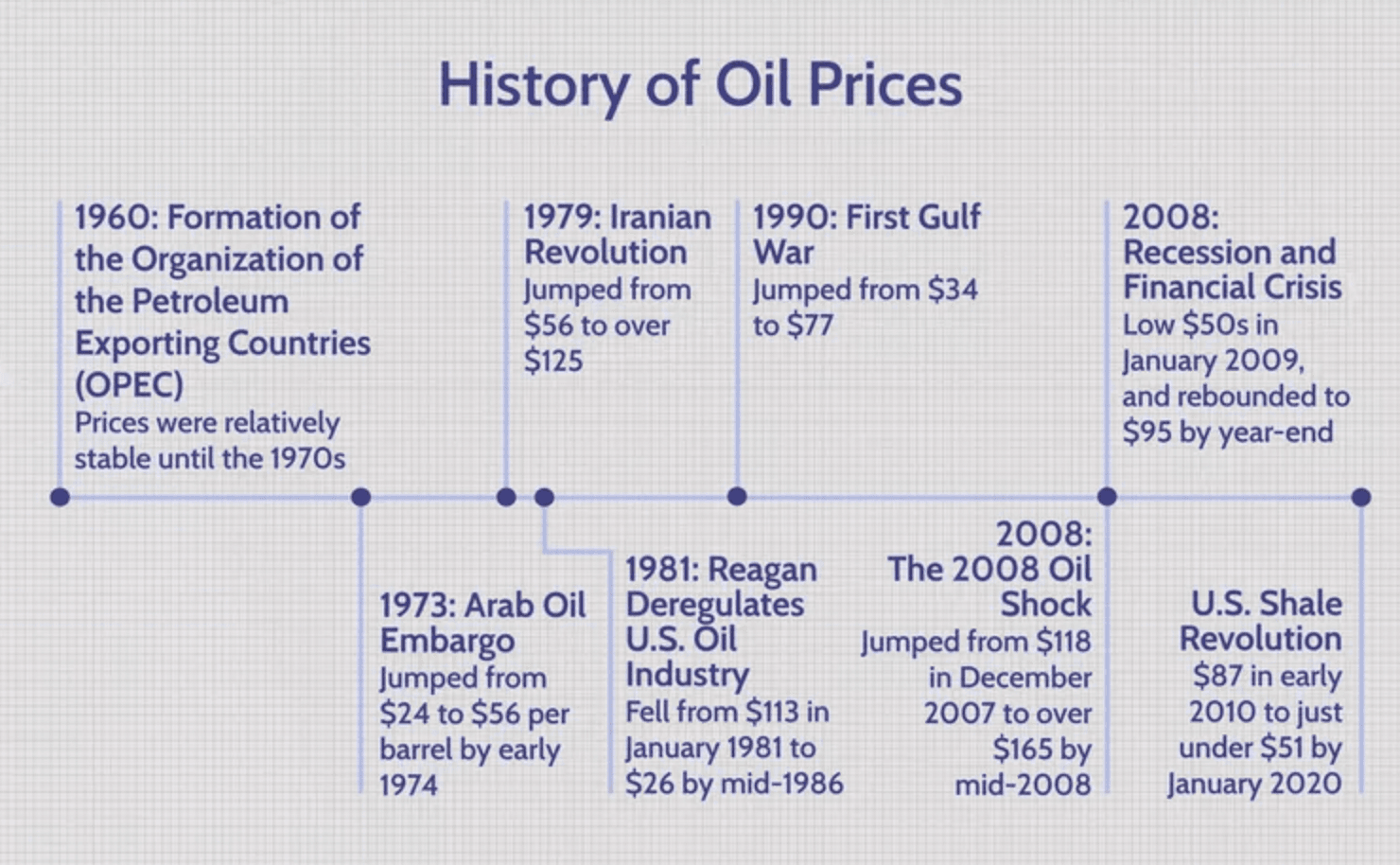
Posted by Meher QazilbashJul 23See a timeline that shows how volatile oil prices have been for decades, from OPEC-led embargoes in the 1970s and shale surges in the 2000s to the US flipping to become a net oil exporter in 2020. ZoomHistory of Oil PricesInvestopediahttps://www.investopedia.com/history-of-oil-prices-4842834
Posted by Meher QazilbashSep 10, 2025Lessons from the 1973 energy crisis still echo in today’s geopolitical battles over oilThe video from the Economist highlights how energy supply disruptions can be weaponized—just as in 1973, today’s gas cutoffs (Russia throttling supplies to Europe after their invasion of Ukraine) reveal the ongoing importance of strategic energy resilience. 15:01Energy crisis: what can 1973 teach us?The Economisthttps://www.youtube.com/watch?v=AR2Y8NU3k-k
Posted by Meher QazilbashSep 10, 2025In 2016 OPEC and 10 major producers—including Russia—launched OPEC+OPEC+ emerged in 2016 when 10 additional producers, including Russia, joined to stabilize markets amid U.S. shale growth. In 2022, OPEC alone supplied 38 % of global crude oil, but combined with OPEC+, output reached nearly 59 % of world production—significantly amplifying its market power.What is OPEC+ and how is it different from OPEC? - U.S. Energy Information Administration (EIA)https://www.eia.gov/todayinenergy/detail.php?id=61102
Posted by Meher QazilbashSep 10, 20251970s U.S. energy crisis sparked waves of green innovationFaced with the 1973 Arab oil embargo, the U.S. responded with bold innovation—enacting a 55 mph speed limit, pioneering daylight saving time, boosting solar research, expanding nuclear power, and pushing energy-efficient building designs and automotive technologies ZoomHow the 1970s US Energy Crisis Drove Innovation | HISTORYHISTORYhttps://www.history.com/articles/energy-crisis-1970s-innovation
Posted by Phoebe BainJan 2OPEC often intervenes to influence the price of oilThis guide explains how investing in oil works with in-depth explanations of each of the forces that control oil’s price. Oil is unique as a commodity in part because of OPEC’s role in regulating its price.Investopediahttps://www.investopedia.com/articles/economics/08/investing-in-oil-markets.asp
Posted by Drew SteigerwaldFeb 20In the 1970s, the US experienced a period of stagflationIt was characterized by high inflation, slow economic growth, and high unemployment. The crisis was triggered by a combination of factors, including loose monetary policy that spurred excess demand and spiraling oil prices caused by an OPEC embargo in 1973. 3:42Segment 207: Stagflation in the 1970shttps://www.youtube.com/watch?v=XfYuA4OL82U
Posted by Phoebe BainMar 12A report found that the 2026 Iran war is the largest oil supply disruption in history.Show 2 more findings ZoomIran war is the largest oil supply disruption in history, report findsPOLITICOhttps://www.politico.com/news/2026/03/12/iran-war-oil-market-disruption-00824791
Posted by Meher QazilbashJun 30Oil's legacy: fueling industrial growth and shaping imperial strategiesThis episode of The Rest Is History podcast traces oil's pivotal role—from fueling industrial growth to steering imperial power. It also examines how access to oil shaped US politics, World War II, and sparked the creation of OPEC following the Suez Crisis.167. Oil: The Making of the Modern World - The Rest Is History | Podcast on SpotifySpotifyCalifornia Consumer Privacy Act (CCPA) Opt-Out IconBack ButtonSearch IconFilter Iconhttps://open.spotify.com/episode/4mbWgZ57Ny1DHPp8S5nYZi
Posted by Meher QazilbashSep 10, 2025Trace the rise of oil: from early drilling to today’s global powerThis animated map video vividly illustrates how petroleum shaped global politics and industry—from 18th-century uses and 19th-century drilling booms in North America to today’s OPEC strategies, shale revolution, and geopolitical oil influence. 14:16Petroleum - Modern history of oil on a Maphttps://www.youtube.com/watch?v=xMQUGSrnbP8
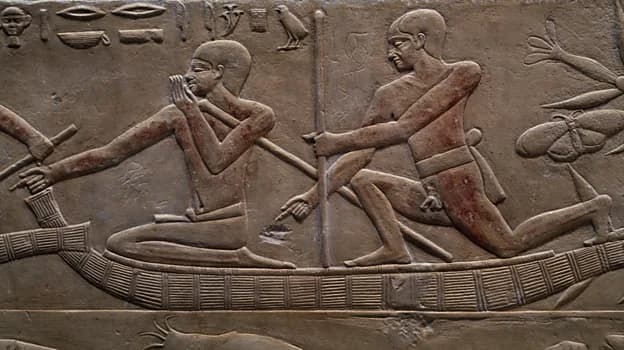
Posted by Marco Daniel MachadoApr 28The recorded history of crude oil use dates back about 5,000 years, with the Babylonians using it to waterproof their boats and as mortar in the construction of structures.Show 6 more findings ZoomHow did oil come to run our world?BBChttps://www.bbc.co.uk/teach/articles/zn6gnrd
Posted by Meher QazilbashSep 10, 2025Explore OPEC’s official webpageOPEC’s official website offers a comprehensive hub for its core work—featuring press releases, monthly and statistical reports, digital publications like the World Oil Outlook and Annual Statistical Bulletin, and other research center materials.Organization of the Petroleum Exporting Countrieshttps://www.opec.org/
Posted by Phoebe BainMar 19Beyond oil, the Iran war is pushing up costs on fertilizer, prescriptions, and mortgages, tooGas is up 27% since fighting began, but the Strait of Hormuz also carries a third of the world's fertilizer, petrochemicals used in generic drugs, and helium for semiconductor manufacturing. Mortgage rates have climbed back above 6.4%, and economists warn $130 oil could tip the U.S. into recession.All the Ways the Iran War Is Draining Your WalletInvestopediahttps://www.investopedia.com/all-the-ways-the-iran-war-is-draining-your-wallet-11928871
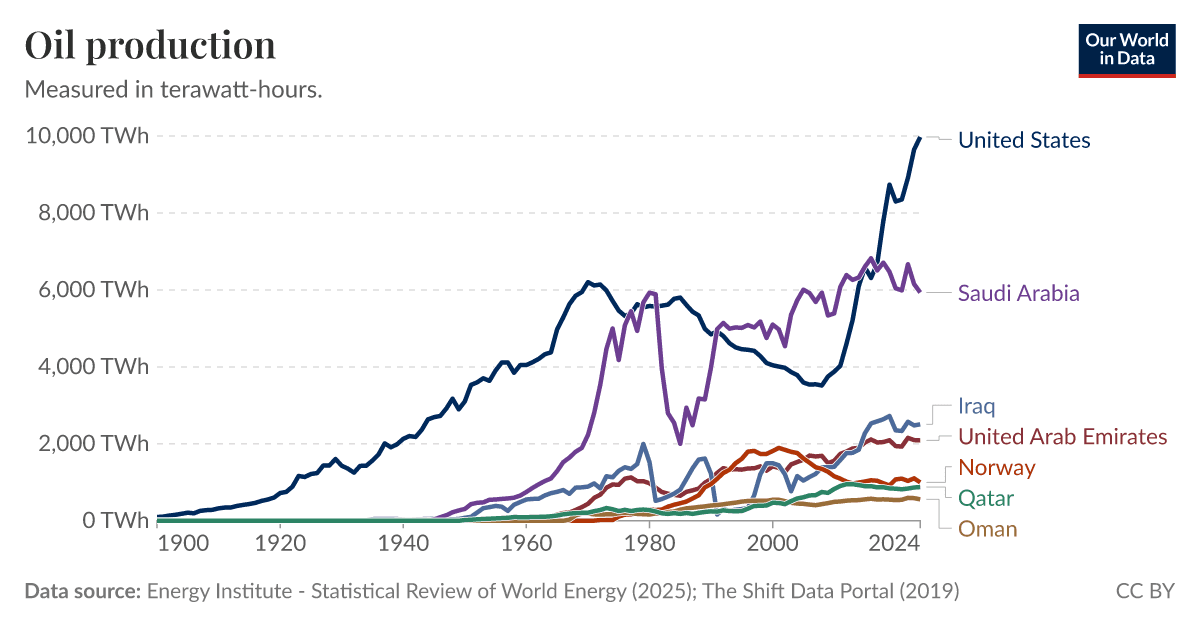
Posted by Phoebe BainMar 19View a breakdown of worldwide oil production since 1900, mostly led by the USWhen analyzing the production of crude oil, shale oil, oil sands, and condensates since the start of the 20th century, Saudi Arabia produced more crude oil only in 1977, from 1979 to 1981, and from 1991 to 2016. Nations such as Iraq and the United Arab Emirates produced much smaller quantities than both Saudi Arabia and the US. ZoomOil productionOur World in Datahttps://ourworldindata.org/grapher/oil-production-by-country
Posted by Meher QazilbashApr 23Explore a timeline of US dependence on crude oil from 1850 to 2023Oil dependence began with the rise of oil as a commodity, followed by an era of geopolitical competition for the resource after World War II. The domestic fracking boom, which started around 2006, was driven by a desire to reduce the nation's dependence on international adversaries for energy.Timeline: Oil Dependence and U.S. Foreign PolicyCouncil on Foreign Relationshttps://www.cfr.org/timeline/oil-dependence-and-us-foreign-policy
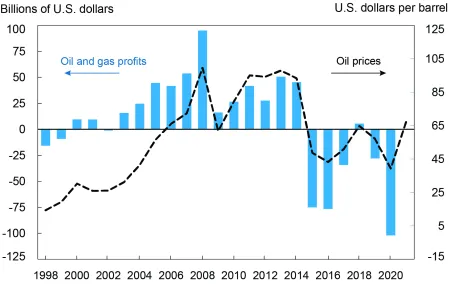
Posted by Meher QazilbashJan 8, 2025Unless prices of fossil fuels rise significantly, their production is expected to slowUS oil and natural gas production skyrocketed from 2000 to 2020, largely due to advances in fracking. However, weak global energy prices have prevented this boom from translating into increased profits for fossil fuel companies. ZoomThe Disconnect between Productivity and Profits in U.S. Oil and Gas Extraction - Liberty Street Economicshttps://libertystreeteconomics.newyorkfed.org/2022/08/the-disconnect-between-productivity-and-profits-in-u-s-oil-and-gas-extraction/
Posted by Phoebe BainJan 2Oil prices spiked when Russia invaded Ukraine in 2022The price of a barrel of Brent crude experienced volatility in the early 2020s. This chart shows price spikes at the beginning of the pandemic and again when Russia invaded Ukraine.https://tradingeconomics.com/commodity/crude-oil
Posted by Jeremy CronigMar 5Mosaddegh nationalized Iran's oil industry in 1951, threatening Western control of the country's resourcesBefore nationalization, British companies controlled most of Iran's oil wealth, with little revenue returned to Iranians. Mosaddegh's decision made him a national hero at home but triggered a Western-led embargo and ultimately contributed to the coup that removed him from power.EBSCOhttps://www.ebsco.com/research-starters/history/iran-nationalizes-its-oil-industry
Posted by Phoebe BainJan 2Oil markets are seeing higher costs and lower prices amid tech breakthroughsExperts say oil demand has not yet reached its peak. Recent technological breakthroughs in the oil industry include advances in drilling and extraction, as well as subsurface technologies.https://open.spotify.com/episode/2cPQdrcIKh4WvE7yGmrgBa
Posted by Phoebe BainJul 21Pan Am was once the largest international airline in the US—but it shut down in 1991 after a series of financial issues, beginning with increased operating costs and reduced demand driven by the oil crisis in the 1970s.Show 4 more findings 11:06The Rise And Fall Of Pan AmBusiness Insiderhttps://www.youtube.com/watch?v=pmEbpnUG-2s
Posted by Meher QazilbashSep 10, 2025The Seven Sisters were a dominant midcentury Western oil consortiumAmid the fallout of World War II, Western multinational corporations expanded their control of the production of oil across the oil-rich Middle East, earning the pejorative nickname of the Seven Sisters. In the 1970s, the group’s role diminished as nationalist movements pursued sovereign control of the oil. OPEC NEW DESIGN_Topic Page Drafthttps://www.financial-dictionary.info/terms/seven-sisters-oil-companies/
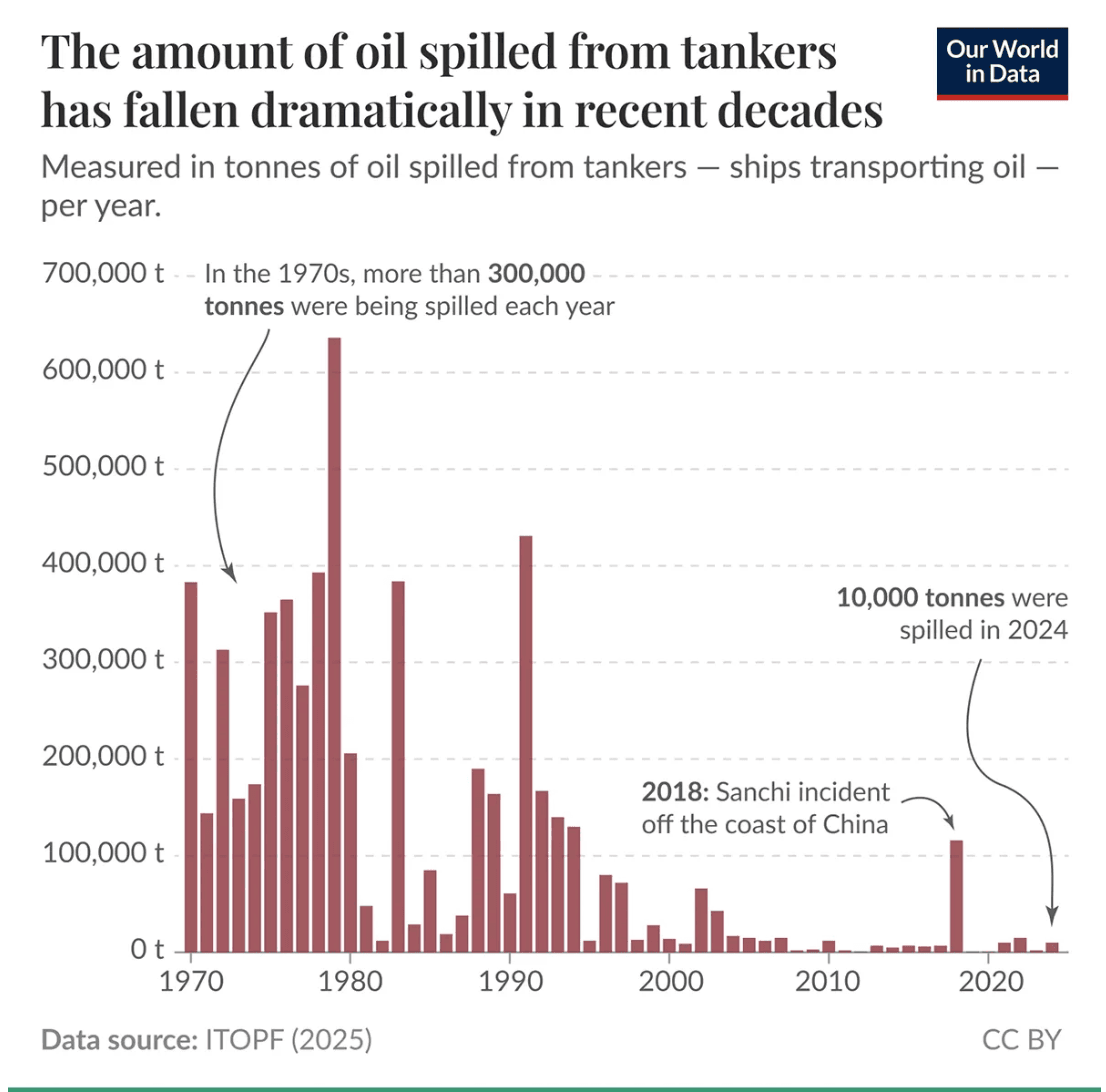
Posted by Phoebe BainJan 2The number of annual oil spills has dropped dramatically since the 1970sOil spills from oil tankers—which can have a sharp, short-term impact on oil prices—have become increasingly rare over the decades in part because of stricter regulations. ZoomVisual Capitalisthttps://www.visualcapitalist.com/cp/oil-spills-1970-to-2024/
Posted by Meher QazilbashMar 5Oil nationalization triggered the CIA‑backed 1953 coup in IranNPR's Four Days in August podcast recounts the four days of covert CIA‑UK operations in Iran that toppled Prime Minister Mossadegh in August 1953. Threats of Iranian oil nationalization were a major driver of the decision to facilitate regime change.Four Days In August : ThroughlineNPRhttps://www.npr.org/2019/07/10/740510559/four-days-in-august
Posted by Phoebe BainMar 17Why have gas prices surged nearly 27% since the Iran war began?Oil passing through the Strait of Hormuz makes up only about 7% of US crude imports. However, crude oil prices account for 51% of the cost of a gallon of gas in the US. US refiners pay the Brent crude futures price, even for domestic drilling. Oil only accounts for half the cost of a gallon of gas. Here's where the rest comes from.CBS Newshttps://www.cbsnews.com/news/iran-war-gas-prices-gallon-crude-oil-chart/
Posted by Meher QazilbashSep 10, 2025Large oil companies knew about the impact of carbon emissions since the ’70sPBS Frontline’s The Power of Big Oil reveals how industry giants like Exxon and Shell were researching climate change in the 1970s but then funded denial campaigns—using internal science to sow public doubt for decades.The Power of Big Oil | FRONTLINEPBShttps://www.pbs.org/wgbh/frontline/documentary/the-power-of-big-oil/
Posted by Jeremy CronigMar 5The 1979 Iranian Revolution inspired other Islamist movements and alarmed Sunni governmentsBy establishing the world's first modern Islamic theocracy, the revolution inspired Islamist movements across the region and alarmed Sunni Arab governments. The resulting rivalry between Shia Iran and Sunni Saudi Arabia has since fueled proxy conflicts in Lebanon, Iraq, Syria, and Yemen that persist today.https://institute.global/insights/geopolitics-and-security/ideology-and-irans-revolution-how-1979-changed-world
Posted by Marco Daniel MachadoMay 4How disruptions in oil markets can drive up the price of everyday goodsMost types of plastic are made from polymers derived from chemicals produced by the processing and refining of crude oil and natural gas. Spikes in the cost of either fossil fuel raise the cost of wrappings, tubs, and other plastic containers for products.Why the Iran war is making everyday shopping more expensiveReutershttps://www.reuters.com/graphics/IRAN-CRISIS/OIL-CONSUMERS/akpeyynmypr/?user_id=68210e0b96ac40707a0cfdc9
Posted by Phoebe BainJan 2Fracking has led to an increased global oil supply, contributing to lower oil pricesFracking technology has significantly increased how much crude oil the US produces. As more countries adopt fracking technology, there could be an increased downward pressure on prices—although fracking has been widely criticized for its negative environmental impacts.Investopediahttps://www.investopedia.com/ask/answers/013015/how-does-fracking-affect-oil-prices.asp
Posted by Teddy BurkhardtMar 18, 2022Breaking down Europe's reliance on Russian energy (preinvasion)One side effect of the Russian-Ukraine conflict is how it underscored European dependence on Russian natural gas and oil. This article, published days before the Russian attacks, outlines and illustrated how much gas and oil flows from Russia to Europe and the potential for either side to use sanctions to get what they want.Russian gas threat in EuropeReutershttps://graphics.reuters.com/UKRAINE-CRISIS/GAS/gdpzynlxovw/
Posted by Phoebe BainJan 2The US stores hundreds of millions of oil barrels in caves along the Texas-Louisiana coastThe US has a Strategic Petroleum Reserve that it taps into, releasing barrels into the economy, during times of emergency (think: major storms and wars) to try to stabilize markets. 5:36The Wall Street Journalhttps://www.youtube.com/watch?v=6mWeBUi44r0
Posted by Teddy BurkhardtDec 3, 2025Japan attacked Pearl Harbor largely because it was running out of oilThis video traces how US-led sanctions and Japan’s near-total dependence on imported oil pushed Japanese leaders toward a high-risk plan: seize Southeast Asian oil fields and neutralize the American Pacific Fleet, hoping Washington would negotiate rather than fight. 13:52The reason Japan attacked Pearl HarborImperial War Museumshttps://www.youtube.com/watch?v=so4v_2zq35k
Posted by Jeremy CronigApr 13The 1956 Suez crisis was one of the earliest tests of the rules-based orderWhen Britain, France, and Israel secretly invaded Egypt, the Eisenhower administration supported UN resolutions condemning the invasion and called for a ceasefire—publicly criticizing its closest allies to uphold the principle that force should not be used to resolve international disputes.https://history.state.gov/milestones/1953-1960/suez
Posted by Phoebe BainJan 2Spare capacity is the amount of oil production that can be brought online within 30 days and sustained for at least 90 daysSpecifically, a country’s “spare capacity” signifies the difference between its maximum sustainable oil production and its current output. OPEC member countries hold nearly all of the world’s spare oil production capacity. Historically speaking, Saudi Arabia has been the country with the largest spare capacity.https://www.eia.gov/finance/markets/crudeoil/supply-opec.php
Posted by Phoebe BainJan 2The world derives more of its energy from oil than from any other resourceCoal and gas are second and third, respectively, in terms of where the bulk of the world’s energy consumption stems from. These interactive charts can help you visualize where the world sources the most of its energy.Our World in Datahttps://ourworldindata.org/energy-mix