Time Travel

Overview

The prospect of revisiting the past or jumping to the future has captured people's imaginations for centuries. Our contemporary understanding of time travel is a marriage of theoretical physics and science fiction.

1440 Findings

Hours of research by our editors, distilled into minutes of clarity.

  • Potential solutions to the grandfather paradox

    This grandfather paradox – the notion that changing the past may alter the present conditions that motivated the time traveler in the first place – instills doubt in time travel. But, as this video explains, subatomic particles regularly do different things in parallel. So, what if the universe exists in two states: one where your grandfather is alive and another where he’s dead? Intrigued? Confused? Let the animations in this 2-minute video help you wrap your mind around the possibility.
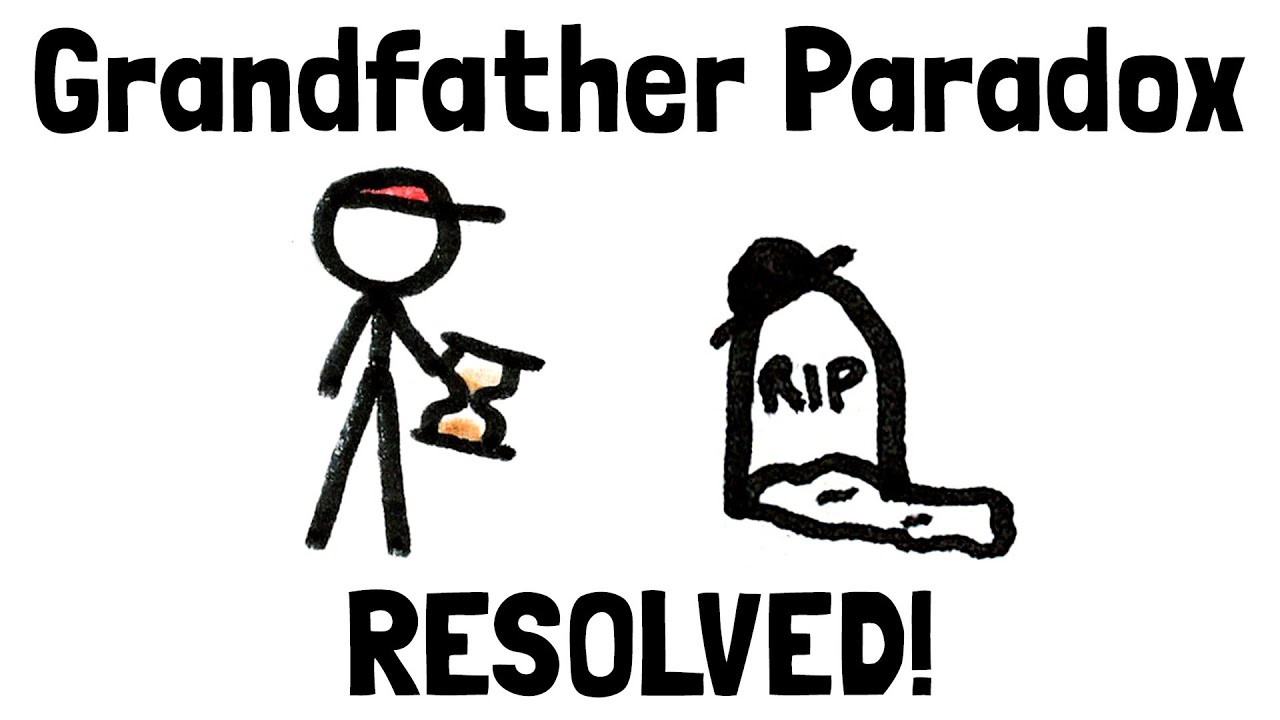
    Video
    Potential solutions to the grandfather paradox

  • The origins of our fascination with time travel

    Humans have been captivated by the prospect of leaping forward and backward in time for thousands of years. Georgia Institute of Technology Science Fiction Studies Professor Lisa Yaszek recounts how the concept has been utilized by storytellers from 400 BCE to modern-day to explore our relationship with the supernatural, technology, and the past. In a way, this historical recounting is a journey through time.

  • Is time travel really possible?

    The laws of physics, as currently understood, don’t categorically reject the possibility of time travel. But, scientists are skeptical, especially when it comes to traveling to the past. Hopping between past, present and future would require the world to have some wacky yet-to-be-discovered physical properties like negative mass, negative energy, and infinite density. Time travel also introduces philosophical questions about free will, causality, and chronology.

  • Neil deGrasse Tyson explains wormholes and black holes

    Much of the film Interstellar is centered on the existence of a wormhole and black hole, which happen to be two of the most perplexing things in the universe. Astrophysicist and StarTalk Radio host Neil deGrasse Tyson explains how wormholes and black holes work in real life in this two-minute video.

    Video

    Neil deGrasse Tyson explains wormholes and black holes

  • Five potential ways to achieve time travel

    While the author discounts the possibility of traveling to the past, it lays out five hypothetical modes of catapulting into the future: speed, gravity, suspended animation, wormholes, and light. Each has some scientific basis, but none are realistic for humans. Read the article to learn where they offer promise and where they fall short.

  • According to special relativity, time travel cannot change history

    Although time travel is allowed—because all moments of the past, present, and future exist simultaneously and are locked in place—you will be unable to alter events beyond those that you changed because you were there before your travel to the past, including doing something to change your existence.

    Time Travel For Real This Time with Brian Greene & Neil deGrasse Tyson
    Video

    According to special relativity, time travel cannot change history

Next page

Explore Human Interest

View All Human Interest