Time Travel

Overview

The prospect of revisiting the past or jumping to the future has captured people's imaginations for centuries. Our contemporary understanding of time travel is a marriage of theoretical physics and science fiction.

1440 Findings

Hours of research by our editors, distilled into minutes of clarity.

  • According to special relativity, time travel cannot change history

    Although time travel is allowed—because all moments of the past, present, and future exist simultaneously and are locked in place—you will be unable to alter events beyond those that you changed because you were there before your travel to the past, including doing something to change your existence.

    Time Travel For Real This Time with Brian Greene & Neil deGrasse Tyson
    Video

    According to special relativity, time travel cannot change history

  • Potential solutions to the grandfather paradox

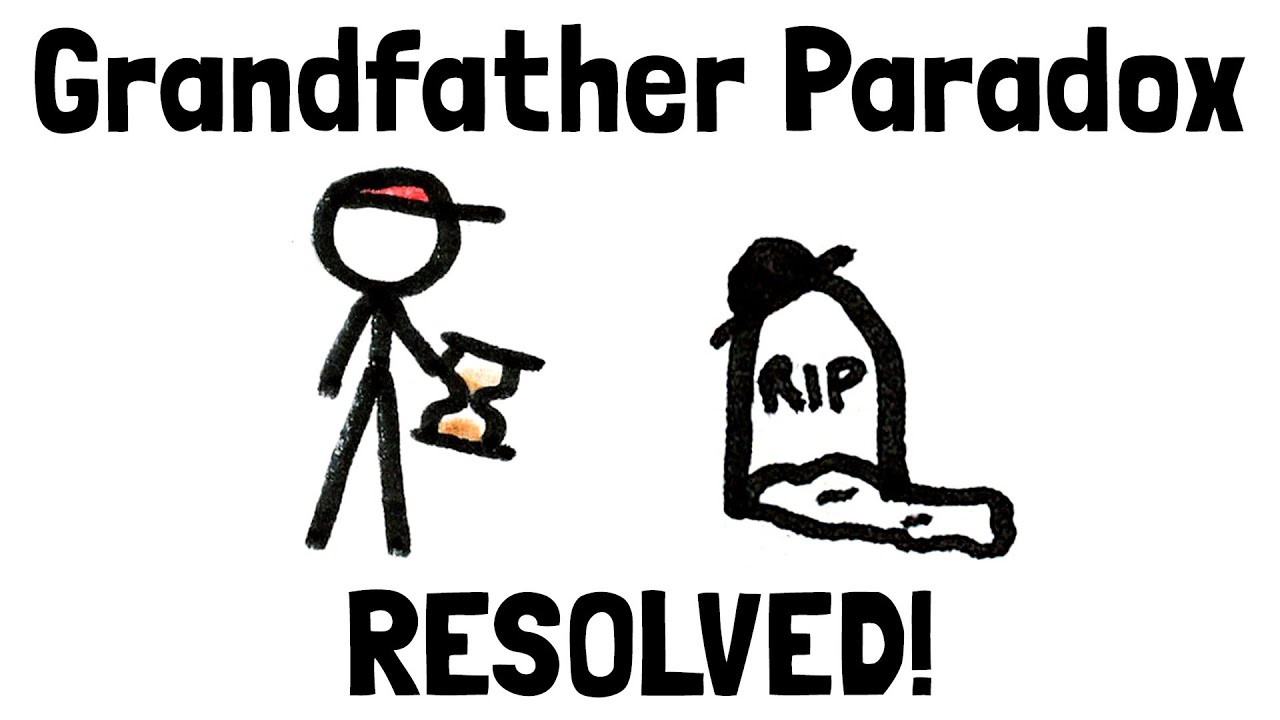
    This grandfather paradox – the notion that changing the past may alter the present conditions that motivated the time traveler in the first place – instills doubt in time travel. But, as this video explains, subatomic particles regularly do different things in parallel. So, what if the universe exists in two states: one where your grandfather is alive and another where he’s dead? Intrigued? Confused? Let the animations in this 2-minute video help you wrap your mind around the possibility.

    Video

    Potential solutions to the grandfather paradox

  • The James Webb Space Telescope is like a time machine

    When you look up at a constellation with your naked eye, you’re looking thousands of years into the past. The stars are so far away that it takes their light that long to reach us. Today’s most powerful telescopes, such as the James Webb Space Telescope, can see billions of years into the past. So, as this article suggests, looking through a telescope (or even up at the stars with your own eye) could be considered a form of time travel.

  • What Stephen Hawking said about time travel

    When renowned theoretical physicist Stephen Hawking did not rule out the possibility of time travel in his posthumous book Brief Answers to the Big Questions, many hopefuls got excited. But, unfortunately for them, Hawking believed that yet-to-be discovered laws of physics will prove time travel impossible. This piece outlines some practicalities about the speed of light and wormholes that lend way to Hawking’s prediction.

  • Neil deGrasse Tyson explains wormholes and black holes

    Much of the film Interstellar is centered on the existence of a wormhole and black hole, which happen to be two of the most perplexing things in the universe. Astrophysicist and StarTalk Radio host Neil deGrasse Tyson explains how wormholes and black holes work in real life in this two-minute video.

    Video

    Neil deGrasse Tyson explains wormholes and black holes

  • The earliest mention of time travel

    Time travel has fascinated humans for centuries. It appears in myths, literature, and science fiction. One of the earliest examples comes from the 400 BCE Hindu epic Mahabharata, describing time dilation long before Einstein’s Theory of Relativity. By the 19th century, stories introduced machines enabling time travel—setting the stage for modern sci-fi.

    Video 1440 Original

    The earliest mention of time travel

  • The origins of our fascination with time travel

    Humans have been captivated by the prospect of leaping forward and backward in time for thousands of years. Georgia Institute of Technology Science Fiction Studies Professor Lisa Yaszek recounts how the concept has been utilized by storytellers from 400 BCE to modern-day to explore our relationship with the supernatural, technology, and the past. In a way, this historical recounting is a journey through time.

Next page

Explore Human Interest

View All Human Interest