Watch President John F. Kennedy's speech on going to the moon
On Sept. 12, 1962, President John F. Kennedy set forth this argument for the effort to land humans on the moon’s surface, casting the Apollo mission in terms of historic human ambitions.
From the dawn of the space race to an era of international cooperation, the exploration of outer space has pushed both the limits of human imagination and humankind's technological capability. Explore the rich history of space exploration below, along with where we may go in the future.
Hours of research by our editors, distilled into minutes of clarity.
On Sept. 12, 1962, President John F. Kennedy set forth this argument for the effort to land humans on the moon’s surface, casting the Apollo mission in terms of historic human ambitions.
On the night of July 20, 1969, Neil Armstrong stepped down the lunar module's ladder onto the moon's surface. The broadcast was watched by an estimated 650 million people—about a fifth of the then global population.
Despite the US starting the Space Race behind the Soviet Union, which had put a cosmonaut into space in 1961, the successful landing of Apollo 11 on the moon in 1969 was seen as a defining victory for America.
Although starting behind in the Space Race in 1958, NASA became a global leader in humanity's exploration of space with the Apollo program, which placed astronauts on the moon. Since then, it has been responsible for the construction of multiple telescopes, the International Space Station, and development of the Artemis program to return humans to the Moon before eventually reaching Mars.
Established in 1958—a year after the Soviet Union launched Sputnik 1—the National Aeronautics and Space Administration has taken humanity into outer space and helped reveal the nature of the universe. Historic moments include the Apollo 11 mission putting humanity on the Moon and construction of the International Space Station.
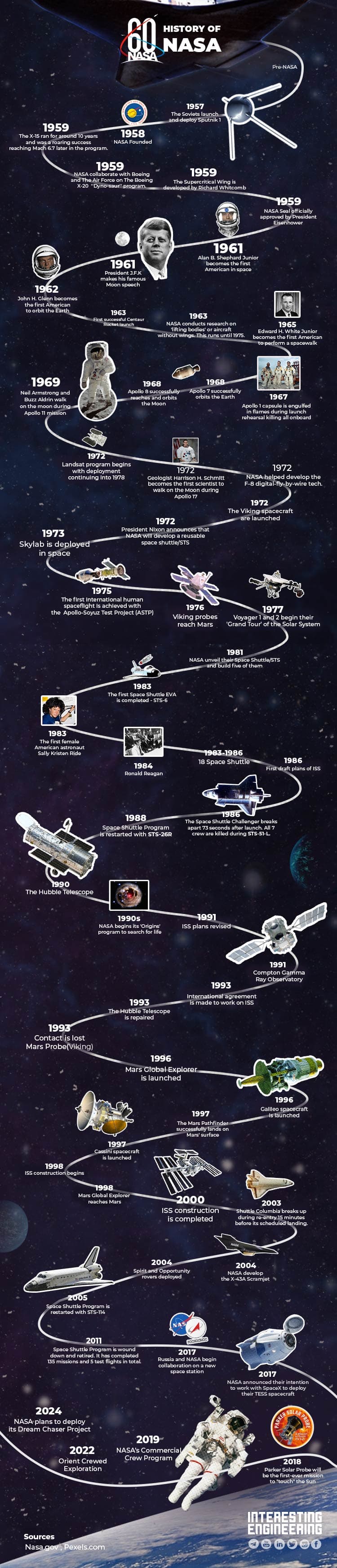
Created by Congress under the National Aeronautics and Space Act, NASA officially began in 1958, building on earlier aviation research and positioning the US to compete in the Space Race and lead global space exploration.
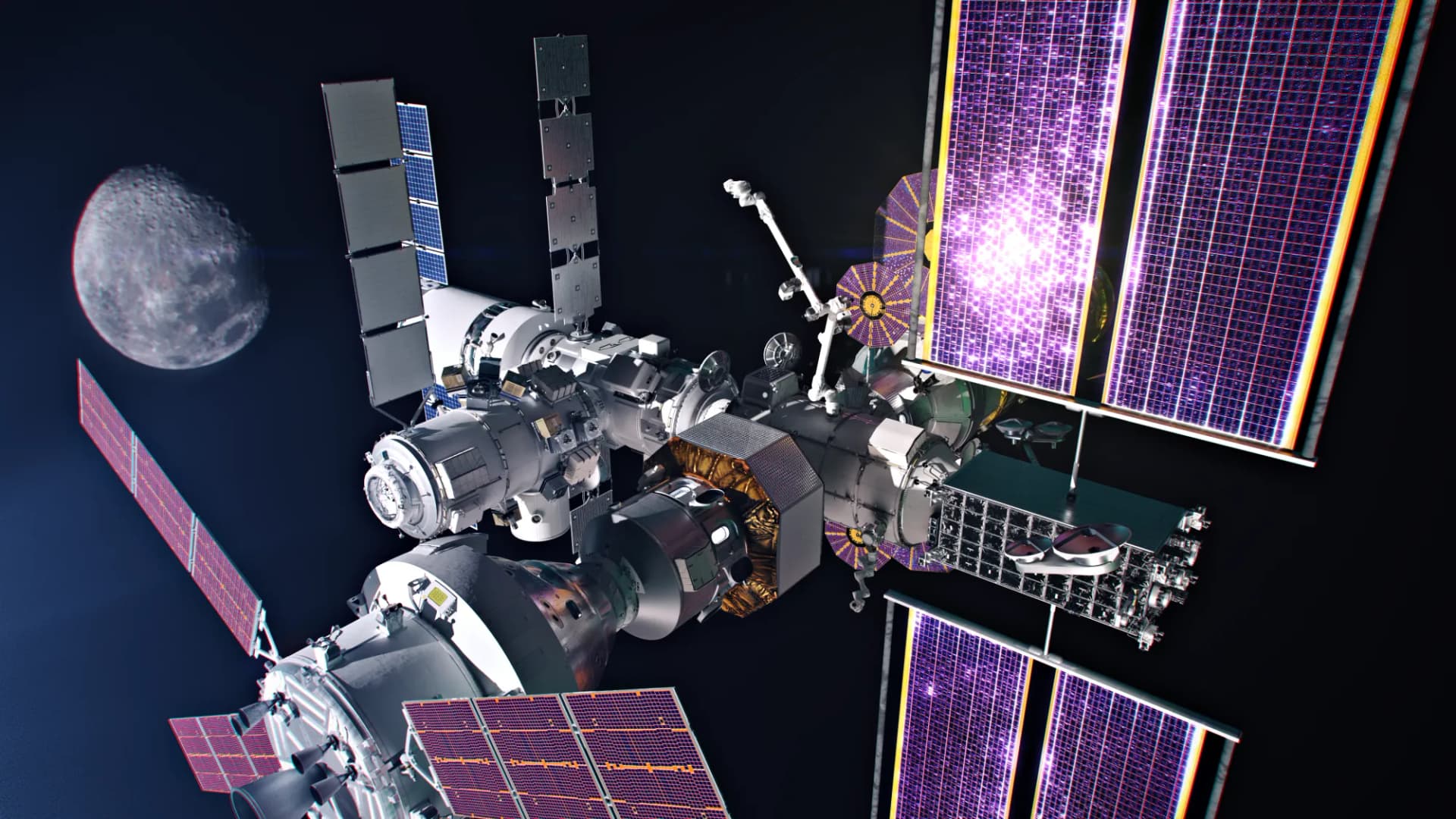
Planned for a 2027 launch, NASA Gateway is a lunar-orbiting space station meant to support Artemis lunar missions and future Mars travel. This resource includes an interactive 3D model of the proposed station’s modules and layout.
The continued human occupancy of the International Space Station since 2000 has led to the development of social and cultural elements by crew members, which the ISS Archaeology Project has catalogued. Records of handmade cakes, decorations, and memorabilia highlight the human aspect of living in space.
A collection of 44 studies, primarily based on data from a 2021 tourist trip to low-Earth orbit, identified immune system disruption and some kidney damage in tourists, with women appearing to recover from space travel faster than men. Return trips from Mars may require human travelers to be on dialysis.
Beyond this line, approximately 100 kilometers above Earth's surface, aerodynamic lift is insufficient to keep aircraft aloft without special propulsion systems. The United Nations has historically accepted the line as delineating the boundary of space.
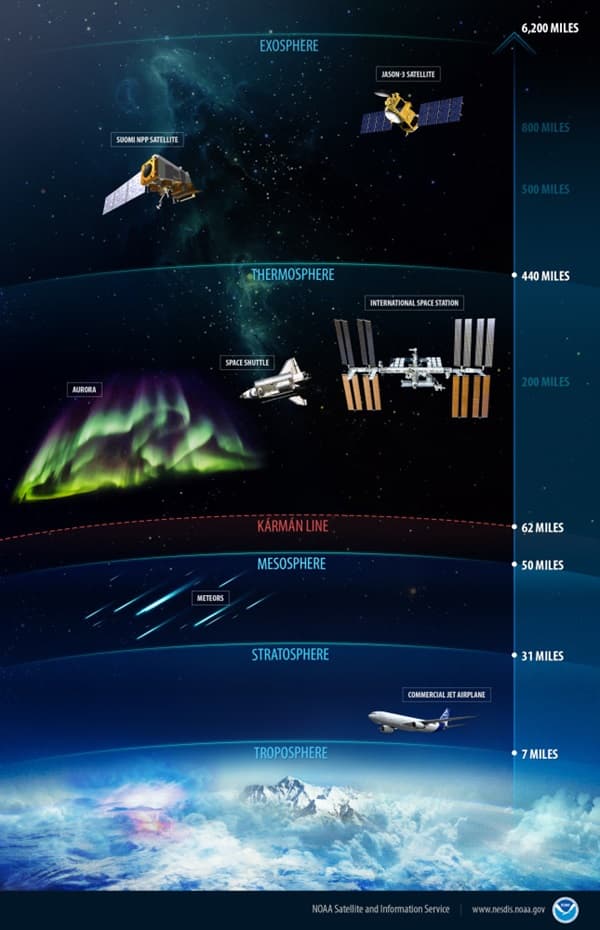
From roughly 60 miles above the Earth's surface to farther than light has traveled during the entire age of the universe, space has captured human imagination for millennia. Explore the final frontier with the best resources curated from across the internet.