Solar System

Overview

The solar system is the gravitationally bound system of the sun and the objects that orbit it. Of the bodies that orbit the sun directly, the largest are the four gas and ice giants and the four terrestrial planets, followed by an unknown number of dwarf planets and innumerable small solar system bodies. Of the bodies that orbit the Sun indirectly—the natural satellites—two are larger than Mercury and one is nearly as large.

1440 Findings

Hours of research by our editors, distilled into minutes of clarity.

  • The Oort cloud, our solar system's theoretical icy shell

    Recurring comets lead astronomers to believe they originate from an extremely distant, icy shell encapsulating the solar system. They call it the "Oort cloud," and this giant swarm of icy objects is as fascinating as it is is massive. Home of comets and a tremendous number of planetesimals, this NASA site introduces you to the Oort.
  • A return to Uranus

    There's been only one mission to Uranus before—Voyager 2 passed by the ice giant in 1986 before heading off into interstellar space. NASA's recent planned itinerary for space missions lists Uranus as the highest priority over the next decade. The seventh planet is 20 times as far from the sun as Earth, and researchers say its study will shed light on how the outer half of the Solar System formed.

  • Zooming out from Earth to the edge of space

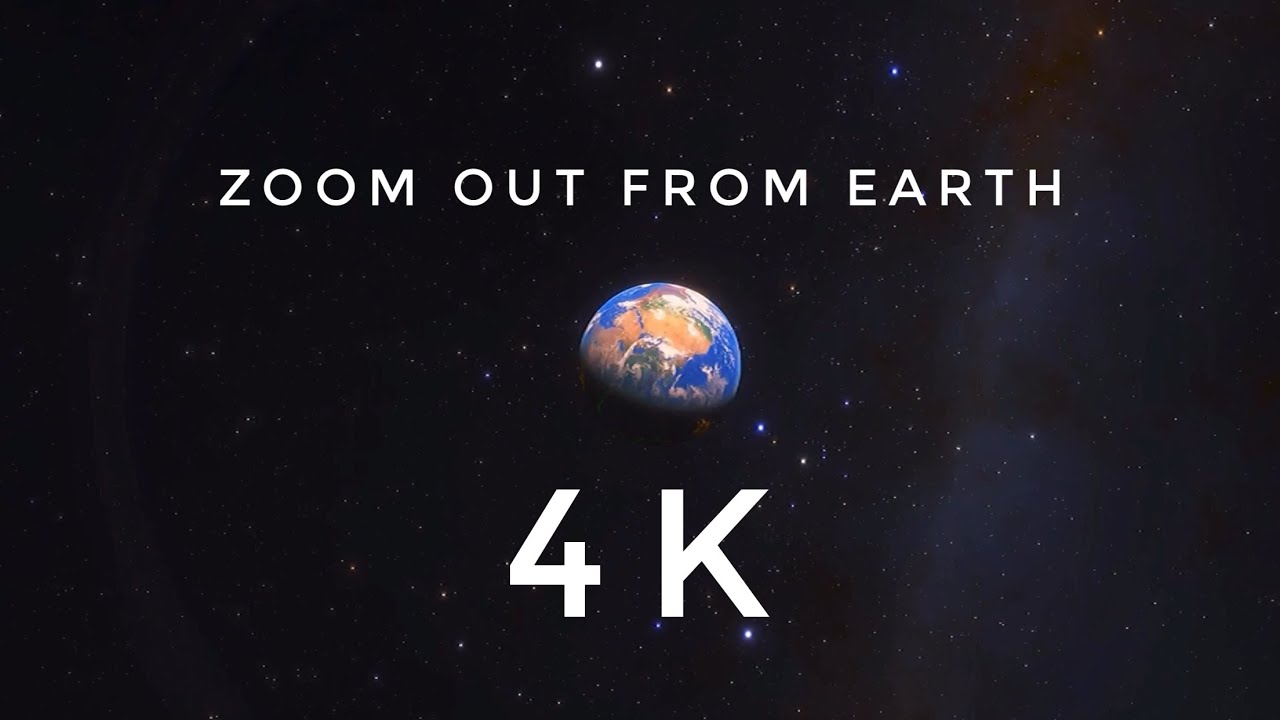
    For perspective on the universe's absolute massiveness, watch this four-minute video. Beginning at a facility in Germany, the "camera" pulls back revealing the surrounding countryside, Germany itself, Europe, the Earth, and so on. At one point stars form galaxies and galaxies, at a distance, become as seemingly "small" as the individual stars.

    Video

    Zooming out from Earth to the edge of space

  • What is the Kuiper Belt?

    The Kuiper Belt is a collection of extraterrestrial objects that might've been a planet if it hadn't been for Neptune. Still, the belt is a fascinating collection of dwarf planets, rocks, ice, and comets. Extending beyond Neptune's orbit, the Kuiper Belt provides an endless selection of interesting objects and anomalies for astronomers to explore.

  • What fuels the sun?

    The sun is our biggest source of heat and light, but how does this massive powerhouse continue to produce such amazing energy? Basically, it's a fusion reactor. At its core the sun produces all that solar energy through hydrogen fusing and converting into helium, over and over again. Learn more about the entire amazing and explosive process here.

  • Explaining the galaxy-sized gas bubbles hovering around the Milky Way

    Depth perception is hard to achieve when looking out into space. For decades, two camps of astrophysicists have disagreed over the nature of the North Polar Spur, a radio-wave emitting arc above the Milky Way galaxy's plane. Was it close and relatively small? Or was it faraway and much more massive? New research utilizing X-ray mapping of the galaxy has helped clarify the existence of both so-called smaller Fermi bubbles and larger X-ray ones.

  • An interactive look at Neptune, the distant planet

    Dark, cold, and whipped by supersonic winds, Neptune is a gas giant made of hydrogen, helium, ammonia, and methane, and was the first planet discovered through mathematics rather than direct observation. It's also the smallest of the gas planets on the periphery of the solar system. Learn more about the last planet in the solar system through the NASA site.

  • Everything you need to know about Jupiter, the gas giant

    NASA introduces you to the fifth planet from the sun, the gas giant Jupiter. When it comes to our solar system, Jupiter is the biggest kid on the block. Named after the king of the Ancient Roman gods, Jupiter is a planet of storms and chaos, most famously in its Great Red Spot, a hurricane larger than the earth itself.

  • A look at Uranus, our distant icy cousin

    NASA provides a profile of the seventh planet from the sun and the third largest—Uranus. More than just a punchline, the planet is cold, windy, and utterly inhospitable. It's also a lovely blue-green, due to the large amounts of methane it contains, with faint rings and two dozen moons. Learn more about this not-so-gentle gas giant.

Next page

Explore Space

From roughly 60 miles above the Earth's surface to farther than light has traveled during the entire age of the universe, space has captured human imagination for millennia. Explore the final frontier with the best resources curated from across the internet.

View All Space