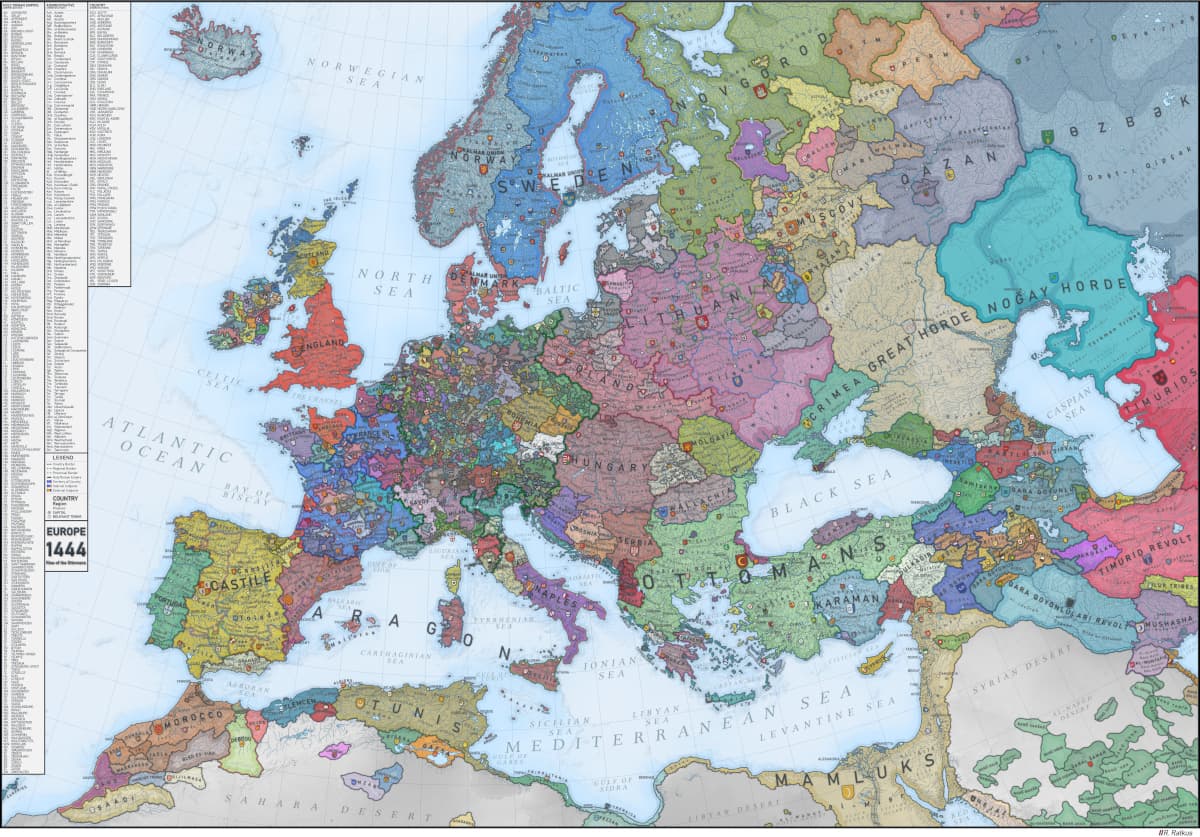
Posted by Teddy BurkhardtJun 24Explore a map of Medieval Europe, which was a patchwork of hundreds of competing states.Show 3 more findings ZoomExplore this Fascinating Map of Medieval EuropeVisual Capitalisthttps://www.visualcapitalist.com/map-of-medieval-europe-in-1444/
Posted by Drew SteigerwaldJun 24The Middle Ages, the roughly 1,000-year period between the fall of Rome and the Renaissance, shaped the political and cultural foundations of modern Europe.Show 4 more findings 6:12Beyond the Dark Ages: How Medieval Europe Shaped the World1440 Originalshttps://www.youtube.com/watch?v=kuS_6B-IWDg
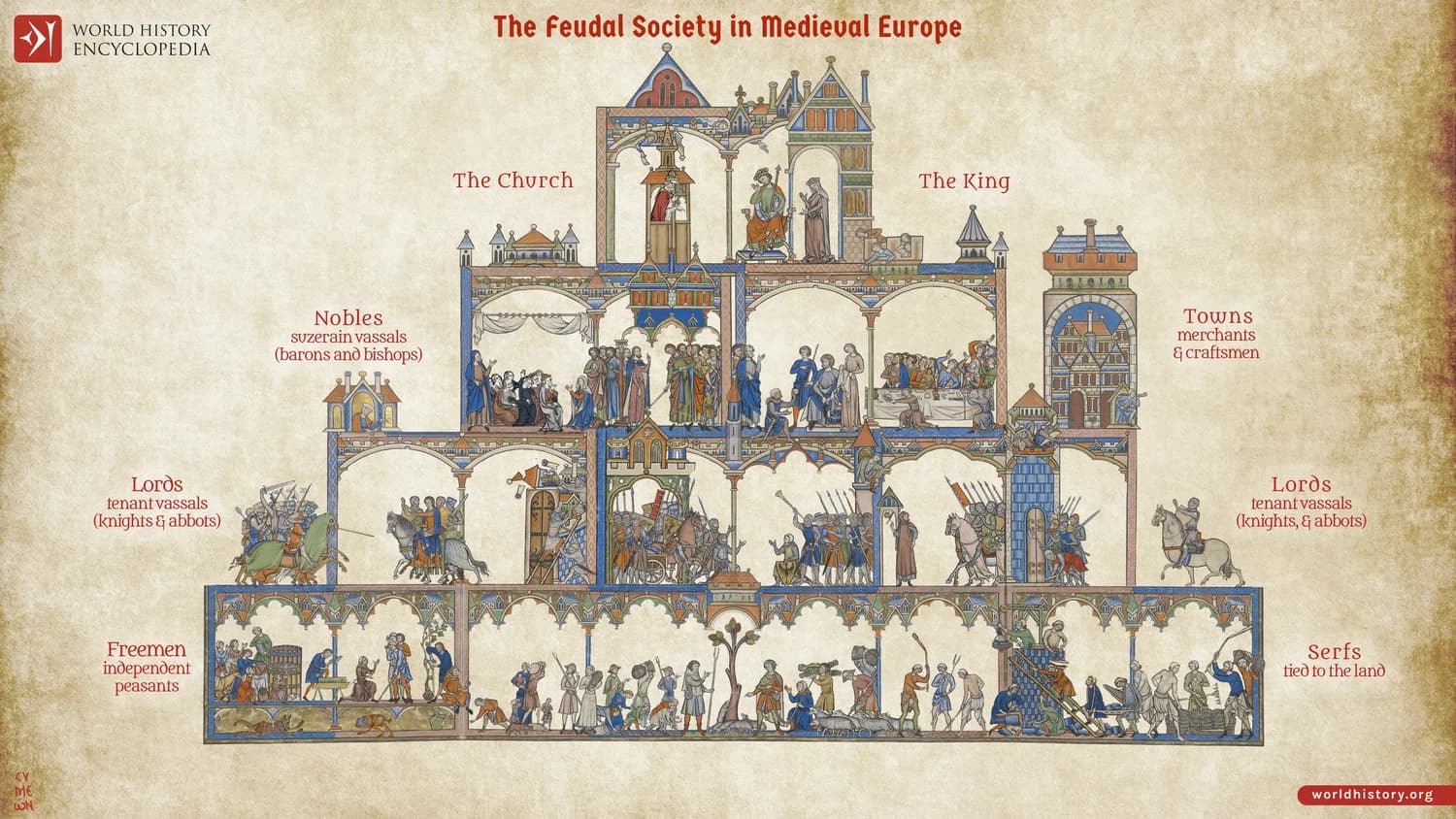
Posted by Teddy BurkhardtMar 22, 2024Feudal landholding organized medieval Europe’s economy without relying on slaveryFrom the 10th to 13th centuries, Europe’s agricultural system relied on localized hierarchies. Lords granted land to knights for defense, who in turn mainly oversaw free peasants paying rents in labor, goods, or money rather than living under slavery. 00:04:38Feudalismhttps://www.youtube.com/watch?v=OfXholnOS9E
Posted by Teddy BurkhardtMar 22, 2024Money—not land—became Europe’s key economic driver in the Middle AgeDuring the medieval commercial revolution, money gradually replaced land as the primary economic commodity. Expanding trade, markets, and finance transformed Europe’s economy—laying foundations, historians argue, that were essential for the later Industrial Revolution. 8:41The COMMERCIAL Revolution, Explained [AP Euro Review—Unit 1 Topic 10 (1.10)]https://www.youtube.com/watch?v=01-iSY38pPQ
Posted by Meher QazilbashMay 7, 2025A map of the Byzantine EmpireThis map, hosted on the World History Encyclopedia, shows the Byzantine Empire in four eras. The area shaded dark purple is the original Eastern Roman Empire. The light purple areas represent the conquests of Justinian. The dark purple line surrounds the middle Byzantine Empire. The hatched area, finally, indicates the small “Latin Empire” established after the Fourth Crusade. ZoomThe Byzantine Empire, c.520 - 1204 - World History EncyclopediaWorld History Encyclopediahttps://www.worldhistory.org/image/15330/the-byzantine-empire-c520---1204/
Posted by Teddy BurkhardtJun 13, 2023Where were the Middle Ages?Many have equated the Middle Ages to European culture and an era beyond the reach of science and art. This false equivalency minimizes, if not erases, the culture and scholarship that flourished worldwide during this time. Medieval history exists in and across many countries, including China, India, Iran, Sudan, and Ethiopia. In this article, a classical archaeologist details evidence of medieval life around the world. ZoomThe Myth of the ‘Dark Ages’ Ignores How Classical Traditions Flourished Around the WorldSmithsonian Magazinehttps://www.smithsonianmag.com/history/the-myth-of-the-dark-ages-ignores-how-classical-traditions-flourished-around-the-world-180982190/
Posted by Teddy BurkhardtJul 20, 2023Explore the medieval world in this 14th-Century mapThis virtual replica of a 14th-Century map allows viewers to see the medieval world through a Christian framework. Jerusalem is the center axle of the map, harkening back to the Bible's Old Testament, which states Jerusalem is the "centre of... ZoomThe Largest Medieval Map | Mappa Mundi Herefordhttps://www.themappamundi.co.uk/index.php
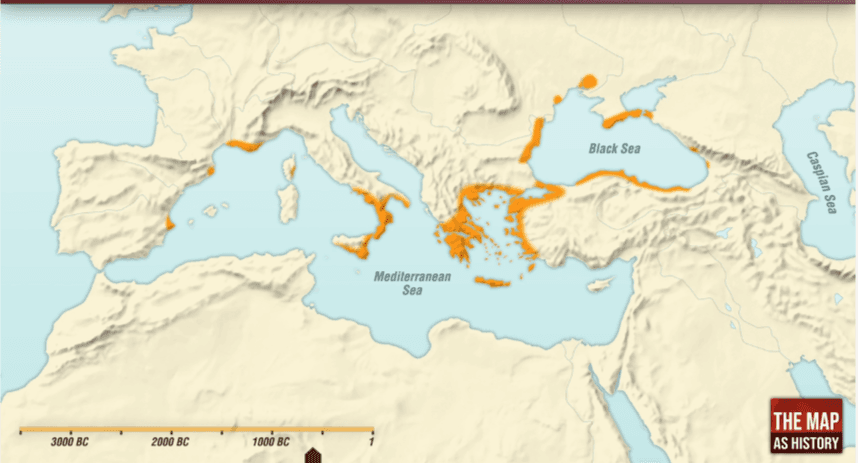
Posted by Teddy BurkhardtMar 8, 2024Mapping the shifts in ancient Greek territoriesThe jagged coastlines and many islands of the eastern Mediterranean peninsulas cultivated a seafaring civilization, which helped the Greeks colonize and trade in the Middle East, North Africa, and the rest of Europe. See the evolution of their territory with this quick animated map video. ZoomDiscover a video on Ancient Greece: the emergence of civilizationhttps://www.the-map-as-history.com/Ancient-Greece-Hellenistic-world/Territorial-evolution
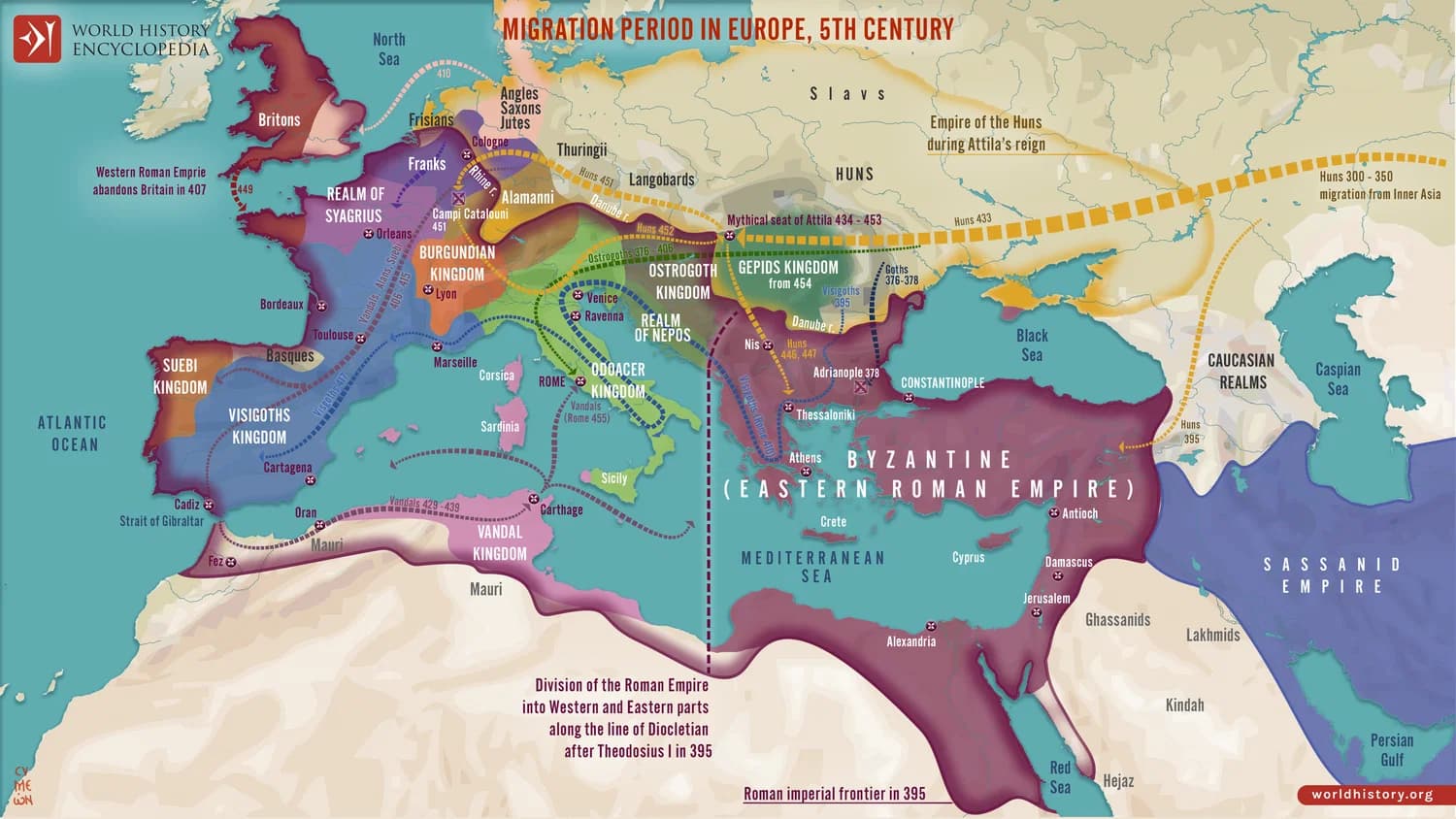
Posted by Teddy BurkhardtMar 22, 2024See how migrating tribes reshaped Europe after the fall of RomeDuring the early Middle Ages (c. 300–700 CE), groups such as the Franks, Vandals, Visigoths, and Suebi migrated into former Roman territories. Their movements transformed European politics and culture while preserving many Roman traditions. ZoomMigration Period in Europe During the 4th & 5th CenturyWorld History Encyclopediahttps://www.worldhistory.org/image/14250/migration-period-in-europe-during-the-4th--5th-cen/
Posted by Teddy BurkhardtMar 22, 2024Europe’s first universities emerged from medieval church schoolThe modern university can be traced back to the Middle Ages, when schools in Italy, France, and England initially trained clergy before expanding to include lay students. By the 10th and 11th centuries, they taught law, medicine, and theology across Europe. ZoomHistorianahttps://historiana.eu/historical-content/source-collections/bologna-and-the-rise-of-medieval-universities
Posted by Teddy BurkhardtFeb 26, 2025Six myths about the Middle AgesThe Middle Ages, or medieval era, refers to roughly 500 CE to 1,500 CE. Contemporary opinion perceives this era as "dark" or backward because it was the time between the fall of Rome and the rise of the Renaissance. But much of the era was vibrant, and many myths are just that, including the idea that most people believed the Earth was flat. Watch this video to debunk more myths. 4:496 myths about the Middle Ages that everyone believes - Stephanie Honchell SmithTED-Edhttps://www.youtube.com/watch?v=e9-l34TcV_U
Posted by Teddy BurkhardtNov 6, 2025Trade and conquest carried chess into Europe by the 11th centuryAfter spreading through Persia, chess traveled along Islamic military and trade routes into North Africa and Moorish Spain by the 10th century. By the 11th century, it had taken root across much of Europe, flourishing in courts and monasteries. 14:08A Brief History of the Game of Chesshttps://www.youtube.com/watch?v=w2aCK1yT8Ms
Posted by Drew SteigerwaldJul 15Watch the many different civilizations around the Mediterranean shift power from the year 2500 BCE to 0 BCE in this animated map. 4:30History of the Ancient Mediterranean: Every Yearhttps://www.youtube.com/watch?v=8h4QDsfnNMg
Posted by Teddy BurkhardtJun 24The Middle Ages produced inventions that still affect our lives today, like coffee houses and improved agricultural techniques.Show 3 more findings Zoom18 Inventions that shaped Europe in the Middle Ages - Interesting EngineeringInteresting Engineeringhttps://interestingengineering.com/lists/18-inventions-of-the-middle-ages-that-changed-the-world
Posted by Teddy BurkhardtAug 10, 2023Maps of murder across medieval EnglandThese interactive maps show the sites of murders across York, Oxford, and London during the 14th Century. Explore the data by clicking site pins or experimenting with map filters, including crime scene type and murder weapon. Each pin includes a blurb on what researchers concluded about the attack, such as how a fight between the London fishmonger and skinner guilds during August 1340 ultimately left one man dead. ZoomLondon Medieval Murder Map | Violence Research Centrehttps://medievalmurdermap.co.uk/
Posted by Teddy BurkhardtApr 17Watch the British Empire expand and recede over 5 centuriesThis interactive map traces the British Empire from 1450 to today—showing its explosive 19th-century expansion to one-quarter of the world's land and its steady contraction after World War II.Map: The rise and fall of the British EmpireThe Washington Posthttps://www.washingtonpost.com/news/worldviews/wp/2015/09/08/map-the-rise-and-fall-of-the-british-empire/
Posted by Teddy BurkhardtJun 28, 2024Mapping Russia's historical bordersThis interactive map illustrates how the country’s borders have changed over the centuries, dating all the way back to the year 862, when the Varangian king Rurik assumed leadership of Ancient Rus. Scroll down to see how Russia vastly expanded its territory in the 16th and 17th centuries, and skip to 1991 to see which countries gained independence after the fall of the USSR. ZoomInteractive map | Russian history — Histographyhttps://histography.ru/en/#welcome
Posted by Meher QazilbashSep 11, 2025During the Medieval Period, urban populations grew significantlyAs workers moved from fields to cities throughout the era, large metropolises of enduring strategic importance were formed from Paris, France, to Baghdad, Iraq. ZoomThe 10 Largest Cities of the Medieval World | TheCollectorTheCollectorhttps://www.thecollector.com/largest-medieval-cities/
Posted by Teddy BurkhardtJun 30The history of the world mapWhat did people used to think the world looked like? From the beginning of human history to right before the age of exploration, learn how the world maps were created. 7:34Origin of the World Maphttps://www.youtube.com/watch?v=AJBBVQrRwqo
Posted by Teddy BurkhardtMar 22, 2024Medieval European winters were colder than ours, but peasants stayed warmMedieval winters were colder than ours today while the continent was mired in the so-called Little Ice Age. Without modern technologies, peasants survived with simple, sometimes genius, solutions, including central, chimney-less fireplaces (vented by small, draftless vents) and decorative handwarmers. 11:28Surviving Winter in the Middle Ages...https://www.youtube.com/watch?v=1Et5qnVG8lA
Posted by Teddy BurkhardtJun 13, 2023Hear how the Black Death reshaped Europe's economyThe Black Death killed tens of millions across Europe, but the labor shortages that followed shifted economic power. With fewer workers available, survivors demanded higher wages and better conditions—sparking what historians call a medieval “Golden Age of Labor.” ZoomAfter The Plague : Planet MoneyNPRhttps://www.npr.org/2020/09/16/913735599/after-the-plague
Posted by Teddy BurkhardtJul 22, 2024European powers carved up nearly all of Africa in just 4 decadesThis video explains the "Scramble for Africa," when seven European nations seized over 90% of the continent between 1870 and 1910. Only Liberia and Ethiopia remained sovereign as imperial competition redrew Africa’s borders and reshaped its future. 3:00What was the 'Scramble for Africa'? - BBC What's Newhttps://www.youtube.com/watch?v=DduN1cU2p9U
Posted by Teddy BurkhardtJul 17, 2025The western Roman Empire fell in the 5th century CE amid invasions, weaknessA mix of over-expansion, political instability, a weak military and economy, and the broad invasion of the Eurasian Huns prompted the downfall. Its eastern half, the Byzantine Empire, would last for another millennium. Zoom8 Reasons Why Rome Fell | HISTORYHISTORYhttps://www.history.com/articles/8-reasons-why-rome-fell
Posted by Teddy BurkhardtJun 28, 2022Illustrating the beginning and end of WWI through mapsIn August of 1914, Germany invaded an ostensibly neutral Belgium, kick-starting World War I. The war became one of the deadliest conflicts in human history, decimating Europe and reshaping global politics for the next century. It also brought forward sweeping and terrifying new military technologies, a product of the Industrial Revolution. Explore 40 maps explaining the Great War in detail. Zoom40 maps that explain World War IVoxhttps://www.vox.com/a/maps-explain-world-war-ihttp://www.vox.com
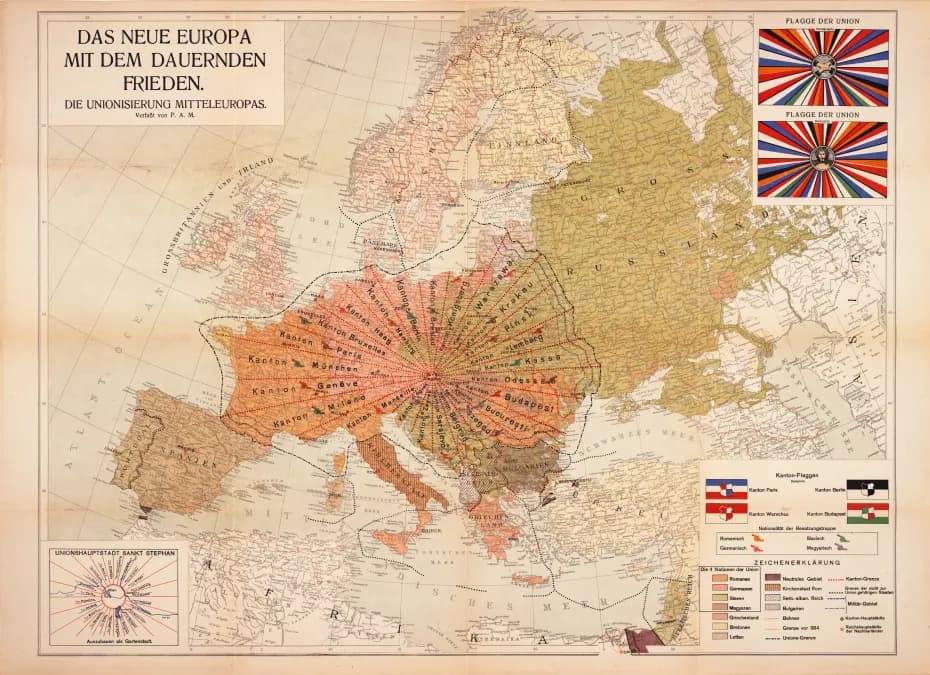
Posted by Teddy BurkhardtFeb 20The bizarre 1920 proposal to form a pizza-shaped central European stateIn light of the challenges of the Treaty of Versailles, which concluded the Great War, a mostly unknown author, and son of the map's printer, PA Maas suggested central Europe be integrated into a single state. With a central capital in Vienna, 24 Kantons, or regions, would radiate outward in pie-slice shapes. ZoomA Bizarre Peace Proposal: Slice Europe Up Like a PieBig Thinkhttps://bigthink.com/strange-maps/a-bizarre-peace-proposal-slice-europe-up-like-a-pie/
Posted by Teddy BurkhardtMar 22, 2024A medieval warm period reshaped agriculture across parts of the worldBetween 750 and 1350 CE, some regions experienced temperatures that rivaled or exceeded late-20th-century averages, likely due to shifts in El Niño–La Niña cycles. The warmer, wetter climate in Europe and northeast North America boosted agriculture, while causing droughts elsewhere. ZoomClimate explained: what was the Medieval warm period?The Conversationhttps://theconversation.com/climate-explained-what-was-the-medieval-warm-period-155294
Posted by Jeremy CronigApr 14The Concert of Europe was an earlier attempt to manage great power relations through shared rulesAfter the Napoleonic wars, European powers established a system of regular consultation to manage conflicts and maintain the balance of power. It offered relative stability for nearly a century before deteriorating.TheCollectorhttps://www.thecollector.com/what-was-the-concert-of-europe/
Posted by Meher QazilbashMay 7, 2025A medieval Italian visits Constantinople In the tenth century, the Holy Roman Emperor Otto I sent Liudprand of Cremona, an Italian bishop, to Constantinople on a diplomatic mission. He was not successful. But the very undiplomatic report he sent back to the emperor about his experiences provides a unique – and often very entertaining – look at life and ceremony in the Byzantine capital, dramatically different from anything in Liudprand’s Italy. 11:11Liutprand of Cremona meets Nikephoros II Phokas // 968 // Byzantine Historyhttps://www.youtube.com/watch?v=r8JLpQaHo_Y
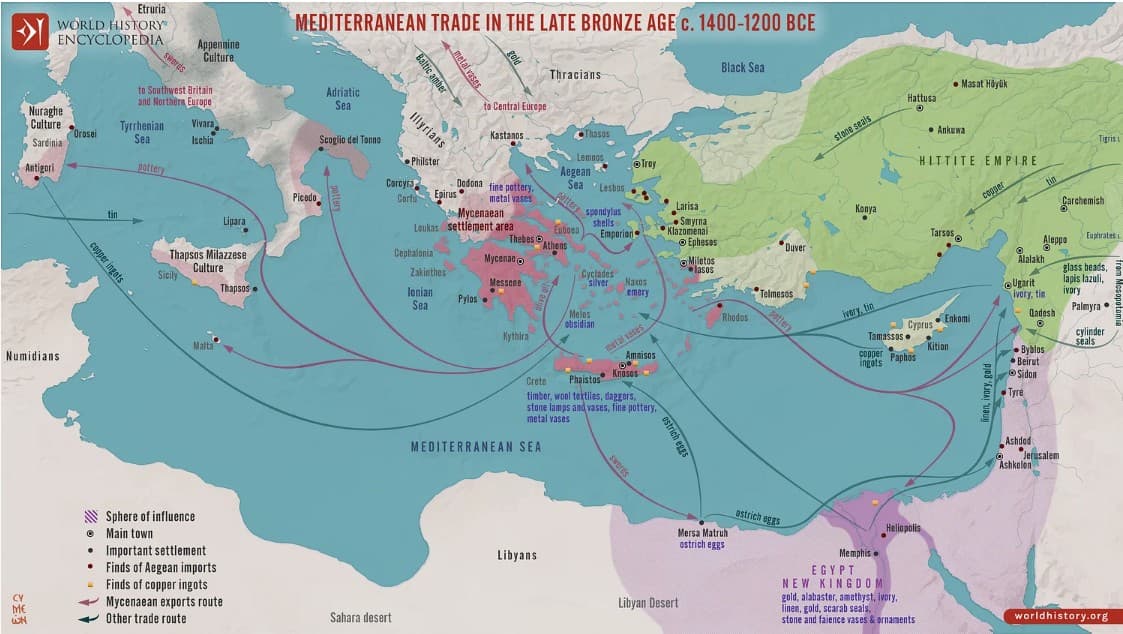
Posted by Drew SteigerwaldJun 27, 2025Maritime trade in the Mediterranean accelerated during the late Bronze AgeThis map illustrates the vibrant trade networks of the eastern Mediterranean during the Late Bronze Age (circa 1500–1200 BCE), highlighting an era of growing interconnectivity among major powers including Egypt, the Hittite Empire, Mesopotamia, and others. ZoomLate Bronze Age Mediterranean Trade, c. 1400-1200 BCEWorld History Encyclopediahttps://www.worldhistory.org/image/14880/late-bronze-age-mediterranean-trade-c-1400-1200-bc/
Posted by Teddy BurkhardtMar 22, 2024The term “Middle Ages” was invented by Renaissance thinkers to belittle the eraThe label “Middle Ages” reflects Renaissance writers’ admiration for ancient Greece and Rome, not medieval reality. They frame the post-Roman centuries as a cultural backslide—a view later reinforced by Edward Gibbon and modernized as the “Dark Ages” myth. ZoomMiddle Ages - Definition, Timeline & FactsHISTORYhttps://www.history.com/topics/middle-ages/middle-ages
Posted by Meher QazilbashMay 7, 2025Visualizing Byzantium in the year 1200This is a computer reconstruction of the Byzantine capital at its apogee, just before the Fourth Crusade. Alongside detailed renderings of the Hippodrome and Hagia Sophia, it includes dozens of the imperial city’s less famous monuments, many of which can still be found in modern Istanbul. The reconstruction is a work in progress, and the Byzantium 1200 X account routinely posts updates. ZoomByzantium 1200https://www.byzantium1200.com/
Posted by Teddy BurkhardtJun 28, 2023Modern swordsmen still are trying to figure out how medieval knights foughtThere's no line of succession for the secrets to fighting like a medieval European knight. All the primary sources of information on the art are either dead or trapped in vague manuscripts. But that doesn't mean people aren't trying to piece the martial art back together. This article explores one group's attempt to revive the world of historical European martial arts. ZoomModern knights: Indonesians study historical European martial arts with Gwaith-i-Megyrhttps://www.thejakartapost.com/culture/2022/06/20/modern-knights-indonesians-study-historical-european-martial-arts-with-gwaith-i-megyr.html
Posted by Teddy BurkhardtNov 12, 2025A day in the life of Bodo and Ermentrude, 8th century Frankish peasantsThe manor was the basic unit of economic and social structures in medieval Europe, where peasants worked the land and served the monastery, all with the feudal lord at the top. This account details a pair of peasants pulled from a real-life manorial account from what is France today. ZoomWhat secrets did a 9th-century peasant’s daily life hold?World History Encyclopediahttps://www.worldhistory.org/article/2826/peasant-life-in-a-medieval-manor/
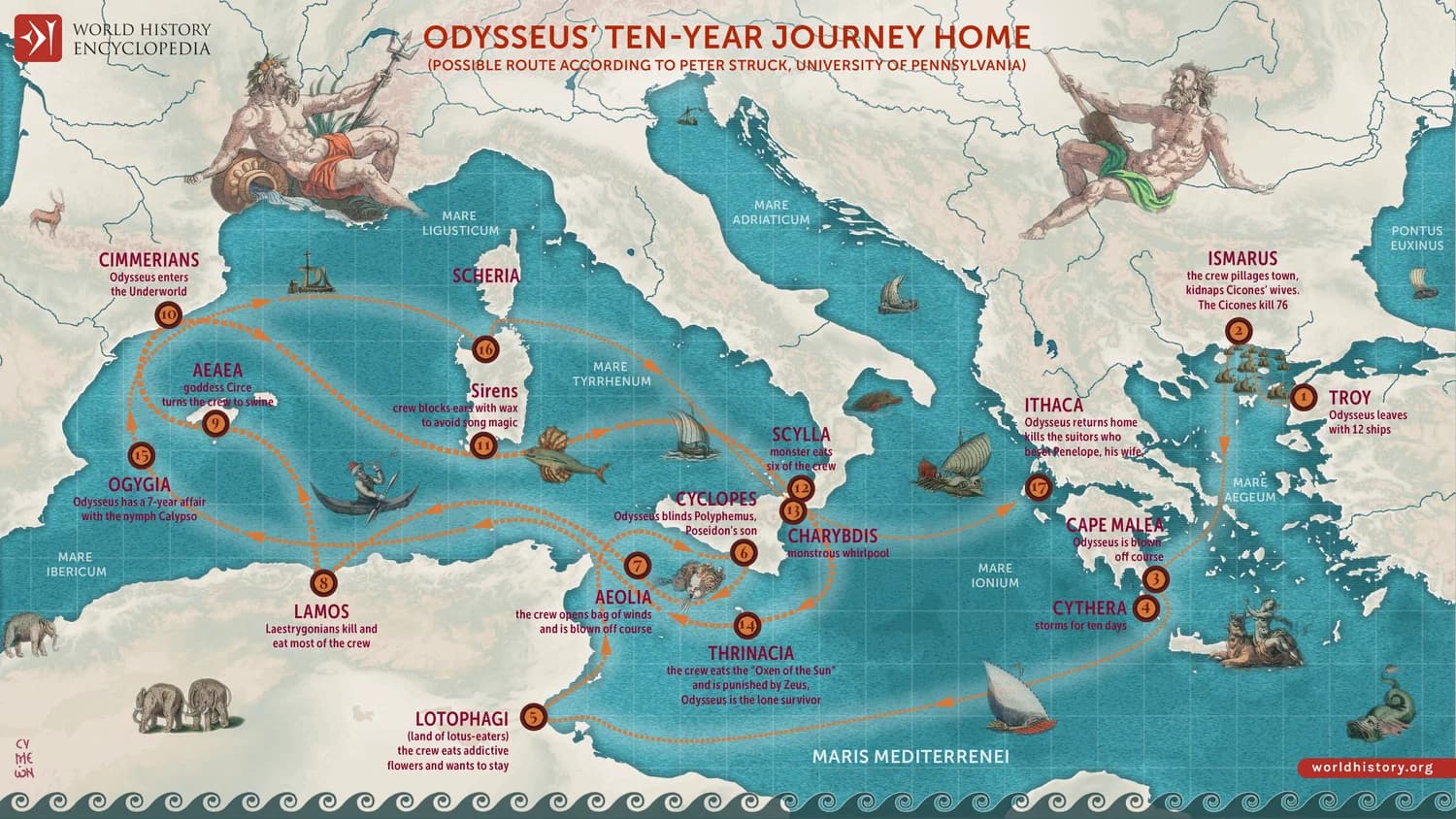
Posted by Kevin KearneyJul 13Explore a detailed map of Odysseus' fictional journey from 'The Odyssey.' Show 3 more findings ZoomMap of Odysseus’ 10-year Journey HomeWorld History Encyclopediahttps://www.worldhistory.org/image/15906/map-of-odysseus-10-year-journey-home/
Posted by Teddy BurkhardtMar 22, 2024Charlemagne sparked a medieval revival of learning and Roman cultureDuring the Carolingian Renaissance, Charlemagne—the king of the Franks and later the emperor of much of Western Europe—and his successors promoted education, the arts, and scholarship. Monasteries preserved hundreds of Roman texts, while architecture and artistic styles drew inspiration from classical Rome. ZoomWhat was the Carolingian Renaissance?TheCollectorhttps://www.thecollector.com/what-was-the-carolingian-renaissance/
Posted by Meher QazilbashMay 7, 2025The impressive walls of ConstantinopleThis video explores the land walls of Constantinople, built on the orders of Theodosius II in the mid-fifth century. They consisted of a triple line of defenses, studded with hundreds of towers and supplemented with a moat. The walls were besieged dozens of times, but were only broken in 1453 by the power of Ottoman cannons. As repaired by the Ottomans, the walls are still largely intact today. 11:11Building the Walls of Constantinopletoldinstonehttps://www.youtube.com/watch?v=eFdC5Rm_im0
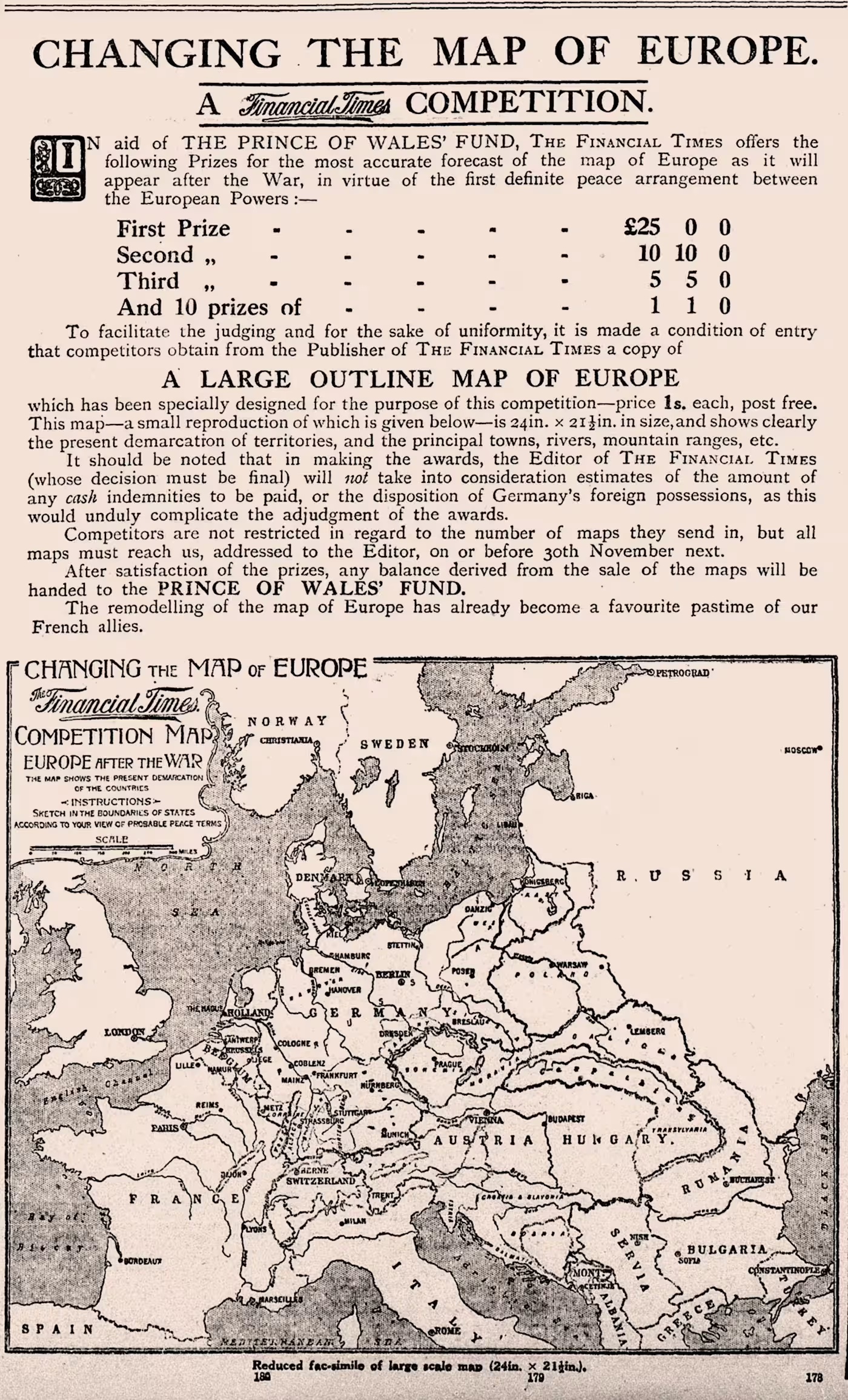
Posted by Teddy BurkhardtFeb 19In 1914, the Financial Times asked readers to redraw Europe for cash prizesTwo months in World War I, the newspaper invited readers to sketch postwar borders and submit peace terms for cash prizes. The contest captured public attempts to predict a new world order and foreshadowed modern crowdsourced forecasting. It's a wild look at how uncertain Europe's future was at the time. ZoomThe FT contest that challenged readers to redraw Europe’s bordersFinancial Timeshttps://www.ft.com/content/79a4df3f-c7fc-4247-add2-574f73785299
Posted by Teddy BurkhardtJun 30Medieval hospitals existed centuries before modern medicineLong before modern healthcare, medieval Europe established hospitals that served multiple roles, including religious, social, and medical purposes. This podcast explores how institutions like Siena's Ospedale di Santa Maria della Scala supported urban and rural communities for centuries.Medieval Hospitals with Sarah Loose Guerrero - Medievalists.nethttps://open.spotify.com/episode/50yw77aQl22D11XwjWR2SI?si=a8wrHokOSWKr1T_faJPHJA
Posted by Meher QazilbashMar 13, 2025A map of Barcelona from 150 BCE to 2010Watch Barcelona evolve from Iberian settlements in 150 BCE to Spain’s second-largest city in the modern day by toggling this chronological series of 27 maps. Accompanied by a short contextual blurb, each map shows Barcelona’s steady urbanization over more than two millennia. For those captivated by the interactive, read this interview with one of the project’s key cartographers. He discusses how the mega-map was created and what it reveals about Barcelona’s history. ZoomCarta Històrica de Barcelonahttps://www.barcelona.cat/museuhistoria/cartahistorica/index.html?lang=en#map=14/242185/5070759/2010//0/0/0/0
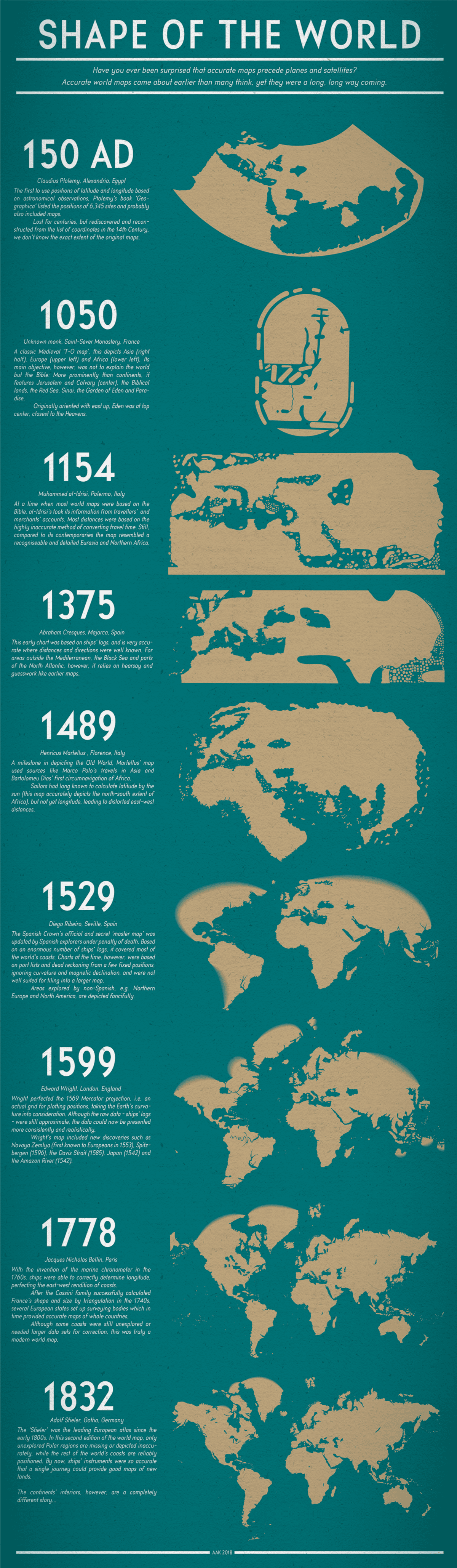
Posted by Marco Daniel MachadoSep 25, 2025View depictions of world maps throughout historyThe first map to use latitude and longitude positions was created by Ptolemy in 150 CE, over 700 years after the oldest known world map, the Imago Mundi, was made with a Babylonian clay tablet. The Spanish crown created a secret master map from hundreds of sailors’ reports. ZoomThe Shape of the World, According to Old MapsVisual Capitalisthttps://www.visualcapitalist.com/shape-of-the-world-ancient-maps/