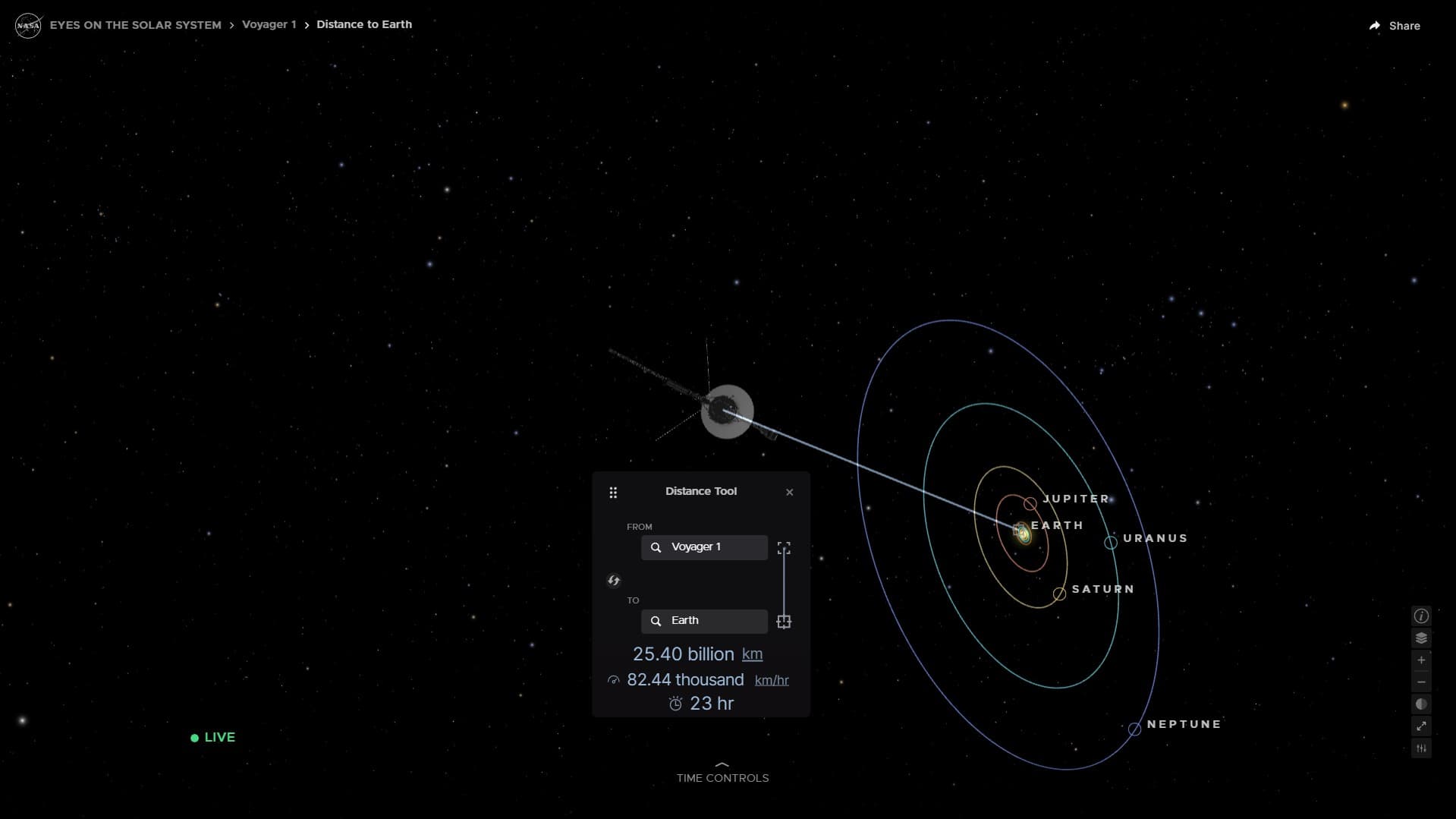
Posted by Meher QazilbashApr 21Track the location of the Voyager probes, currently between 13 and 15 billion miles away from Earth.Show 4 more findings ZoomWhere Are Voyager 1 and 2 Now? - NASA ScienceNASAhttps://science.nasa.gov/mission/voyager/where-are-voyager-1-and-voyager-2-now/
Posted by Meher QazilbashJan 4, 2025Intended to last four years, the Voyager spacecraft have lasted nearly five decadesLaunched in 1977, the Voyager probes still send data from billions of miles away, guided by engineers who’ve turned down promotions to stay with the mission. The team continues to support the probes as they move 37,000 mph through space. Zoom40 years and counting: the team behind Voyager’s space odysseyThe Guardianhttps://www.theguardian.com/science/2015/mar/15/voyager-1-and-2-space-journey-nasa
Posted by Meher QazilbashJan 4, 2025Voyager 1 and 2 are the only spacecraft to reach and study interstellar spaceThe Voyager Interstellar Mission extended beyond the original planetary flybys to explore the solar system's edge and beyond. Voyager 1 and 2 crossed the heliosheath—the boundary between the solar wind and the interstellar medium—in 2012 and 2018, respectively. ZoomInterstellar Mission - NASA ScienceNASAhttps://science.nasa.gov/mission/voyager/interstellar-mission/
Posted by Meher QazilbashApr 21Voyager spacecraft defied expectations and only powered down after 47 years in spaceOriginally built for a four-year mission, Voyagers 1 and 2 used a rare planetary alignment and gravity assists to reach interstellar space. With limited power and aging systems, they will continue to send data until the mid-2030s. (Some readers may experience a paywall.) ZoomRecord-Breaking Voyager Spacecraft Begin to Power Downhttps://www.scientificamerican.com/article/record-breaking-voyager-spacecraft-begin-to-power-down/
Posted by Meher QazilbashJan 4, 2025Voyager science teams still collect valuable space data using four active toolsThese instruments track magnetic fields, solar wind particles, radio emissions from the heliopause, and hydrogen levels in the outer heliosphere. Even though each Voyager sends data at just 160 bits per second, NASA receives 6–8 hours of tracking data daily. ZoomInterstellar Science - NASA ScienceNASAhttps://science.nasa.gov/mission/voyager/interstellar-science/
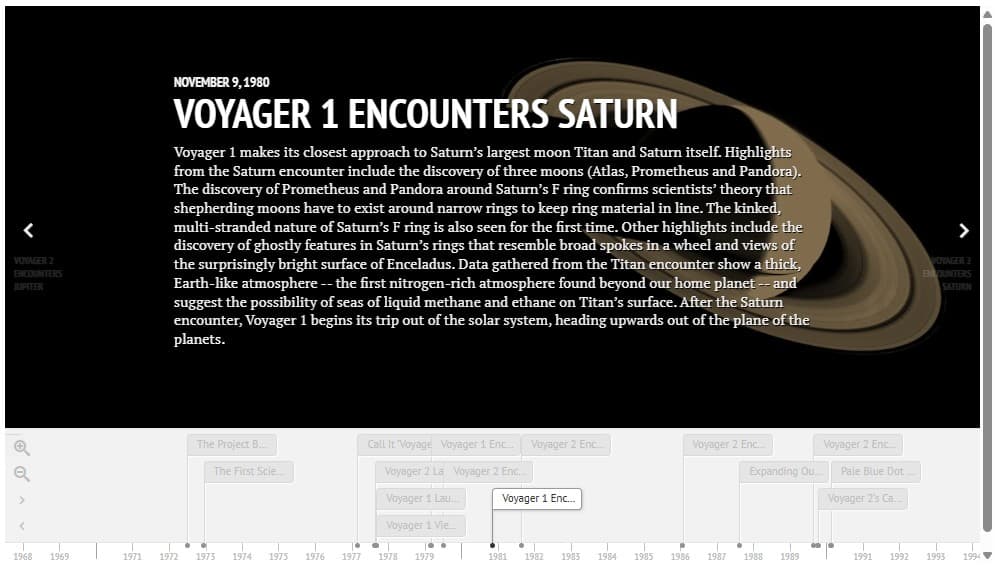
Posted by Meher QazilbashApr 21Explore a NASA timeline of the entire Voyager missionThis infographic leads users through the entire Voyager mission timeline, starting at its conception and moving through launch, to each destination, and finally, the Voyagers' crossing into interstellar space. ZoomTimeline - NASA ScienceNASAhttps://science.nasa.gov/mission/voyager/timeline/
Posted by Meher QazilbashFeb 5Voyager mission's Golden Record captures Earth’s essence for alien discoveryHoused aboard Voyager 1 and 2, each record serves as a time capsule of human culture and a peaceful introduction to any intelligent life. Even if never played, the records can outlast humanity and travel through space for a billion years. 4:49The Voyager Golden Record: A reminder that we are all connectedUnited Nationshttps://www.youtube.com/watch?v=l5BG5nGmGFQ
Posted by Teddy BurkhardtFeb 24, 2023A return to UranusThere's been only one mission to Uranus before—Voyager 2 passed by the ice giant in 1986 before heading off into interstellar space. NASA's recent planned itinerary for space missions lists Uranus as the highest priority over the next decade. The seventh planet is 20 times as far from the sun as Earth, and researchers say its study will shed light on how the outer half of the Solar System formed. ZoomMission to Uranushttps://www.chemistryworld.com/features/mission-to-uranus/4016913.article
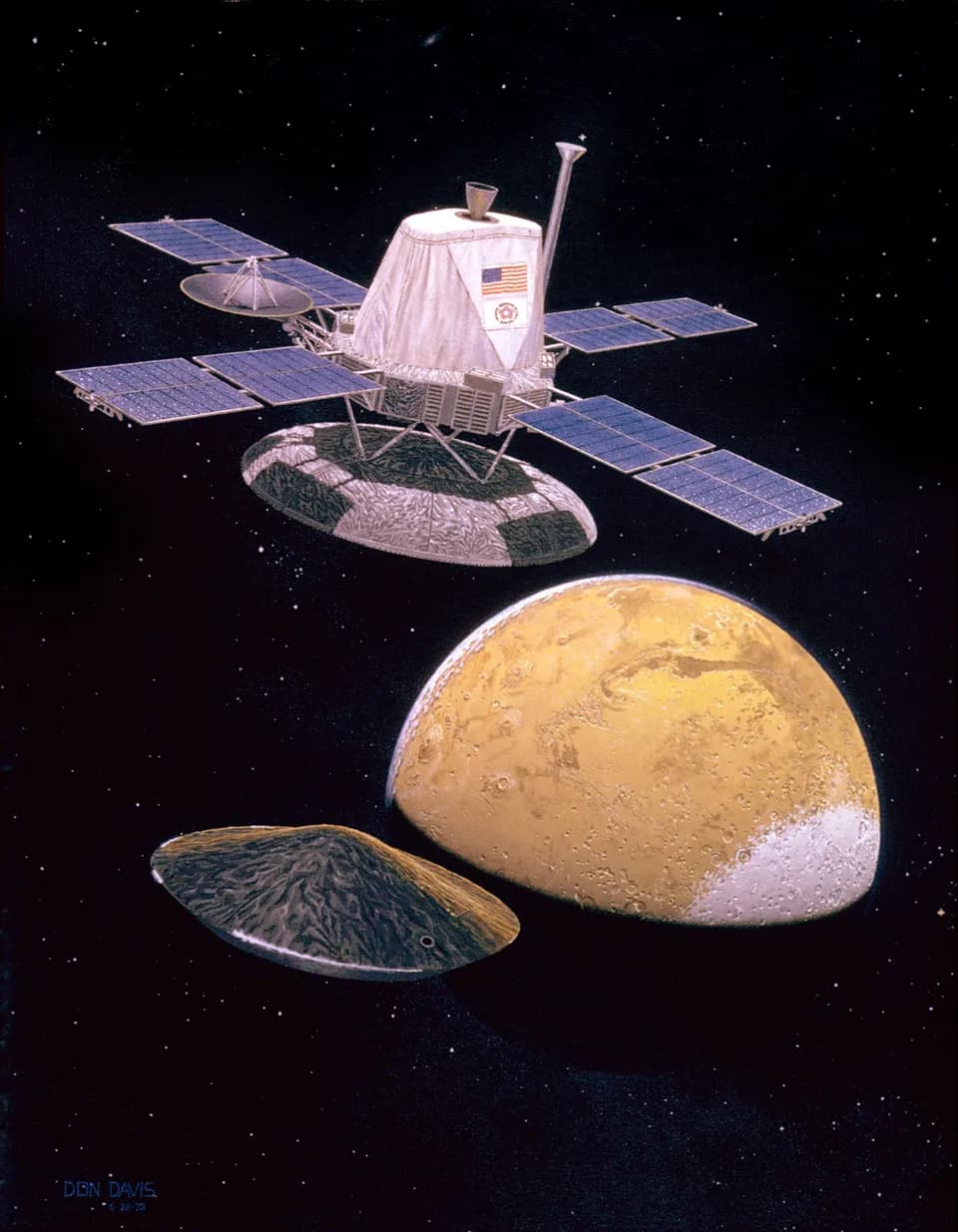
Posted by Marco Daniel MachadoAug 8, 2025Planetary exploration and the search for extraterrestrial life kicked off with VikingNASA's Viking 1 and 2 missions revealed Mars' geological activity and potential for past life through their evidence of past surface water. Viking 1 held the record for the longest Mars surface operation until the Opportunity rover surpassed it in 2010. Zoom45 Years Ago: Viking 1 and 2 off to Mars - NASANASAhttps://www.nasa.gov/history/45-years-ago-viking-1-and-2-off-to-mars/
Posted by Meher QazilbashJan 4, 2025NASA fixed Voyager 1’s glitchy memory from 24 billion kilometers awayIn November 2023, Voyager 1 began sending unusable data due to a stuck bit in a decades-old memory chip. After months of investigation, engineers managed to reroute the faulty code to a new memory location, restoring functionality in April 2024. ZoomHow NASA Is Hacking Voyager 1 Back to Life IEEE Spectrumhttps://spectrum.ieee.org/voyager-1
Posted by Teddy BurkhardtApr 21Voyager carries Earth's hopeful greeting into deep space as a message of peaceAlong with scientific instruments, each Voyager carried a golden record containing multilingual greetings—ranging from Sumerian and Akkadian to Thai and Cantonese—music, and sounds of Earth intended for any intelligent life that might find it. 14:55Embark on an interstellar, operatic adventure with the Voyager spacecrafts | Aeon Videoshttps://www.youtube.com/watch?v=sUz8bGCFdo4
Posted by Meher QazilbashJan 4, 2025Voyager 1 captured Earth as a 'Pale Blue Dot' from 6 billion kilometers awayOn Feb. 14, 1990, NASA's Voyager 1 space probe took the farthest photo of Earth ever captured. Earth appears so small in the image that it takes up less than a single pixel out of 640,000 in the photo's frame. 3:0014th February 1990: Voyager 1 creates the Pale Blue Dot photograph of Earthhttps://www.youtube.com/watch?v=iml8wEDxl60
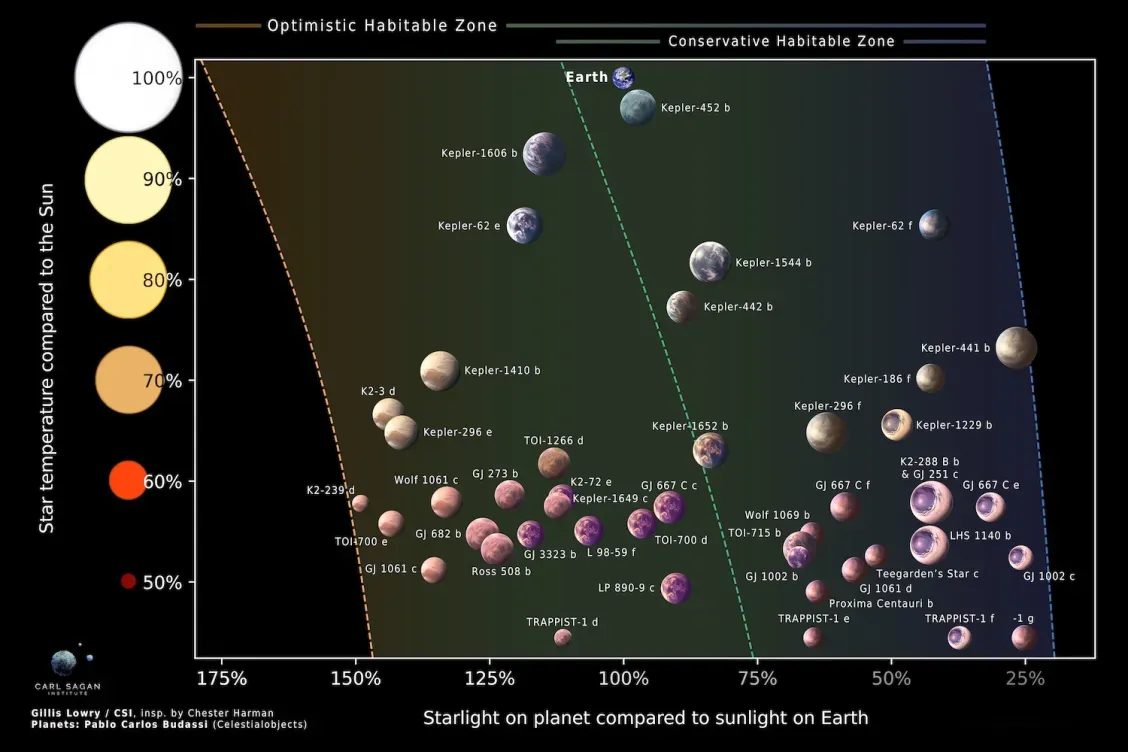
Posted by Marco Daniel MachadoMar 19The 45 planets astronomers think are most likely to host alien lifeThe list includes familiar names like Proxima Centauri b (4 light-years away) and four planets in the TRAPPIST-1 system (about 40 light-years away), but even the nearest of those would take humanity roughly 114,000 years to reach at current spacecraft speeds. The list's real near-term value is as a targeting guide for the James Webb and upcoming Nancy Grace Roman space telescopes. ZoomThe 45 planets most likely to host alien life, according to astronomersPopular Sciencehttps://www.popsci.com/science/habitable-planets-astronomers-project-hail-mary/
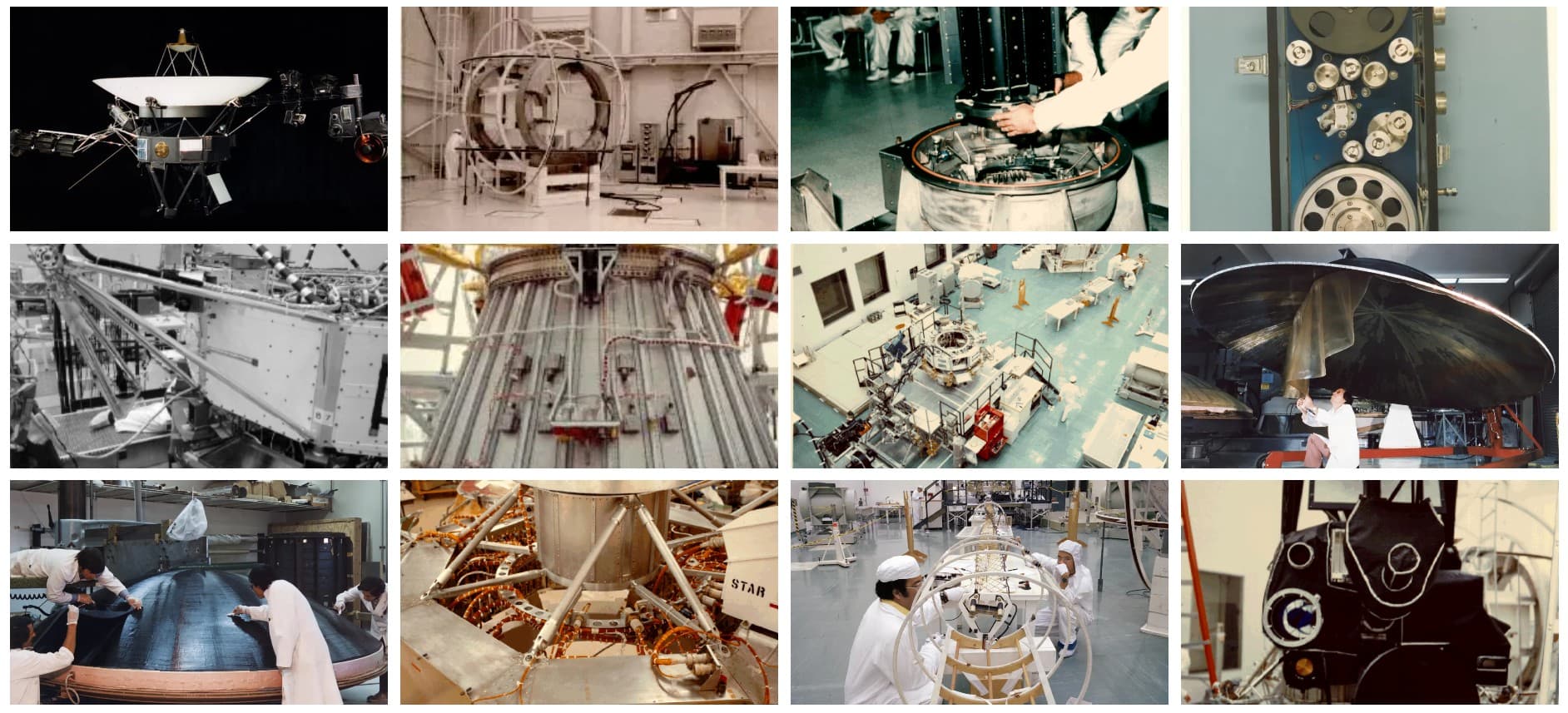
Posted by Meher QazilbashApr 21View a media gallery from the assembly of Voyager 1 and 2This archive includes the many steps it took to put together each Voyager probe. Photos focus on individual parts, like the 8-track tape deck, the large dish-shaped antenna, and its long arm magnetometer boom. ZoomImages of Voyager - NASA ScienceNASAhttps://science.nasa.gov/gallery/images-of-voyager/
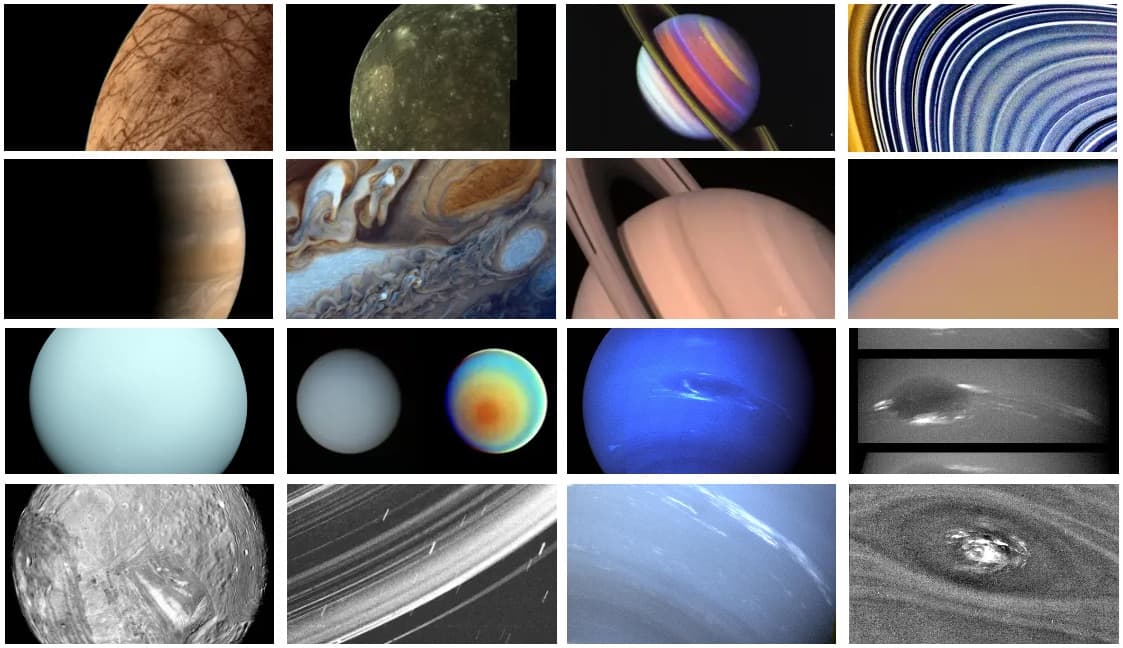
Posted by Meher QazilbashApr 21View galleries of images taken by the Voyager spacecraft during planetary flybysThe images and videos include close-ups of Uranus, Jupiter's Great Red Spot, Saturn's ring system, and Neptune's Great Dark Spot. The Pale Blue Dot color image of Earth is included as part of the solar system's family portrait. ZoomImages Voyager Took - NASA ScienceNASAhttps://science.nasa.gov/mission/voyager/images-voyager-took/
Posted by August MoonMar 5The Deep Space Network keeps NASA linked to spacecraft billions of miles awayNASA's DSN is a global system of giant radio antennas that receive data from faraway spacecraft like Voyager 1 and the James Webb Space Telescope. It is sensitive enough to detect a signal as weak as a single light bulb from billions of miles away. 1:15How We Communicate With Spacecraft Millions of Miles Away1440 Originalshttps://youtube.com/shorts/257_29egVt8
Posted by Marco Daniel MachadoOct 14, 2025Space probes propelled by lasers may one day visit distant planetary systemsLaunched in 2016, Breakthrough Starshot is a project to send gram-sized spacecraft to the nearest stars and their planets at 10% to 20% the speed of light after being accelerated by ground-based laser systems. The project requires orders of magnitude advancements to current technology.Space probes propelled by lasers may one day visit distant planetary systemsThe Economisthttps://www.economist.com/science-and-technology/2016/04/16/starchip-enterprise?giftId=baca877b-2547-4ec6-ba76-d4bed3901a1e&utm_campaign=gifted_article
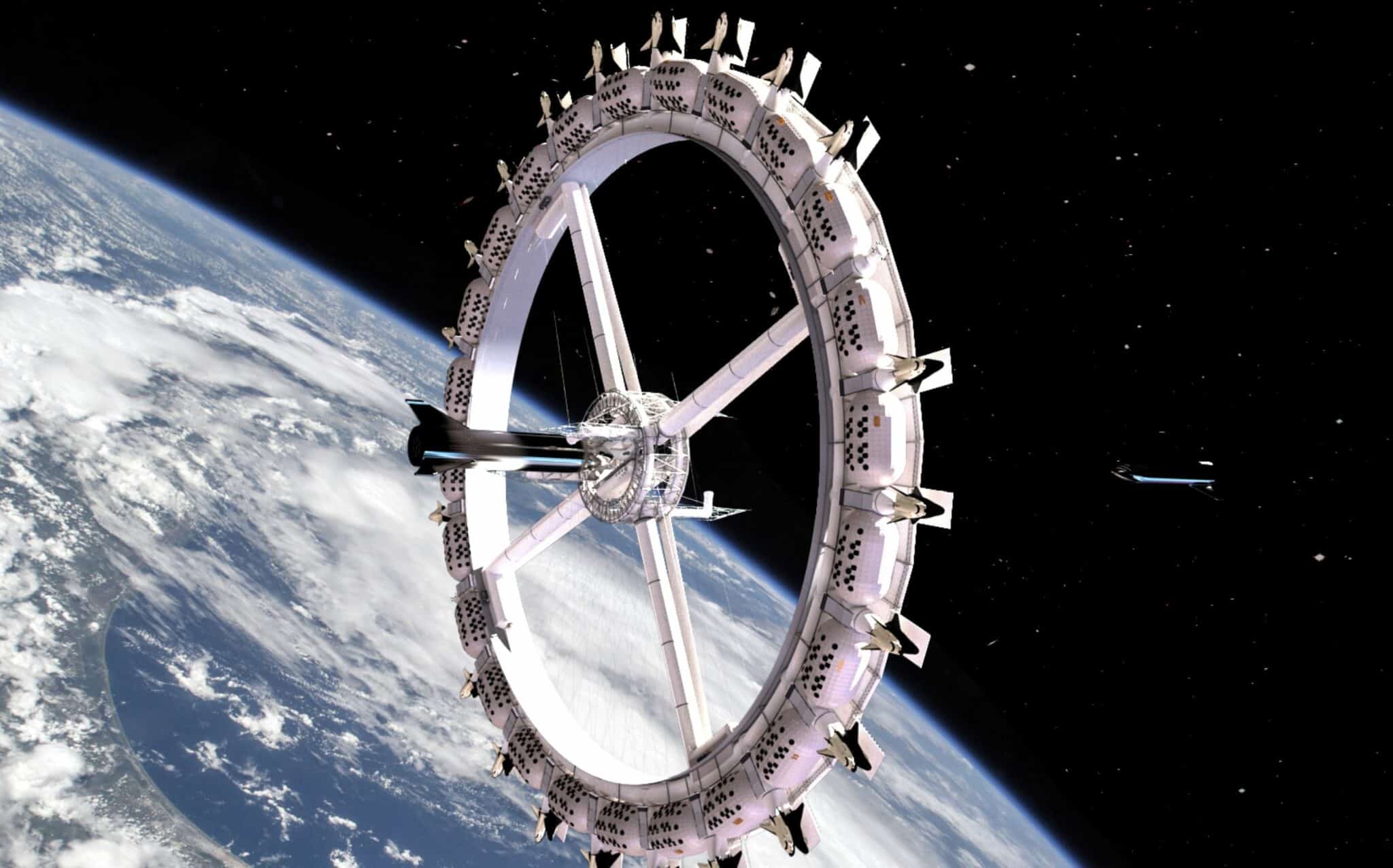
Posted by Teddy BurkhardtDec 24, 2025Voyager Station, the world's first space hotel, is planned for 2027The structure spans 488 meters in diameter and will rotate to simulate one-sixth of Earth's gravity while circumnavigating the planet every 90 minutes. The Voyager Station is designed to accommodate 450 guests and 150 crew members, providing amenities such as restaurants, a sports hall, and a movie theater. ZoomVoyager Station, the First Hotel in Space by 2027 - ArchiExpo e-Magazinehttps://emag.archiexpo.com/voyager-station-the-first-hotel-in-space-by-2027/
Posted by Meher QazilbashApr 29The Hubble Space Telescope made discoveries within our solar system and across the universeThe observatory helped confirm the presence of water on Jupiter's moon Europa, and uncovered seasonal variations on planets like Uranus. It also observed exoplanets and gravitational lensing, proved the existence of supermassive black holes at the centers of galaxies, and detected the accelerated expansion of the universe. ZoomHow the Hubble Space Telescope changed our view of the Universe | BBC Sky at Night MagazineBBC Sky at Night Magazinehttps://www.skyatnightmagazine.com/space-science/how-hubble-space-telescope-changed-view-of-universe
Posted by Marco Daniel MachadoAug 8, 2025The Viking landers were the first spacecraft to conduct experiments on MarsNASA’s Viking 1 and 2 missions tested soils for signs of life, captured images, and studied the Martian atmosphere, revealing evidence of ancient water flow, volcanic soil, and a thin carbon dioxide atmosphere. ZoomViking Project - NASA ScienceNASAhttps://science.nasa.gov/mission/viking/
Posted by Marco Daniel MachadoAug 8, 2025Viking established entry, descent, and landing methods for future planetary visitsThe most significant engineering challenge was slowing the Viking lander, which would move through space at nearly 29,000 kilometers per hour before reaching Mars. This required the invention of supersonic parachute technology, which is still used today. 2:50How Viking Conquered Mars: Entry, Descent, and Landinghttps://www.youtube.com/watch?v=2omjPrRxJBk
Posted by Marco Daniel MachadoAug 8, 2025Congress settled for the Viking program after canceling the Voyager Mars programNASA's proposed Voyager missions to Mars and Venus in the 1970s were canceled due to budget cuts and the Apollo 1 fire. The Viking program's smaller scope—focused on data collection—was the economically viable alternative to manned Mars mission proposals. ZoomThe First Voyager (1967)WIREDhttps://www.wired.com/2012/05/the-first-voyager-1967/
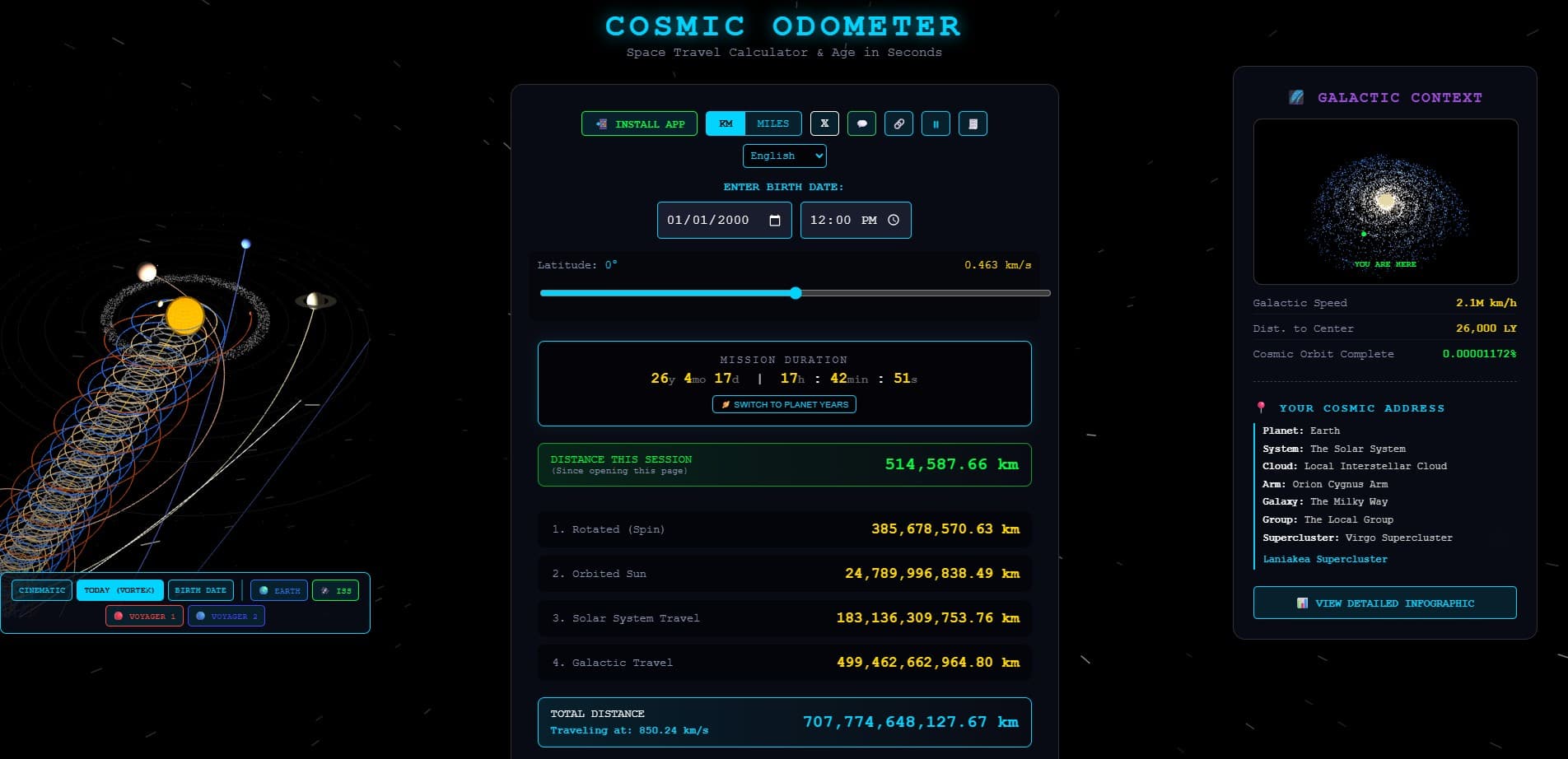
Posted by Marco Daniel MachadoMay 19Explore how far you've traveled through space while living on EarthUsing the "Cosmic Odometer," users can enter their birthday and learn how far they have moved through space due to the combined effects of Earth's rotation around its axis, the planet's orbit around the sun, the solar system's trajectory through the Milky Way, and the galaxy's motion through the universe. ZoomCosmic OdometerCosmic Odometerhttps://www.cosmicodometer.space/
Posted by Meher QazilbashApr 21, 2025Aliens may be closer to Earth than scientists have previously assumedThe hunt for extraterrestrial life is often associated with traveling far into the depths of space for clues. But answers could be closer than we think. Modern space missions have demonstrated our capability of sending probes beyond the solar system, making it plausible that other civilizations could do the same. ZoomWhy we’re searching for alien tech in the solar system | Aeon EssaysAeonhttps://aeon.co/essays/why-were-searching-for-alien-tech-in-the-solar-system
Posted by Marco Daniel MachadoJun 8View the first photos ever taken from the Martian surface, courtesy of NASA's Viking Project.Show 2 more findings ZoomNASA's Stunning First Images From the Surface of MarsHISTORYhttps://www.history.com/articles/viking-mars-photos
Posted by Teddy BurkhardtAug 2, 2023James Webb Space Telescope aims to unlock secrets of the early universeDecades in the making, JWST is designed to study the universe in infrared light, allowing it to see through cosmic dust and observe ancient galaxies, star formation, and potentially life-supporting exoplanets. The Webb will orbit the sun at a stable point 1.5 million kilometers from Earth. ZoomLooking back in timeReutershttps://www.reuters.com/graphics/SPACE-EXPLORATION/TELESCOPE/klvyknwbrvg/
Posted by Marco Daniel MachadoAug 6, 2025ESA’s Juice and NASA’s Europa Clipper will search for habitability near JupiterThree of Jupiter’s moons—Ganymede, Europa, and Callisto—possess subsurface oceans that may support life. While Clipper will perform flybys of Europa, Juice will be the first spacecraft to orbit a moon in the outer Solar System. ZoomJuice and Europa Clipper: Dream team to JupiterESAhttps://www.esa.int/Science_Exploration/Space_Science/Juice/Juice_and_Europa_Clipper_Dream_team_to_Jupiter
Posted by Marco Daniel MachadoAug 6, 2025Galileo’s discovery of Jupiter’s moons led to multiple scientific advancementsBeyond challenging Earth-centric views upon their discovery in 1610, the Galilean moons were also later analyzed to contribute to early astrometry and astronomical interferometry. Measurements of eclipses were also used to estimate the speed of light. ZoomIo, Europa, Ganymede, and Callisto: Galileo’s Moons in the History of Sciencehttps://galileo-unbound.blog/2023/05/29/galileos-moons-in-the-history-of-science/
Posted by Teddy BurkhardtFeb 8, 2024The USSR’s Venera program made the only successful landings on VenusWhile the Soviet space program is famous for launching the first satellite and human into orbit, its most extraordinary feat was the Venera missions—probes that captured data, images, and audio from Venus’s brutal surface. No other nation has repeated the achievement. 8:42Surviving Venus in the 1970shttps://www.youtube.com/watch?v=rMGUA77z80E
Posted by Marco Daniel MachadoFeb 5Universal limit to technological development may prevent finding alien civilizationsGiven the vastness of the Universe, detecting alien life may require technological progress beyond the limits of what is sociologically viable and physically possible. Although interstellar civilizations are unlikely, messaging techniques and probes may improve the odds of successful communication with other intelligent life. ZoomWhy haven't we found intelligent alien civilizations? There may be a 'universal limit to technological development’Space.comhttps://www.space.com/lack-of-intelligent-aliens-universal-technological-development-limit
Posted by Marco Daniel MachadoJul 23In 2025, the European Space Agency created the first artificial solar eclipse in space when one spacecraft cast a shadow onto another spacecraft to enable observations of the sun's outermost atmosphere.Show 2 more findings 1:45First artificial solar eclipse in spaceEuropean Space Agency, ESAhttps://www.youtube.com/watch?v=nhke43NPO0A
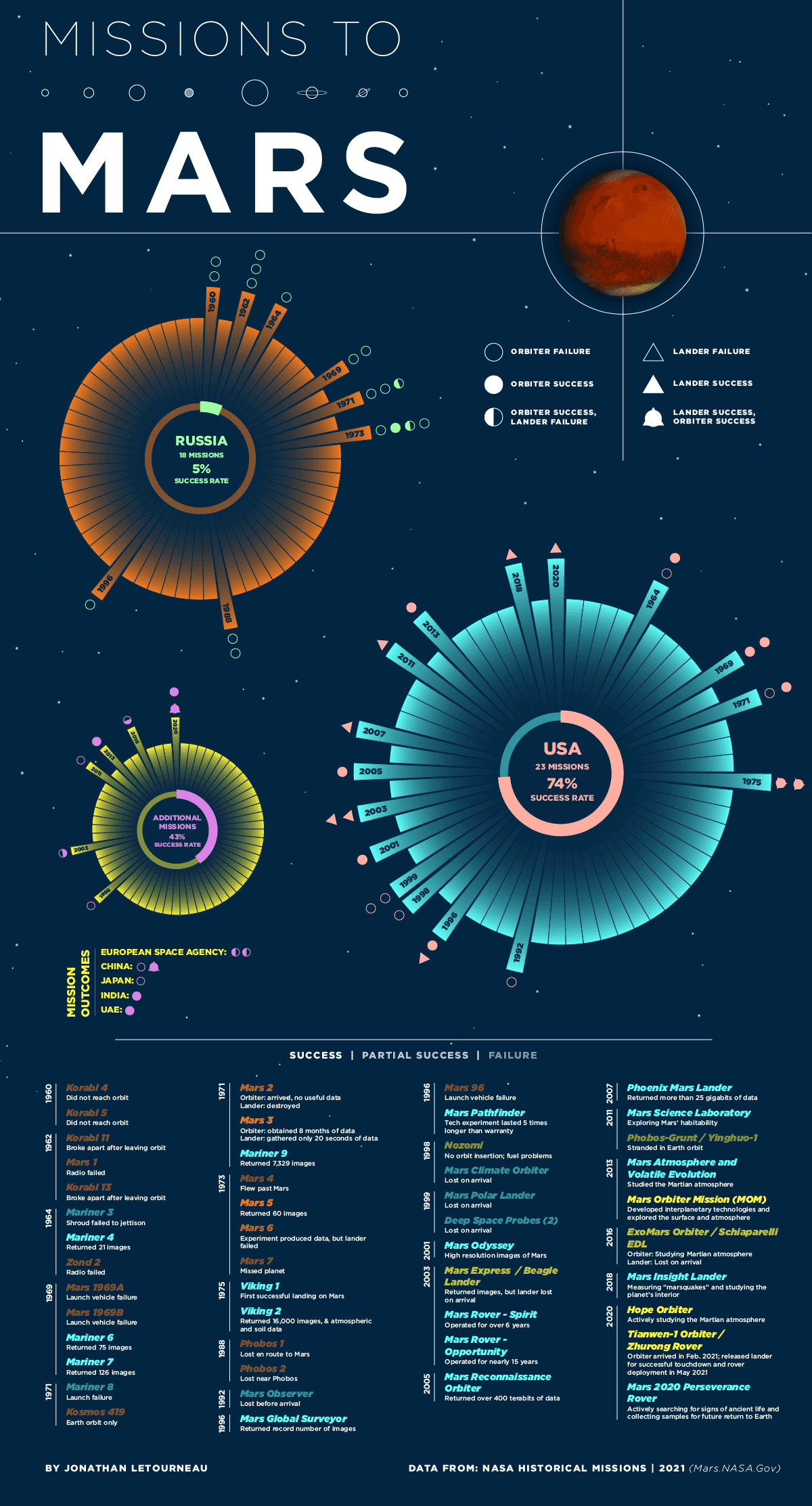
Posted by Marco Daniel MachadoNov 12, 2025Explore a timeline of every mission to Mars through 2020The US has conducted the most missions (23) and has the highest success rate (74%), followed by Russia (18 missions at 5%). The first successful orbiter was Mariner 4, while Viking 1 was the first successful lander. ZoomEvery Mission to Mars in One VisualizationVisual Capitalisthttps://www.visualcapitalist.com/cp/every-mission-to-mars/
Posted by Marco Daniel MachadoAug 8, 2025Read the NASA overview of the results of Viking’s biological experiments on MarsThree experiments on the Viking 1 and 2 landers searched for signs of metabolic activity in soil samples, indicating the presence of microorganisms. No definitive evidence of life was found in any experiment or lander imaging.The Viking biology results - NASA Technical Reports Server (NTRS)NASAhttps://ntrs.nasa.gov/citations/19890016985
Posted by Marco Daniel MachadoApr 7How a pulsar's properties led to the discovery of the first exoplanetsIn 1992, astronomers examining the radio waves emitted by PSR B1257+12 as it swept past detectors every 0.006219 seconds noticed occasional deviations at regular intervals. Further analysis revealed the existence of two planets beyond our solar system orbiting the neutron star, causing it to wobble and affecting pulsar timing.Astronomy Magazinehttps://www.astronomy.com/science/how-the-first-exoplanets-were-discovered/
Posted by Teddy BurkhardtMar 13, 2025Visualizing the history of Saturn and its ringsEvery 13 to 16 years, Saturn's rings become far less visible because its plane becomes exactly even with Earth's. This visual-rich essay explores the history of humanity's perception of Saturn, from Galileo's first sighting (and dubbing the rings "ears") to the idea that the rings won't last more than a few hundred millions years more. Explore this fascinating planet here. ZoomVisualizing the History of Saturn and its Rings, Nightingalehttps://nightingaledvs.com/visualizing-the-history-of-saturn-and-its-rings/
Posted by Marco Daniel MachadoJul 31Units involving light, such as light-seconds and light-years, describe the distances traveled by light across that amount of time.Show 5 more findings 1:47Our Milky Way Galaxy: How Big is Space?NASA Solar Systemhttps://www.youtube.com/watch?v=MX3PIkbTQwQ
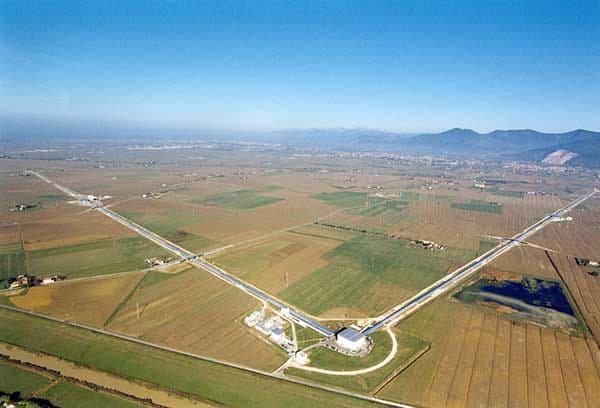
Posted by Marco Daniel MachadoFeb 2Since 2017, Virgo has helped LIGO localize astronomical phenomenaThe detector near Pisa, Italy, coordinates its experimental runs with those in Hanford, Washington, and Livingston, Louisiana. Scientists can triangulate the locations of celestial events that generate gravitational waves using signal arrival times, just as earthquake locations can be determined from measurements at three seismic stations. ZoomAmerican Physical Societyhttps://www.aps.org/archives/publications/apsnews/201710/virgo.cfm
Posted by Teddy BurkhardtMar 13, 2023New ways of seeing the cosmos have redrawn the map of human identityFrom Galileo’s crude spyglass to the James Webb Space Telescope, each technological leap has expanded our observational reach and redefined philosophical and moral conceptions of our place in the universe. Identifying signs of life through the study of exoplanet atmospheres would represent the next great revolution. ZoomJWST’s cosmic revelations will change our interior lives too | Aeon EssaysAeonhttps://aeon.co/essays/jwsts-cosmic-revelations-will-change-our-interior-lives-too
Posted by Teddy BurkhardtDec 4, 2022See to the edge of the universe with this two-decade astronomy projectA New Mexico telescope has captured astronomical data for two decades to compile this map of the universe. Starting from earth and ending at the "edge" of the universe, it shows one slice of the cosmos: a total of 200,000 galaxies. ZoomThe Map of the Universehttps://mapoftheuniverse.net/
Posted by Meher QazilbashJun 30Space archaeology studies space trash in the context of heritage and social meaningSome orbiting objects, such as Elon Musk's Tesla, have symbolic or historical importance, despite being functionally worthless. The oldest human-made object in Earth's orbit is Vanguard 1, a grapefruit-sized satellite launched in 1958. The strangest may be an experimental, inflatable space station containing live cockroaches.Space Archaeology (SPACE JUNK) with Alice Gorman — alie wardOlogies with Alie Wardhttps://open.spotify.com/episode/6PvLH2kOn0eLXeF2bkcfcR