Posted by August MoonAug 20Ceasefires rarely produce a total cessation of violence.Show 4 more findings 2:25Everyone gets ceasefires wrong1440 Originalshttps://www.youtube.com/watch?v=KFVHJfHRON8
Posted by Jeremy CronigJun 22Since World War II, formal declarations of war and peace treaties have become increasingly rare, replaced by cease-fires, authorizations of force, and "special military operations."Show 4 more findings ZoomWhat Happened To Declarations Of War And Treaties Of Peace?Hoover Institutionhttps://www.hoover.org/research/what-happened-declarations-war-and-treaties-peace
Posted by Teddy BurkhardtMay 12, 2023History shows what’s wrong with the idea that war is ‘normal’ in the Middle EastAn old trope claims that war is ‘normal’, innate, and inevitable in the Middle East. However, the history of the region reveals complex and civilized systems of coexistence. Empires found economic and political strength in fostering diversity;... ZoomHistory Shows What’s Wrong With the Idea That War Is ‘Normal’ in the Middle EastTIMEhttps://time.com/5764119/middle-east-war-history/
Posted by Teddy BurkhardtJul 22Research found that nonviolent protests are more likely to succeed than armed uprisings.Show 3 more findings ZoomThe ‘3.5% rule’: How a small minority can change the worldBBChttps://www.bbc.com/future/article/20190513-it-only-takes-35-of-people-to-change-the-world
Posted by Teddy BurkhardtJul 19, 2023Why don’t we negotiate with terrorists?Politicians in the US and the UK regularly refuse to negotiate with terrorists. Some claim that negotiating with terrorists would be inappropriate and impractical, and might encourage and legitimize terrorists around the world. But, other Western governments—including France and Spain—have negotiated with terrorist groups. So why do some governments refuse to negotiate with terrorists, while others consider it effective? This article by Chatham House breaks down the history, strategies, and arguments around negotiating with terrorists. Zoom‘We do not negotiate with terrorists’ – but why?https://www.chathamhouse.org/2022/01/we-do-not-negotiate-terrorists-why
Posted by Teddy BurkhardtMay 4, 2023An interactive map tracking conflict in the Middle EastConflict and peace in the Middle East are constantly in flux. Decision-makers need up-to-date developments – both within individual countries and across the greater MENA region – to identify trends and risks of violence, and opportunities for... ZoomMay Alerts and April Trends 2023https://www.crisisgroup.org/crisiswatch
Posted by Teddy BurkhardtMay 12, 2023A survey of armed conflict in the Middle EastThe decade following the Arab Spring has been one of bloodshed and violence in the Middle East. In 2011, protests in Tunisia, Egypt, Yemen, and Libya led to infighting and political fragmentation. Civil wars, foreign interventions, and the rise of... ZoomMiddle East and North Africa | The Armed Conflict Survey 2022https://www.iiss.org/online-analysis/online-analysis/2022/11/acs-2022-middle-east-and-north-africa/
Posted by Jeremy CronigJun 22Because the Korean War ended with an armistice rather than a peace treaty, North and South Korea are technically still at war.Show 3 more findings 2:11Korean War Armistice Agreement, 1953The New York Timeshttps://www.youtube.com/watch?v=t06Rljkovtc
Posted by Teddy BurkhardtFeb 20During the Cold War and into the 21st century, US and Soviet/Russian leaders repeatedly agreed to arms control treaties, though strained tensions have led to the expiration of agreements in recent years.Show 4 more findings ZoomU.S.-Russia Nuclear Arms ControlCouncil on Foreign Relationshttps://www.cfr.org/timeline/us-russia-nuclear-arms-control
Posted by Teddy BurkhardtFeb 19The Minsk peace accords failed to end fighting in eastern Ukraine in the mid-2010sThe Minsk Agreements of 2014 and 2015 sought to halt the war in eastern Ukraine through ceasefires and political reforms, but repeated violations left the accords unenforced and the conflict unresolved.https://ecfr.eu/article/ukraine-russia-and-the-minsk-agreements-a-post-mortem/
Posted by Drew SteigerwaldFeb 10The modern Olympic truce originated in a real pause in ancient conflictBack in Ancient Greece, neighboring city-states were constantly at war. So when the Olympics started in 776 BCE, they needed a way to keep the peace. This video from the International Olympic Committee discusses the origins of the Olympic Truce and its reinstatement at the 1994 Games in Lillehammer. 1:11What is the Olympic Truce? - La Trêve Olympiquehttps://www.youtube.com/watch?v=Pp35HHAQ-kw
Posted by Teddy BurkhardtMay 3, 2023Timeline: the Middle East conflictDuring the First World War, Western and Arab powers negotiated the future political status of Arab lands. Since WWI, a complex history of political, economic, and social events have fueled tension and violence between Israel and Palestine. This timeline, compiled by Al Jazeera, highlights important global events defining conflict in the Middle East from 1915 to 2007. ZoomTimeline: the Middle East conflictAl Jazeera Englishhttps://www.aljazeera.com/news/2008/1/21/timeline-the-middle-east-conflict
Posted by Jeremy CronigApr 14Relationships between countries have become more peaceful since the rules-based order was establishedOur World in Data monitors bilateral relationships on a spectrum from open rivalry to "positive peace"—deep cooperation and mutual protection. In 1945, no countries had highly cooperative security relationships. Today, nearly a fifth do.Our World in Datahttps://ourworldindata.org/war-and-peace?insight=relationships-between-countries-have-become-more-peaceful#key-insights
Posted by Teddy BurkhardtMay 12, 2023Is there an arms race in the Middle East?In 2021, countries in the Middle East spent $168 billion on weapons. Defense spending in the Middle East has been falling in the last few years, but this doesn’t necessarily mean that the region is de-militarizing. In 2021, Saudi Arabia spent $55... ZoomIs there an arms race in the Middle East?Al Jazeera Englishhttps://www.aljazeera.com/podcasts/2022/9/8/middle-east-arms-race-whos-involved
Posted by Teddy BurkhardtMay 15Could water scarcity cause future wars in the Middle East?The MENA region is facing a looming water crisis that could lead to future conflicts. While water scarcity isn't new in the Middle East, the region is among the most water scarce in the world. Home to only 1% of the world's fresh water... ZoomWars over water in the Middle EastAl Jazeera Englishhttps://www.aljazeera.com/podcasts/2022/11/10/wars-over-water-in-the-middle-east
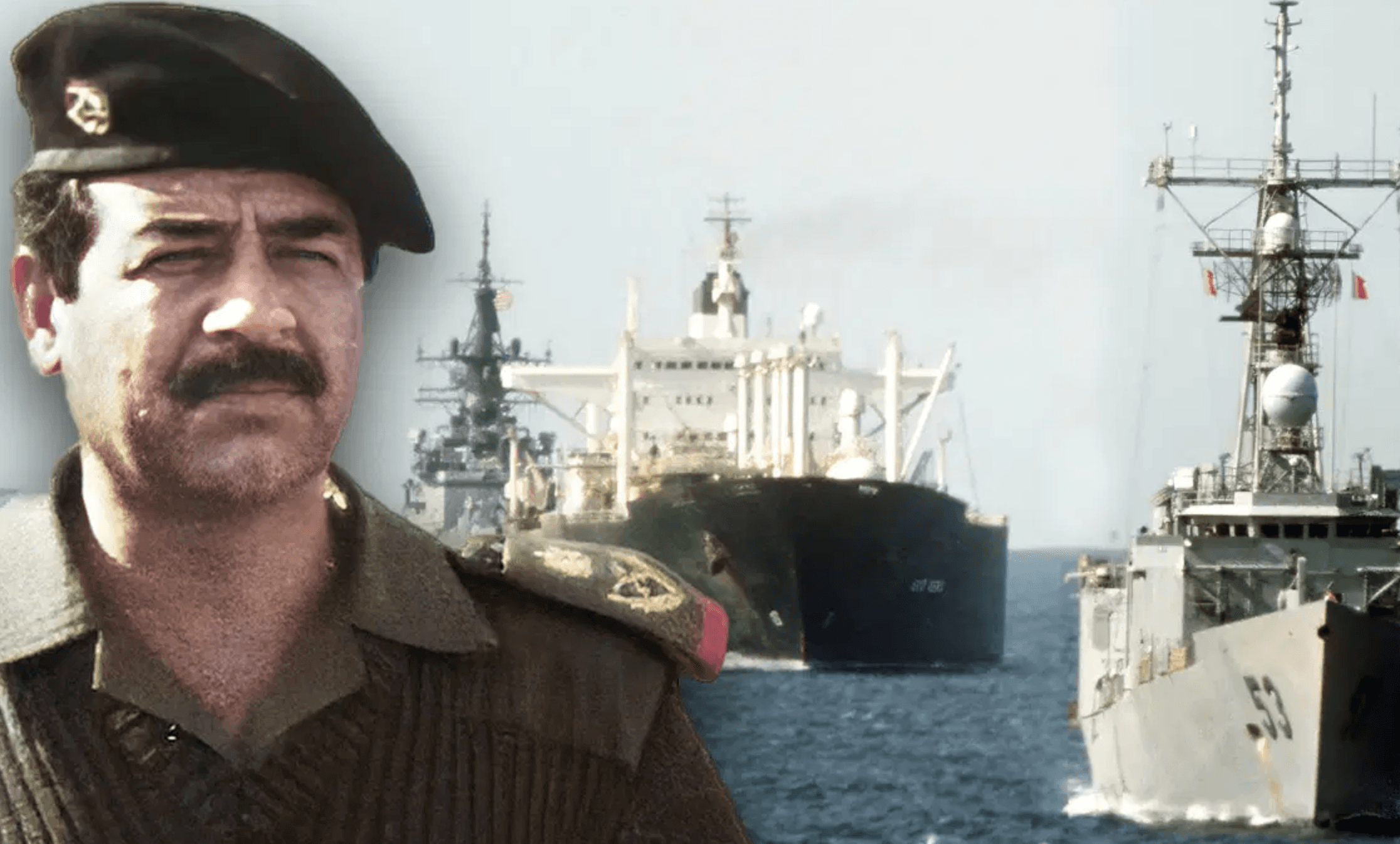
Posted by Meher QazilbashMar 6Iran-Iraq war drained over $1T from the combined economies of Iran and IraqAcross eight years (1980-88), Iran and Iraq each lost about $500 B in GDP, infrastructure destruction, military expenses, disrupted oil exports, and mounting debt—totaling over $1 T in economic damage. ZoomWhat Were the Economic Effects of the Iran-Iraq War? | TheCollectorTheCollectorhttps://www.thecollector.com/what-were-economic-effects-iran-iraq-war/
Posted by Jeremy CronigApr 13The 1956 Suez crisis was one of the earliest tests of the rules-based orderWhen Britain, France, and Israel secretly invaded Egypt, the Eisenhower administration supported UN resolutions condemning the invasion and called for a ceasefire—publicly criticizing its closest allies to uphold the principle that force should not be used to resolve international disputes.https://history.state.gov/milestones/1953-1960/suez
Posted by Teddy BurkhardtOct 9, 2025Wartime conferences exposed cracks in the US–Soviet allianceAt the Tehran, Yalta and Potsdam Conferences, Allied leaders coordinated WWII strategy—but deep disagreements over postwar Europe foreshadowed the Cold War. The USSR’s push for influence in Eastern Europe clashed with US and British calls for self-determination. 13:13The Big Three Conferences | Tehran, Yalta, Potsdam | WW2 Ends, Cold War Beginshttps://www.youtube.com/watch?v=q3mRScGa0f0
Posted by Jeremy CronigMar 5The Iranian Revolution relied largely on nonviolent tacticsDespite thousands of unarmed protesters killed by the Shah's forces, the revolution relied overwhelmingly on nonviolent tactics, including strikes, demonstrations, and civil disobedience, with up to 9 million Iranians peacefully taking to the streets, making it one of history's largest protest movements by population percentage.https://www.rferl.org/a/iran-politics-revolution/29752729.html
Posted by Teddy BurkhardtJan 5, 2023The world's most peaceful countriesGlobal Peace Index presents the most comprehensive data-driven analysis to date on trends in peace, including the most and least peaceful countries in the world. ZoomGlobal Peace Index Map » The Most & Least Peaceful Countrieshttps://www.visionofhumanity.org/maps/
Posted by Meher QazilbashAug 5, 2025The “Phoney War” was an eight‑month build-up to warFrom September 1939 to May 1940, following their war declaration on Germany, Britain and France entered a phase of military inaction—even as civil defence measures, naval blockades, and rationing intensified at home. Skirmishes were limited, but the decisive fighting didn't begin until Germany invaded Norway and France in April–May 1940, abruptly ending the uneasy stalemate. ZoomBritain's 'Phoney' Start To The Second World WarImperial War Museumshttps://www.iwm.org.uk/history/britains-phoney-start-to-the-second-world-war
Posted by Teddy BurkhardtJun 30The Middle East's cold war, explainedThe Middle East is one of the most complex regions in the world, including a complicated web of conflicts and actors. Two countries, Saudi Arabia and Iran, have torn apart the region by supporting opposing sides in other countries and indirectly... 10:19The Middle East’s cold war, explainedVoxhttps://www.youtube.com/watch?v=veMFCFyOwFI
Posted by Meher QazilbashMay 7, 2025The final war between the Persian and Byzantine empiresThe Arab conquests of the seventh century, which swept over Egypt, Syria, and Mesopotamia, were made possible by a catastrophic generation-long war between the Byzantine and Persian Empires. That war, in turn, was the last act in a struggle that had gone on for centuries, and shaped the whole subsequent history of the Middle East. 14:14The War That Ended the Ancient Worldtoldinstonehttps://www.youtube.com/watch?v=qMNx9-AjrXM
Posted by Teddy BurkhardtMay 12, 2023An interactive overview of the human toll of the Yemen conflictThe conflict in Yemen shows no signs of stopping. Civilians continue to suffer from military hostilities and human rights violations. More than 20,000 civilians have been killed and injured by the fighting since March 2015, according to the Office... ZoomThe Yemen conflict shows no real signs of abating as it enters its fifth yearhttps://www.amnesty.org/en/latest/news/2015/09/yemen-the-forgotten-war/
Posted by Teddy BurkhardtFeb 16, 2023Testing assumptions about the war in Ukraine, one year laterTwo years ago, policymakers in Washington made multiple predictions about the course of the war between Russia and Ukraine. One year later this site revisited several common assumptions about the war—for example, that Russia would swiftly defeat Ukraine—and asks several experts if they came true, or not. But things can always change. ZoomTesting Assumptions About the War in Ukraine, One Year Later • Stimson Centerhttps://www.stimson.org/2023/testing-assumptions-about-the-war-in-ukraine-one-year-later/
Posted by Meher QazilbashSep 10, 2025Israel’s swift victory in the Six-Day War redrew the map of the Middle EastLearn more about the June 1967 conflict which shifted territorial lines across Israel and its neighbors—Egypt, Jordan, Syria, and Iraq—reshaping the Middle East’s political landscape with long-lasting geopolitical ramifications. 4:22Here's How the Six-Day War Changed the Map of the Middle East | HistoryHISTORYhttps://www.youtube.com/watch?v=B60O6Kcijso
Posted by Jeremy CronigMar 4A legal scholar argues that the existing war powers framework may collapse in the event of a major power conflictThe legal tests presidents have used to avoid seeking congressional authorization were designed for weaker adversaries. This piece argues that those tests fail against similarly armed competitors, where even limited strikes risk significant escalation, potentially triggering a constitutional crisis over who has the authority to respond.https://legal-forum.uchicago.edu/print-archive/war-powers-and-return-major-power-conflict
Posted by Jeremy CronigMar 4Congress has formally declared war 11 times across five conflicts, the last in 1942The five declared wars were the War of 1812, the Mexican-American War, the Spanish-American War, World War I, and World War II. Every major American military conflict since Korea, Vietnam, Iraq, and Afghanistan has been fought without a formal declaration.HISTORYhttps://www.history.com/articles/united-states-official-declarations-war
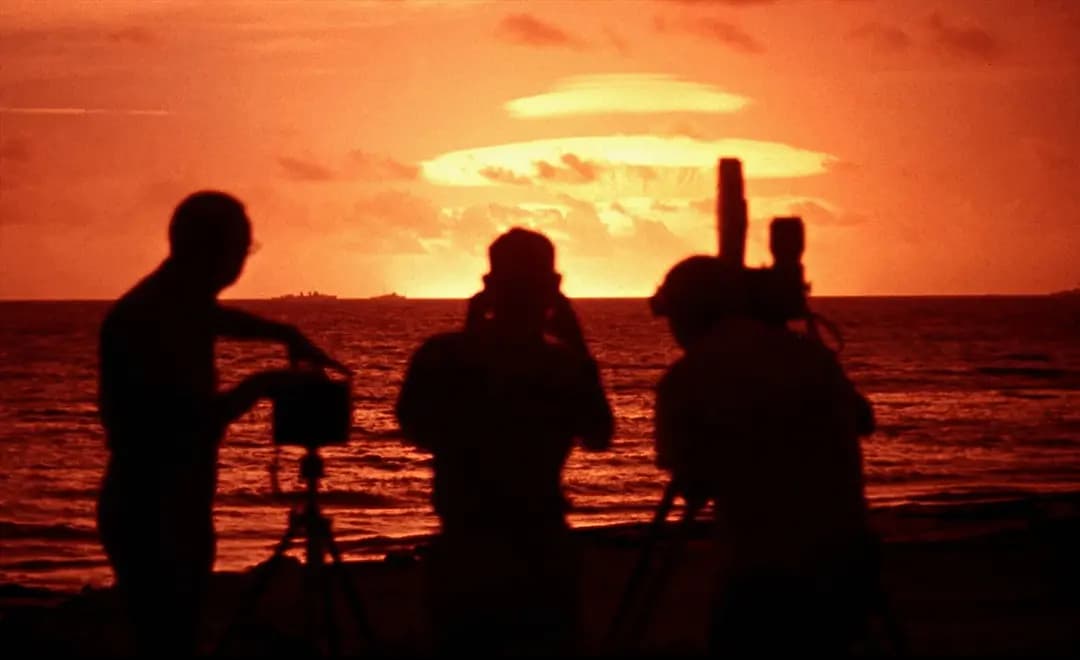
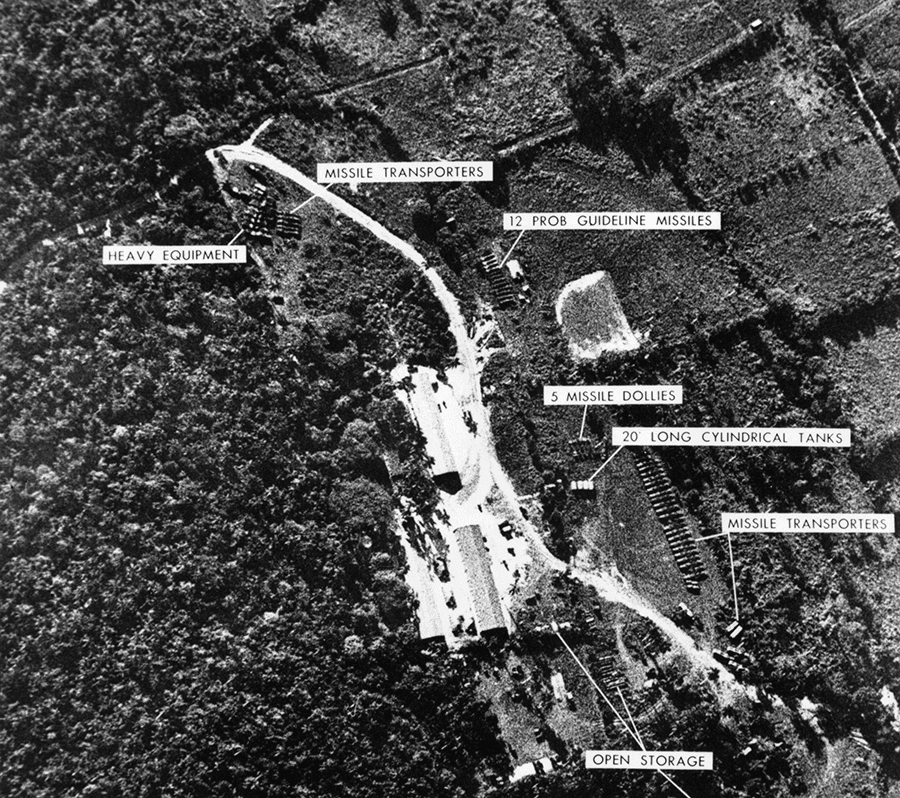
Posted by Drew SteigerwaldFeb 20The threat of nuclear annihilation reshaped global diplomacyThe first use of atomic weapons introduced the possibility of a war with no survivors. This article examines how nuclear fear shaped Cold War diplomacy and continues to influence international relations today. Zoomhttps://www.armscontrol.org/act/2022-04/features/nuclear-threats-and-alerts-looking-cold-war-background
Posted by Meher QazilbashSep 10, 2025The 1967 war was the first use of oil as a geopolitical weaponFollowing the June 1967 Arab–Israeli war, Saudi Arabia, Kuwait, Iraq, Libya, and Algeria embargoed oil shipments to the US, UK, and West Germany. While the move did not have a large impact, it reshaped global oil flows, and foreshadowed OAPEC's later actions. ZoomThe 1967 War and the “oil weapon” | BrookingsThe Brookings Institutionhttps://www.brookings.edu/articles/the-1967-war-and-the-oil-weapon/
Posted by Teddy BurkhardtMay 20, 2023The Sykes-Picot agreement as seen through Arab eyesAfter WWI, the borders of the Middle East were redrawn by two men: Mark Sykes (UK) and Francois Picot (France). Signed in 1916, their secret agreement divided one of the most volatile regions in the world into states, cutting through ethnic and... ZoomA century on: Why Arabs resent Sykes-PicotAl Jazeera Englishhttps://interactive.aljazeera.com/aje/2016/sykes-picot-100-years-middle-east-map/index.html
Posted by Meher QazilbashAug 10The treaty that ended the First World War laid the groundwork for the Second.Show 3 more findings ZoomHow the Treaty of Versailles and German Guilt Led to World War II | HISTORYHISTORYhttps://www.history.com/articles/treaty-of-versailles-world-war-ii-german-guilt-effects
Posted by Teddy BurkhardtApr 6, 2023What were the major battles of the Vietnam War?As to be expected, there was no shortage of conflict during a war filled with guerrilla tactics. However, there were a few key battles and operations that influenced changes in warfare and ultimately led to the North's victory. This list of key battles starts with conflict between the France and Vietnam and ends with what became known as the fall of Saigon. ZoomKey Battles | Vietnam War | Pritzker Military Museum & Library | Chicagohttps://www.pritzkermilitary.org/explore/vietnam-war/key-battles
Posted by Jeremy CronigMar 4Congress has unsuccessfully voted on war powers resolutions over Trump's military operations in Venezuela and IranAfter Trump ordered unilateral military operations in both Venezuela and Iran without congressional authorization, lawmakers from both parties introduced war powers resolutions to block further action. Each effort failed, with Republican majorities largely supporting the president.TIMEhttps://time.com/7381852/iran-war-congress-war-powers-act/
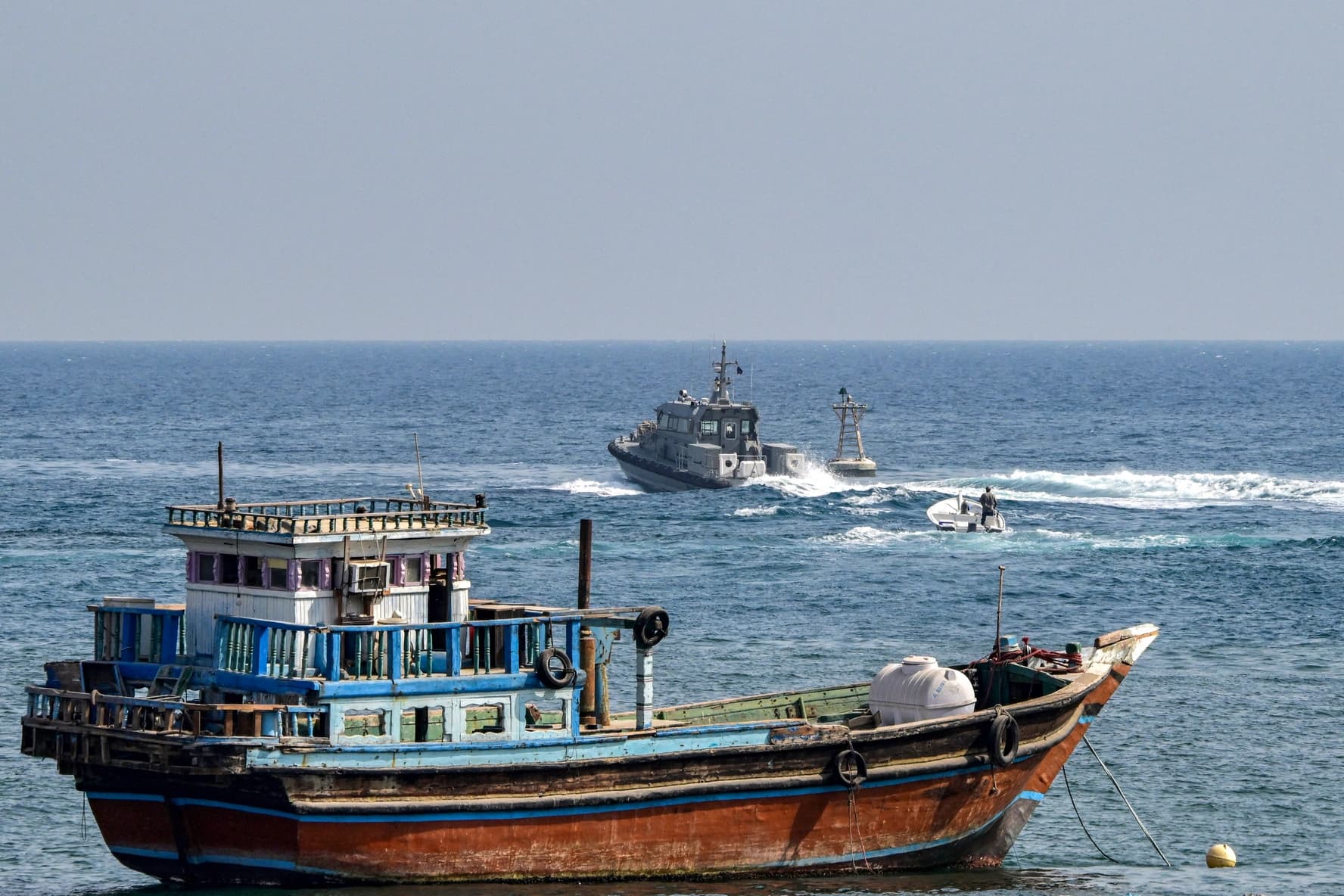
Posted by Phoebe BainMar 12A report found that the 2026 Iran war is the largest oil supply disruption in history.Show 2 more findings ZoomIran war is the largest oil supply disruption in history, report findsPOLITICOhttps://www.politico.com/news/2026/03/12/iran-war-oil-market-disruption-00824791
Posted by Teddy BurkhardtMar 5See how the rivalry between Iran and Israel has remade the Middle EastThis 2025 documentary explores how the relationship between Iran, Israel, and the United States has shaped Middle Eastern geopolitics for decades. The film covers events leading up to and following the 2025 12-day war involving these nations. 1:53:17https://www.youtube.com/watch?v=ZPuY5KhwRRg
Posted by Jeremy CronigApr 14The Concert of Europe was an earlier attempt to manage great power relations through shared rulesAfter the Napoleonic wars, European powers established a system of regular consultation to manage conflicts and maintain the balance of power. It offered relative stability for nearly a century before deteriorating.TheCollectorhttps://www.thecollector.com/what-was-the-concert-of-europe/
Posted by Jeremy CronigMar 5Hear how the US and Iran went from close allies to bitter adversaries after the 1979 revolution.Show 1 more findingRules Of EngagementThroughlinehttps://open.spotify.com/episode/2qmDrjynKzSTfmGN14j5D4
Posted by Jeremy CronigFeb 20Four Cold War hawks warn: Nuclear weapons still threaten the worldDespite the Cold War's end, the US and Russia still hold 95% of the world's nuclear weapons—many on hair-trigger alert. In this 2010 documentary, top former officials urge urgent action to reduce and eliminate the threat. 55:24https://www.youtube.com/watch?v=5sSCqdkNJwo
Posted by Jeremy CronigFeb 20The global nuclear arms regime has slowly eroded over the past few decadesBoth Russia and the United States have withdrawn from key Cold War-era arms-control pacts. Russia's 2022 invasion of Ukraine marked a turning point, as it suspended its participation in inspections and data-sharing agreements.TIMEhttps://time.com/6334258/putin-nuclear-arms-control/