Posted by Kevin KearneyApr 27Read the works of Henry David Thoreau, including 'Walden' and 'Civil Disobedience,' for free.Books by Thoreau, Henry DavidProject Gutenberghttps://www.gutenberg.org/ebooks/author/54
Posted by Kevin KearneyApr 27Read Thoreau's 'Civil Disobedience'The essay—originally delivered as a lecture and inspired by a night in jail for failing to pay a poll tax—argued that citizens should nonviolently resist unjust government policies, including slavery. Read the entirety of the essay for free. ZoomOn the Duty of Civil Disobediencehttps://www.gutenberg.org/cache/epub/71/pg71-images.html
Posted by Kevin KearneyApr 27The political theory of Henry David ThoreauThe two years, two months, and two days that Thoreau spent living in a modest cabin at Walden Pond informed his beliefs that people should live simply, deliberately, and become self-reliant. Those beliefs were later articulated, in a political sense, in his landmark essay, "Civil Disobedience." 5:48POLITICAL THEORY - Henry David Thoreauhttps://www.youtube.com/watch?v=JJL9S0J8-4k
Posted by Kevin KearneyApr 27Read the poetry of Henry David ThoreauAlthough primarily known for his nonfiction, the New England transcendentalist was also a prolific poet, writing verse that, like his essays, tackled nature, man, and society. The Academy of American Poets has collected 30 of his poems, which you can read for free. ZoomHenry David Thoreauhttps://poets.org/poet/henry-david-thoreau
Posted by Kevin KearneyApr 27The long-tail influence of Thoreau's 'Civil Disobedience'His essay "Civil Disobedience" laid out both a practical and a moral plan for resisting unjust governments, inspiring civil rights leaders like Mahatma Gandhi and Martin Luther King Jr., as well as anti-war anarchists like Emma Goldman and literary figures like Leo Tolstoy. ZoomMartin Luther King and Gandhi Weren’t the Only Ones Inspired By Thoreau’s ‘Civil Disobedience’Smithsonian Magazinehttps://www.smithsonianmag.com/smart-news/martin-luther-king-and-gandhi-werent-only-ones-inspired-thoreaus-civil-disobedience-180963972/
Posted by Kevin KearneyApr 27Thoreau's 'Civil Disobedience' was largely a protest against the Mexican-American WarHenry David Thoreau refused to pay taxes that funded what he saw as an unjust war waged to expand slavery. His act of protest inspired his famous essay "Civil Disobedience," a foundational text for nonviolent resistance. 5:29Thoreau and Civil Disobediencehttps://www.youtube.com/watch?v=gugnXTN6-D4
Posted by Kevin KearneyApr 27Diving into the life of Henry David ThoreauBefore he went to live in the woods by Walden Pond, Thoreau (who originally went by David Henry) lived a fascinating life, opening a school with his brother, working for his father's pencil-making business, and becoming close to Ralph Waldo Emerson, who'd become a mentor figure for the aspiring writer. This deep profile explores all that and more. ZoomHenry David Thoreauhttps://www.poetryfoundation.org/poets/henry-david-thoreau
Posted by Kevin KearneyApr 27Busting the myths about Thoreau's 'Walden'This resource from The Walden Woods Project dispels some of the common myths about Thoreau's time in the woods, including that he was a hermit (he actually regularly visited friends), that he was freeloading (he paid off his debts), that "Walden" was a misrepresentation (he was forthcoming about editing his experiences), and that he was opposed to progress (he believed in practical technology). ZoomMyths and Misconceptions | The Walden Woods Projecthttps://www.walden.org/education/for-students/myths-and-misconceptions/
Posted by Kevin KearneyApr 27Browse the original 'Walden' manuscriptsHenry David Thoreau began writing the book about his time living at Walden Pond in 1846, but it went through seven iterations before being published in 1854. You can look through scans of early proofs, including some of Thoreau's handwritten corrections, through the Huntington Digital Library. ZoomThe Walden Manuscript ProjectThe Huntington Digital Libraryhttps://cdm16003.contentdm.oclc.org/digital/collection/p16003coll16/id/1322/rec/1
Posted by Kevin KearneyAug 18Henry David Thoreau's 'Walden' is a popular text with young people in China exhausted by the country's emphasis on achievement.Show 4 more findings ZoomWhy Thoreau and Walden Resonate With Chinese YouthLiterary Hubhttps://lithub.com/why-thoreau-and-walden-resonate-with-chinese-youth/
Posted by Kevin KearneyMar 10Read the works of Mark TwainTwain's books are in the public domain, meaning they can be freely distributed. Digital versions of his classic novels—including "The Adventures of Huckleberry Finn," "The Adventures of Tom Sawyer," "A Connecticut Yankee in King Arthur's Court"—as well as many of his short stories and satirical essays can be accessed through Project Gutenberg.Read the works of Mark Twainhttps://www.gutenberg.org/ebooks/author/53
Posted by Kevin KearneyJun 1Read the works of Charles DickensDickens' work has long been in the public domain, meaning it's freely available to readers. Project Gutenberg's collection of Dickens' novels allows you to read classic novels like "Oliver Twist" and "A Tale of Two Cities," as well as early works like "Sketches by Boz," at no cost.Books by Dickens, CharlesProject Gutenberghttps://www.gutenberg.org/ebooks/author/37
Posted by Kevin KearneyApr 27Henry David Thoreau's family's pencil-making company helped fund the transcendentalist writer's books.Show 2 more findings ZoomHow the Thoreau Pencil Wrote, and Paid for, Walden - New England Historical Societyhttps://newenglandhistoricalsociety.com/thoreau-pencil-wrote-paid-walden/
Posted by Kevin KearneyApr 27Why Henry David Thoreau was not a hermitWhen many people think of "Walden," they think of a man who intentionally exiled himself from society. But that's inaccurate. Thoreau regularly welcomed guests and explained that he kept three chairs in his modest cabin: "one for solitude, two for friendship, three for society." ZoomNot Exactly a Hermit: Henry David ThoreauNational Endowment for the Humanitieshttps://www.neh.gov/humanities/2012/septemberoctober/feature/not-exactly-hermit
Posted by Kevin KearneyApr 27Well before the publication of 'Walden,' Henry David Thoreau nearly burned down his hometown with an unruly campfire.Show 3 more findingsHenry David Thoreau: The Woods Burner - History of Massachusetts BlogHistory of Massachusetts Bloghttps://historyofmassachusetts.org/henry-david-thoreau-woods-burner/
Posted by Kevin KearneyApr 27Understanding Thoreau's critique of American workJohn Kaag, a coauthor of "Henry at Work: Thoreau on Making a Living," explains how the writer is often mischaracterized as a layabout who avoided responsibilities. Kaag, though, notes that Thoreau was a jack-of-all-trades—working as a schoolteacher and a handyman, and even for his father's pencil-manufacturing company—who came to believe that relentless striving was getting in the way of authentic living.https://open.spotify.com/episode/2tXIbnD1vC7hCUoudSHjlz
Posted by Kevin KearneyApr 27How one professor uses 'Walden' to study climate changeRichard Primack, a biology professor at Boston University, uses observations on Walden Pond's ecology from Henry David Thoreau's book to inform his study of climate change, noting that "Walden" is one of the oldest datasets available in the United States. 3:46Scientists using Henry David Thoreau's book to study climate change in Massachusettshttps://www.youtube.com/watch?v=-EPimpa42po
Posted by Kevin KearneyApr 27See the plot of land where Thoreau built his Walden cabinHarvard's Lawrence Buell takes viewers down to Walden Pond to show them the spot in the woods where Thoreau constructed his modest cabin. Along the way, he reads from "Walden" and explains why Thoreau's text still matters 170 years after its publication. 2:47Thoreau at 200: Reflections on "Walden"Harvard Universityhttps://www.youtube.com/watch?v=GV6nepqzrFc
Posted by Kevin KearneyApr 27A prominent writer analyzes Thoreau's apparent contradictionsSome call Thoreau a monkish hermit living in the woods, while others say he's a privileged layabout who was playacting a simple life. In this essay, Rebecca Solnit argues that both of those assessments are caricatures that reduce a complex man who reckoned with complex ideas. ZoomThe Thoreau Problem - Orion MagazineOrion Magazinehttps://orionmagazine.org/article/the-thoreau-problem/
Posted by Kevin KearneyApr 27Henry David Thoreau, the transcendentalist writer and philosopher, was inspired by the philosophical ideas of yoga.Show 2 more findings ZoomWhy Henry David Thoreau was drawn to yogaBig Thinkhttps://bigthink.com/thinking/henry-david-thoreau-yoga-philosophy/
Posted by Kevin KearneyApr 27Unpacking Thoreau's diet, which once included a woodchuckThe writer's diet was notoriously simple, preferring an inexpensive combination of rice and vegetables to meat, though he usually ate it when offered. In "Walden," he mentions eating a woodchuck after it got into his beans, which one Thoreau biographer said was likely true. ZoomWhat Did Thoreau Really Eat? You Might Be SurprisedNPRhttps://www.npr.org/sections/thesalt/2017/07/11/535770269/what-did-thoreau-really-eat-you-might-be-surprised
Posted by Kevin KearneyApr 27In 2024, Walden Pond was listed as an endangered placeThe National Trust for Historic Preservation listed the site of Henry David Thoreau's "Walden" experiment as one of the most endangered historic places in America due to a proposed airport expansion and the proposed development of a nearby plot of land. 2:40Walden Pond: An endangered treasureCBS Sunday Morninghttps://www.youtube.com/watch?v=6IajnSWSis8
Posted by Kevin KearneyApr 27Tourists flock to Walden Pond, the namesake for Henry David Thoreau's book 'Walden,' from across the globe.Show 3 more findings ZoomWalden Pond State Reservation | The Walden Woods ProjectThe Walden Woods Projecthttps://www.walden.org/what-we-do/friends-of-walden-pond/our-park/
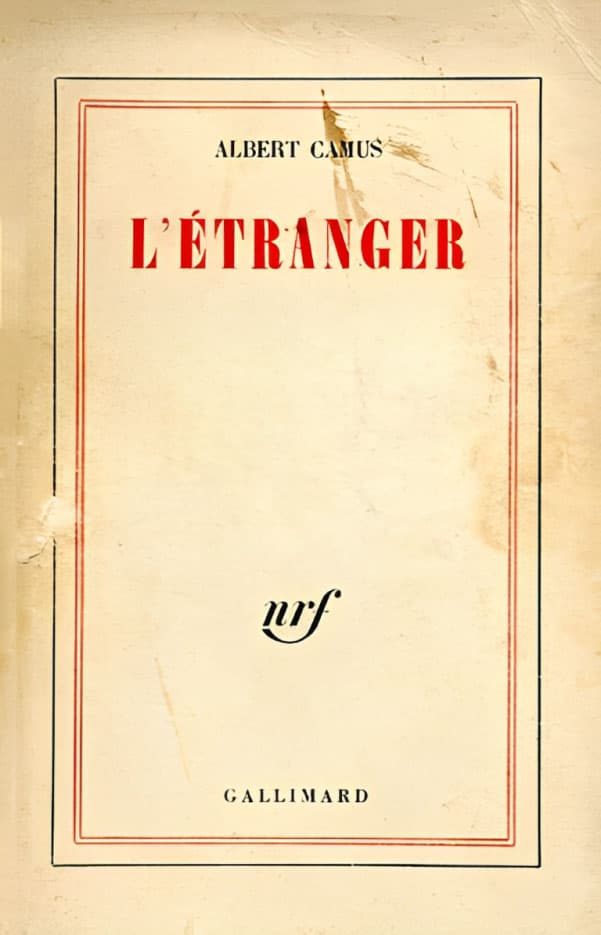
Posted by Kevin KearneyDec 29, 2025An existentialist reading listIf you’re looking for a starting point for diving into existentialist thought, this is a great resource. Its titles are not exactly obscure—Albert Camus’ “The Stranger,” Franz Kafka’s “The Trial,” and Søren Kierkegaard’s “Either/Or” are among the most famous works in Western literature—but the list provides some digestible context for each text, which will help you decide the best place to begin your journey. ZoomBig Thinkhttps://bigthink.com/hard-science/existentialism-books/
Posted by Kevin KearneyApr 27Why Thoreau considered himself spiritual but not religiousThis interview with Richard Higgins, author of "Thoreau's God," unpacks the writer's deep spirituality, which underlies his exploration of "deliberate" living. Higgins notes that Thoreau was opposed to the dogma of organized religion but took his spirituality seriously, treating July 4, 1845, when he moved to Walden Pond, as his own "spiritual independence day."https://open.spotify.com/episode/48zo60q6WEjlrHSRnhTxRs
Posted by Kevin KearneyFeb 22Read 'The New Negro,' the influential collection edited by Alain LockeThe 1925 anthology features early works by Langston Hughes, Countee Cullen, Zora Neale Hurston, Claude McKay, Jean Toomer, WEB DuBois, and more. You can read it in its entirety—for free—through the Internet Archive.Internet Archivehttps://archive.org/details/newnegrointerpre00unse/mode/2up
Posted by Kevin KearneyJul 17Explore a collection of famous literary maps, including original images from 'Treasure Island,' 'The Swiss Family Robinson, ' and 'Walden.' ZoomHow Writers Map Their Imaginary WorldsAtlas Obscurahttps://www.atlasobscura.com/articles/writers-maps
Posted by Kevin KearneyNov 21, 2025Twain read (and lampooned) classic literatureEver the ironist, Twain claimed to have “ no liking for novels or stories.” Obviously, that was untrue: He read widely, devouring books by Charles Dickens, slave narratives, and texts on astronomy. He also loved John Milton’s “Paradise Lost,” which he called “something everybody wants to have read and nobody wants to read.” ZoomTwain read (and lampooned) classic literatureSmithsonian Magazinehttps://www.smithsonianmag.com/arts-culture/how-read-mark-twain-180972928/
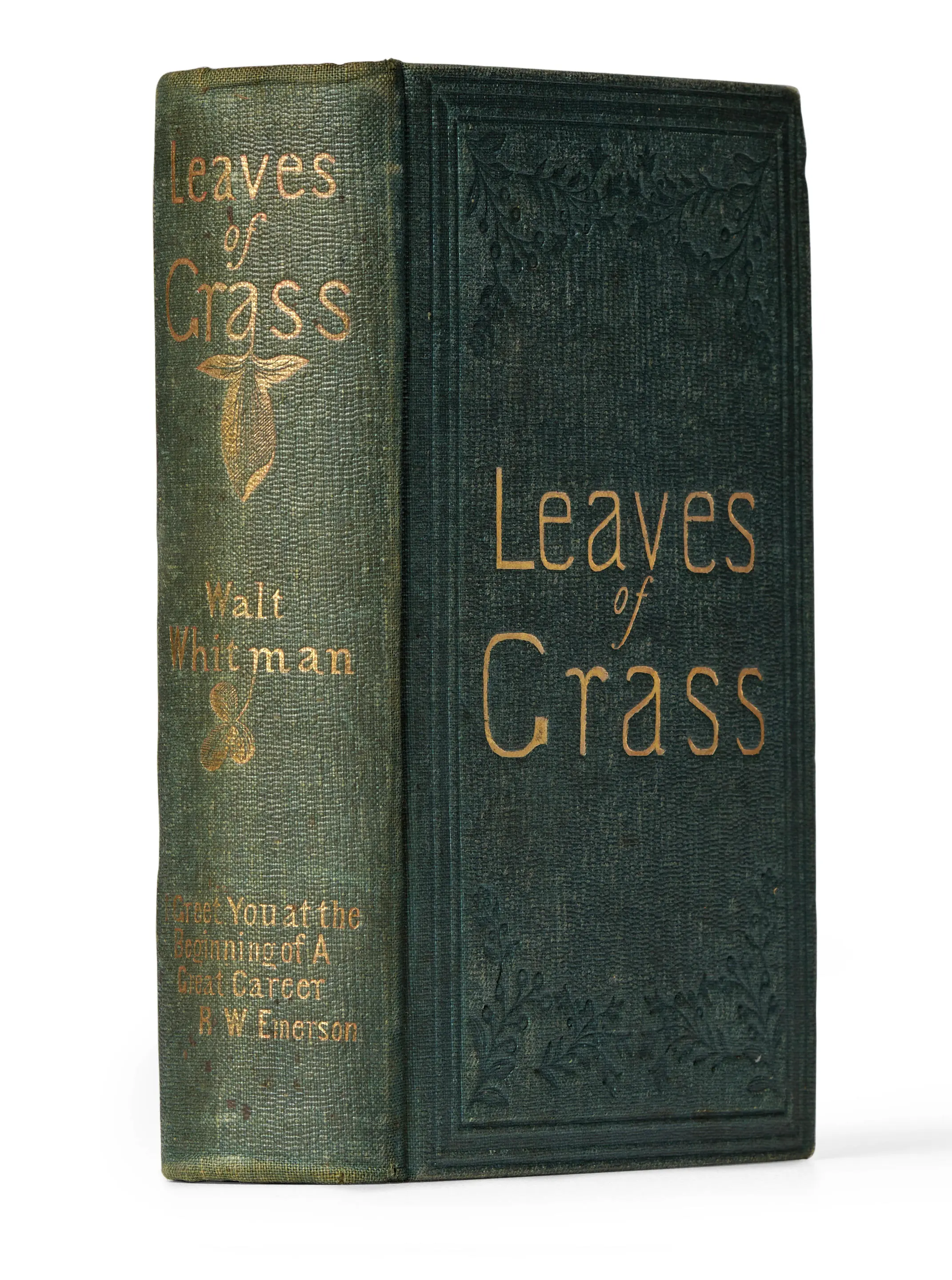
Posted by Kevin KearneyMay 21, 2025Walt Whitman wrote a temperance novelBefore “Leaves of Grass” there was “Franklin Evans,” a novel about a young man whose drinking ruins his life. Whitman all but disowned the novel for the rest of his life, though critics note that he preached teetotaling throughout his life. ZoomWhitman the Temperance Novelist | Books and Culturehttps://www.booksandculture.com/articles/2007/sepoct/19.39.html
Posted by Kevin KearneyMay 7, 2025Audit a Yale course on great American novels after 1945Wish you'd paid more attention back in college? There's good news: You can still pop into some college classes, without having to pay tuition (or write term papers). This course from one-time Yale professor Amy Hungerford walks through the great American novels after World War II, including works from Toni Morrison, Philip Roth, Cormac McCarthy, and more. ZoomThe American Novel Since 1945 | Open Yale Courseshttps://oyc.yale.edu/english/engl-291
Posted by Kevin KearneyJun 18Check out a list of 50 great novels under 200 pages, including works by Albert Camus, Shirley Jackson, James Baldwin, and more. Zoom50 Great Classic Novels Under 200 PagesLiterary Hubhttps://lithub.com/50-great-classic-novels-under-200-pages/
Posted by Kevin KearneyMar 26Improve your typing speed by retyping classic literatureWhy practice with nonsense letters and syllables when you can retype full books you always wanted to read, from Jane Austen and Sir Arthur Conan Doyle to George Orwell and W.E.B. duBois. And it's free.Practice typing by retyping ENTIRE books — TypeLit.iohttps://www.typelit.io/
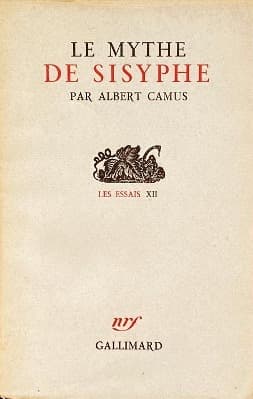
Posted by Kevin KearneyDec 29, 2025Read Albert Camus' 'Myth of Sisyphus and Other Essays'Camus' most famous work of nonfiction is this collection of philosophical essays. Perhaps the most resonant entry is the title essay, which reimagines the Greek myth of a man condemned to roll a boulder for all eternity. Rather than presenting the story as a cautionary tale about defying the gods, as the original myth intended, Camus considered Sisyphus an "absurd hero" for his actions and imagined him smiling as he endlessly toiled at his repetitive punishment. Zoomhttps://dn710009.ca.archive.org/0/items/persepolis_202107/The%20Myth%20of%20Sisyphus%20-%20Albert%20Camus.pdf
Posted by Jeremy CronigJan 14See the individuals who inspired the ideology and practice of Dr. Martin Luther King Jr.This resource examines how Dr. King drew inspiration from figures such as Thomas Carlyle, Henry David Thoreau, and Mahatma Gandhi, integrating global literature, moral philosophy, and nonviolence into his speeches and activism.Forbeshttps://www.forbes.com/sites/nathanraab/2014/01/20/10-people-who-inspired-martin-luther-king-and-he-hoped-would-inspire-us/
Posted by Teddy BurkhardtJun 16Watch an interview with author AJ Jacobs, who attempted to live as closely as possible by the principles of the US Constitution for an entire year. 6:42A.J. Jacobs on his "Year of Living Constitutionally"CBS Sunday Morninghttps://www.youtube.com/watch?v=zGAE-ceKoz0&ab_channel=CBSSundayMorning
Posted by Kevin KearneyMay 21, 2025A guide to the poetry of Walt WhitmanThe resource allows you to explore over 100 of Whitman’s essential works, from the iconic “Leaves of Grass” through poems you’ll recognize from pop culture, like “When I Heard the Learn’d Astronomer” and “O Captain! My Captain!” ZoomAbout Walt Whitman | Academy of American Poetshttps://poets.org/poet/walt-whitman
Posted by August MoonApr 27George Orwell's '1984' is one of the most famous dystopian worksOrwell's life experiences, from living among the poor to witnessing the rise of authoritarian regimes, deeply shaped his worldview. His iconic works, "Animal Farm" and "1984," offered stark warnings about power, control, and propaganda, making him one of the most enduring voices against totalitarianism. 1:12Who Was George Orwell?1440 Originalshttps://youtube.com/shorts/7WX-na_c1hc
Posted by Kevin KearneyNov 21, 2025Twain ruthlessly criticized other writersThe writer was known for lambasting popular writers of his time, including Jane Austen and Robert Louis Stevenson. One of his most famous takedowns is “Fenimore Cooper’s Literary Offences,” an essay that simultaneously mocks Cooper’s popular adventure tales and satirizes the pretentiousness of literary criticism. Remarking on Cooper’s novel “The Deerslayer,” Twain wrote, “its conversations are—oh! Indescribable; its love-scenes odious; its English a crime against the language.”Twain ruthlessly criticized other writersJSTORhttps://www.jstor.org/stable/25103547
Posted by Kevin KearneyJul 2The Library of America, a reissue series that began in 1982, repackaged classic works of American writers at a low cost to encourage readers to engage with what it considered the American literary canon.Show 3 more findings ZoomHow Library of America Helped Shape the Modern American Literary CanonLiterary Hubhttps://lithub.com/how-library-of-america-helped-shape-the-modern-american-literary-canon/
Posted by Kevin KearneyJul 7'Leaves of Grass' was banned several times for obscenity.Show 4 more findings ZoomUniversity of Virginia Library Online Exhibits | CENSORED: Wielding the Red Penhttps://explore.lib.virginia.edu/exhibits/show/censored/walkthrough/bowdlerized