Posted by Kevin KearneyApr 10The Bauhaus school developed a sleek typography that intentionally contrasted Nazi propaganda.Show 3 more findings 7:01- YouTubeQuartzhttps://www.youtube.com/watch?v=X59FCW3vOlE
Posted by Kevin KearneyApr 10The Bauhaus artists who became Nazi collaboratorsThe Nazis deplored the Bauhaus style, until they found a way to use it for themselves. This deep dive explores the connection between the Nazis and three Bauhaus-affiliated designers—Franz Ehrlich, who was sent to Buchenwald and forced to design the camp's gates (seen below), Fritz Ertl, who designed the shower rooms at Auschwitz, and Herbert Bayer, who helped design Third Reich propaganda.https://www.abc.net.au/news/2019-03-30/nazis-shut-down-the-bauhaus-but-design-school-legacy-lived-on/10947778
Posted by Kevin KearneyApr 10Why the Nazis hated the Bauhaus styleThe Nazis viewed the Bauhaus internationalist and collectivist philosophy to be communist and considered its modernist aesthetic as an affront to the more classical German identity they wished to project. This article from the Conversation explores the history behind that conflict, which forced the Bauhaus to move several times before ultimately closing.The Conversationhttps://theconversation.com/why-germanys-far-right-hates-the-bauhaus-movement-250416
Posted by Kevin KearneyApr 10Breaking down the Bauhaus' minimalist, modern aestheticThe Bauhaus style valued objects' functions above all else and, as such, largely did away with the ornate decoration of previous styles such as Victorian, colonial, or Art Deco. Instead, Bauhaus used primary colors, clean lines, and exposed industrial elements to create simple but sleek buildings, products, and typefaces.MasterClasshttps://www.masterclass.com/articles/bauhaus-architecture-explained
Posted by Kevin KearneyApr 10The ways Bauhaus still shapes modern lifeThe German art school was around for less than 15 years, but its aesthetic and philosophy can still be seen today in sleek, minimalist design, bold typefaces, and even the corporate aesthetics of IKEA, Apple, and other brands. This DW feature visits the schools that have taken up the Bauhaus legacy, using its ideas to tackle contemporary problems. 15:15https://www.youtube.com/watch?v=rA3cgvBpfAU
Posted by Kevin KearneyApr 10A history of Bauhaus, the influential 20th-century design movementThe design school was short-lived but immensely impactful, turning design in architecture, typography, and a number of other fields away from superfluous ornamentation and toward practical, straightforward expression. This history of the movement from the Metropolitan Museum of Art outlines its major figures, key events, and the ways its influence persists.The Metropolitan Museum of Arthttps://www.metmuseum.org/essays/the-bauhaus-1919-1933
Posted by Kevin KearneyApr 10Why Bauhaus—the 20th-century design school and aesthetic movement—matters todayThe school, founded by Walter Gropius in Weimar, Germany, in 1919, was an experimental educational environment that valued the function of an object before its form, a philosophy that would animate the rise of minimalist and modernist design in the 20th century. 6:50https://www.youtube.com/watch?v=SF9K70VFTIE
Posted by Kevin KearneyApr 10Browse some of the most iconic Bauhaus furnitureThe Bauhaus style has become so commonplace that you might not have realized its influence on modern furniture, but the German school's impact is profound, from the Wassily and Barcelona chairs to Gropius' industrial style door knob.https://www.dezeen.com/2018/11/08/bauhaus-furniture-designs-chair-tables-chess-set-baby-cradle/
Posted by Kevin KearneyApr 10The Bauhaus designer who predicted the future of graphic designLászló Moholy-Nagy believed that technology would eventually turn typesetting into a process that allowed fonts to be easily modified rather than manually constructed. This history from the American Institute of Graphic Arts digs into how Moholy-Nagy arrived at those prescient theories.https://eyeondesign.aiga.org/the-bauhaus-master-who-saw-photoshop-coming-90-years-ahead-of-time/
Posted by Kevin KearneyApr 10Check out pictures from the Bauhaus' elaborate costume partiesBauhaus is known for its innovation, but, at the end of the day, it was still an art school. That means parties were regular occurrences and often featured elaborate costumes—Gropius once dressed as the renowned architect Le Corbusier, while Kandinsky was known for pretending to be an antenna. Zoomhttps://peoplesgdarchive.org/item/16688/bauhaus-costume-parties-1920s
Posted by Kevin KearneyApr 10How László Moholy-Nagy's Bauhaus work changed designThe artist established a foundational course that would later become standard for many Western art schools. A few years later, he'd spearhead a publishing wing of the school, establish a template for modern graphic design, and toy with developing technologies. This profile from the Guggenheim digs into the massive contributions Moholy-Nagy made to the art world.https://www.guggenheim.org/articles/checklist/moholy-nagy-design-pioneer
Posted by Kevin KearneyApr 10A guide to the Bauhaus' 3 German locationsThe influential design school began in Weimar, then moved to Dessau and later to Berlin. This narrated timeline from Graphic Design History explains how Gropius' countercultural educational and artistic philosophies forced the school to move and, ultimately, leave Gropius behind.https://designtraveler.wordpress.com/2011/03/04/bauhaus-trifecta-the-three-bauhaus-museums-in-germany/
Posted by Kevin KearneyApr 10The impact of Ludwig Mies van der Rohe, the final Bauhaus directorThe legendary modernist architect—known for maxims like "less is more" and "God is in the details"—had not yet designed some of his most famous buildings when he took over as director for the Bauhaus and steered the school to Berlin when the Nazis effectively closed its Dessau location. This Dezeen profile considers the artist's tenure at the school, which would shape his later work.https://www.dezeen.com/2018/11/19/mies-van-der-rohe-modernist-architect-third-director-bauhaus-100/
Posted by Kevin KearneyApr 10Read the original curriculum for the Bauhaus school, which was founded as a breeding ground for artistic collaboration across disciplines.Show 2 more findingsThe Curriculum of the Bauhaus (1919) – TetragrammatonTetragrammatonhttps://www.tetragrammaton.com/content/curriculumbauhaus-asn6p
Posted by Kevin KearneyApr 10Bauhaus' biggest contributions to modern architectureWalk around almost any major metropolitan area, and you'll see Bauhaus' influence in the glass facades, tubular steel, and windows offering ample natural light. This ArchDaily explainer illustrates those concepts through iconic Bauhaus buildings, such as the Gropius House, along with detailed diagrams of their design.https://www.archdaily.com/1020389/architectural-details-of-the-bauhaus-movement-revisiting-the-glass-corners-and-tubular-steel-construction
Posted by Kevin KearneyApr 10See the most famous Bauhaus sitesThe Bauhaus school had a profound impact on 20th-century architecture, from the Zentrum Paul Klee in Switzerland to the Poli House in Israel. This list from Artsy shows you eight of the most important Bauhaus buildings, including the school's second location in Dessau, Germany.Artsyhttps://www.artsy.net/article/artsy-editorial-8-iconic-bauhaus-sites-visit-100th-anniversary
Posted by Kevin KearneyApr 10How an international perspective shaped BauhausThe Bauhaus was located in Germany, but it welcomed students and teachers from across the world. Its collaborative spirit meant that the work it produced considered the many histories and perspectives of its international community. When the school was dissolved, those designers then spread across the globe, bringing the new style with them. This timeline from the director of Stiftung Bauhaus Dessau details how the process unfolded.Googlehttps://artsandculture.google.com/story/bauhaus-the-school-of-modernism/8QUh8UW9Rfa-Kw?hl=en
Posted by Kevin KearneyApr 21How Bauhaus resonated in NorwayThe Bauhaus style may have originated in Germany, but it had a major impact in Norway. This history unpacks the work of Marianne Brandt, Thorbjørn Lie-Jørgensen, Ola Mørk Sandvik, Hans Mollø-Christensen, and other Norwegian designers and architectsBauhaus and Norwayhttps://www.nasjonalmuseet.no/en/stories/explore-the-collection/bauhaus-and-norway/
Posted by Kevin KearneyApr 10Is IKEA continuing the Bauhaus movement's mission?Both the influential German design school and the popular Swedish brand are known for sleek, mass-produced modernist furniture. This essay argues that the comparisons run deeper, with both the Bauhaus and IKEA espousing an anti-elitist philosophy.https://kooihaus.com/bauhaus-ikea/
Posted by Kevin KearneyApr 10How one North Carolina college welcomed the BauhausAfter the Bauhaus in Berlin closed because the school wouldn't comply with the Nazis' demands, many of its teachers, students, and affiliated artists—including Walter Gropius—left Germany and relocated at Black Mountain College, a quirky liberal arts school in the mountains of western North Carolina.https://burnaway.org/magazine/bauhaus-and-black-mountain-college-today/
Posted by Kevin KearneyApr 10Exploring the White City of Tel Aviv, the capital of the Bauhaus styleIn 1933, around 60,000 German Jews fled the Nazi regime for what was then Mandatory Palestine. Among them were six Bauhaus students, who accommodated the influx by working with nearly 150 other architects to design over 4,000 buildings that reflected their alma mater's modernist style. This Smarthistory article on the area, now a UNESCO World Heritage site, allows you to see several of its buildings from the comfort of your couch.Smarthistoryhttps://smarthistory.org/the-white-city-of-tel-aviv/
Posted by Kevin KearneyApr 10How Lucia Moholy's photography captured the Bauhaus aestheticThe photographer was one of the few affiliated with the school who photographed its locations, documenting the modern style long after the Nazis had driven its artists from Germany. This podcast episode explores why she went uncredited for so many years.99% Invisiblehttps://open.spotify.com/episode/1IyFCBdfGzkN8gQktsCUEY
Posted by Kevin KearneyApr 10Read the original, utopian manifesto for the Bauhaus movementIn "Program of the Staatliche Bauhaus in Weimar," Walter Gropius' 1919 manifesto, the architect imagined his Bauhaus school as a "guild of craftsmen" where architects, painters, and sculptors could be freed from the class-oriented pretensions of the art world and learn to make works that would benefit humanity.https://bauhausmanifesto.com/
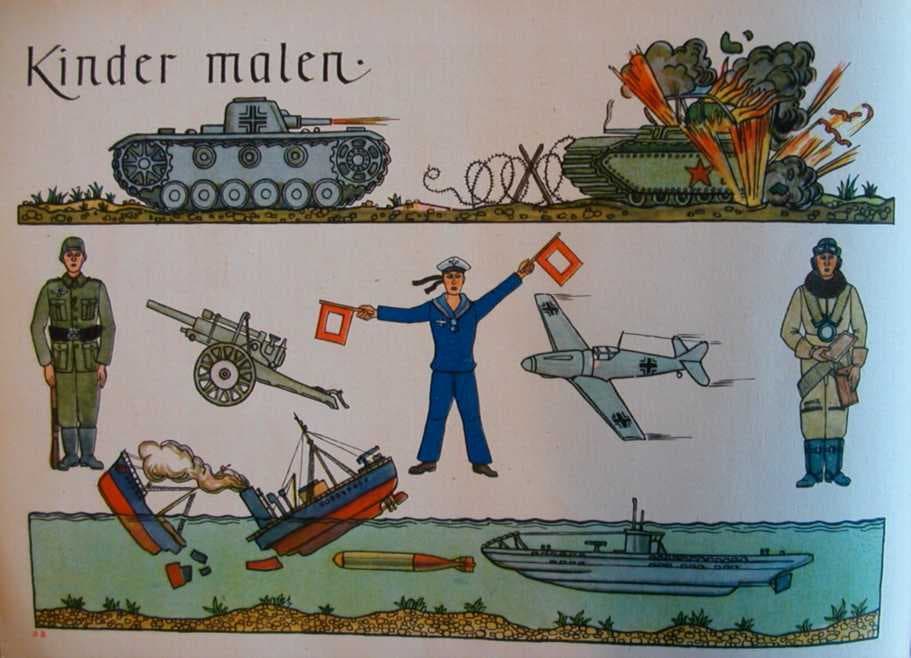
Posted by Teddy BurkhardtNov 25, 2025Nazi Germany replaced Advent calendars with depictions of family life under Nazi ruleDuring World War II, the Nazi regime banned printed Advent calendars because of religious messaging. Officials instead produced state-approved versions featuring swastikas, tanks, and Nazi symbols. ZoomNazi Material for Advent 1943https://research.calvin.edu/german-propaganda-archive/vorweihnachten1943.htm
Posted by Kevin KearneyOct 23, 2025German expressionism produced some of horror’s earliest classicsAfter World War I, German filmmakers turned from reality to the surreal, fusing experimental art with the nascent world of film. Some of the movement’s most notable films, like FW Murnau’s “Nosferatu: A Symphony of Horror” and Robert Wiene’s “The Cabinet of Dr. Caligari,” were intent on frightening their audiences.German Expressionism and the Birth of American Horrorhttps://thetwingeeks.com/2020/10/26/german-expressionism-and-the-birth-of-american-horror/
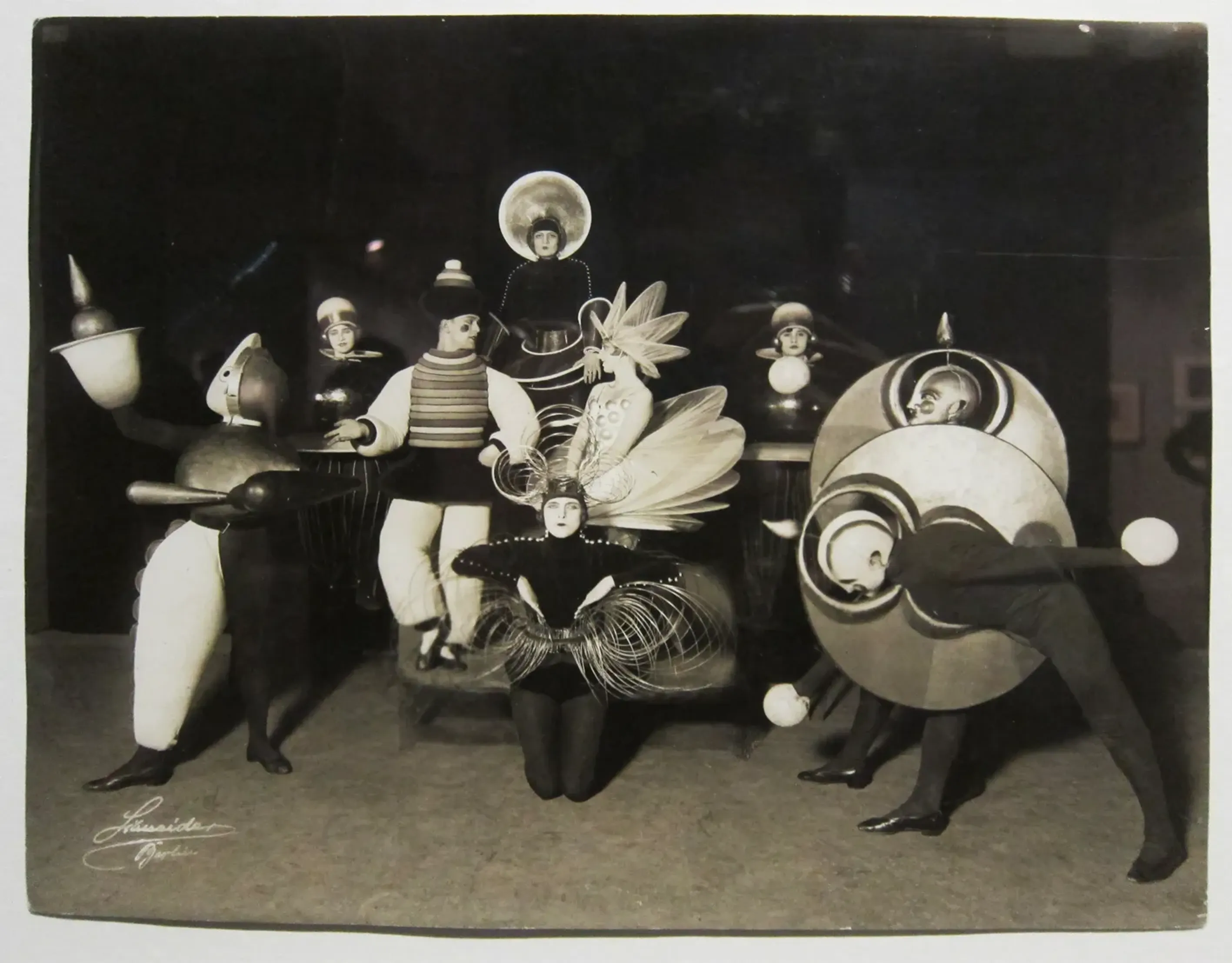
Posted by Kevin KearneyApr 10Exploring Oskar Schlemmer's 'Triadic Ballet,' a Bauhaus-inspired performance pieceThe "symphonic dance of threeness" brought together Bauhaus' varied artistic interests and offered a fable in which collectivism wins. This history and timeline of the work details its origins as well as its near-destruction at the hands of the Nazis, who considered it profane.https://www.schlemmer.org/triadic-ballet
Posted by Meher QazilbashAug 5, 2025The Nazi Party was founded in Germany in 1920 and tried a failed coup in 1923Founded in Germany in February 1920, the National Socialist German Workers’ Party (Nazi Party) attempted its first major power grab in 1923 with the Beer Hall Putsch—a failed coup in Munich that killed about 16 Nazis and four police officers, led to Hitler’s arrest and treason trial, but ultimately elevated his public profile. ZoomThe Nazi Party | Holocaust Encyclopediahttps://encyclopedia.ushmm.org/content/en/article/the-nazi-party-1
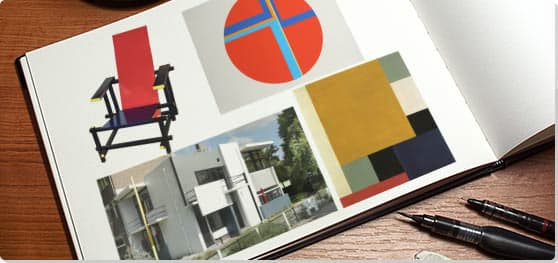
Posted by Kevin KearneyJul 10, 2025The de stijl movement embraced bright colors and abstract imagesThe 20th-century movement sought to develop a universal language for the modern era by fusing form and function. Modern day viewers will recognize its bright colors and clean aesthetic, popular with retro-styled book and album covers. ZoomDe Stijl Movement Overviewhttps://www.theartstory.org/movement/de-stijl/
Posted by Phoebe BainMay 27Adolf Hitler deeply admired Henry Ford, citing him as an inspiration for "Mein Kampf"Hitler frequently praised Ford's anti-semitic viewpoints, both before and during the Holocaust. While Ford denied being sympathetic to the Nazi regime, Hitler kept a portrait of Ford on his desk, and Ford accepted the highest military award available to a foreign citizen from the Nazi government.https://encyclopedia.ushmm.org/content/en/article/antisemitism-and-henry-fords-international-jew#:~:text=Influence%20of%20Ford's%20Antisemitism%20in%20the%20United%20States%20and%20Germany&text=Ford%20shut%20down%20The%20Dearborn,States%20and%20Europe%2C%20especially%20Germany
Posted by Kevin KearneyMar 12, 2025The man behind Comic Sans, the world's most contentious fontComic Sans is often used as a joke, but it wasn't intended that way. Its creator wanted something eye-catching and original, something that reminded people of iconic comics like Batman and Watchmen. This interview details how he made that happen and how it took on a new life once it was released into the world. 3:43Comic Sans: The Man Behind the World’s Most Contentious FontGreat Big Storyhttps://youtu.be/5l4sCaw71NE
Posted by Meher QazilbashAug 10European leaders pursued appeasement of Hitler in the 1930s, hoping to avoid war.Show 3 more findings ZoomThe British Policy of Appeasement toward Hitler and Nazi Germany | Holocaust Encyclopediahttps://encyclopedia.ushmm.org/content/en/article/neville-chamberlain
Posted by Kevin KearneyMar 18, 2025A guide to brutalism, architecture's most polarizing styleBrutalism is an architectural style that emphasizes raw materials, bold lines, and limited ornamentation. Although it was most popular in the middle of the 20th century, its fans can still be found across the globe, championing the misunderstood buildings in the world's major cities. This article from Dwell defines the style and unpacks why people feel so passionately about this design style.Why You Either Love or Hate Brutalismhttps://www.dwell.com/article/why-you-either-love-or-hate-brutalism-8ee0a9d3
Posted by Teddy BurkhardtAug 28, 2025Rewrite 1930s Germany with this alternative history game of politicsYou are at the head of the Social Democratic Party in Germany in 1928 and must use parliamentary politics, the media, and more to oppose the ascendant National Socialists. This text-based, narrative simulation becomes a lesson in the complexities of political history. ZoomSocial Democracy: An Alternate History by Autumn Chenhttps://red-autumn.itch.io/social-democracy
Posted by Kevin KearneyAug 21'Casablanca,' the iconic World War II-era film, was recut for its German release, with all references to the Nazis removed.Show 4 more findings ZoomWhat's 'Casablanca' Without Nazis? After WWII, German Audiences Found OutNPRhttps://www.npr.org/2017/12/17/565777766/whats-casablanca-without-nazis-after-wwii-german-audiences-found-out
Posted by Kevin KearneyJan 27Comic books were used as a form of government propaganda in World War II.Show 2 more findings ZoomWar and Superheroes: How the Writer’s War Board Used Comics to Spread its Message in WWII | InsightsLibrary of Congresshttps://blogs.loc.gov/kluge/2015/11/war-and-superheroes-how-the-writers-war-board-used-comics-to-spread-its-message-in-wwii/
Posted by Teddy BurkhardtAug 21, 2025Often-maligned Brutalist architecture inspired a design renaissanceDespite petitions worldwide to demolish some of its more notorious examples, Brutalism was a transformative moment in architecture. The reinforced concrete style arguably reduced costs, enabled new designs, and reduced the need for maintenance. ZoomThe concrete buildings of Brutalism are beautiful | Aeon IdeasAeonhttps://aeon.co/ideas/the-concrete-buildings-of-brutalism-are-beautiful
Posted by Kevin KearneyAug 6, 2025Art Deco formally began in France in 1925The design style—often associated with 1920s New York—is named after the International Exhibition of Modern Decorative and Industrial Arts in Paris, which featured many works in the style, which was already popular in France. Zoom100 years of Art Deco: a movement comes of agehttps://observer.co.uk/culture/architecture/article/100-years-of-art-deco-a-movement-comes-of-age
Posted by Teddy BurkhardtJun 30How the Great Depression and end of WWI paved the way for Hitler's rise to powerThe end of WWI was triggered by an armistice that blamed the conflict on Germany and required the financially struggling country to pay reparations. This outraged nationalists and ignited conspiracies that Hitler was able to capitalize on, according to this six-minute video. It was during this financial strain that the Great Depression hit. 5:37How did Hitler rise to power? - Alex Gendler and Anthony HazardTED-Edhttps://www.youtube.com/watch?v=jFICRFKtAc4
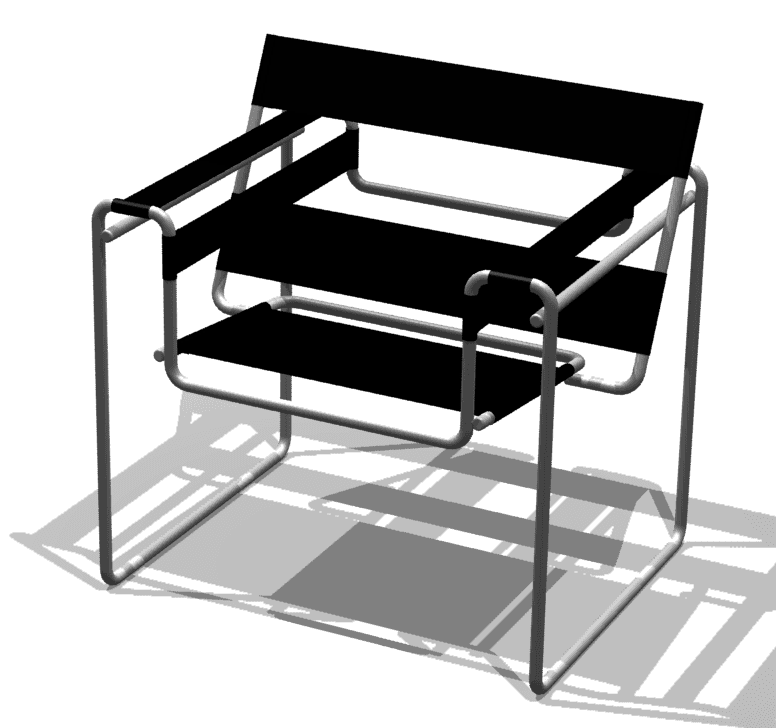
Posted by Kevin KearneyApr 10The Wassily chair, the iconic modernist armchair, was inspired by a bicycle.Show 3 more findings ZoomThe Metropolitan Museum of Arthttps://www.metmuseum.org/art/collection/search/485067